

Marvin Harrison Net Worth 2026: Hall of Fame Career Earnings and Super Bowl Legacy
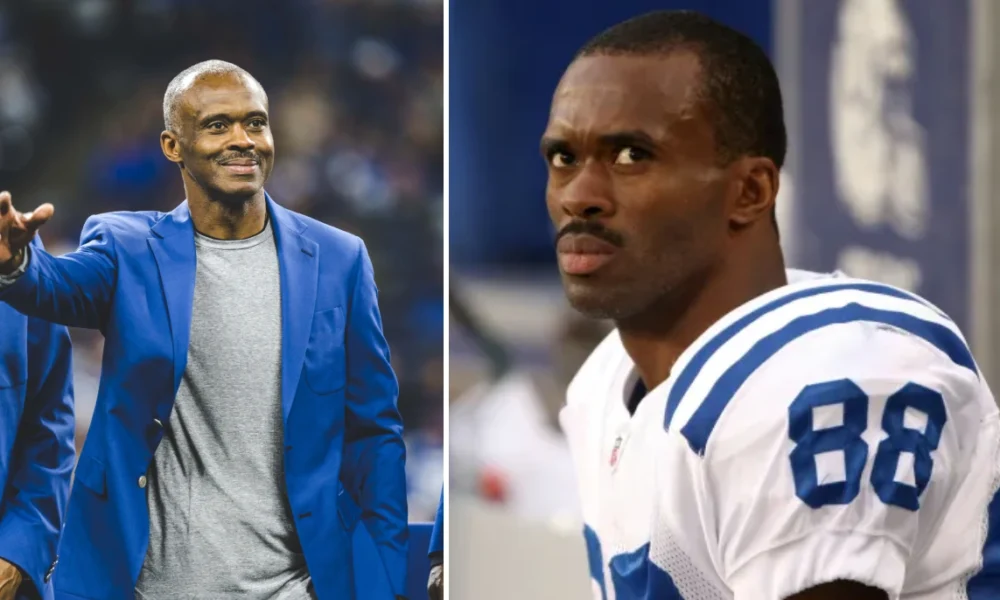
Marvin Harrison, the Hall of Fame wide receiver who played 13 seasons with the Indianapolis Colts (1996-2008), earned a Super Bowl XLI championship ring when the Colts defeated the Chicago Bears 29-17. As of 2025, his estimated net worth stands at $26.8 million, built primarily through NFL contracts that reflected his status as one of the most productive receivers in league history. Harrison’s financial profile demonstrates both the earning potential of elite players from his era and successful wealth management strategies that many retired athletes struggle to implement.
Table Of Content
- Record-Breaking Prime and Career Foundation
- NFL Contracts and Total Career Earnings
- Super Bowl Success and Championship Impact
- Post-Retirement Business Ventures and Current Life
- Historical Impact and Records
- The Harrison Family Football Legacy
- Financial Success Factors and Wealth Preservation
- 1. Career longevity
- 2. Conservative spending patterns
- 3. Diversified income sources
- 4. Avoiding common pitfalls
- 5. Philadelphia focus
- Conclusion
Record-Breaking Prime and Career Foundation
Harrison’s 2002 season produced an NFL record 143 receptions, a mark that stood until Michael Thomas caught 149 passes in 2019. That same year, he recorded 1,722 receiving yards, his career high. He became the first player in NFL history to record two seasons with 1,600+ receiving yards (1999 and 2002), a feat that demonstrated sustained excellence rather than a single-season anomaly.
Harrison’s partnership with quarterback Peyton Manning produced 953 completions for 12,766 yards and 112 touchdowns—the most completions, yards, and touchdowns by a quarterback-receiver tandem in NFL history. This connection formed the backbone of the Colts’ offensive success throughout the 2000s.
He finished his career with 1,102 receptions for 14,580 yards and 128 touchdowns, retiring second to Jerry Rice in career receptions and fourth all-time in receiving yards. His eight consecutive seasons (1999-2006) with 1,000+ receiving yards and 10+ touchdown receptions set an NFL record for consistency at the position.
Harrison’s statistical dominance included:
- Eight Pro Bowl selections across his career
- Three First-Team All-Pro honors (1999, 2002, 2006)
- Member of the NFL 2000s All-Decade Team
- 59 career 100-yard receiving games, second only to Jerry Rice at the time of retirement
- 190 consecutive games with a reception to start his career, an NFL record
His precision route-running and reliable hands maximized his earning potential throughout contract negotiations. Teams pay premium salaries to players who deliver consistent production year after year, and Harrison’s decade-plus stretch of excellence justified top-tier compensation.
NFL Contracts and Total Career Earnings
Throughout his 13-year career, Harrison earned approximately $66.9 million in salary and bonuses. His initial rookie contract in 1996 was a five-year, $5.825 million deal that included a $2 million signing bonus. As he established himself among elite receivers, he signed a five-year, $25.5 million extension that included an $11.5 million signing bonus.
NFL contracts during Harrison’s era differed significantly from modern deals. Wide receivers in the late 1990s and early 2000s earned substantially less than today’s top players, though elite performers still commanded significant compensation.
His contracts with the Colts included signing bonuses that provided guaranteed money, base salaries that increased with proven performance, and performance incentives tied to receptions and yardage. His 13-season tenure meant consistent high-level income compared to players with shorter careers.
The playing style that emphasized technique over physicality contributed to career longevity. Players who rely on route precision and hands rather than physical dominance often extend their careers, increasing total earnings. Harrison avoided the career-shortening injuries common among receivers who depend primarily on speed and athleticism.
Super Bowl Success and Championship Impact
Harrison won his only Super Bowl ring in Super Bowl XLI on February 4, 2007, when the Colts defeated the Chicago Bears 29-17 in a rain-soaked game in South Florida. He recorded five receptions for 59 yards in the championship game.
The road to that championship demonstrated Harrison’s playoff reliability. In the 2006 AFC Championship game against the New England Patriots, Harrison caught a two-point conversion pass from Manning in the third quarter during the Colts’ 38-34 victory.
Harrison’s playoff performance across his career included 65 receptions for 883 yards and two touchdowns in 16 postseason games. While not matching his regular-season statistical dominance, his consistency in high-pressure situations helped the Colts reach multiple playoff runs throughout the 2000s.
The Super Bowl championship elevated Harrison’s legacy and marketability. Championship-winning players typically command higher endorsement fees and speaking engagement rates than equally talented players without rings. This ring added to Harrison’s overall earning potential both during his playing career and in retirement.
Post-Retirement Business Ventures and Current Life
After retiring in 2008, Harrison owned multiple businesses in his hometown of Philadelphia, including Playmakers sports bar, Chuckie’s Garage, his mother Linda’s Italian restaurant, and his aunt’s soul food restaurant. As of 2009, he owned approximately 20 properties in Northern Philadelphia.
Harrison worked as an active landlord, with local kids regularly seeing him fixing shutters on his properties on their way to school. He also worked the door at Playmakers, demonstrating a hands-on approach to his business ventures rather than passive ownership.
Since retirement, Harrison has maintained a relatively low profile compared to many former NFL stars. His financial management appears to have been sound, with his net worth remaining stable at approximately $26.8 million as of 2025.
Harrison’s approach to post-retirement life emphasizes:
- Real estate investments in Philadelphia neighborhoods
- Hospitality businesses, including bars and restaurants
- Limited public appearances and media engagements
- Active involvement in day-to-day business operations
In his 2016 Hall of Fame induction speech, Harrison explained his retirement decision: “Retirement was easy for one reason. I have two sons, Marvin and Jett. To be able to come home, be your coach, be your father, and be your friend, there is no other feeling in the world that I want to do than come home to you guys”.
Historical Impact and Records
Harrison’s place in NFL history extends beyond raw statistics. He was the first player to record 50+ receptions in his first 11 seasons in NFL history, a mark of unprecedented consistency. He reached his 1,000th career reception in just 167 games, the fastest to that milestone at the time.
Additional records and milestones include:
- Most receptions over the first 7, 8, 9, 10, 11, and 13 seasons of any NFL receiver’s career
- Highest average receptions per game in a career (5.8) from 1996-2008
- Member of the Pro Football Hall of Fame (inducted 2016) and College Football Hall of Fame (inducted 2026)
On December 18, 2006, Harrison and teammate Reggie Wayne became the only NFL wide receiver tandem to record 75+ receptions and 1,000+ yards in three straight seasons. This dual dominance created matchup problems for opposing defenses throughout the mid-2000s.
His quiet demeanor contrasted sharply with his on-field production. While other receivers celebrated milestones with elaborate demonstrations, Harrison’s understated approach became his trademark. He simply handed the ball to officials and returned to the huddle, letting his statistics speak for themselves.
The Harrison Family Football Legacy
Marvin Harrison Jr. was selected fourth overall by the Arizona Cardinals in the 2024 NFL Draft, making the Harrisons the first father-son wide receiver duo to both be drafted in the first round since the Common Draft Era began in 1957.
Harrison Jr. signed a four-year rookie contract worth $35.3 million, fully guaranteed on May 23, 2024. This contract structure reflects modern NFL economics, where first-round picks receive guaranteed contracts under the collective bargaining agreement.
In his 2024 rookie season, Harrison Jr. recorded 62 receptions for 885 yards and eight touchdowns in 16 starts. His eight receiving touchdowns tied the Cardinals’ franchise rookie record.
The younger Harrison’s guaranteed money alone exceeds what many top receivers earned in total during his father’s era. Given salary cap growth and guaranteed money structures that didn’t exist in the 1990s, Junior’s career trajectory could ultimately produce greater total earnings than his father’s $66.9 million.
Both Harrisons share similar playing styles—precise route-running, reliable hands, and professional demeanors. This generational consistency demonstrates how technique-based skills can be taught and replicated across family lines.
Financial Success Factors and Wealth Preservation
Harrison’s $26.8 million net worth in 2025—17 years after retirement—demonstrates successful wealth management. Many professional athletes face financial difficulties within years of leaving their sport, making Harrison’s continued prosperity noteworthy.
Key factors contributing to his financial stability:
1. Career longevity
Thirteen seasons of elite production maximized earning potential through contract extensions and performance bonuses. Players who maintain starting positions for 10+ seasons typically earn far more than those with comparable peak salaries but shorter careers.
2. Conservative spending patterns
Harrison maintained a modest public profile with limited flashy purchases. His hands-on approach to business ventures suggests cost-conscious management rather than passive ownership with high overhead.
3. Diversified income sources
Real estate holdings and hospitality businesses created revenue streams beyond playing salary. Multiple properties in Philadelphia provided rental income and long-term appreciation potential.
4. Avoiding common pitfalls
The absence of widely reported business failures, legal settlements, or financial disputes suggests disciplined money management. Many athletes lose wealth through poor investment choices, excessive spending, or legal issues.
5. Philadelphia focus
Concentrating business ventures in his hometown allowed Harrison to use local knowledge and community connections. Familiarity with neighborhood dynamics likely reduced investment risk compared to ventures in unfamiliar markets.
Harrison’s financial approach offers a model for athletes whose peak earning years span less than two decades. Maximizing playing-years income while avoiding post-retirement financial mistakes created his current financial position.
Conclusion
Marvin Harrison’s estimated net worth of $26.8 million represents the outcome of an exceptional 13-year NFL career, a Super Bowl championship, and disciplined financial management. His 1,102 receptions, 14,580 yards, and 128 touchdowns established him as one of football’s greatest receivers, while his record-setting partnership with Peyton Manning redefined offensive productivity. His quiet retirement life in Philadelphia, focused on family and business ventures, demonstrates how athletic excellence can translate to lasting financial security when combined with smart planning and conservative spending. The Harrison family’s two-generation NFL success—with both father and son drafted in the first round—ensures the legacy extends beyond statistics into lasting financial security.