

Why Insurance Quote Prices Differ for the Same Coverage
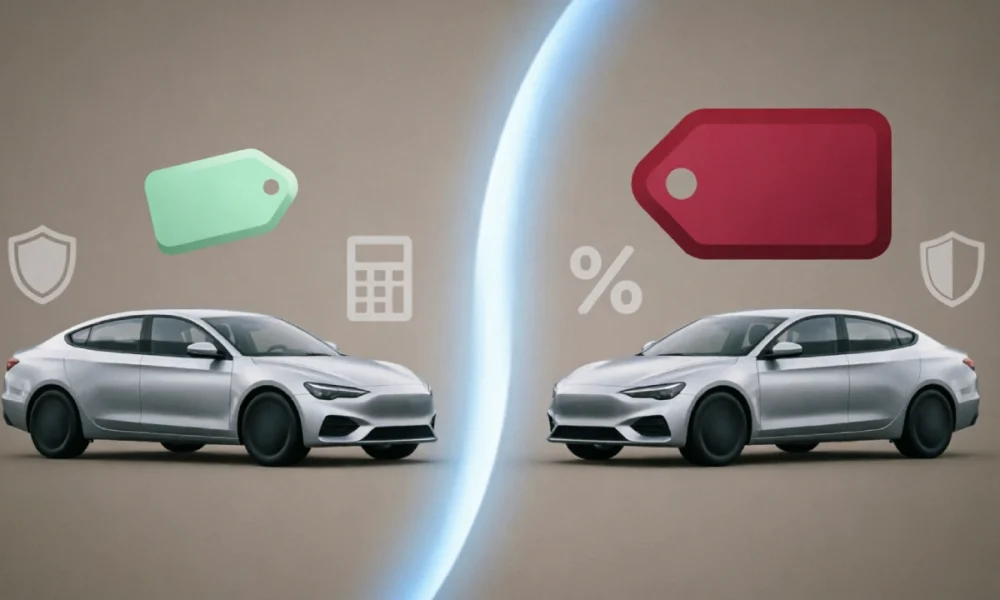
You request quotes from three different insurers, ask for identical coverage limits, and still notice that insurance quote prices differ by hundreds of dollars. It feels like a mistake, but it isn’t. Two policies can list the same liability limits and deductibles on paper while being fundamentally different products underneath. Coverage wording, exclusions, claim-handling processes, and underwriting assumptions vary from one insurer to the next, even when the summary page looks identical. What looks like an apples-to-apples comparison is often closer to comparing two different fruits that happen to be the same color. Understanding this illusion is the first step toward making sense of why your premium never matches your neighbor’s, even if you drive the same car and live on the same street.
Table Of Content
- How Every Insurance Company Calculates Your Price Differently
- The Hidden Rating Factors That Make You Pay More
- Why Your Credit Score, Zip Code, and Loyalty Affect Your Premium
- Big Data and the “Ideal Customer” — How Insurers Profile Risk
- Real-World Examples: Same Car, Same Coverage, Radically Different Quotes
- The Loyalty Penalty — Why Staying With One Insurer Often Costs More
- How to Stop Overpaying: A 30-Day Cheat Sheet for Lower Rates
- Don’t Just Buy Cheap — Why Claims Service and Payout Speed Matter
- Frequently Asked Questions About Insurance Pricing Discrepancies
- Why do I get different quotes for the same coverage?
- Does my credit score really affect my insurance rate?
- Is it true that loyal customers pay more over time?
- How often should I compare insurance quotes?
- Should I always choose the cheapest insurance quote?
How Every Insurance Company Calculates Your Price Differently
Insurance pricing isn’t a single universal formula — it’s proprietary. Every insurer builds its own actuarial models based on its own historical claims data, its own risk appetite, and its own reinsurance arrangements. One company might weigh your driving record heavily, while another leans more on your location or vehicle type. Some insurers specialize in low-risk drivers and price aggressively to attract them, while others focus on high-risk pools and price accordingly. Because these models are built independently, the same person can be seen as an “ideal” customer by one company and an “average” one by another, resulting in wildly different quotes for what appears to be the same risk.
The Hidden Rating Factors That Make You Pay More
Beyond the obvious factors like age, driving history, and coverage limits, insurers use dozens of lesser-known variables. These can include your occupation, education level, marital status, homeownership status, and even how long you’ve held your driver’s license. Some of these factors are statistically correlated with claim frequency, even if the connection isn’t intuitive. For example, certain professions may show fewer late-night claims, or married policyholders may historically file fewer claims than single ones. None of this is disclosed clearly on a quote page, which is part of why premiums can feel arbitrary even though they are calculated with mathematical precision behind the scenes.
Why Your Credit Score, Zip Code, and Loyalty Affect Your Premium
In most states, insurers are permitted to use credit-based insurance scores as a rating factor, since data shows a correlation between credit behavior and claims likelihood. Your zip code matters too — local accident rates, theft statistics, and even weather-related claim history in your area all feed into your price. Interestingly, how long you’ve stayed with an insurer can also affect pricing, but not always in your favor. Some companies gradually raise renewal rates for long-term customers who are less likely to shop around, while offering the lowest rates to new customers as an acquisition incentive. This combination of factors means two people with nearly identical driving profiles can pay very different amounts simply based on where they live, their financial history, and how loyal they’ve been.
Big Data and the “Ideal Customer” — How Insurers Profile Risk
Modern insurers increasingly rely on big data and predictive analytics to build detailed customer profiles. Beyond traditional factors, some companies analyze purchasing patterns, social and demographic data, and behavioral signals to estimate risk more precisely than ever before. The goal is to identify the “ideal customer” — someone statistically unlikely to file a costly claim — and price policies to attract that segment while charging more to offset perceived risk elsewhere. This profiling happens largely behind closed doors, and consumers rarely know exactly which data points pushed their quote up or down. It’s a major reason two “identical” applicants can receive very different offers from the same insurer.
Real-World Examples: Same Car, Same Coverage, Radically Different Quotes
Consider two drivers, both 35 years old, both driving a 2022 sedan, both requesting the same liability and comprehensive coverage. One has a slightly higher credit score and owns a home; the other rents and has a marginally longer commute. On paper, their risk looks similar, but their quotes could differ by 20–30% simply due to these secondary factors. In other cases, two neighbors with nearly identical vehicles and driving records receive different quotes purely because one has stayed with the same insurer for a decade and lost the new-customer discount, while the other just switched and received an introductory rate. These real-world discrepancies illustrate how pricing isn’t just about risk — it’s also about business strategy and customer acquisition.
The Loyalty Penalty — Why Staying With One Insurer Often Costs More
It may seem counterintuitive, but staying loyal to an insurance company can sometimes cost you more over time. Since many companies prioritize competitive pricing for new customers, long-term policyholders may see gradual rate increases that aren’t matched by equivalent increases in value or service. This “loyalty penalty” isn’t universal, but it’s common enough that many financial experts recommend reviewing your policy and shopping around every year or two, rather than assuming your current insurer is still offering you the best deal simply because you’ve been a loyal customer.
How to Stop Overpaying: A 30-Day Cheat Sheet for Lower Rates
If you want to actively lower your premium, consider a structured approach over the next month. Start by requesting quotes from at least three to five insurers with identical coverage details. Review your credit report for errors, since inaccuracies can inflate your insurance score. Ask about all available discounts — bundling policies, safe-driver programs, low-mileage discounts, and affiliations with employers or alumni groups. Consider adjusting your deductible to see how it impacts your premium. Finally, set a calendar reminder to repeat this comparison process annually, since rates and discount eligibility change frequently, and yesterday’s best deal may not be today’s.
Don’t Just Buy Cheap — Why Claims Service and Payout Speed Matter
While price comparison is important, choosing the cheapest policy without considering service quality can backfire when you actually need to file a claim. Some insurers process claims quickly and pay out fairly, while others are known for delays, lowball settlement offers, or complicated claims procedures. Before switching purely for a lower premium, research an insurer’s claims satisfaction ratings, average payout timelines, and customer reviews specifically related to the claims experience. A slightly higher premium from a company with excellent claims service can be far more valuable than a cheaper policy that leaves you frustrated during a stressful situation.
Frequently Asked Questions About Insurance Pricing Discrepancies
Why do I get different quotes for the same coverage?
Each insurer uses its own pricing model and rating factors, so identical coverage can be priced differently based on their unique risk assessment.
Does my credit score really affect my insurance rate?
Yes, in most states, insurers use credit-based scores because of a statistical link to claims frequency.
Is it true that loyal customers pay more over time?
Often, yes — some insurers offer lower rates to new customers while gradually raising renewal prices for long-term policyholders.
How often should I compare insurance quotes?
Most experts recommend comparing quotes annually, since rates and available discounts change frequently.
Should I always choose the cheapest insurance quote?
Not necessarily — claims service quality and payout speed matter just as much as price, especially when you need to file a claim.