

Insurance Technology Growth 2026 Complete Guide
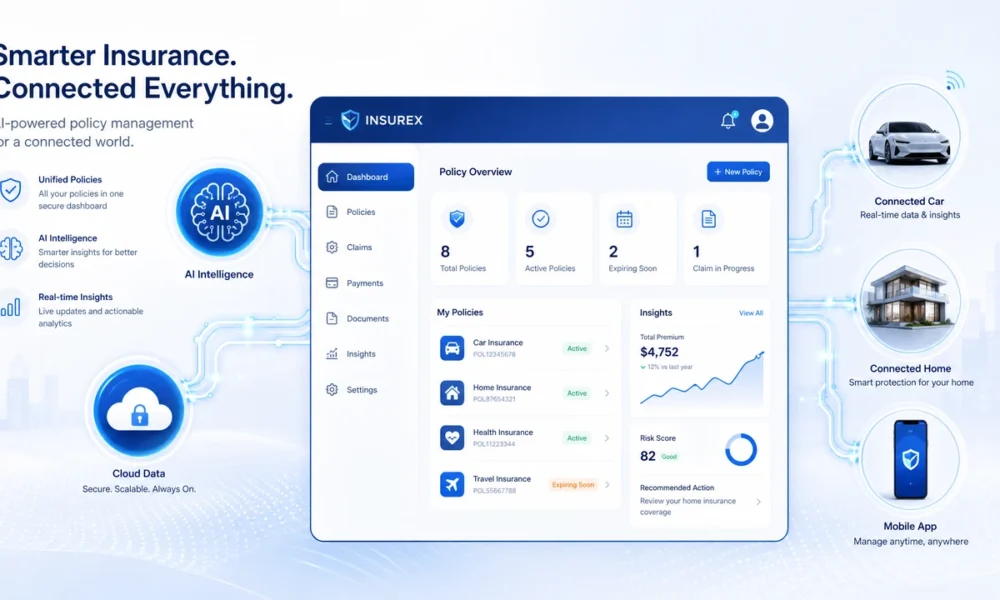
Insurtech refers to the use of technology to design, sell, and manage insurance products. The term covers everything from mobile apps that let customers file claims in minutes to backend systems that calculate risk using live data instead of static tables.
Table Of Content
- The Current State of Insurance Technology Growth in 2026
- How Insurtech Companies Are Changing Traditional Insurance Policy Management
- Key Technologies Driving Insurance Transformation in 2026
- How Artificial Intelligence Is Revolutionizing Insurance Policy Management
- The Role of Machine Learning and Predictive Analytics in Modern Insurance
- How Automation Is Improving Insurance Operations and Customer Experience
- Cloud-Based Insurance Platforms and Digital Policy Management Systems
- How IoT Technology Enables Real-Time Risk Assessment and Personalized Insurance
- Benefits of Insurtech Solutions for Insurance Companies
- How Insurtech Improves the Customer Insurance Experience
- Challenges Facing Insurance Technology Adoption in 2026
- Legacy System Integration and Digital Transformation Challenges
- Data Privacy, Cybersecurity, and Regulatory Compliance in Insurtech
- Future Trends That Will Shape the Insurance Industry Beyond 2026
- Frequently Asked Questions About Insurance Technology and Insurtech in 2026
- What does insurtech mean?
- How is AI used in insurance?
- Are insurtech companies replacing traditional insurers?
- Is my data safe with insurtech platforms?
- Will insurance premiums become fully personalized?
Insurance technology growth in 2026 comes from three forces working together: customer expectations shaped by other digital industries, cost pressure on insurers running old systems, and the maturity of tools like artificial intelligence and cloud computing. Insurers that once viewed technology as a support function now treat it as the core of their business strategy.
The Current State of Insurance Technology Growth in 2026
Insurance technology spending has moved from experimental pilot programs to full-scale deployment. Insurers are replacing decades-old mainframe systems with cloud-based platforms, and insurtech companies are no longer just startups pitching niche apps. Many now partner directly with established insurers, providing the technology layer behind policy issuance, underwriting, and claims.
This shift is visible in how fast policies get issued. Processes that once took days, including underwriting review and paperwork, now happen in minutes through automated systems. Customers expect this speed, and insurers that cannot deliver it are losing market share to competitors who can.
How Insurtech Companies Are Changing Traditional Insurance Policy Management
Traditional policy management relied on paper files, manual data entry, and siloed departments that rarely communicated in real time. Insurtech companies have replaced much of this with connected digital systems where underwriting, billing, and claims data live in one place.
This connected approach reduces errors and speeds up every step of the policy lifecycle. When a customer updates their address or adds a driver to their auto policy, the change reflects instantly across underwriting and billing rather than sitting in a queue for manual processing. Insurers gain accuracy, and customers gain control over their own accounts.
Key Technologies Driving Insurance Transformation in 2026
A handful of technologies sit at the center of this transformation, and each plays a distinct role in the insurance value chain.
How Artificial Intelligence Is Revolutionizing Insurance Policy Management
Artificial intelligence now handles tasks that once required teams of underwriters and claims adjusters. AI models review applications, flag inconsistencies, and recommend pricing based on patterns drawn from millions of past policies. In claims, AI reviews photos of damage, cross-checks policy terms, and approves straightforward claims without human review.
This does not eliminate human judgment from insurance. It removes repetitive work so that underwriters and adjusters can focus on complex cases that genuinely need expertise.
The Role of Machine Learning and Predictive Analytics in Modern Insurance
Machine learning models improve over time as they process more claims and policy data. Predictive analytics uses this history to estimate the likelihood of future events, such as the chance a driver will file a claim or the probability a homeowner’s property will suffer storm damage.
These predictions let insurers price policies closer to actual risk instead of relying on broad customer categories. A driver with a clean record and safe habits pays less than one with a history of claims, even if both fall into the same demographic group under older pricing models.
How Automation Is Improving Insurance Operations and Customer Experience
Automation now covers document processing, policy renewals, payment reminders, and basic customer service through chatbots. Staff spend less time on routine administrative tasks and more time on work that requires judgment, such as reviewing disputed claims or advising customers on coverage options.
For customers, automation means fewer delays. A renewal notice arrives automatically, a premium payment processes without a phone call, and a simple claim gets approved without waiting for a caseworker to review it during business hours.
Cloud-Based Insurance Platforms and Digital Policy Management Systems
Cloud platforms give insurers the flexibility to scale operations without investing in physical servers. Policy management systems built on the cloud update in real time, integrate with third-party tools, and allow remote teams to access the same data securely from anywhere.
This flexibility also supports faster product launches. An insurer can introduce a new policy type or adjust pricing rules across an entire portfolio without the lengthy IT projects that legacy systems required.
How IoT Technology Enables Real-Time Risk Assessment and Personalized Insurance
Internet of Things devices, including telematics sensors in cars, smart home monitors, and wearable health trackers, feed live data into insurance systems. This data allows insurers to assess risk continuously rather than relying only on the information gathered at the time a policy was purchased.
A driver who consistently brakes safely can see their premium adjust downward. A homeowner with a connected water leak sensor may qualify for a lower rate because the device reduces the chance of major damage. Insurance becomes personalized to actual behavior rather than broad assumptions.
Benefits of Insurtech Solutions for Insurance Companies
Insurers adopting these technologies see measurable gains: lower operating costs from automation, more accurate pricing from predictive models, faster claims processing, and the ability to launch new products quickly in response to market demand. Technology also reduces fraud, since AI systems can detect suspicious claim patterns that a manual review might miss.
How Insurtech Improves the Customer Insurance Experience
Customers benefit through shorter wait times, clearer communication, and pricing that reflects their actual risk rather than broad categories. Mobile apps let policyholders manage coverage, file claims, and track payments without calling an agent. For many customers, especially younger ones, this self-service model is now the preferred way to interact with an insurer.
Challenges Facing Insurance Technology Adoption in 2026
Despite clear benefits, adoption is not without obstacles.
Legacy System Integration and Digital Transformation Challenges
Many established insurers still run core operations on systems built decades ago. Replacing these systems is expensive and risky, since a poorly managed migration can disrupt policy servicing for existing customers. Insurers often choose a gradual approach, integrating new technology alongside legacy systems rather than replacing everything at once.
Data Privacy, Cybersecurity, and Regulatory Compliance in Insurtech
Insurers handle sensitive personal and financial data, making them frequent targets for cyberattacks. As insurtech systems collect more data from connected devices, the responsibility to protect that data grows. Regulators in many regions have introduced stricter rules on how insurers can collect, store, and use customer data, and companies that fail to comply face significant penalties along with reputational damage.
Future Trends That Will Shape the Insurance Industry Beyond 2026
Looking beyond 2026, expect deeper integration between insurers and the connected devices customers already own, more insurance products priced entirely on real-time behavior rather than fixed categories, and continued consolidation as insurtech companies partner with or get acquired by established insurers. Regulatory frameworks will likely tighten further as AI plays a larger role in underwriting and claims decisions, requiring insurers to demonstrate that their models are fair and explainable.
Frequently Asked Questions About Insurance Technology and Insurtech in 2026
What does insurtech mean?
Insurtech describes technology built specifically to improve how insurance products are designed, sold, priced, and managed.
How is AI used in insurance?
AI supports underwriting decisions, detects fraud, automates claims review, and helps set pricing based on individual risk data.
Are insurtech companies replacing traditional insurers?
Most insurtech companies work alongside traditional insurers as technology partners rather than replacing them outright.
Is my data safe with insurtech platforms?
Reputable insurtech platforms follow strict data protection regulations, though customers should review a company’s privacy policy before sharing sensitive information.
Will insurance premiums become fully personalized?
Personalized pricing based on real-time data is already common in auto and home insurance, and this trend is expected to expand into other insurance types over the coming years.