

Pack Carry-On Bag for a Week Without Overpacking
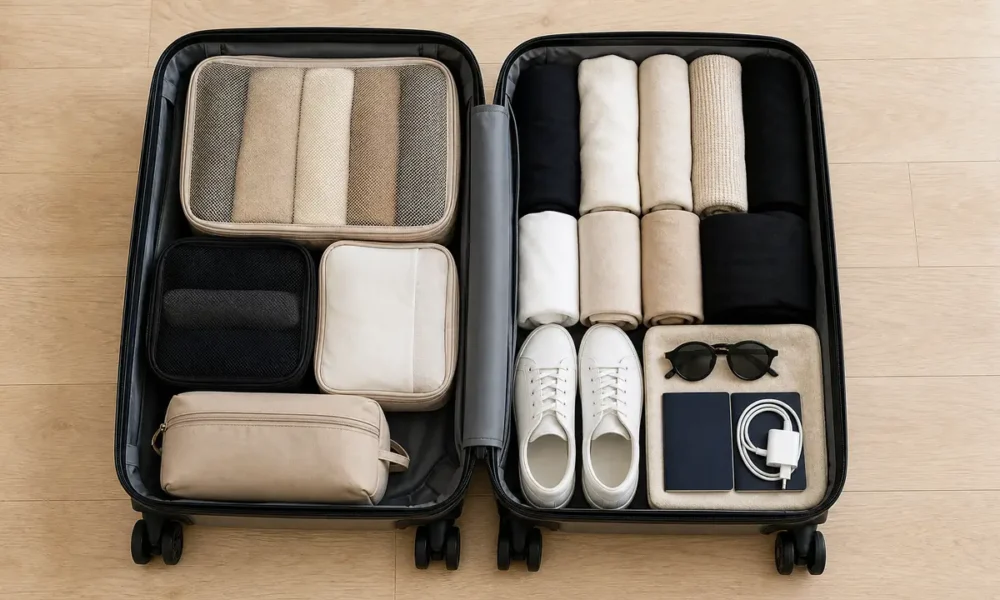
Traveling for a week with nothing but a carry-on sounds impossible until you actually try it. Once you know how to pack carry-on bag essentials the smart way, along with a versatile wardrobe and a few packing tricks, you can fit everything you need into one bag — and skip the checked-baggage fees and lost-luggage stress altogether.
Table Of Content
- Why Packing Light Makes Travel Easier
- Plan Before You Pack
- Choose the Right Carry-On Bag
- Build a Smart Capsule Wardrobe
- The Ultimate One-Week Carry-On Packing List
- Pack Toiletries Without Wasting Space
- Space-Saving Packing Techniques
- Should You Use Packing Cubes?
- How to Maximize Your Personal Item
- Smart Tips to Avoid Overpacking
- Carry-On Packing Tips for Different Types of Trips
- Common Carry-On Packing Mistakes
- Sample 7-Day Carry-On Packing Checklist
- Frequently Asked Questions
- Can you pack for a week in a carry-on?
- What is the 3-3-3 packing rule?
- How many outfits do I need for seven days?
- Should I roll or fold clothes?
- Are packing cubes worth it?
- Final Thoughts
Why Packing Light Makes Travel Easier
Traveling with only a carry-on means you skip baggage claim, avoid lost-luggage risk, and move through airports faster. You save on checked-bag fees, and you’re never stuck lugging a heavy suitcase up cobblestone streets or subway stairs.
The most common overpacking mistakes are simple: bringing “just in case” outfits, packing full-size toiletries, choosing shoes for every possible occasion, and failing to plan outfits. Fixing these few habits solves most of the problem before you even start folding clothes.
Plan Before You Pack
Start by checking your itinerary and the weather forecast for your destination. This tells you exactly how many warm-weather or cold-weather items you actually need, instead of guessing.
Next, check your airline’s carry-on restrictions. Size and weight limits vary between airlines, and budget carriers are often stricter about personal item dimensions. Confirming this ahead of time prevents a stressful gate-side repack.
Finally, build a packing checklist before you touch your suitcase. A checklist keeps you focused on essentials and stops last-minute “might need this” additions that quietly fill up your bag.
Choose the Right Carry-On Bag
A hardshell carry-on suitcase offers structure and protection, while a travel backpack is easier to carry over uneven terrain and keeps your hands free. Choose based on your trip style — city sightseeing favors a backpack, while business travel often suits a wheeled suitcase.
Standard carry-ons have a fixed shape, while expandable versions add a few extra inches of space when needed — useful if you plan to bring back souvenirs. Look for features like multiple compartments, a laptop sleeve, sturdy wheels, and compression straps, all of which help you stay organized and maximize space.
Build a Smart Capsule Wardrobe
The secret to packing for a week in a carry-on is a capsule wardrobe: a small set of versatile clothing items that all work together.
Choose pieces that can be dressed up or down, and stick to a neutral color palette — black, navy, white, and gray mix and match effortlessly. This lets you create multiple outfit combinations from just a handful of items instead of packing a separate outfit for every day.
Layering is your best friend. Instead of packing one bulky sweater or jacket, bring lighter layers you can combine as needed for changing temperatures.
The Ultimate One-Week Carry-On Packing List
A solid one-week packing list includes:
- Clothing essentials: 3–4 tops, 2 bottoms, one layering piece, one versatile dress or outfit
- Shoes: one comfortable walking pair, one dressier option
- Underwear and sleepwear: enough for the week, plus one spare
- Toiletries: travel-size essentials only
- Electronics: phone charger, adapter, headphones, power bank
- Travel documents: passport, boarding passes, ID, travel insurance details
- Medications: prescriptions and basic over-the-counter items
- Travel accessories: sunglasses, a scarf, a reusable water bottle, a small umbrella
Pack Toiletries Without Wasting Space
Transfer products into travel-size containers to save room and weight. Always follow the TSA 3-1-1 liquids rule — containers of 3.4 ounces or less, all fitting in a single quart-size bag.
Minimize skincare and makeup to multi-purpose products where possible, and use a hanging toiletry organizer or clear pouch so everything stays visible and easy to find at security checkpoints.
Space-Saving Packing Techniques
Rolling clothes generally saves more space and reduces wrinkles compared to folding, though folding works better for structured items like blazers. Compression bags or compression packing cubes squeeze out excess air and can shrink your clothing pile significantly.
Pack heavier items, like shoes, near the wheels or bottom of the bag for better balance, and use every inch of space — stuff socks inside shoes, tuck small items into gaps, and use the interior pockets fully.
Should You Use Packing Cubes?
Packing cubes are one of the most effective tools for carry-on travel. They compress clothing, keep categories separated, and make unpacking at your destination fast and simple.
Compression cubes use zippers to actively squeeze out air, while standard cubes simply organize without added compression. For best results, use one cube for tops, one for bottoms, and a separate one for underwear and sleepwear, keeping your bag tidy throughout the trip.
How to Maximize Your Personal Item
Your personal item — a backpack or tote — is valuable extra space. Keep essentials you’ll need mid-flight easily accessible: travel documents, phone charger, headphones, and any medications.
Organize electronics and chargers in a small pouch so cables don’t tangle. Pack snacks and comfort items like a neck pillow or eye mask, and always carry one emergency change of clothes in case checked items ever go missing — even on carry-on-only trips, this habit protects you if plans change unexpectedly.
Smart Tips to Avoid Overpacking
Plan every outfit rather than packing individual items loosely — this instantly reveals unnecessary duplicates. Limit yourself to two pairs of shoes maximum, since shoes take up disproportionate space.
Wear your bulkiest clothing item, like a jacket or boots, on travel day instead of packing it. Leave “just in case” items at home; if you truly need something, most destinations have stores. Finally, leave a little room in your bag for souvenirs so you’re not scrambling to rearrange everything on your way home.
Carry-On Packing Tips for Different Types of Trips
Packing priorities shift depending on your trip type. Business travel calls for wrinkle-resistant fabrics and one polished outfit per key meeting. Beach vacations need quick-dry swimwear and minimal footwear. City breaks favor comfortable walking shoes and layerable outfits. International travel requires extra attention to adapters, documents, and climate differences. Summer trips lean toward lightweight, breathable fabrics, while winter trips rely on thermal layers instead of one bulky coat.
Common Carry-On Packing Mistakes
The most frequent packing errors include bringing too many clothes “just in case,” packing unnecessary extra shoes, and ignoring airline baggage size and weight rules. Many travelers also pack full-size toiletries that eat up space and violate liquid restrictions, or forget essential items like chargers, medications, or a copy of important documents.
Sample 7-Day Carry-On Packing Checklist
- Clothing: 4 tops, 2 bottoms, 1 layering piece, 1 versatile outfit
- Toiletries: travel-size shampoo, toothpaste, deodorant, skincare essentials
- Electronics: phone charger, adapter, power bank, headphones
- Documents: passport, boarding pass, ID, insurance info
- Personal item: snacks, neck pillow, spare outfit, medications
Frequently Asked Questions
Can you pack for a week in a carry-on?
Yes — with a capsule wardrobe, travel-size toiletries, and smart packing techniques, a week’s worth of clothing fits comfortably in most standard carry-ons.
What is the 3-3-3 packing rule?
It suggests packing 3 tops, 3 bottoms, and 3 pairs of shoes (sometimes adapted to 3 outfits, 3 activewear pieces, and 3 accessories) to force a minimalist, mix-and-match wardrobe.
How many outfits do I need for seven days?
You don’t need seven separate outfits — 5 to 6 clothing pieces that mix and match can create 7+ unique combinations.
Should I roll or fold clothes?
Rolling generally saves more space and reduces wrinkles for casual items, while folding works best for structured pieces like blazers.
Are packing cubes worth it?
Yes — they compress clothing, keep your bag organized, and make unpacking significantly faster.
Final Thoughts
Packing a carry-on for a week comes down to a few key habits: plan, build a capsule wardrobe, use space-saving techniques, and stick to your checklist. Traveling light means less stress, more flexibility, and more time enjoying your trip instead of managing your luggage. Before you leave home, run through your packing checklist one last time — you’ll thank yourself at the airport.