

Benefits of Sustainable Fashion Brands: Environment, Ethics, and Your Wardrobe
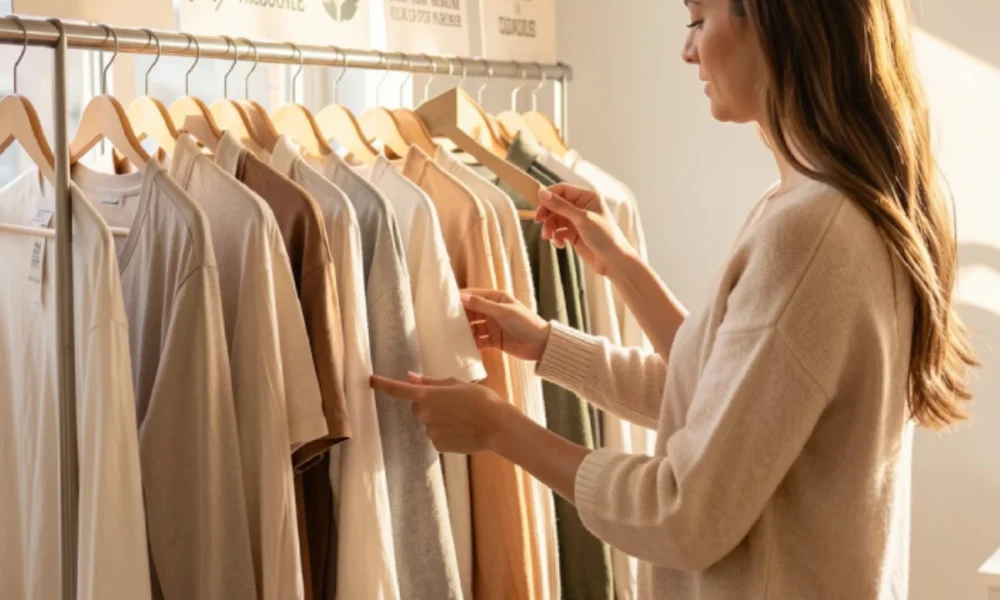
Benefits of Sustainable Fashion Brands. Consumer interest in sustainable clothing is high, yet a significant gap remains between intention and action. Around 55% of US consumers say they want to buy sustainable clothing, but close to 48% report they don’t know where to find credible sustainable brands. Globally, more than one in four consumers say they have made a meaningful shift toward purchasing more sustainable products. Understanding why this shift matters—and what it actually delivers—can help bridge that gap.
Table Of Content
- What Is Sustainable Fashion?
- Why the Fashion Industry Needs a Different Model
- Environmental Benefits of Sustainable Fashion
- Eco-Friendly Materials and Lower Resource Use
- Circular Systems and Waste Reduction
- Water Conservation
- Packaging
- Social Benefits of Sustainable Fashion
- Fair Wages and Safe Working Conditions
- Supply Chain Transparency
- Preserving Craft and Supporting Communities
- Economic Benefits of Sustainable Fashion
- Long-Term Value for Consumers
- Resale Value
- Broader Economic Impact
- Health Benefits for Consumers
- How Sustainable Fashion Affects Personal Style
- Notable Sustainable Fashion Brands
- Regulatory Context in 2025–2026
- How to Start Buying More Sustainably
- Conclusion
What Is Sustainable Fashion?
Sustainable fashion refers to clothing designed, produced, and distributed in ways that minimize harm to both people and the environment. It covers the full lifecycle of a garment: from how raw materials are grown or sourced, to manufacturing conditions, to what happens when the item is no longer worn.
This approach intersects with several related movements. Slow fashion pushes back against rapid production cycles by prioritizing quality and longevity. Ethical manufacturing focuses on workers’ rights and fair compensation. Circular fashion keeps materials in use as long as possible through repair, resale, take-back programs, and fiber recycling. In practice, a genuinely sustainable brand addresses all three dimensions rather than just one.
It is also worth distinguishing authentic sustainability from greenwashing. Brands have increasingly used terms like “organic” and “eco-conscious” as marketing tools without making substantive changes—but performative sustainability is facing growing scrutiny from both consumers and regulators. FASHION Magazine Certifications such as GOTS (Global Organic Textile Standard), Fair Trade, B Corp, and OEKO-TEX® provide third-party verification that helps buyers identify credible brands.
Why the Fashion Industry Needs a Different Model
The conventional fashion industry operates on a take-make-dispose model that places heavy demands on natural resources. The clothing and textile industry is responsible for roughly 10% of global carbon emissions and is one of the leading sources of industrial wastewater. Global fibre production nearly doubled from 58 million tonnes in 2000 to 116 million tonnes in 2022, and is expected to reach 147 million tonnes by 2030 if current practices continue. Geneva Environment Network
Consumers lost approximately US$460 billion in value in a single year by discarding clothes that could still be worn, with some garments estimated to be thrown away after just seven to ten uses. Geneva Environment Network This level of waste is not an inevitable feature of the clothing industry—it is a consequence of business models that prioritize volume over durability.
Environmental Benefits of Sustainable Fashion
Eco-Friendly Materials and Lower Resource Use
Many sustainable brands replace conventional inputs with lower-impact alternatives. Organic cotton is cultivated without synthetic pesticides, which protects soil health and reduces chemical runoff. Hemp requires far less water than conventional cotton and produces a durable, breathable fabric. Recycled polyester diverts plastic waste from landfills and oceans. Emerging bio-fabricated materials—including mushroom-based leather (Mylo), pineapple fiber (Piñatex), and algae-based textiles—further reduce reliance on virgin resources.
Circular Systems and Waste Reduction
Sustainable fashion supports a circular economy where products are designed to be reused, recycled, or biodegraded—significantly reducing the volume of textile waste that ends up in landfills. Brands like Patagonia and Eileen Fisher have introduced take-back programs that allow customers to return worn garments for recycling. Outland Denim Fiber-to-fiber recycling technologies now allow fabrics to be broken down at the molecular level and remade into new materials, closing the loop on textile waste.
Water Conservation
Conventional textile dyeing is among the most polluting industrial processes globally. Sustainable brands address this through low-impact dyes, waterless dyeing techniques, and closed-loop water systems in manufacturing. Stella McCartney and Reformation are recognized for their water-saving initiatives, while Outland Denim uses vegetable dyes and water-saving technology in its wash house. Outland Denim
Packaging
Responsible packaging is part of the environmental picture. Sustainable brands typically use recyclable, biodegradable, or compostable materials, reducing plastic waste across the supply chain.
Social Benefits of Sustainable Fashion
Fair Wages and Safe Working Conditions
The garment industry employs hundreds of millions of workers worldwide, the majority of them women in lower-income countries. Ethical fashion brands commit to paying living wages—wages sufficient to cover daily needs—and to maintaining safe, legal working conditions. This approach works to eliminate exploitative practices including child labor, forced labor, and working poverty, where workers earn a wage but cannot meet their basic needs. Outland Denim
Supply Chain Transparency
According to Fashion Revolution’s Transparency Index, only 11% of fashion brands know the source of their own raw materials. FASHION Magazine Sustainable brands close this gap by publishing information about their suppliers and manufacturing locations. Blockchain technology is increasingly used to provide verified, end-to-end traceability, allowing shoppers to view a product’s journey from raw fiber to finished garment.
Preserving Craft and Supporting Communities
Many sustainable brands work directly with artisans and small-scale producers, helping preserve traditional textile skills and generating stable incomes in rural and marginalized communities. Some go further: Outland Denim, for example, provides training and employment to women who have experienced human trafficking. Cotton production alone sustains the livelihoods of approximately 28.67 million people and benefits over 100 million families globally. Geneva Environment Network Brands that source responsibly contribute directly to those livelihoods.
Economic Benefits of Sustainable Fashion
Long-Term Value for Consumers
Sustainable garments are typically constructed to last. A higher upfront cost is often offset by a longer useful life and lower replacement frequency. Many sustainable brands also offer repair services or provide repair guidance—Patagonia, Nudie Jeans, and Veja all offer in-store repairs—which extends garment life further and reduces total spending over time.
Resale Value
Because sustainable clothing tends to be durable and well-made, it holds resale value better than fast fashion alternatives. A growing secondhand market—including platforms and brand-run resale programs like Lululemon’s “Like New”—allows consumers to recover part of their original purchase price.
Broader Economic Impact
A transition to a sustainable textiles industry could create 18 million additional jobs globally by 2030, and solving fast fashion’s structural problems could contribute a $192 billion boost to the global economy. TheRoundup The global sustainable fashion market was valued at $9.22 billion in 2024 and is projected to reach $20.84 billion by 2033. Lightspeed
Health Benefits for Consumers
Conventional clothing is sometimes produced using pesticides, synthetic dyes, and chemical finishing agents that can remain in the fabric. Organic and OEKO-TEX®-certified garments are free from these substances, reducing the risk of skin irritation and prolonged chemical exposure. This is particularly relevant for children’s clothing, where contact with treated fabrics is frequent and sustained.
How Sustainable Fashion Affects Personal Style
Choosing sustainable brands does not mean limiting your wardrobe. Many sustainable labels produce distinctive, well-crafted pieces that differ noticeably from mass-produced alternatives. Because sustainable brands often manufacture in smaller quantities, their items are less likely to be widely replicated—which suits buyers who want a more individual look.
The emphasis on timeless design rather than rapid trend cycles also works in the buyer’s favor. Investing in versatile, high-quality pieces builds a more coherent wardrobe over time and reduces the decision fatigue that comes with constantly replacing low-cost items. Wearing clothing whose origins you can verify also allows your choices to reflect your values without requiring any explicit statement.
Notable Sustainable Fashion Brands
The following brands are recognized for substantive sustainability practices rather than marketing claims alone.
This list is illustrative, not exhaustive. When evaluating any brand’s sustainability claims, look for third-party certifications and published supplier information rather than relying on self-reported data.
Regulatory Context in 2025–2026
Governments in the EU and US are tightening requirements on the fashion industry. The EU’s Ecodesign for Sustainable Products Regulation, which came into effect in July 2024, aims to support the EU’s circularity and climate goals. The Corporate Sustainability Due Diligence Directive (CSDDD) requires fashion brands to address human rights and environmental impacts across their full supply chains. ECOSKILLS Additionally, by July 19, 2026, it will be illegal for large enterprises in the EU to destroy unsold textiles and footwear, with medium-sized companies required to comply by 2030. Browzwear
These regulations make sustainability less optional for brands operating in or selling into major markets, which increases accountability across the industry.
How to Start Buying More Sustainably
You do not need to replace your wardrobe immediately to make a difference. Practical starting points include:
- Wear what you already own longer. Extending garment life is among the highest-impact actions a consumer can take.
- Research certifications. Look for GOTS, Fair Trade, B Corp, or OEKO-TEX® labels when buying new.
- Explore secondhand first. Buying pre-owned clothing extends the useful life of existing garments and avoids new production entirely.
- Choose quality over volume. One well-made item that lasts five years has a lower lifetime footprint than five cheap replacements.
- Ask brands directly. Transparent brands will tell you where their materials come from and who made your clothes.
Conclusion
The benefits of buying from sustainable fashion brands span environmental, social, economic, and personal dimensions. Reduced carbon emissions, fair wages, supply chain accountability, longer-lasting garments, and clothing that reflects considered values are all tangible outcomes of shifting purchasing habits. The sustainable fashion market is growing steadily, regulation is increasing brand accountability, and the range of credible options available to consumers is wider than ever. Making more deliberate choices about what you buy—and from whom—has a measurable effect on an industry that touches virtually every person on the planet.