

Ana Leza: From Spanish Cinema to Antonio Banderas’ First Wife and Life After Hollywood
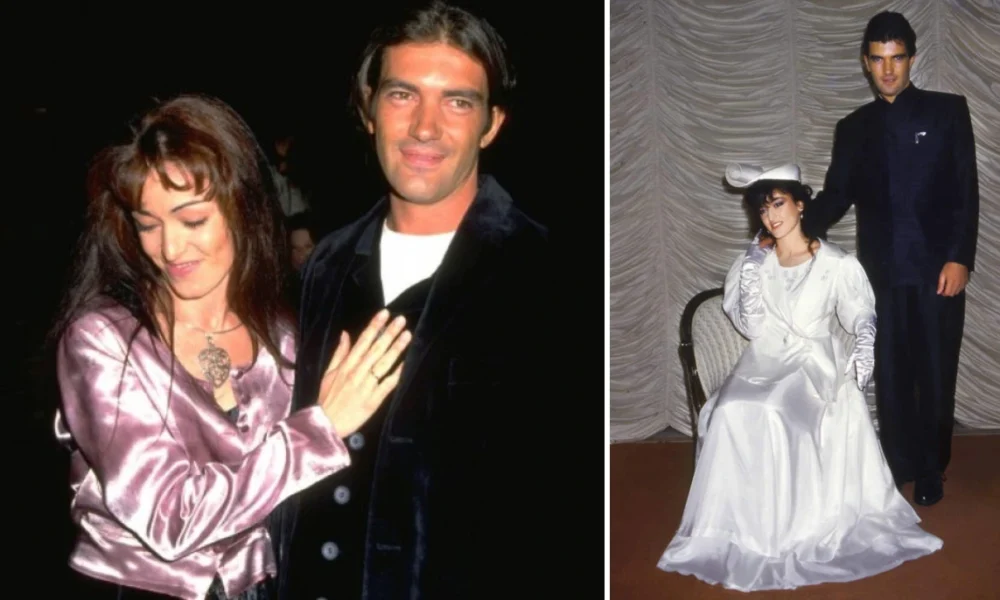
Ana Leza remains best known as Antonio Banderas’ first wife, but her story extends far beyond that high-profile relationship. Born Ana Arana Leza in 1962 in Madrid, Spain, this actress played a crucial behind-the-scenes role in launching one of Spain’s biggest international stars while pursuing her own career in Spanish cinema during its post-Franco cultural renaissance.
Table Of Content
- Who Is Ana Leza?
- Early Career in Spanish Television and Film
- Notable Filmography
- Meeting and Marrying Antonio Banderas
- Ana’s Critical Role in Banderas’ Hollywood Success
- The End of Their Marriage
- New Beginning with Dharma Villareal
- Spiritual Journey: Discovering Siddha Yoga
- Life Beyond the Spotlight
- Life and Net Worth
- Conclusion
From her early appearances in Pedro Almodóvar’s celebrated films to her current life centered on spirituality and family, Ana’s journey reflects transformation, resilience, and the courage to step away from fame when it no longer served her.
Who Is Ana Leza?
Ana Leza is a retired Spanish actress born in Madrid in 1962. Her mother, Concha Leza Núñez, was an established actress in Spanish theater and television, which gave Ana direct exposure to the entertainment world from childhood.
Growing up in 1970s Madrid, Ana witnessed Spain’s artistic awakening after decades of dictatorship. This period, known as La Movida Madrileña, saw an explosion of creativity in film, music, and art. Surrounded by this cultural energy and her mother’s theatrical career, Ana developed a natural affinity for performance and storytelling.
Early Career in Spanish Television and Film
Ana began her acting career in 1984 with roles in Spanish television. Her early work included appearances in the TV miniseries Teresa de Jesús and Fragmentos de interior, both of which showcased Spain’s growing television industry.
Her film career took off during the late 1980s, a transformative period for Spanish cinema. Directors like Pedro Almodóvar were gaining international recognition, and Ana became part of this movement.
Notable Filmography
| Year | Title | Role/Notes |
|---|---|---|
| 1984 | Teresa de Jesús | TV miniseries debut |
| 1984 | Fragmentos de interior | TV miniseries |
| 1988 | Women on the Verge of a Nervous Breakdown | Ana (Almodóvar film) |
| 1988 | El placer de matar | Supporting role |
| 1989 | Lorenzaccio | Film appearance |
| 1990 | La Mujer de Tu Vida | Television series |
| 1991 | Hay que zurrar a los pobres | Film role |
| 1992 | Sublet | Film appearance |
| 1992 | La reina anónima | Film role |
| 1993 | Philadelphia | Uncredited cameo |
| 1994 | Of Love and Shadows | Evangelina (credited as Anita Lesa) |
Her role in Women on the Verge of a Nervous Breakdown (Mujeres al borde de un ataque de nervios) proved most significant. This 1988 Almodóvar film earned an Academy Award nomination for Best Foreign Language Film and brought international attention to Spanish cinema. While Ana’s role wasn’t large, her involvement connected her to one of Spain’s most iconic cinematic moments.
Meeting and Marrying Antonio Banderas
Ana and Antonio Banderas met in Madrid in the mid-1980s when both were emerging actors in Spain’s theater scene. According to multiple accounts, Ana first saw Banderas performing in a play and was immediately drawn to his talent. The attraction was mutual.
After dating for six months, they married on July 27, 1987, at the Church of San Nicolás in Madrid. Notable attendees included actress Carmen Maura and director Pedro Almodóvar, reflecting the couple’s deep connections within Spain’s film community.
The newlyweds soon moved to the United States as Banderas pursued Hollywood opportunities, maintaining homes in both Manhattan and Madrid.
Ana’s Critical Role in Banderas’ Hollywood Success
When Banderas began auditioning for American films in the early 1990s, he faced a significant obstacle: he spoke almost no English. Ana, who was fluent, became his private English tutor and translator.
She dedicated countless hours to helping him learn the language, translating scripts, and coaching his pronunciation. For The Mambo Kings (1992), Banderas himself acknowledged: “She helped me translate the script for ‘Los reyes del mambo,’ to work on it, she gave me a lot of confidence. Without her, I would not have gotten the role.”
Actors and crew members on set recalled Ana whispering line corrections to Banderas between takes. Film historians now recognize her contribution as vital to his successful transition from Spanish cinema to Hollywood stardom.
During this period, Ana’s own acting ambitions took a backseat. She accepted an uncredited cameo in Philadelphia (1993) but increasingly prioritized supporting her husband’s demanding schedule over pursuing her own roles.
The End of Their Marriage
In 1995, while filming Two Much, Banderas met his co-star Melanie Griffith. Griffith and Banderas had previously encountered each other at the 1989 Academy Awards when both were married to other people, but their connection deepened on the film set.
After nearly nine years of marriage, Ana and Antonio divorced in 1996. The split attracted significant media attention, with Ana reportedly feeling betrayed by the circumstances.
The financial settlement secured Ana’s future independence:
- Their Madrid home (valued at approximately $4 million)
- Cash settlement of 3.4 million euros
- Monthly alimony of €12,000 (approximately $14,100) for three and a half years
- 50% of the profits from the films Banderas made during their marriage
Banderas later described the eight-day trial as difficult, though both parties maintained the separation was ultimately amicable.
New Beginning with Dharma Villareal
Four years after her divorce, Ana married Christopher Lee “Dharma” Villareal, an American film editor and documentarian, on November 26, 2000, in Santa Barbara, California. Carmen Maura once again served as madrina (godmother) at this intimate ceremony.
Dharma’s background in documentary filmmaking and his contemplative nature aligned well with Ana’s interest in meaningful storytelling beyond commercial entertainment.
Together, Ana and Dharma welcomed two daughters:
- Clara María Villareal (who prefers her spiritual name, Clara Priya Villareal)
- Sofía Macarena Villareal (known as Sofia Sindhu Villareal)
The family has lived in various cities, including Madrid, Los Angeles, Abu Dhabi, and New York, reflecting their adventurous spirit and Dharma’s work in documentary production.
In 2003, Ana and Dharma attempted to launch a restaurant franchise in Madrid. While the business venture ultimately didn’t succeed, it demonstrated Ana’s willingness to explore opportunities beyond acting.
Spiritual Journey: Discovering Siddha Yoga
A defining element of Ana’s post-Hollywood life has been her commitment to Siddha Yoga, a spiritual practice that emphasizes meditation, mantra repetition, and self-inquiry. Unlike general Buddhist practice, Siddha Yoga follows specific teachings founded by Swami Muktananda and currently led by Gurumayi Chidvilasananda.
Ana encountered these teachings around the time of her second marriage. The practice spoke to her desire for purpose beyond performance and public recognition. She began attending retreats at the Shree Muktananda Ashram in South Fallsburg, New York, one of the two main Siddha Yoga centers (the other being Gurudev Siddha Peeth in Ganeshpuri, India).
The family’s spiritual practice became central to their daily life, with both daughters being raised within this tradition—hence their spiritual Sanskrit names, Priya and Sindhu.
According to those who know her, Ana occasionally leads bilingual chanting workshops, using her artistic voice for spiritual expression. Friends describe how meditation softened her self-criticism and brought a calmer, more forgiving outlook on life.
Life Beyond the Spotlight
Ana stepped away from acting completely in the late 1990s. Her final credited film role was Of Love and Shadows in 1994.
Since then, she has deliberately maintained a private life, rarely appearing in public or giving interviews. Her priorities shifted entirely to family, spiritual practice, and personal growth rather than professional recognition or fame.
For a brief period in the early 2000s, reports suggest she launched a restoration company in Madrid focused on refurbishing historic apartments, though details remain limited.
Life and Net Worth
As of 2026, Ana continues to live a quiet life focused on family and spiritual practice. Her estimated net worth is approximately $100,000, not including the assets secured in her divorce settlement.
While she maintains virtually no public presence, her legacy remains significant in film history—not for her own screen roles, but for the critical support she provided during a pivotal moment in international cinema when Spanish actors were breaking into Hollywood.
Her daughters, now adults, have been raised with values of mindfulness, spirituality, and privacy—a stark contrast to the celebrity lifestyle their mother once knew.
Conclusion
While Ana Leza never achieved the fame of her first husband, her story offers a valuable perspective on life behind the scenes of Hollywood success. She represents a generation of Spanish performers who participated in their country’s cinematic renaissance during the 1980s and 1990s.
More significantly, her transformation from actress to spiritual seeker demonstrates that fulfillment comes in many forms. By choosing privacy over publicity, meditation over materialism, and family over fame, Ana crafted a life aligned with her deepest values.
Her contribution to Antonio Banderas’ career—teaching him English, translating scripts, and providing emotional support during his vulnerable transition to Hollywood—changed the trajectory of Spanish cinema’s international presence. Without her behind-the-scenes work, one of Spain’s most beloved actors might never have achieved global stardom.
Today, Ana Leza lives proof that sometimes the most meaningful roles are played off-camera, and that true success means having the courage to define it for yourself rather than accepting others’ definitions.