

Topical CBD for Horse Cancer Support: Benefits, Research, and Safety Considerations
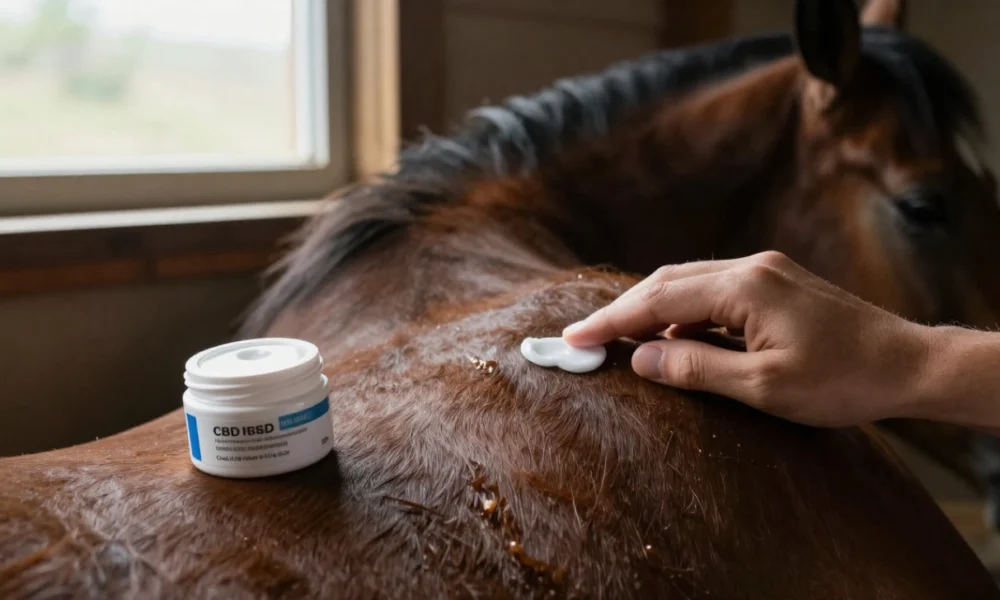
Cancer treatment in horses presents a complex set of challenges, from managing pain and inflammation to supporting the animal’s overall well-being during therapy. Recently, there has been growing interest among equine owners and veterinarians in complementary approaches to support traditional cancer care. One such approach is the use of topical CBD (cannabidiol), a compound derived from hemp.
Table Of Content
- The Endocannabinoid System and Its Role in Equine Health
- How Topical CBD May Offer Support for Horses with Cancer
- 1. Managing Localized Pain and Inflammation
- 2. Soothing Skin Irritations from Cancer Therapies
- 3. Supporting Wound Healing After Surgical Procedures
- Critical Considerations and the Current State of Research
- The Need for More Equine-Specific Research
- The Critical Importance of Product Quality
- The Necessity of Veterinary Guidance
- Conclusion
This article examines the current understanding of topical CBD for horses undergoing cancer treatment, reviewing its proposed mechanisms, potential benefits, and the critical importance of product quality and veterinary guidance. While research is still in its early stages, understanding what is currently known can help horse owners make informed decisions.
The Endocannabinoid System and Its Role in Equine Health
To understand how CBD might work, it is necessary to look at the endocannabinoid system (ECS). The ECS is a biological system present in all vertebrates, including horses. It is involved in regulating a wide range of physiological processes, such as pain perception, inflammation, mood, appetite, and immune response . The ECS functions through receptors (primarily CB1 and CB2) that interact with cannabinoids produced naturally by the body. Phytocannabinoids like CBD, derived from plants, can also interact with this system, potentially influencing these regulatory pathways .
How Topical CBD May Offer Support for Horses with Cancer
Topical application involves applying CBD-infused products directly to the skin. This method is particularly relevant for addressing localized issues associated with cancer or its treatments. While extensive clinical trials in horses are lacking, existing research in veterinary medicine and related fields provides a basis for understanding its potential applications.
1. Managing Localized Pain and Inflammation
Pain and inflammation are common in horses with cancer, whether from the disease itself or secondary conditions. CBD is known for its anti-inflammatory properties . When applied topically, CBD can interact with cannabinoid receptors in the skin nd underlying tissues. This interaction may help modulate localized pain signals and reduce inflammation at the site of application.
One study specifically examining senior horses found that CBD, in a controlled laboratory setting, significantly reduced the production of pro-inflammatory cytokines, specifically interferon-gamma (IFN-γ) and tumor necrosis factor-alpha (TNF-α) . These are cell-signaling proteins that promote inflammation. By potentially reducing these local inflammatory markers, topical CBD could offer a complementary method to help manage discomfort associated with tumors or arthritic conditions that may coexist with cancer in older horses.
2. Soothing Skin Irritations from Cancer Therapies
Conventional cancer treatments, such as radiation therapy, can sometimes cause adverse effects on a horse’s skin, leading to conditions like radiation dermatitis, which includes redness, soreness, and irritation. While this specific application in horses requires further study, topical CBD is being investigated for its potential in dermatological care . Its recognized anti-inflammatory and soothing properties make it a candidate forproviding relief to sensitive or compromised skin, acting as a natural balm to ease discomfort caused by treatments .
3. Supporting Wound Healing After Surgical Procedures
Surgery is often a necessary component of cancer treatment, and post-operative wound care is critical for recovery. Effective wound healing requires controlled inflammation and protection from infection. CBD’s properties may offer support in this area. Its ability to reduce swelling (anti-inflammatory) and its potential antimicrobial effects could help create a favorable environment for healing . By applying a topical CBD product to the area around a surgical site (not on the oen wound itself, unless directed by a veterinarian), owners might support the body’s natural healing processes, allowing the equine patient to recover more comfortably.
Critical Considerations and the Current State of Research
While the potential benefits are promising, it is equally important to understand the limitations and responsibilities associated with using CBD in equine cancer care.
The Need for More Equine-Specific Research
Much of the optimism surrounding CBD comes from research in other species or from laboratory (in vitro) studies. A 2024 review of cannabinoid efficacy in veterinary medicine noted that while there is promising data for conditions like osteoarthritis pain and atopic dermatitis in dogs, there are currently no published clinical studies examining the use of CBD in horses . A 2025 review on veterinary oncology similarly concluded that while CBD shows antinoplastic properties in laboratory settings, research is still in its early stages, and many aspects like optimal dosing and long-term effects in live animals need further definition . Th,erefore, current applications are based on extrapolation,d evidence, and anecdotal reports.
The Critical Importance of Product Quality
The market for CBD products is largely unregulated, which presents significant risks. Stephen Cital, an expert in veterinary cannabinoid medicine, emphasizes that product quality is paramount. A study he was involved in found that while many products were accurately labeled, some were not. Owners must be vigilant about:
- Source: Products should be derived from hemp, containing less than 0.3% THC (tetrahydrocannabinol), the psychoactive compound, to avoid intoxication .
- Manufacturing: High heat can degrade CBD and potentially convert it into THC, altering its effects. Knowing the manufacturer’s practices is essential.
- Label Accuracy: Third-party testing is crucial to verify that the product contains the stated amount of CBD and is free from harmful contaminants.
The Necessity of Veterinary Guidance
Before introducing any CBD product into a horse’s care regimen, consultation with a veterinarian is non-negotiable. This is especially true for a complex condition like cancer. Key reasons include:
- Drug Interactions: CBD can interact with other medications. For example, it may potentiate the effects of drugs like gabapentin, leading to excessive sleepiness . A veterinarian can assess the horse’s full medication list to mitigate these risks.
- Monitoring Health: A veterinarian can perform regular health checks, including bloodwork. A known side effect of CBD in some animals is a rise in the liver enzyme alkaline phosphatase (ALP), which should be monitored to ensure it remains an innocuous change rather than a sign of underlying disease .
- Dosing: There are no established standard doses for horses, especially for topical application. A veterinarian can provide guidance based on the horse’s specific condition, weight, and the product being used.
Conclusion
Topical CBD presents a fascinating and potentially valuable complementary option for supporting horses battling cancer. Its potential to provide localized relief from pain and inflammation, soothe skin irritations, and aid in wound healing aligns with the needs of many equine cancer patients. The presence of an endocannabinoid system in horses provides a biological basis for how these compounds might work .
However, this potential must be balanced with a clear-eyed view of the current evidence. The lack of equine-specific clinical studies means that claims are often based on research from other species or preliminary lab data . The responsibility, therefore, falls on the horse owner to prioritize safetyabovee all else. This means seeking out high-quality, verifiable products and, most importantly, working closely with a knowledgeable veterinarian. By integrating topical CBD thoughtfully and under professional supervision, owners may be able to offer their equine companions an additional layer of comfort and support throughout the difficult journey of cancer care.