

Bernie Mac’s Former House in Frankfort, Illinois: Inside the Comedy Legend’s Home
Born Bernard Jeffrey McCullough, Bernie Mac didn’t just make audiences laugh—he transformed stand-up comedy through raw honesty and fearless observations. From Chicago’s Cotton Club to The Original Kings of Comedy tour, his five-season sitcom The Bernie Mac Show (2001-2006), and roles in the Ocean’s trilogy, this South Side native built a career on authentic storytelling.
Table Of Content
His home reflects that same authenticity. Walk through the door of this Frankfort residence, and you’ll understand how the spaces where Bernie Mac lived, worked, and entertained shaped his groundbreaking comedy.
Early Life and Career
Bernie Mac’s path to stardom began in Chicago’s Englewood neighborhood, where he was born on October 5, 1957. Raised by his single mother and grandparents, he attended Chicago Vocational High School before his mother’s death during his sophomore year sent him temporarily to Tampa, Florida.
Back in Chicago, Mac performed at the Cotton Club and other local venues, honing a blunt, truthful style. His breakthrough came after winning the Miller Lite Comedy Search at age 32. In 1992, a performance on HBO’s Def Comedy Jam—where he famously told a hostile audience “I ain’t scared of you”—launched him into the national spotlight.
Mac joined Steve Harvey, Cedric the Entertainer, and D.L. Hughley as the “Big Four” comedians on the Kings of Comedy tour. Director Spike Lee documented their performances in The Original Kings of Comedy (2000), which grossed over $38 million and became a cultural phenomenon.
The Bernie Mac Show and Film Career
In 2001, FOX gave Mac his own sitcom based on his stand-up routine about raising his sister’s children. The Bernie Mac Show ran for five seasons and earned Mac two Emmy Award nominations for Outstanding Lead Actor in a Comedy Series. The show won an Emmy for Outstanding Writing, the Peabody Award, and the Humanitas Prize.
During this period, Mac appeared in numerous films, including his role as Frank Catton in the Ocean’s trilogy (2001-2007), Bad Santa (2003), Mr. 3000 (2004), Guess Who (2005), and Pride (2007). Three films released after his death—Soul Men and Madagascar: Escape 2 Africa (both 2008), and Old Dogs (2009)—were dedicated to his memory.
History, Location, and Property Details
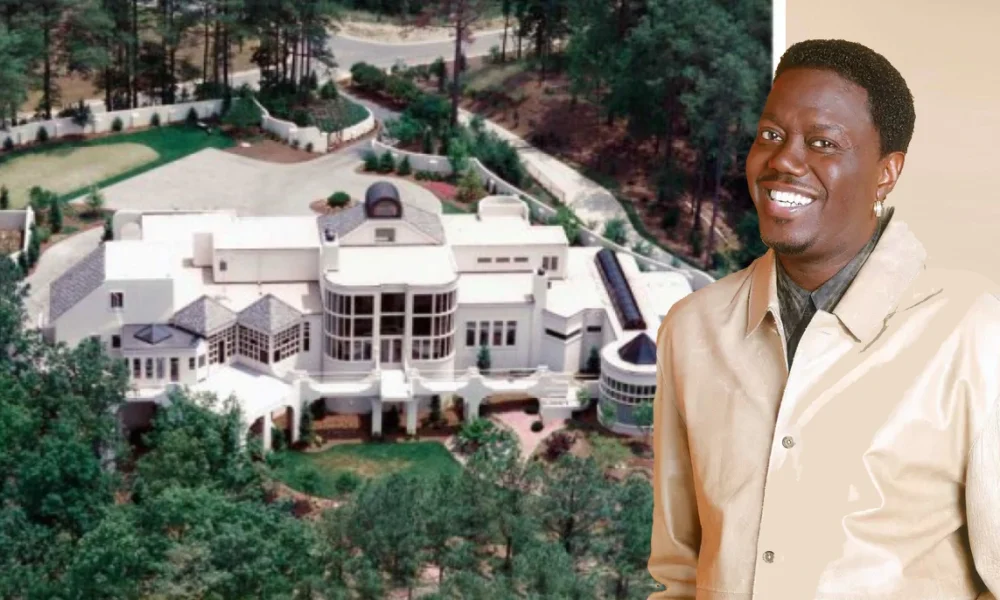
Bernie Mac’s former house stands in the Prestwick neighborhood of Frankfort, Illinois, not Hyde Park as often misreported. Mac purchased this property in 2002 for $875,000 after selling his earlier home in Crete’s Willowbrook Estates neighborhood.
The house was built in 1985-1986 and spans approximately 7,000 square feet on a one-acre wooded lot. It features four to five bedrooms and three to five bathrooms. The property is now worth over $1 million and appears on Google Maps as a landmark.
Before this purchase, Mac owned a more modest four-bedroom home in Crete, which he bought in 1995 for $235,000. That property included a 10-foot-deep in-ground swimming pool measuring 40 by 22 feet. When his career took off, Mac also leased a Hollywood Hills villa for $8,500 monthly during filming of The Bernie Mac Show in California.
Inside Bernie Mac’s Home
The two-story custom home showcases Bernie Mac’s success while maintaining comfortable, family-focused spaces. Large windows extend to the roofline at the front entrance, filling the interior with natural light. The property’s brick and stone exterior combines traditional and contemporary elements.
Inside, the layout prioritized gathering spaces. The living areas could accommodate both intimate family evenings and Mac’s legendary parties. A dedicated trophy room displayed his career achievements, including awards from the American Comedy Awards, NAACP Image Awards, his Emmy nominations, and recognition for The Bernie Mac Show’s Peabody Award and Humanitas Prize.
Mac was a devoted Chicago White Sox fan. He regularly referenced the team on his show and famously congratulated them on their 2005 World Series championship. Personal touches throughout the home reflected this hometown pride alongside his entertainment career.
Living with Sarcoidosis
In 1983, doctors diagnosed Mac with sarcoidosis, an inflammatory disease affecting his lungs. For 25 years, he managed the condition through careful diet, exercise, and medical supervision. Mac announced his sarcoidosis had entered remission in 2005.
Despite this health challenge, Mac maintained a full career and active lifestyle. He believed in keeping his mind and body strong, working closely with doctors and testing new treatments as they became available.
Where Bernie Mac Lived and Died?
On July 19, 2008, Mac was admitted to Northwestern Memorial Hospital in Chicago with a fever and breathing difficulties. After three weeks in intensive care treating pneumonia, Mac went into cardiac arrest and died during the early morning hours of August 9, 2008, at age 50. He was at his beloved Frankfort home at the time complications began.
His publicist stated the complications were not directly attributed to his sarcoidosis, though the decades of inflammation may have compromised his immune system.
Bernie Mac’s Burial Site
Bernie Mac was laid to rest at Evergreen Memorial Park (also called Evergreen Memorial Cemetery) in Evergreen Park, Illinois, a short drive from his Frankfort home. His gravesite features a simple headstone and has become a place where fans pay respects to the comedy legend.
The Legendary Parties
Mac’s Frankfort home hosted some of entertainment’s most talked-about gatherings. His backyard barbecues drew fellow performers, creating an atmosphere of laughter and camaraderie. These weren’t just parties—Mac used his home to mentor aspiring comedians, hosting impromptu sessions where new material was developed and ideas flowed freely.
The House Today
Current owners have modernized the kitchen and living areas while preserving key spaces that defined Mac’s time there. The trophy room remains largely intact, and efforts have been made to maintain the character that made this house special during Bernie Mac’s residency.
Photos from Mac’s career still adorn the walls. The well-worn furniture and personal items that witnessed countless hours of routine development remain as reminders of the creative process that happened within these walls.
The owners have occasionally opened the home for tours and events, allowing fans to walk through spaces where Bernie Mac lived and worked.
Memorial and Legacy
Mac’s memorial service took place one week after his death at House of Hope Church, with nearly 7,000 people in attendance. Notable attendees included Chris Rock, Chicago Mayor Richard M. Daley, Samuel L. Jackson, Ashton Kutcher, Don Cheadle, The Bernie Mac Show cast members, and his Kings of Comedy partners Steve Harvey, Cedric the Entertainer, and D.L. Hughley.
The 2008 Bud Billiken Parade in Chicago was dedicated to his memory. Chicago television station WCIU-TV aired “A Tribute to Bernie Mac” on the day of his funeral.
On November 14, 2016, Chicago Mayor Rahm Emanuel proclaimed November 14 as “Bernie Mac Day.” During Steve Harvey’s television show, Bernie’s wife, Rhonda McCullough, daughter Je’Niece, and granddaughter Jasmine joined Harvey and the other Kings of Comedy performers. The Chicago Vocational High School auditorium was renamed the Bernie Mac Auditorium.
In 2017, Rolling Stone ranked Bernie Mac #41 on their list of the 50 Best Stand-Up Comics of All Time.
The Bernie Mac Foundation
Before his death, Mac established The Bernie Mac Foundation in 2007 to raise awareness and fund research for sarcoidosis. Rhonda McCullough continues to operate the foundation, ensuring Bernie’s mission to help sarcoidosis patients and advance research lives on.
The Bernie Mac Sarcoidosis Translational Advanced Research (STAR) Center operates at UI Health in Chicago, providing comprehensive care for sarcoidosis patients and conducting research to find new treatments.
Conclusion
Bernie Mac’s path from Englewood’s streets to a Frankfort estate represents more than financial success. The house in Prestwick served as his creative sanctuary, family refuge, and gathering place where comedy history was made.
His fearless approach found humor in difficult situations while addressing real-life issues. Mac didn’t just tell jokes—he used sharp observations to examine the human condition with honesty and heart. The home where he spent his final years stands as a physical reminder of a comedian who remained true to his roots while reaching the heights of his profession.