

Morocco Desert Tours: Complete Guide to Sahara Adventures
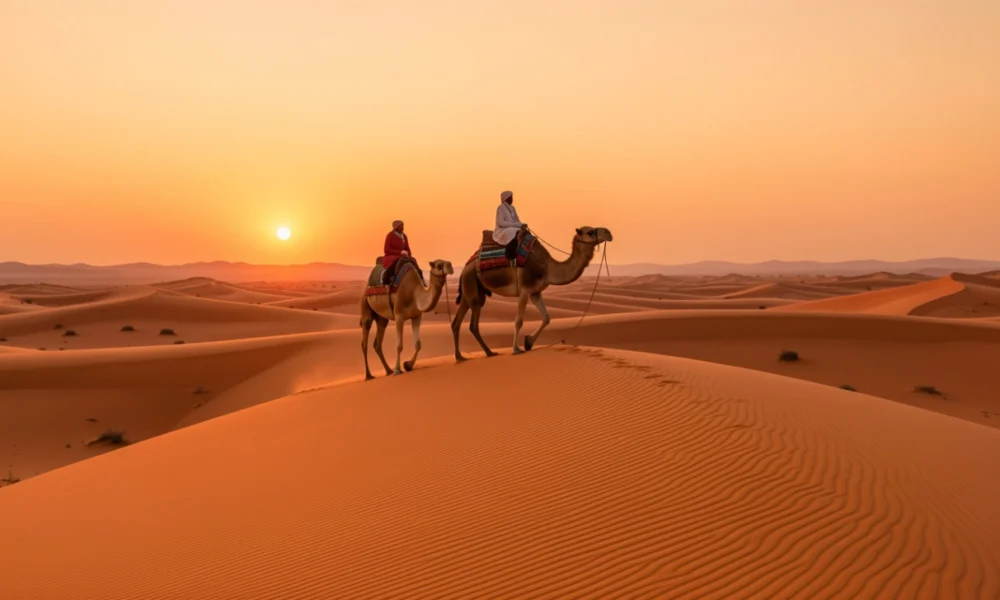
Morocco desert tours take travelers from the imperial cities of Marrakech or Fes through dramatic mountain passes, ancient kasbahs, and river valleys — before arriving at one of North Africa’s most striking landscapes: the Sahara Desert. Whether you have two days or a week, the Moroccan Sahara offers a journey that is equal parts adventure, culture, and natural wonder.
Table Of Content
- What to Expect on a Morocco Desert Tour
- Tour Durations and Itinerary Options
- 2-Day / 2-Night Tours
- 3-Day Tours (Most Popular)
- 4-Day and Longer Tours
- Activities in the Sahara Desert
- Best Time to Visit the Moroccan Sahara
- 1. Group tours
- 2. Private tours
- 3. Custom itineraries
- How to Get to the Sahara Desert
- What to Pack for a Desert Tour
- Sustainable and Responsible Travel
- FAQs
- How long does a Morocco desert tour take?
- What is the best base for a Sahara desert tour?
- Is the camel ride comfortable?
- Do I need to book in advance?
- Is the Sahara Desert tour worth it?
- Conclusion
What to Expect on a Morocco Desert Tour
Most organized Morocco desert tours follow one of two primary routes: Marrakech to Merzouga or Fes to Marrakech (and vice versa). Both routes pass through landscapes that change completely over a few hundred kilometers — from the snow-capped peaks of the High Atlas Mountains to the flat hammada plains, palm-lined river oases, and eventually the towering golden dunes.
Along the way, tours typically stop at key landmarks including Aït Ben Haddou (a UNESCO-listed ksar), Ouarzazate and its famous film studios, the Dades Gorges, Todra Gorge, and the Draa Valley. These stops are not filler — each one adds historical and geographic context that makes arriving at the dunes feel earned.
The endpoint for most Sahara tours is Merzouga, a small desert town on the edge of Erg Chebbi — the largest field of dunes in Morocco, with some dunes reaching over 150 meters. A second, less-visited dune area, Erg Chigaga, sits farther west and offers a more remote experience, typically accessed by 4WD.
Tour Durations and Itinerary Options
2-Day / 2-Night Tours
The shortest organized option, usually departing from Marrakech or Fes and returning the same way. These tours cover the highlights — Erg Chebbi dunes, a camel trek, and an overnight in a desert camp — but involve long daily drives of six to nine hours.
3-Day Tours (Most Popular)
The 3-day format is by far the most common and balances driving time with actual desert experience. A typical Marrakech-to-Fes route includes stops at Aït Ben Haddou, the Dades Valley, Todra Gorge, and Merzouga, with an overnight camel trek and sunrise in the dunes before continuing north to Fes.
4-Day and Longer Tours
For travelers who want more time at the dunes or who wish to include additional cultural stops — such as the Draa Valley, the Ziz Valley oasis, or Rissani market — 4-day and 6-day tours offer that breathing room. These are also better suited to combining a desert trip with a visit to other Moroccan regions.
| Feature | Erg Chebbi | Erg Chigaga |
|---|---|---|
| Access | Easy (paved road to Merzouga) | Remote (4WD required) |
| Dune height | Up to 150m | Up to 100m |
| Crowds | Moderate to high (peak season) | Low |
| Nearest town | Merzouga | M’hamid El Ghizlane |
| Best for | First-time visitors | Off-the-beaten-path travelers |
Most organized Morocco desert tours go to Erg Chebbi. Erg Chigaga is better suited to private, custom itineraries.
Activities in the Sahara Desert
Camel trekking is the most iconic desert activity, and most overnight tours include a guided camel ride into the dunes at sunset. The ride itself typically lasts 45 minutes to an hour each way. Beyond camels, there are several other activities available in and around Merzouga:
- Sandboarding down the face of the dunes
- Quad biking and ATV tours across the desert flats
- 4WD and jeep excursions into the more remote sections of Erg Chebbi
- Sunrise dune hikes — the best time to photograph the changing light
- Stargazing — with minimal light pollution, the Milky Way is clearly visible on clear nights
- Berber music and drumming evenings at desert camps
Desert camp accommodations range from basic to genuinely luxurious. Standard camps typically offer Berber-style tents with shared bathrooms, while luxury glamping camps provide en-suite facilities, proper beds, electricity, and sometimes private terraces. Most include dinner (typically a tagine or couscous) and breakfast, plus evening music.
When choosing a tour, confirm whether the camp is within walking distance of the main dunes or requires a drive — proximity matters for the sunrise experience.
Best Time to Visit the Moroccan Sahara
The desert is open year-round, but conditions vary significantly by season.
| Season | Daytime Temp | Night Temp | Conditions |
|---|---|---|---|
| March–April | 20–30°C | 10–15°C | Ideal — warm days, cool nights |
| May | 30–38°C | 15–20°C | Warm but manageable |
| June–August | 45–50°C+ | 25–30°C | Extremely hot; not recommended |
| October–November | 22–28°C | 12–18°C | Ideal — reliable, mild conditions |
| December–February | 15–20°C | –5 to 5°C | Cold nights; warm clothing essential |
March–April and October–November are the best months for comfort, photography, and dune hiking. For peak season travel, booking 2–4 weeks in advance is advisable.
1. Group tours
Group tours are the more affordable option, typically running €250–350 per person for a 3-day itinerary, with shared transport and shared camp accommodation. They suit solo travelers and those happy to share the experience with others.
2. Private tours
Private tours cost more but offer flexibility — the ability to linger at stops, adjust the pace, and choose a higher-tier camp. Private tours are particularly worthwhile for couples, families, or anyone who prefers not to coordinate with strangers at every step.
3. Custom itineraries
Custom itineraries fall between the two: you work with a local operator to design a route around your schedule, interests, and budget. These are worth considering for trips longer than four days or for unusual combinations, such as pairing a desert tour with a coastal stay in Taghazout or Agadir.
How to Get to the Sahara Desert
Most tours depart from Marrakech (approximately 9–10 hours to Merzouga by road, with stops) or Fes (approximately 8–9 hours). Both cities have international airports with frequent connections from Europe and beyond. Casablanca is also a common arrival point, from which travelers typically continue to Marrakech or Fes before joining a tour.
Driving the route independently is possible and rewarding — the road through the Tizi n’Tichka Pass alone is worth the trip — though the distance and mountain terrain require care, particularly for drivers unfamiliar with Moroccan roads.
What to Pack for a Desert Tour
The desert climate creates a wide temperature swing within a single day — often 25–35°C between midday and midnight. Packing layers is not optional.
Essential items:
- Lightweight, breathable clothing for daytime heat
- Warm layers (fleece or light down jacket) for evenings and early mornings
- Sturdy closed-toe shoes for dune walks
- High-SPF sunscreen, sunglasses, and a wide-brimmed hat
- A headscarf or buff (useful for wind and sand)
- A reusable water bottle — hydration in the desert is critical
- A headlamp or torch for camp use at night
- A camera or phone with extra storage — the light at golden hour on the dunes is exceptional
Luggage during the camel portion of the tour is typically transported to camp by vehicle, so there is no need to carry anything heavy on the ride.
Sustainable and Responsible Travel
The desert ecosystem around Erg Chebbi is under genuine pressure from increased tourism. When booking, look for operators that employ local Berber guides, use eco-friendly camp setups, and avoid single-use plastics in their provisions. Paying fairly for guides, camel handlers, and camp staff directly supports the communities that maintain this landscape.
Visitors should stay on designated paths around the dunes where possible, avoid removing sand or plants, and dispose of waste only at designated points. Several local organizations work on desert conservation — reputable tour operators are often connected to these efforts.
FAQs
How long does a Morocco desert tour take?
Most organized tours run 3 days/2 nights. Shorter 2-day options exist but involve very long driving days. Longer tours of 4–7 days allow for a more comfortable pace and additional stops.
What is the best base for a Sahara desert tour?
Marrakech and Fes are the two most common departure points. Marrakech offers slightly more route variety; Fes is closer to Erg Chebbi by road.
Is the camel ride comfortable?
Most travelers find it manageable for 45–60 minutes. Longer rides are available but not typically recommended as the only mode of desert transport. The camel trek is best treated as an experience rather than a primary means of getting around.
Do I need to book in advance?
During peak season (March–April and October–November), booking 2–4 weeks ahead is advisable, particularly for private tours and specific camp upgrades.
Is the Sahara Desert tour worth it?
For most visitors to Morocco, yes — the combination of landscape, night skies, Berber culture, and the journey through the Atlas Mountains makes this one of the more complete travel experiences available in North Africa.
Conclusion
A Moroccan desert tour is one of those trips that rewards some planning without requiring obsessive detail. Choose the right duration for your schedule, decide early between private and group travel, and pick your season carefully. The landscape from Marrakech to the Sahara — through mountain passes, kasbah ruins, and river oases — is as much a part of the experience as the dunes themselves.
The desert will still be there whenever you arrive. But going at the right time, with a guide who knows the region, and with realistic expectations about the journey involved, makes the difference between a good trip and a genuinely memorable one.