

Chris Benoit House: Complete History of the Fayetteville Property and What Happened There
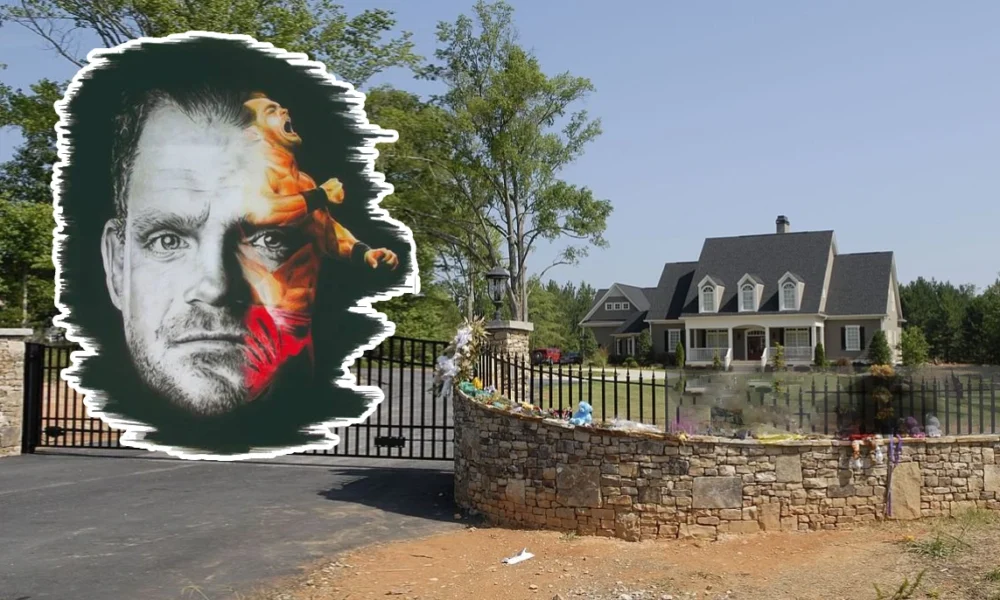
The Chris Benoit house was located at 130 Green Meadow Lane in Fayetteville, Georgia, approximately 22 miles south of Atlanta. The residence sat in a cul-de-sac accessible via Quarters Road, roughly two miles east of Peachtree City near the Whitewater Creek country club.
Table Of Content
- Premium Features and Amenities
- The June 2007 Events
- The CTE Discovery and Eddie Guerrero Connection
- Property Sale and Demolition
- Nancy Benoit’s Wrestling Background
- Benoit’s Other Properties
- Estate Litigation and Legal Aftermath
- WWE Response and Industry Changes
- Current Status of the Property
- Wrestling Community Impact
- FAQs
- Conclusion
Built in 2004, this ranch-style home combined traditional architectural elements with brick, stone, and stucco exteriors typical of upscale Georgia properties from that era. The residence spanned approximately 7,500 square feet across 8.6 acres of private, gated land.
The property featured six bedrooms and five and a half bathrooms. During Benoit’s ownership, the home was valued at over $900,000, positioning it as a substantial family residence in an affluent suburban area.
Chris Benoit, known in wrestling circles as “The Canadian Crippler” and “The Rabid Wolverine,” lived in the home with his wife Nancy and their son, Daniel. Nancy, who wrestled under the ring name “Woman,” had managed several wrestlers throughout her career, including The Four Horsemen and The Sandman in ECW.
Premium Features and Amenities
The Benoit residence included several high-end features common in mid-2000s luxury homes, though it remained less ostentatious than many celebrity properties.
The property included a Pebble Tec brand swimming pool with an enclosed pool area, a dedicated home theater, and a professional-grade workout room where Benoit maintained his training regimen during his WWE career. The home featured coffered 10-foot ceilings and heart pine floors throughout.
Additional amenities included a separate guest suite, a spacious home office where Benoit kept wrestling memorabilia, and multiple living areas designed for family comfort. The generous lot size provided privacy typical of what professional athletes prefer while remaining commutable to Atlanta.
The outdoor space included well-maintained grounds with shade trees suitable for Georgia’s hot summers, along with porches overlooking the backyard.
The June 2007 Events
Over three days from June 22 to June 24, 2007, a tragedy unfolded at 130 Green Meadow Lane that would shock the wrestling world and beyond.
On Friday, June 22, Nancy Benoit was killed in the bonus room of the house. According to police reports, her limbs had been bound with coaxial cables and duct tape. A Bible was placed near her body.
The following morning, June 23, their seven-year-old son Daniel was sedated with Xanax and killed while lying in his bed. A Bible was also placed beside him.
On Saturday, June 23, Benoit contacted WWE colleague Chavo Guerrero, nephew of Benoit’s late best friend Eddie Guerrero, claiming Nancy and Daniel had food poisoning. He missed a scheduled house show in Beaumont, Texas that evening.
Early Sunday morning, June 24, between 3:51 and 3:58 AM, five text messages were sent from both Chris and Nancy’s cell phones to WWE co-workers, including Chavo Guerrero and referee Scott Armstrong. Four messages contained the address: “My physical address is 130 Green Meadow Lane, Fayetteville, Georgia. 30215.” The fifth stated: “The dogs are in the enclosed pool area. Garage side door is open.”
Later that day, Benoit died by suicide in his weight room, using a lat pulldown machine to hang himself. His body was discovered on Monday, June 25, after WWE officials, led by John Laurinaitis, requested a welfare check from the Fayetteville Police Department. WWE CEO Vince McMahon announced the deaths that afternoon, initially unaware of the circumstances.
Fayette County District Attorney Scott Ballard described the case as “surreal” and “bizarre.” Anabolic steroids were found in the home, though investigations would later reveal more complex factors at play.
The CTE Discovery and Eddie Guerrero Connection
Following the tragedy, Christopher Nowinski, a former WWE wrestler turned neuroscientist, contacted Benoit’s father, Michael Benoit, suggesting brain trauma might have contributed to the events. Michael Benoit agreed to have his son’s brain examined by the Sports Legacy Institute (now the Concussion Legacy Foundation).
Dr. Julian Bailes, chairman of neurosurgery at West Virginia University, and Dr. Robert Cantu conducted the examination. Their findings revealed severe chronic traumatic encephalopathy (CTE), with Benoit’s brain resembling that of an 85-year-old Alzheimer’s patient. Dr. Cantu stated it was “the most extensively damaged of the brains we have examined so far.”
The CTE diagnosis showed damage to all four lobes of Benoit’s brain and the brain stem, with excessive tau protein deposits throughout. These findings suggested repeated concussions from his 22-year wrestling career, including his signature diving headbutt move, had caused severe brain damage.
Another significant factor was the November 13, 2005, death of Benoit’s best friend, Eddie Guerrero, who died of heart failure at age 38. The two had been close friends since their days wrestling together in WCW, ECW, and Japan, earning the nickname “The Three Amigos” along with Dean Malenko. They celebrated together at WrestleMania XX in 2004 when both won world championships.
After Eddie’s death, Benoit fell into severe depression. Nancy gave him a journal to cope with his grief, where he wrote entries addressed to Eddie. One entry stated, “I will be with you soon.” Neighbors reported seeing Benoit walking his property wearing a rosary around his neck—behavior Michael Benoit described as completely out of character, as his son wasn’t religious.
Nancy’s sister, Sandra Toffoloni, noted that by 2007, Nancy believed wrestling was harming Chris’s well-being and wanted him to leave the industry. Friends described increased paranoia and concerning behavior in the months before June 2007.
Property Sale and Demolition
Following the June 2007 events, the property’s value plummeted. In February 2009, the house was initially listed for $750,000, but months later sold at a foreclosure sale for just $287,500—a fraction of its previous $900,000+ valuation.
In 2012, wrestler Justin McCully reportedly purchased the property with plans to demolish the original structure. The house was eventually torn down, completely erasing the physical building where the tragedy occurred.
This demolition-and-rebuild approach is not uncommon for properties associated with high-profile, tragic events. The stigma attached to 130 Green Meadow Lane made the property nearly impossible to sell at market value despite its desirable location and size.
A new home was built on the site, giving the property a fresh start separated from its past. The current structure bears no physical connection to the original residence.
Nancy Benoit’s Wrestling Background
Nancy Benoit, born Nancy Toffoloni on May 17, 1964, had an extensive wrestling career before becoming a stay-at-home mother. She appeared in Florida Championship Wrestling, Extreme Championship Wrestling, and World Championship Wrestling under various ring names, including “Fallen Angel,” “Robin Green,” and most famously, “Woman.”
She first entered wrestling after a 1984 photo shoot led to a meeting with Kevin Sullivan, who recruited her for his “Army of Darkness” faction in Florida Championship Wrestling. Nancy married Sullivan in 1985, her second marriage.
In WCW, Nancy managed prominent wrestlers and stables, including The Four Horsemen (Ric Flair, Arn Anderson, Brian Pillman, and Chris Benoit), Doom, Rick Steiner, and various others. She was known for her sophisticated persona and willingness to get physically involved in matches when necessary.
In ECW, she managed The Sandman, opening his beers and lighting his cigarettes as part of his character, while wielding a Singapore cane to attack opponents.
In 1996, while still married to Kevin Sullivan (who was also a WCW booker), Sullivan created a storyline where Nancy would have an on-screen affair with Chris Benoit. The storyline became reality, leading to what wrestling insiders joke was “Sullivan booking his own divorce.” Nancy and Sullivan divorced in 1997.
Nancy’s final wrestling appearance was on May 26, 1997, on WCW Monday Nitro. She married Chris Benoit on November 23, 2000, and gave birth to Daniel on February 25, 2000. She managed Chris’s career from their Atlanta-area home.
In May 2003, Nancy filed for divorce, citing “cruel treatment” and requesting a restraining order, but withdrew both filings in August 2003.
Benoit’s Other Properties
Unlike many professional wrestlers who build real estate portfolios, Chris Benoit owned limited property. His only other known residence was a previous home in Peachtree City, Georgia, which was listed for $399,000 after his death.
There is no evidence Benoit owned vacation homes, investment properties, or real estate in other markets. His approach focused on family residences rather than property investment or wealth building through real estate.
At the time of his death in 2007, Benoit’s net worth was approximately $1 million, with the Fayetteville house representing a significant portion of his assets.
Estate Litigation and Legal Aftermath
A legal battle emerged over Benoit’s estate, centered on whether Nancy or Daniel died first—a determination that would decide inheritance under Georgia’s slayer statute. This law prevents someone who causes another’s death from profiting from it.
Nancy’s parents, Paul and Maureen Toffoloni, represented by Atlanta lawyer Richard Decker, questioned the official timeline. Since neither Chris nor Nancy had a will, the order of deaths became paramount in determining which heirs—Nancy’s family or Benoit’s two children from his first marriage—would inherit the estate.
The estate included multiple pieces of real estate, cash, and investments, though exact values were never publicly disclosed.
WWE Response and Industry Changes
WWE initially aired a three-hour tribute show to Benoit’s career on June 25, 2007, before the full circumstances became clear. Once details emerged, WWE immediately distanced itself from Benoit, removing nearly all mentions from their website, broadcasts, and publications.
Benoit’s name was essentially erased from WWE history for years. His matches were edited from WrestleMania XX footage, and his legacy became one of wrestling’s most controversial topics.
In February 2006, following Eddie Guerrero’s death, WWE implemented a Wellness Program to test wrestlers for drug abuse and physical well-being. The Benoit tragedy led to additional scrutiny of the industry’s approach to concussions, steroids, and mental health.
The case prompted a federal investigation into steroid abuse in professional wrestling and increased awareness of CTE in contact sports. WWE has maintained that steroid use did not directly cause the events, pointing to evidence of premeditation.
Current Status of the Property
Today, 130 Green Meadow Lane features a completely new structure with no physical remnants of the original Benoit home. The property remains a private residence, and the current owners have no connection to the events of 2007.
The address, while still associated with the tragedy in wrestling history and true crime discussions, has been given a physical fresh start through demolition and rebuilding.
The property is not available for tours, and visitors are not welcome, as it remains private property where trespassing carries legal consequences.
Wrestling Community Impact
The Benoit tragedy remains one of the darkest chapters in professional wrestling history. It prompted widespread discussion about athlete mental health, the long-term effects of concussions, and CTE in contact sports.
Many of Benoit’s former colleagues have spoken about the difficulty of reconciling the friend they knew with the person who committed these acts. Stone Cold Steve Austin articulated this tension: “Chris Benoit as the person I knew, loved him. Chris Benoit, as a wrestler, loved him. Chris Benoit, as the person who did what he did, is unforgivable.”
The case became a landmark moment in CTE research. Dr. Bennet Omalu, who had identified CTE in NFL players like Mike Webster, confirmed similar findings in Benoit. Subsequent cases in wrestlers, including Andrew “Test” Martin, reinforced connections between repeated head trauma and violent behavior.
Chris Jericho, a close friend of both Benoit and Eddie Guerrero, has discussed the case in his “Talk Is Jericho” podcast, including a 2025 interview with Christopher Nowinski about CTE research advances. The Boston University CTE Center continues studying brain trauma in athletes, with Benoit’s case remaining a reference point for understanding the condition’s severity.
FAQs
- What is the exact address of the Chris Benoit house? The property was located at 130 Green Meadow Lane, Fayetteville, GA 30215, in a cul-de-sac accessible via Quarters Road.
- How much did the house sell for after 2007? After being listed at $750,000 in February 2009, the property sold at foreclosure for $287,500 later that year, down from its previous $900,000+ valuation.
- Was the original house demolished? Yes, the original structure was completely demolished around 2012, reportedly by wrestler Justin McCully. A new home was built on the site.
- Did Chris Benoit own other properties? Benoit owned a previous home in Peachtree City, Georgia, listed for $399,000 after his death. There is no evidence of other real estate holdings.
- Can you visit the property today? No. The property is a private residence with no public access. Trespassing is illegal and subject to legal consequences.
Conclusion
The former Chris Benoit house represents a tragic intersection of wrestling history, brain trauma research, and mental health awareness. While the physical structure no longer exists, the address remains significant in discussions about athlete safety and the long-term consequences of repeated head injuries.
For those interested in wrestling history, this case serves as a reminder of the importance of concussion protocols, mental health support, and recognizing warning signs of CTE. The tragedy affected not only the immediate victims but also rippled through the wrestling community, changing how the industry approaches performer health and safety.
The complete demolition and rebuilding of the property reflects society’s approach to places associated with horrific events—sometimes a physical fresh start is necessary to allow healing and prevent morbid tourism. The new structure at 130 Green Meadow Lane has no connection to the past, offering the land itself a measure of redemption even as the memory of what happened there continues to inform important conversations about athlete welfare.