

Jackson Foo Wong: The Inspiring Story of BD Wong’s Son
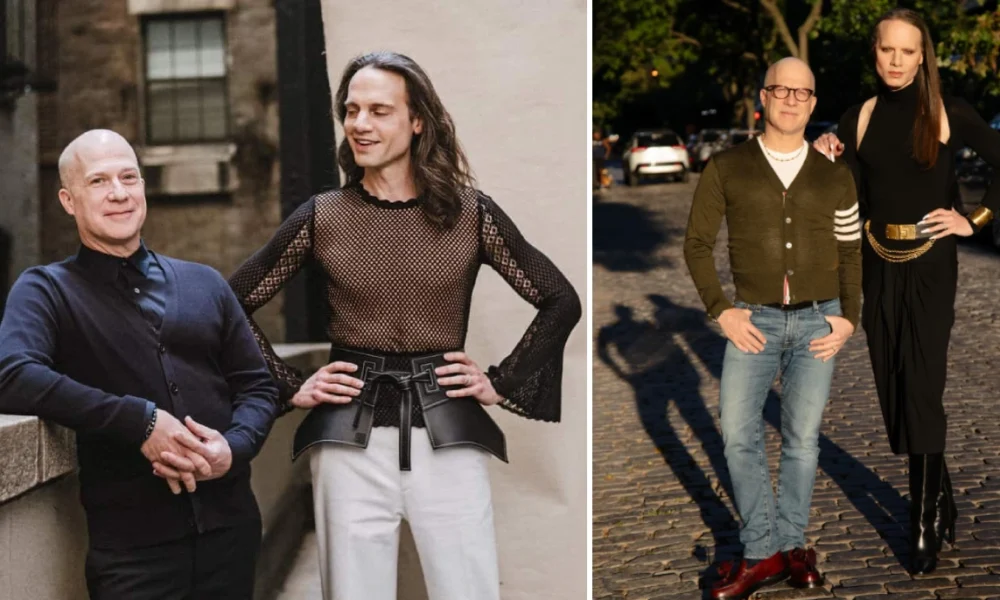
Jackson Foo Wong was born on May 28, 2000, through surrogacy to actor BD Wong and producer Richie Jackson. His arrival came with both heartbreak and hope—he survived a premature birth and the loss of his twin brother, becoming a symbol of resilience for LGBTQ+ families.
Table Of Content
- Early Life and Premature Birth
- Parents: BD Wong and Richie Jackson
- Growing Up Between Two Households
- Education at New York University
- Coming Out at 15
- The Meaning Behind “Gay Like Me”
- BD Wong’s Influence as a Father
- Life in Greenwich Village
- Private Life and Social Media Presence
- The Loss of Boaz Dov Wong
- Representation in LGBTQ+ Family Advocacy
- What Jackson Foo Wong is Doing Now?
Now 25 years old, Jackson lives a deliberately private life in New York City. His story has inspired two books and continues to represent modern family structures and LGBTQ+ visibility.
Early Life and Premature Birth
Jackson Foo Wong entered the world on May 28, 2000, three months premature. His parents, BD Wong and Richie Jackson, hired a surrogate who was inseminated with BD’s sperm and an egg donated by Richie’s sister.
The pregnancy resulted in twin boys: Jackson and Boaz Dov Wong. Both suffered from Twin-to-Twin Transfusion Syndrome (TTTS), a rare condition affecting identical twins sharing a placenta. In TTTS, one twin receives blood from the placenta while the other depends on their sibling for circulation.
Boaz, the donor twin, died approximately 90 minutes after birth. Jackson, weighing just 2 pounds 13 ounces, was rushed to the neonatal intensive care unit. He spent three months fighting for survival before his father finally brought him home on August 21, 2000, weighing 4 pounds 6 ounces.
BD Wong documented this experience in his 2003 memoir “Following Foo: The Electric Adventures of the Chestnut Man.” The nickname “Chestnut Man” came from Jackson’s wrinkled appearance as a premature infant, which BD found endearing.
Parents: BD Wong and Richie Jackson
BD Wong, born October 24, 1960, is an acclaimed actor who became the first Asian American to win a Tony Award for his performance in “M. Butterfly” (1988). He remains the only actor to receive the Tony Award, Drama Desk Award, Outer Critics Circle Award, Clarence Derwent Award, and Theatre World Award for the same role.
Wong’s career spans Broadway, film, and television. He portrayed Dr. Henry Wu in the Jurassic Park franchise, FBI psychiatrist Dr. George Huang on “Law & Order: Special Victims Unit” for 14 years, and Whiterose in “Mr. Robot.”
Richie Jackson, born October 6, 1965, is a television and theater producer. He served as executive producer on Showtime’s “Nurse Jackie” and co-produced the film “Shortbus.” Jackson also worked as a talent agent before transitioning to production.
BD and Richie were partners for 15 years (1988-2004). Their relationship gave BD the strength to come out publicly in 2003, despite concerns about potential career consequences. The couple split when Jackson was 3 years old, but they maintained a strong co-parenting relationship.
Growing Up Between Two Households
After his parents’ separation, Jackson split his time between two homes in New York City. During weekdays, he lived uptown with Richie and his new partner, Jordan Roth. On weekends, he stayed downtown with BD.
Jordan Roth, president and majority owner of Jujamcyn Theaters, married Richie Jackson on September 8, 2012, at the Al Hirschfeld Theatre on Broadway. Roth became Jackson’s stepfather and co-parent, creating what BD described as a three-parent household.
BD Wong expressed initial feelings of disappointment about Jackson growing up in a “broken home,” but both families worked to provide stability. BD would host Saturday gatherings with theater friends, including composer Wayne Baker and director Cindy Cheung, creating a creative environment for Jackson.
In 2016, Jackson became a big brother when Richie and Jordan welcomed Levi Emmanuel Roth through surrogacy. BD Wong also remarried in 2018 to Richert John Frederickson Schnorr, director of digital media for the New York Public Library.
Education at New York University
Jackson followed both his parents’ educational paths by attending New York University. Richie Jackson graduated from NYU’s Tisch School of the Arts in the early 1980s, experiencing the early years of the AIDS crisis while living in Greenwich Village.
Jackson’s NYU experience differed vastly from his father’s. While Richie came of age during a terrifying time for the LGBTQ+ community, Jackson attended university in an era of greater acceptance and legal protections.
Jackson graduated from NYU in May 2023, marking a milestone his family celebrated publicly on social media. His education focused on literature and history, interests nurtured throughout his childhood in New York City’s Greenwich Village.
Coming Out at 15
When Jackson was 15 years old, he came out as gay to his parents. His father, Richie, was elated, having waited for this moment. However, Jackson’s comment that “being gay is not a big deal” and his generation didn’t consider it significant sparked concern in Richie.
This generational divide—Jackson’s comfort with his sexuality versus Richie’s awareness of ongoing threats—became the catalyst for Richie’s book “Gay Like Me: A Father Writes to His Gay Son.”
Published by HarperCollins in 2020, the book serves as both a personal letter to Jackson and a guide for LGBTQ+ youth and their families. O: The Oprah Magazine called it “An LGBTQ Book That’ll Change the Literary Landscape in 2020.”
Richie wrote: “It is important that I tell you everything I know—of everything that I have learned, of every rise and of every depression, of so much that I have kept to myself so that you would feel safe. All of that I have to tell you now.”
The book addresses relationships, sex, love, friendships, and resistance against the backdrop of the AIDS crisis, “don’t ask, don’t tell,” marriage equality, and the political climate during the Trump administration.
The Meaning Behind “Gay Like Me”
“Gay Like Me” emerged from Richie’s concern that Jackson, having grown up in a two-father household in progressive Greenwich Village, lacked what Richie called a “gay guard”—the awareness of discrimination and legal vulnerabilities still facing LGBTQ+ people across America.
Richie emphasized that not all 50 states offer equal protection. Employment discrimination, housing discrimination, and other challenges vary dramatically by location. He wanted Jackson to understand that while their New York City life felt safe, much of the country remained hostile to LGBTQ+ people.
The book also challenged complacency within the LGBTQ+ community. In response to writer Andrew Sullivan’s suggestion that LGBTQ+ people should move on without sexual orientation “getting in the way,” Richie argued: “It cannot be that we have fought back centuries…all just to get our liberation so that we can say being gay isn’t a big deal.”
Jackson’s coming-out story became the heart of the book’s message about intergenerational dialogue and the importance of understanding LGBTQ+ history.
BD Wong’s Influence as a Father
BD Wong’s career provided Jackson with firsthand exposure to Asian American representation in entertainment. Wong’s groundbreaking Tony Award win in 1988 came at a time when Asian American actors faced severe typecasting and limited opportunities.
Throughout Jackson’s childhood, Wong balanced demanding television and film schedules with active parenting. He wrote detailed, often humorous emails to friends and family during Jackson’s three-month NICU stay, documenting milestones like Jackson’s first bowel movement.
Wong’s advocacy for Asian American actors also shaped Jackson’s worldview. In 1990, Wong objected to the casting of Welsh actor Jonathan Pryce in the lead Asian role in “Miss Saigon,” arguing it denied opportunities to Asian American performers.
As Jackson grew older, Wong navigated co-parenting across two households. He described feeling torn between enforcing discipline and acknowledging the difficulty of Jackson living between two homes. Wong expressed deep respect for how Jackson handled this arrangement.
Life in Greenwich Village
Growing up in Greenwich Village provided Jackson with early exposure to LGBTQ+ culture, arts, and diversity. The neighborhood’s long history as a haven for LGBTQ+ people meant Jackson was surrounded by same-sex couples and families like his own.
BD Wong noted that registering Jackson for preschool felt remarkably ordinary in their neighborhood. “No one cared,” Wong explained, referring to having two fathers listed as parents.
Jackson’s childhood included attending Broadway openings, interacting with theater professionals, and experiencing New York City’s cultural scene. This environment normalized both his family structure and the entertainment industry.
The West Village location also meant Jackson grew up near Richie and Jordan’s apartment, facilitating co-parenting arrangements. The neighborhood’s LGBTQ+ community provided a support network that embraced non-traditional family structures.
Private Life and Social Media Presence
Unlike many children of celebrities, Jackson maintains a deliberately private life. His Instagram account is private with approximately 300 followers. He rarely appears in public except at occasional family events or Broadway openings with his parents.
This privacy preference stands in contrast to his parents’ public profiles. Both BD Wong and Richie Jackson maintain active social media presence, but they respect Jackson’s desire for a quieter existence.
When Jackson does appear in his parents’ social media posts, it’s typically at family gatherings or milestone events. Photos show close relationships with both his biological parents and stepparents.
As of 2023, Jackson lives in Long Island City, Queens, according to an interview BD Wong gave. He graduated from NYU and has chosen a path outside the entertainment industry.
The Loss of Boaz Dov Wong
The death of Jackson’s twin brother, Boaz, remains a defining part of his family’s story. BD Wong has spoken openly about experiencing “Boaz moments”—periods of wistful reflection about what might have been.
Wong told The Advocate in 2003: “Every once in a while, I’ll call Richie and say, ‘I’m having a Boaz moment.’ That means I’m daydreaming, thinking about ‘what if.’ It’s not that painful; it’s more wistful, more curious about the possibilities. But Jackson is here because of what Boaz did for him. I will always be grateful to Boaz for that gift.”
This perspective—viewing Boaz’s short life as a gift that allowed Jackson to survive—reflects the family’s approach to processing grief. The loss created a permanent bond between BD and Richie, even after their romantic relationship ended.
BD has described the loss as “collateral damage” that ultimately contributed to their breakup, yet also as a shared experience that keeps them “forever marked” and connected as co-parents.
Representation in LGBTQ+ Family Advocacy
Jackson’s existence challenges traditional family structures and represents the possibilities of LGBTQ+ parenting. When he was born in 2000, same-sex couples faced significant legal obstacles to parenthood, including difficulties getting both parents’ names on birth certificates.
BD and Richie were part of an emerging wave of gay men pursuing fatherhood through surrogacy. While they benefited from pioneers who came before them, the process remained complicated and expensive compared to today.
Their family became a visible representation at a time when debates over same-sex marriage and LGBTQ+ parenting dominated public discourse. Conservative groups like One Million Moms argued that LGBTQ+ families harmed children.
Richie Jackson directly confronted these arguments: “I have been through a plague, so One Million Moms don’t scare me. Here’s what I know about gay parents, about LGBTQ+ parents: You have to be deliberate about it. It doesn’t just happen that you have a family. It takes enormous work and a lot of hurdles….So I promise you, the gay parents who do exist, they are full of purpose and love and potential.”
What Jackson Foo Wong is Doing Now?
As of 2026, Jackson Foo Wong is 25 years old, living independently in New York City. He maintains close relationships with his parents, stepparents, and half-brother Levi.
Jackson’s choice to live privately, despite his famous family, reflects his own values and preferences. He occasionally attends Broadway events with his family but generally stays out of the spotlight.
His story continues to inspire through the books written about him. “Following Foo” and “Gay Like Me” reach audiences around the world, offering perspectives on LGBTQ+ parenting, premature birth survival, and coming of age in a non-traditional family.
Jackson represents a generation of LGBTQ+ youth who grew up with legal protections and social acceptance that their parents fought to secure. His comfort with his identity, while initially concerning to Richie, ultimately demonstrates the progress made in LGBTQ+ rights.