

How to Choose the Right Commercial Fencing Solution for Your Business
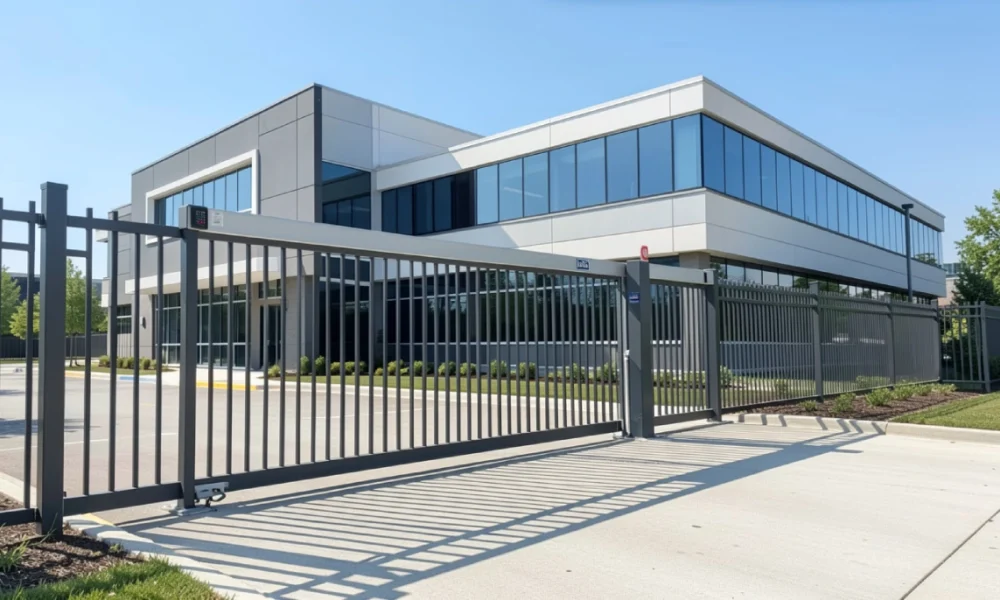
Securing your business premises is more than a precaution — it directly affects asset protection, liability exposure, and the impression your property makes on clients and visitors. A well-chosen commercial fence defines your perimeter, controls access, deters unauthorized entry, and contributes to a professional property appearance. Choosing the wrong one, however, can mean costly replacements, compliance violations, or security gaps. This guide covers the key decisions involved in selecting a fencing solution that fits your business’s security requirements, budget, and site conditions.
Table Of Content
- Assess Your Business’s Security Requirements
- Understand the Different Commercial Fencing Materials
- 1. Steel and Wrought Iron
- 2. Aluminum
- 3. Chain-Link
- 4. Wood
- 5. Vinyl (PVC)
- 6. Composite
- Factor in Fence Height and Design
- Consider Access Control and Gate Systems
- Calculate Maintenance Costs Honestly
- Check Local Zoning Laws and Building Codes
- Balance Security and Property Appearance
- Choosing a Commercial Fencing Contractor
- Conclusion
Assess Your Business’s Security Requirements
Before comparing materials or styles, identify the specific risks your commercial property faces. The right level of perimeter security varies significantly by industry, location, and what you’re protecting.
Consider the crime rate in your area, the nature of the assets stored on-site, whether employees or the public access your property regularly, and whether confidential activity takes place on the premises. A warehouse storing high-value equipment has different fencing needs than a law office or retail center. Conducting a straightforward risk assessment — even informally — helps you determine whether you need a high-security perimeter fence, a privacy fence, a boundary marker, or a combination of these.
Whether you work with Perth fence and gate suppliers or a local commercial fencing contractor, these factors should drive your specification before you request any quotes.
Understand the Different Commercial Fencing Materials
The material you choose determines the fence’s strength, lifespan, maintenance demands, appearance, and overall cost. Here are the most widely used options for commercial properties:
1. Steel and Wrought Iron
Steel and wrought iron offer the highest level of structural strength among commercial fencing materials. They are difficult to breach and provide a visible deterrent to intruders, making them a common choice for industrial facilities, warehouses, and high-security sites. The main drawback is susceptibility to rust — regular rust-prevention treatment and repainting are necessary to maintain structural integrity over time.
2. Aluminum
Aluminum fencing is a practical middle ground between security and appearance. It resists corrosion without surface treatments, requires minimal upkeep, and accepts powder-coat finishes in a range of colors. It works well for office complexes, business parks, and retail centers where a clean, professional boundary is needed. Aluminum is lighter and less rigid than steel, so it’s better suited to moderate-security environments than high-risk sites.
3. Chain-Link
Chain-link remains the most widely used commercial fencing material due to its low installation cost, durability, and quick deployment. It defines perimeters clearly, allows visibility across the boundary (which helps with on-site monitoring), and can be upgraded with privacy slats, barbed wire toppers, or razor wire for added deterrence. It is the standard choice for parking lots, industrial yards, construction sites, and storage facilities.
4. Wood
Pressure-treated and cedar wood fencing offers privacy, a natural aesthetic, and effective noise reduction — useful for businesses located near residential areas or in settings where screening is a priority. Wood requires regular maintenance, including staining, sealing, or painting, to prevent weather damage, rot, and insect damage. Shadowbox, solid board, and tongue-and-groove styles are among the most common configurations for commercial applications.
5. Vinyl (PVC)
Vinyl fencing requires no painting, staining, or sealing and resists rot, rust, moisture, and insect damage. It comes in multiple styles and colors and suits businesses that want low long-term maintenance costs alongside reasonable privacy. For extended durability, steel-reinforced railings and UV-protective coatings can be added during installation. Vinyl tends to cost more upfront than chain-link but less over time when maintenance costs are factored in.
6. Composite
Composite fencing uses a blend of wood fibers and recycled plastics to replicate the look of wood with far less upkeep. It doesn’t warp, rot, or require repainting, making it a practical choice for businesses that want a natural appearance without ongoing maintenance commitments. It is increasingly available in commercial grades and works well in retail, hospitality, and mixed-use property settings.
Factor in Fence Height and Design
Fence height is one of the most direct variables affecting perimeter security. Fences under 6 feet can be climbed by a determined intruder without specialized equipment. For high-security commercial or industrial properties, fence heights of 8 feet or more are standard, and anti-climbing features such as inward-angled tops, taut mesh apertures with no footholds, or rotating spikes can be added to reduce breach risk further.
Design affects both the security function and site management. Open designs — chain-link, ornamental iron, and welded mesh — maintain clear sight lines across the perimeter, which aids surveillance and makes it harder for intruders to approach undetected. Solid privacy fences made from wood, vinyl, or composite provide effective screening but can inadvertently create concealed areas that reduce natural surveillance. For businesses where visibility is part of the security strategy, an open or semi-open design is usually more effective.
The right balance depends on your priorities. Upscale commercial properties such as hotels, corporate offices, and luxury retail locations often use ornamental iron or aluminum precisely because these materials combine strong perimeter definition with an attractive, open profile.
Consider Access Control and Gate Systems
A fence is only as effective as its access points. For businesses where controlling who enters and exits the property is a priority — including those handling confidential materials, hazardous goods, or high-value assets — a well-specified gate system is as important as the fence itself.
Automated gate options include sliding gates, swing gates, and barrier arms, which can be integrated with keycard readers, intercom systems, or remote access controls. These systems give you a defined record of who enters your property and when, which is useful for both security and compliance purposes. Businesses in heavily trafficked areas can also use gated access to prevent unauthorized vehicle or pedestrian cut-throughs.
If your commercial property includes a pool, gated pool fencing is a separate consideration — it is a code requirement in many jurisdictions, so local building regulations should be checked before specifying any perimeter fence that includes a pool enclosure.
Calculate Maintenance Costs Honestly
Each fencing material carries a different long-term cost profile. The initial installation price is rarely the full picture.
Wood requires the most hands-on maintenance — staining or sealing every two to three years, repainting when the surface deteriorates, and periodic board replacement due to rot or storm damage. Wrought iron and steel need rust-prevention treatment and repainting over time, particularly in humid or coastal climates. Aluminum, vinyl, and composite are genuinely low-maintenance — periodic cleaning is generally sufficient — but their higher upfront cost reflects this.
When comparing quotes, calculate the total cost of ownership over a 10-year horizon, not just the initial installation figure. A cheaper material that needs frequent repair or replacement may cost significantly more over time than a more expensive, lower-maintenance option.
Check Local Zoning Laws and Building Codes
Commercial fencing is subject to local planning and zoning regulations that vary by municipality, property type, and location. These rules may govern maximum fence height, permitted materials, setback distances from the property line, and design standards in commercial or mixed-use zones.
Some areas with designated commercial corridors have aesthetic guidelines that restrict solid privacy fencing or require specific materials to maintain visual consistency along the streetscape. Failing to check these requirements before installation can result in fines, mandatory modifications, or forced removal — all of which add high cost.
Before committing to any fencing specification, consult your local planning department or work with a licensed commercial fencing contractor who is familiar with the regulations in your area.
Balance Security and Property Appearance
For businesses that receive customers, clients, or the public on-site — retail stores, professional offices, hospitality venues, healthcare facilities — the appearance of the perimeter fence forms part of the first impression visitors receive. A fence that looks neglected, mismatched, or purely industrial can undermine a professional brand image even before someone enters the building.
Ornamental iron and aluminum fencing have become a standard solution for businesses that need both perimeter security and visual appeal. Both materials accept decorative finials, custom panel designs, and powder-coat color finishes, allowing the fence to complement the building’s architecture without compromising structural performance.
For businesses in residential-adjacent commercial zones — such as accounting firms, medical practices, or boutique offices — vinyl or composite privacy fencing can create a clean, neutral boundary that suits the surrounding environment without appearing hostile or institutional.
Choosing a Commercial Fencing Contractor
Material selection is important, but installation quality determines how long a fence performs and whether it holds up under pressure. A fence with posts that aren’t properly set in concrete, mesh that isn’t correctly tensioned, or gates that aren’t aligned will fail sooner and create security gaps regardless of the material specified.
When selecting a contractor, look for documented experience with commercial-grade installations, local knowledge of zoning requirements, and references from comparable projects. Request written quotes that specify materials (including grade), post depth, gate hardware, and any warranty terms on both materials and labor.
Conclusion
Selecting the right fencing solution for your business requires matching material strength, height, design, and access control features to your actual security needs — while accounting for maintenance costs and local regulatory requirements. Chain-link is the most cost-effective option for perimeter definition and general security. Steel and wrought iron suit high-security sites where breach resistance is the priority. Aluminum and ornamental iron work well where security and appearance carry equal weight. Vinyl and composite are practical long-term choices for businesses that want minimal upkeep. Wood and composite suit privacy-focused applications in settings where natural aesthetics matter.
Getting these choices right protects your property, keeps your business compliant, and presents a professional image to everyone who approaches your premises.