

What Kindergarten Workbooks Actually Teach And Why It Matters
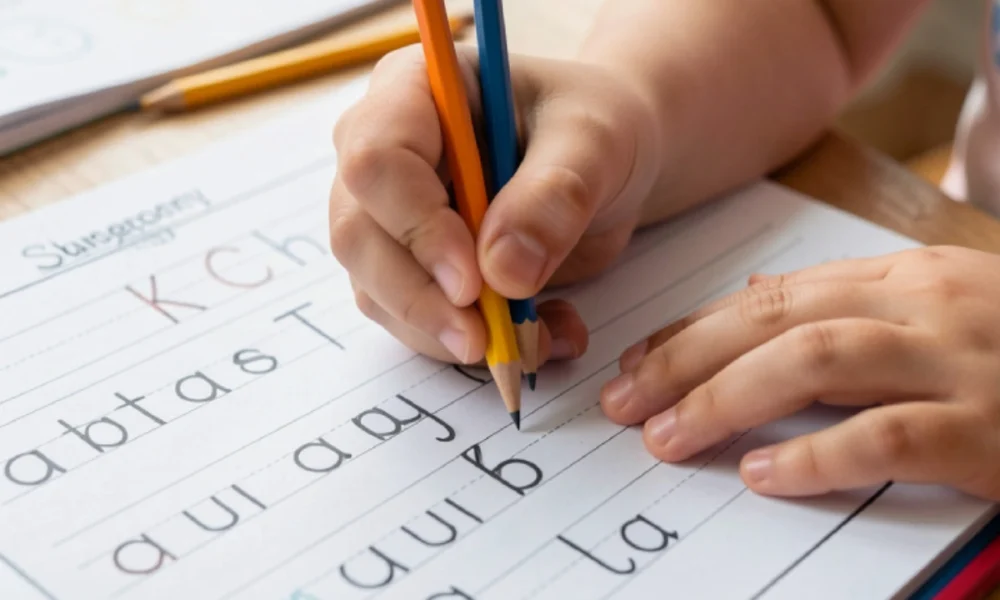
Early childhood education shapes how a child learns for years to come. Research from the San Francisco Department of Early Childhood, published in a longitudinal study, found that children who performed well on kindergarten readiness measures consistently outperformed peers on academic measures through middle and high school. Kindergarten workbooks are one practical tool that supports this readiness — both in classrooms and at home.
Table Of Content
- Why Structured Practice at This Stage Works
- Literacy Skills: What Good Workbooks Cover
- Letter Recognition and Alphabet Familiarity
- Phonemic Awareness and Phonics
- Sight Words
- Early Reading Comprehension and Writing
- Math Skills: Building Number Sense From the Ground Up
- Counting and Number Recognition
- Basic Arithmetic
- Patterns, Shapes, and Spatial Reasoning
- Critical Thinking and Problem-Solving
- Fine Motor Development
- Independence and Self-Paced Learning
- How to Choose the Right Kindergarten Workbook
- Getting the Most Out of Workbook Time
- Summary
This article covers what these workbooks develop, why each skill matters, and what parents and educators should look for when selecting one.
Why Structured Practice at This Stage Works
Children between the ages of four and six are in a period of rapid cognitive, motor, and language development. Structured activities — like those found in kindergarten workbooks — provide repetition and variety in a format children can engage with independently. Unlike passive screen time or unstructured play alone, workbooks ask children to produce output: trace, write, circle, match, draw, and reason.
The National Association for the Education of Young Children (NAEYC) notes that structured learning during early childhood can significantly support cognitive development when activities are age-appropriate and engaging. Workbooks, when well designed, meet both conditions.
Literacy Skills: What Good Workbooks Cover
Letter Recognition and Alphabet Familiarity
Most kindergarten workbooks begin with letter recognition — identifying uppercase and lowercase letters, matching them to pictures, and tracing their shapes. This builds the visual familiarity children need before they can move to reading.
Phonemic Awareness and Phonics
Phonemic awareness — the ability to hear and manipulate individual sounds in spoken words — is widely recognized as the foundation of early reading. Children who cannot isolate or blend phonemes will struggle to decode written words. Quality kindergarten workbooks include activities that connect letters to sounds, work with consonant-vowel-consonant (CVC) words, and introduce phoneme blending and segmentation.
Phonics instruction in workbooks follows this naturally: once children associate letters with sounds, they can begin sounding out simple words like cat, dog, and run.
Sight Words
By the end of kindergarten, children are typically expected to recognize a set of high-frequency words by sight — words that appear too often to decode letter by letter every time. Workbooks that include sight word tracing, matching, and sentence-completion activities help build this recognition automatically.
Early Reading Comprehension and Writing
Simple illustrated passages with follow-up questions give children early practice with reading comprehension — understanding what they read, not just decoding it. Writing activities, from copying words to completing short sentences, strengthen hand-eye coordination alongside language development.
Math Skills: Building Number Sense From the Ground Up
Counting and Number Recognition
Workbooks introduce numbers through counting exercises, dot-to-dot activities, and number-writing practice. These tasks build number literacy — the ability to connect a written numeral to a quantity.
Basic Arithmetic
Addition and subtraction within ten are standard kindergarten math goals. Workbooks introduce these concepts through visual representations: grouping objects, counting on, and matching number sentences to pictures. This visual approach aligns with how children at this stage understand quantity before they can work abstractly.
Patterns, Shapes, and Spatial Reasoning
Pattern recognition exercises — identifying what comes next in a sequence — develop early logical thinking. Shape and geometry activities build spatial awareness, which research links to stronger math performance in later grades.
Critical Thinking and Problem-Solving
Puzzles, mazes, sequencing tasks, and logic exercises are common in quality kindergarten workbooks. These activities ask children to consider multiple possibilities, identify what fits and what doesn’t, and arrive at a solution through reasoning rather than guessing.
Sequencing tasks — arranging pictures or steps in the correct order — are particularly useful. They build narrative understanding and logical structure simultaneously. Matching games, especially those that require identifying categories or relationships, develop early analytical thinking.
Fine Motor Development
Many parents overlook this, but fine motor skill development is one of the most direct benefits of workbook use. Tracing letters, coloring within lines, drawing shapes, and cutting activities all strengthen the small muscles in a child’s hand and improve pencil grip and control. These physical skills underpin handwriting — which, despite the prevalence of typing, continues to support cognitive processing and reading development in early learners.
Independence and Self-Paced Learning
A well-structured workbook gives children a clear task with a defined endpoint. Completing a page — even a simple one — produces a concrete sense of achievement. Over time, this builds the habit of sitting with a task, working through it, and finishing it without adult intervention.
Because workbooks can be used at a child’s own pace, they accommodate the natural variation in how quickly children grasp new concepts. A child who needs more repetition can revisit the same type of exercise; one who is moving quickly can skip ahead. This flexibility is harder to replicate in a classroom setting.
How to Choose the Right Kindergarten Workbook
Not all workbooks are equal. When selecting one, consider the following:
Age and developmental appropriateness. Content should match where the child currently is — not where you hope they’ll be. Starting too advanced creates frustration and avoidance.
Curriculum alignment. Workbooks that align with Common Core State Standards or equivalent national standards ensure the skills practiced are consistent with what children are expected to know in school.
Skill balance. Look for workbooks that cover literacy and math together rather than focusing only on one area. Options like School Zone’s Big Kindergarten Workbook, Brain Quest Workbook: Kindergarten, and Scholastic’s Big Kindergarten Workbook are consistently recommended by both parents and educators for their broad skill coverage.
Visual design and engagement. Colorful illustrations, clear instructions, and varied activity formats keep children willing to sit with the material. Pages that look like tests tend to create resistance; pages that look like games tend to create engagement.
Progress tracking features. Some workbooks include completion charts or sticker-based reward systems. These reinforce the habit of finishing tasks and help parents monitor which skill areas need more attention.
Getting the Most Out of Workbook Time
Short, consistent sessions work better than long, infrequent ones. Ten to fifteen minutes of focused workbook practice each day is more effective than an hour on the weekend. Pairing workbook exercises with real-world reinforcement — counting objects after a counting page, pointing out letters on signs after an alphabet activity — helps children transfer what they practice on paper to the world around them.
The goal isn’t perfection. Kindergarteners are still developing attention spans, fine motor control, and the ability to follow multi-step written instructions. Encouragement, patience, and low-stakes practice build the confidence that carries into more formal schooling.
Summary
Kindergarten workbooks, when chosen well and used consistently, address several areas of development at once: reading readiness through phonemic awareness and phonics, math foundations through number sense and basic arithmetic, critical thinking through puzzles and logic tasks, fine motor skills through tracing and drawing, and independence through self-guided practice.
The benefits are not limited to academic preparation. Children who develop structured learning habits early, and who associate effort with accomplishment, tend to approach new material with more confidence as they progress through school.