

Becki Moss and Wayne Gretzky | Two Paths to Excellence
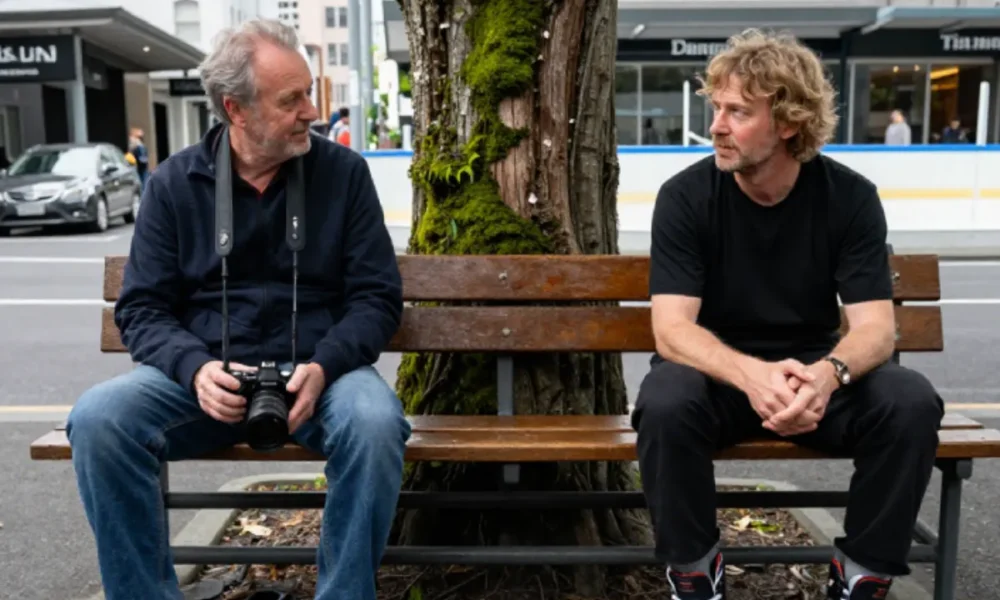
Becki Moss and Wayne Gretzky represent two very different kinds of achievement — one through a lens, the other on ice. Moss, a New Zealand-based freelance editorial photographer using they/she pronouns, has spent over a decade building an intimate body of work that documents marginalised communities and invisible illness. Gretzky, born in Brantford, Ontario, spent 20 NHL seasons becoming the most prolific point-scorer in league history, earning the nickname “The Great One.” Though their worlds share no obvious overlap, both have shaped their respective fields through clarity of purpose, personal conviction, and a willingness to define their own approaches.
Table Of Content
- Becki Moss: Visual Storytelling With Social Purpose
- From Science Student to Award-Winning Photographer
- Key Projects and Their Subjects
- Recognition and Career Milestones
- Wayne Gretzky: Hockey Intelligence Over Physical Dominance
- Early Life and Professional Beginnings
- Playing Career and Records
- Post-Playing Career
- What Connects Two Very Different Careers
Becki Moss: Visual Storytelling With Social Purpose
From Science Student to Award-Winning Photographer
Becki Moss began photographing as a teenager, teaching themselves the technical side of the craft through YouTube tutorials, online photography communities such as Flickr, and advice from friends. What started as a personal interest eventually ran alongside a formal academic path — Moss studied at the University of Auckland, completing a Bachelor of Science in Physiology and Psychology between 2014 and 2017.
Alongside their degree, Moss spent seven years photographing weddings, work that built skills in reading emotional moments quickly and earning the trust of subjects under pressure. When Moss eventually took a deliberate break from academic studies to pursue photography full time, the plan was to test the option for one year. That year never ended. The background in psychology, Moss has noted, shapes their curiosity about people even if the photographic instinct itself remains largely intuitive: “my photography is very intuitive,” Moss told D-Photo, before acknowledging that studying how people think and feel does carry into how they approach portraiture.
Key Projects and Their Subjects
One of Moss’s most recognised ongoing series is Queer Portraits of Auckland, a long-term documentary project photographing members of Auckland’s LGBTQ+ community. The images have been described as “raw, vulnerable and strong,” with Moss aiming to give subjects a space where they feel both seen and respected. Exhibiting the work during Auckland Pride brought it wider attention and placed it within broader conversations about representation in New Zealand society.
Moss has also produced sustained work on invisible chronic illness — a subject they know personally. Moss lives with chronic kidney disease, endometriosis, and ongoing pain. This lived experience gives their photographs of others navigating similar conditions a quality of shared recognition rather than outside observation. Beyond the images themselves, Moss has used their public platform to advocate for accessibility and disability visibility, including an appearance on the RNZ programme What’s the Disibili-Tea, where they examined how accessible Karangahape Road in Auckland is for people with disabilities.
Other significant projects in Moss’s portfolio include Wozer — a documentary series on Wellington’s diverse skateboarding collective that was published in The Washington Post in June 2024 — work featured in The Guardian, and projects including Polyfest and documentary portrait work that consistently centres communities not often given space in mainstream editorial photography. Their series Stay Home Club has been acquired by Te Papa Tongarewa, Museum of New Zealand, marking a significant institutional recognition of Moss’s documentary practice.
Recognition and Career Milestones
Moss won NZ Geographic Young Photographer of the Year in 2020, and in 2023 became the NZ Geographic Photographer of the Year — the only person under 30 to have won both awards. Publications in The Washington Post and The Guardian have brought international visibility to their work, while three solo exhibitions have given their long-form documentary projects a gallery presence. The acquisition of Stay Home Club by Te Papa Tongarewa represents one of the more concrete markers of where Moss’s work now sits within New Zealand’s cultural record.
Wayne Gretzky: Hockey Intelligence Over Physical Dominance
Early Life and Professional Beginnings
Wayne Douglas Gretzky was born on January 26, 1961, in Brantford, Ontario. He learned to skate on the backyard rink his father Walter built each winter — a sheet of ice the family nicknamed “Wally’s Coliseum” — and was competing far above his age group from an early stage. His paternal grandfather emigrated from the Brest region of what is now Belarus, and his grandmother was Ukrainian, from the Ternopil region. Gretzky grew up with four siblings: Kim, Kate, Brent, and Glenn.
At 17, Gretzky signed with the Indianapolis Racers of the World Hockey Association (WHA) in 1978. After eight games, his contract was sold to the Edmonton Oilers. When the WHA folded in 1979 and the Oilers joined the NHL, Gretzky’s career at the highest level of the sport began in earnest.
Playing Career and Records
What distinguished Gretzky from other elite players was not size or physical strength but an almost unnatural ability to read the game. He knew where the puck was going before it got there, and he created an unusual amount of his offensive production from behind the opposing net — a position his teammates and commentators came to call “Gretzky’s office.” His stamina and decision-making allowed him to dominate despite never being among the largest players on the ice.
With the Oilers, Gretzky led the team to four Stanley Cup championships: 1984, 1985, 1987, and 1988. He captured nine Hart Trophies as the NHL’s most valuable player, ten Art Ross Trophies for most points in a season, two Conn Smythe Trophies as playoff MVP, and five Lester B. Pearson Awards (now the Ted Lindsay Award). He also won the Lady Byng Memorial Trophy for sportsmanship five times, and was the only NHL player ever to score more than 200 points in a single season — a feat he accomplished four times. He scored 50 goals in just 39 games during the 1981–82 season, a mark that shattered the standing record of 50 goals in 50 games.
On August 9, 1988, Gretzky was traded to the Los Angeles Kings in a move that sent reverberations across Canadian public life — Parliament briefly debated whether he qualified as a national treasure. In Los Angeles, Gretzky helped bring sustained attention to hockey in California and the southwestern United States, eventually leading the Kings to the 1993 Stanley Cup Finals. He played briefly for the St. Louis Blues before finishing his career with the New York Rangers, retiring in April 1999.
At the time of his retirement, Gretzky held 61 NHL records: 40 regular season, 15 playoff, and six All-Star records. His career totals stand at 2,857 points, 1,963 assists, and 894 regular-season goals. His assists total alone — 1,963 — exceeds the combined career points totals of any other player in NHL history. His points and assists records remain intact and are widely considered the most durable statistical marks in professional hockey. His goals record of 894 stood for 31 years before Washington Capitals forward Alex Ovechkin surpassed it in April 2025, scoring his 895th NHL regular-season goal in the same number of games Gretzky had played.
Post-Playing Career
Upon retiring, Gretzky was immediately inducted into the Hockey Hall of Fame, with the standard three-year waiting period waived. The NHL also retired his number 99 league-wide — the only number ever to receive that distinction. He was later inducted into the IIHF Hall of Fame in 2000 and received the Order of Hockey in Canada in 2012. Gretzky was promoted to Companion of the Order of Canada in 2009.
In coaching and management, Gretzky served as executive director for the Canadian men’s national hockey team at the 2002 Winter Olympics in Salt Lake City, where Canada won its first gold medal in 50 years, and again at the 2006 Turin Games. He became a part-owner of the Phoenix Coyotes in 2000 and served as the team’s head coach from 2005 to 2009 following the 2004–05 NHL lockout. He returned to the Edmonton Oilers in October 2016 as a minority partner and vice-chairman of Oilers Entertainment Group, a role he left in May 2021 to join Turner Sports (now TNT Sports) as a hockey analyst. He continues to provide analysis for TNT Sports broadcasts, including the 2024 NHL Winter Classic at Wrigley Field in Chicago. In February 2025, the NHL named Gretzky honorary team captain for Canada at the 4 Nations Face-Off.
Beyond broadcasting, Gretzky and his wife Janet co-founded the Wayne Gretzky Foundation in 2002 to support underprivileged youth who want to play hockey. He has also been involved with the CNIB Foundation since 1995, served as an ambassador and board member for the Make-A-Wish Foundation and Ronald McDonald House Charities, and in September 2024 led NHL alumni support for the ALS super fund campaign of former player Mark Kirton.
What Connects Two Very Different Careers
Becki Moss and Wayne Gretzky have almost nothing in common on the surface — one photographs overlooked communities in Auckland and Wellington, the other spent two decades dominating professional hockey in North America. What they share is more structural than biographical.
Both built their approaches around something other than the obvious advantages their fields tend to reward. Gretzky succeeded not through size but through positional intelligence and an ability to anticipate play. Moss succeeds not through spectacle but through the trust they build with subjects over time before a camera is ever raised. Both have also turned personal experience into professional purpose: Gretzky’s early years on a Brantford backyard rink shaped the work ethic that carried him through two decades at the top; Moss’s experience with chronic illness directly informs the empathy running through their portraiture of others navigating similar conditions.
The result, in each case, is a body of work that lasts not because it chased recognition but because it was genuinely produced with conviction. Gretzky’s statistical records — most still unbroken more than 25 years after his retirement — and Moss’s institutional acquisitions and award history both point to the same underlying quality: consistency of intent over a long period of time.