

What Is Third-Party Logistics (3PL) Software? Features, Benefits & How to Choose
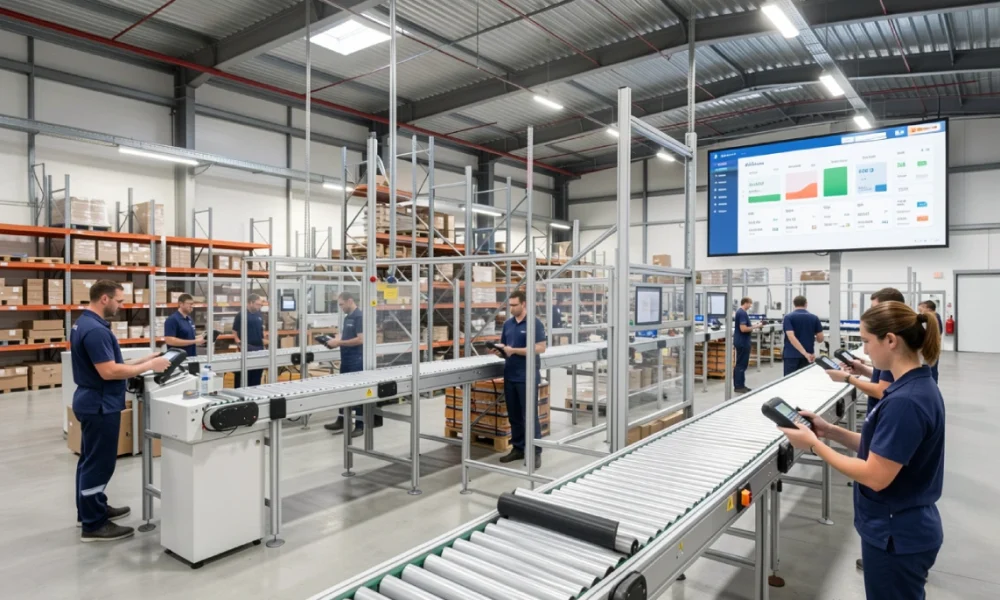
The global third-party logistics market was valued at approximately $1.19 trillion in 2023 and is projected to reach $2.43 trillion by 2032. That growth reflects a fundamental shift in how businesses manage supply chains — moving from in-house operations to outsourced, technology-driven fulfillment. At the center of that shift is 3PL software: the specialized platforms that make multi-client logistics manageable at scale.
Table Of Content
- What Is Third-Party Logistics (3PL) Software?
- How 3PL Differs from 4PL
- Core Features of 3PL Software
- Warehouse Management
- Multi-Client Inventory Management
- Order Management
- 3PL Billing
- Client Portals
- Carrier Integration and Rate Shopping
- Returns Management (Reverse Logistics)
- Key Technologies Driving 3PL Software Performance
- Artificial Intelligence and Machine Learning
- Internet of Things (IoT)
- Blockchain
- Cloud Architecture
- The Business Case for 3PL Software
- Faster Order Fulfillment
- Improved Inventory Accuracy
- Flexibility During Volume Fluctuations
- Common Problems Businesses Face Without Dedicated 3PL Software
- How to Choose 3PL Software: Key Evaluation Criteria
- Integration Depth
- Billing Automation
- Reporting and Visibility
- Implementation Timeline and Support
- Scalability Across Locations
- Notable 3PL Software Platforms
- Best Practices for Implementing 3PL Software
- Emerging Trends in 3PL Technology
- Conclusion
This guide explains what 3PL software is, what it must do, which technologies are shaping it, and how to evaluate platforms before committing.
What Is Third-Party Logistics (3PL) Software?
Third-party logistics software is a specialized category of supply chain technology built for businesses that manage warehousing, transportation, and order fulfillment on behalf of multiple clients. Unlike a standard warehouse management system (WMS) designed for a single company, 3PL software maintains separate inventory records, order histories, billing accounts, and client portals within one platform.
This multi-client architecture is the defining characteristic of purpose-built 3PL software. It allows a logistics provider to operate as an extension of each client’s supply chain — with client-specific workflows, storage rules, and reporting — without mixing data or creating operational confusion across accounts.
3PL software typically sits at the intersection of several system types: warehouse management systems (WMS), transportation management systems (TMS), order management systems (OMS), and billing platforms. Some providers offer all of these in a single platform; others specialize in one area and rely on integrations to cover the rest.
How 3PL Differs from 4PL
A third-party logistics provider handles physical operations: warehousing, transportation, and fulfillment. A fourth-party logistics (4PL) provider operates at a higher level — managing the entire supply chain strategy, including overseeing 3PLs, carriers, and technology partners on behalf of a client. Most growing businesses start with a 3PL relationship and layer in 4PL coordination later, as supply chain complexity increases.
Core Features of 3PL Software
Not every platform marketed as “3PL software” includes the full feature set that multi-client logistics actually requires. When evaluating systems, these are the capabilities that matter:
Warehouse Management
A proper WMS module for 3PL operations supports shared warehouse environments with client-specific storage rules. It should include barcode and RFID scanning, real-time inventory tracking, and full control over receiving, picking, and packing workflows. Features like auto-batching rules — grouping orders by customer or shipping carrier to reduce warehouse travel time — are standard in leading platforms.
Multi-Client Inventory Management
Inventory must be tracked separately by the client, even when goods share the same physical space. This includes lot and serial number tracking, cycle counting tools, replenishment alerts, and the ability to manage inventory across multiple warehouse locations or sites from a single dashboard.
Order Management
3PL software should consolidate incoming orders from eCommerce platforms (Shopify, WooCommerce, Amazon, Magento), EDI feeds, and client portals. Automated order routing, status updates, and shipment notifications reduce manual handling and cut the time between order placement and dispatch.
3PL Billing
Billing is one of the most frequently cited weaknesses of general WMS platforms when used in 3PL contexts. Purpose-built 3PL software supports both fixed fees (monthly storage, handling) and variable fulfillment charges, with automated invoice generation and client-level reporting. This removes the manual reconciliation that slows down cash flow and creates billing disputes.
Client Portals
Client-facing portals give each customer real-time visibility into their own inventory levels, order status, and shipping history — without requiring the 3PL to generate manual reports. This transparency is increasingly expected by eCommerce brands and retailers as a baseline service standard.
Carrier Integration and Rate Shopping
Integration with shipping carriers allows 3PL operators to compare rates, select the most cost-effective shipping method per order, and automate label generation. Multi-carrier support and carrier diversification are important for managing delivery costs and maintaining SLA compliance during carrier capacity disruptions.
Returns Management (Reverse Logistics)
E-commerce generates significant return volumes, and manufacturers regularly deal with defective or recalled goods. 3PL software should handle reverse logistics end-to-end: receiving returned items, assessing their condition, and routing them to restock, disposal, or recycling workflows.
Key Technologies Driving 3PL Software Performance
Warehouse automation has reduced the cost and error rate of repetitive fulfillment tasks. Automated guided vehicles (AGVs) handle internal goods movement, while automated picking and packing systems improve throughput without increasing headcount. The software layer that orchestrates these systems — assigning tasks, tracking progress, and adjusting routing — is what makes physical automation operationally viable at scale.
Artificial Intelligence and Machine Learning
AI is increasingly embedded in 3PL platforms for demand forecasting, inventory placement, and route optimization. Rather than relying on historical averages, AI-powered systems analyze patterns across order data, carrier performance, and seasonal variables to improve planning accuracy. Logiwa, for example, positions its platform explicitly around machine learning-driven warehouse management for high-volume fulfillment.
Route optimization powered by AI accounts for variables including traffic conditions, delivery priority, vehicle capacity, and time-window constraints — reducing transportation costs and improving on-time delivery rates.
Internet of Things (IoT)
IoT devices — including RFID tags, barcode scanners, and environmental sensors — feed real-time data into 3PL platforms. Temperature and humidity monitoring is particularly relevant for food, pharmaceutical, and chemical logistics, where goods must remain within defined environmental ranges throughout transit and storage. This data supports both compliance documentation and proactive intervention when conditions drift out of range.
Blockchain
Blockchain applications in logistics provide an auditable, tamper-resistant record of transactions and custody transfers throughout the supply chain. While adoption is still growing, blockchain is gaining traction in industries where provenance, compliance documentation, and dispute resolution require verifiable records that multiple parties can trust without a single central authority.
Cloud Architecture
Most leading 3PL platforms now operate as cloud-native systems, which allows multi-warehouse visibility, client portal access, and mobile scanning apps to function without on-premise infrastructure. Cloud deployment also simplifies scaling across new warehouse locations and makes software updates faster to deploy.
The Business Case for 3PL Software
3PL providers operate with carrier rate advantages that individual businesses typically cannot match. Combined with software that automates billing, reduces picking errors, and improves inventory accuracy, 3PL partnerships consistently lower per-order fulfillment costs compared to in-house operations of equivalent scale.
Faster Order Fulfillment
Access to distributed fulfillment networks — multiple warehouses positioned closer to end customers — shortens the distance each order travels. Combined with automated order routing that assigns each order to the nearest stocked location, this directly reduces delivery times without increasing carrier spend.
Improved Inventory Accuracy
Manual inventory processes introduce errors that compound over time — leading to stockouts, overstocking, and inaccurate order fulfillment. WMS-driven cycle counting, RFID scanning, and real-time stock level visibility significantly reduce inventory discrepancies and the costs that follow from them.
Flexibility During Volume Fluctuations
Businesses that manage their own warehousing carry fixed costs — staff, space, equipment — regardless of order volume. Partnering with a 3PL provider whose software supports dynamic capacity allocation allows businesses to absorb seasonal peaks and volume spikes without long-term capital commitments.
Common Problems Businesses Face Without Dedicated 3PL Software
Logistics providers that rely on spreadsheets, general-purpose ERPs, or basic WMS platforms not designed for multi-client operations typically encounter the same recurring issues: billing errors that damage client relationships, inventory data that can’t be separated cleanly by client, and an inability to provide the real-time visibility clients now expect as standard. As order volumes grow, manual workarounds that once seemed manageable become sources of high operational cost and client churn.
How to Choose 3PL Software: Key Evaluation Criteria
Verify that the platform genuinely separates client data — inventory, orders, billing, and reporting — rather than approximating separation through manual filtering or custom workarounds. Ask vendors specifically how they handle conflicting SKU codes across clients.
Integration Depth
3PL software does not operate in isolation. Evaluate whether the platform integrates natively with the eCommerce platforms, ERP systems, carrier networks, and EDI partners your clients use. Thin or brittle integrations create data latency and manual reconciliation work.
Billing Automation
Confirm that the billing module supports the specific fee structures your operation uses — storage by pallet or cubic foot, pick fees, special handling, surcharges — and that it can generate client-specific invoices automatically at the close of each billing cycle.
Reporting and Visibility
Assess whether the platform provides operational dashboards for your team alongside client-facing portals. Real-time visibility into order status, inventory levels, carrier performance, and warehouse throughput should be accessible without running custom reports.
Implementation Timeline and Support
A platform with strong features but a six-month implementation timeline may create more disruption than the operational gains justify. Ask vendors for realistic onboarding timelines, what data migration support looks like, and what ongoing technical support is included versus billed separately.
Scalability Across Locations
If your operation spans or plans to span multiple warehouse sites, confirm that the platform supports multi-location inventory management, inter-facility transfers, and consolidated client reporting without requiring separate system instances.
Notable 3PL Software Platforms
Several platforms are consistently referenced by logistics operators evaluating this category. Extensiv (formerly 3PL Central) is one of the most established cloud-based WMS/OMS platforms designed specifically for 3PL providers, with reported use by over 1,500 3PL companies. Logiwa is positioned around AI-driven warehouse management for high-volume fulfillment operations. CartonCloud is designed for small and mid-sized 3PLs needing combined TMS and WMS functionality. Manhattan Active Warehouse Management targets large enterprise 3PLs with complex robotics and labor management requirements. ShipBob and ShipMonk serve eCommerce-focused 3PLs with distributed fulfillment networks and direct integrations with major online retail platforms. Deposco addresses omnichannel logistics with strong multi-location inventory management.
Each platform involves trade-offs across functionality, pricing structure, implementation complexity, and industry specialization. No single platform is the right fit for all operations.
Best Practices for Implementing 3PL Software
- Identify your current bottlenecks — whether in billing accuracy, inventory visibility, client reporting, or order throughput — and use those requirements to filter platforms, rather than evaluating feature lists in the abstract.
- List every system your 3PL software needs to connect with: client ERP systems, eCommerce platforms, carriers, and EDI networks. Confirm integration availability and quality with each vendor before shortlisting.
- The people picking, packing, and receiving goods will use the system daily. Their input on scanning workflows, screen layout, and task assignment logic is more operationally meaningful than executive-level demos.
- Establish current baseline metrics — order accuracy rate, billing cycle time, inventory discrepancy rate — so that software performance can be evaluated against concrete comparisons rather than general impressions.
- Software implementation fails more often due to adoption problems than technical ones. Invest in structured training and designate internal champions who can support team members during the transition period.
- Track order accuracy, on-time shipping rates, inventory turn, and client satisfaction on a regular cycle. Review performance with your vendor quarterly and adjust configurations where gaps appear.
Emerging Trends in 3PL Technology
- AI-Driven Predictive Operations. 3PL platforms are increasingly using machine learning not just for route optimization but for predictive restocking, labor scheduling, and carrier selection — shifting from reactive operations management to anticipatory planning.
- Sustainable Logistics Practices. Environmental sustainability is now a procurement criterion for many shippers. 3PL software is beginning to incorporate carbon footprint tracking per shipment, route optimization weighted toward lower-emission outcomes, and reporting tools that support clients’ ESG documentation requirements.
- Hyper-Personalized Last-Mile Delivery. Consumer expectations for delivery flexibility — specific time windows, alternative delivery locations, real-time rerouting — are cascading into B2B logistics requirements. 3PL platforms are expanding last-mile management features to accommodate this complexity.
- Autonomous Vehicles and Drone Delivery. Self-driving freight vehicles and drone delivery systems remain in active development and limited deployment. As these technologies mature, 3PL software will need to support hybrid fleets that combine conventional carrier networks with autonomous delivery options, particularly for last-mile and rural coverage.
- Deeper EDI and API Integration Standards. As eCommerce brands expect faster onboarding with their 3PL providers, platforms that support rapid EDI setup and open API connectivity will have a structural advantage in client acquisition and retention.
Conclusion
Third-party logistics software is not a single product category — it is a spectrum of platforms, each built with different operational priorities and client profiles in mind. The right choice depends on your current volume, the industries you serve, your integration requirements, and how quickly your operation needs to expand.
What is consistent across all effective 3PL software is the core requirement: clean separation of multi-client data, reliable billing automation, real-time inventory visibility, and integrations deep enough to replace manual workarounds. Platforms that deliver on these fundamentals give 3PL operators the operational control needed to retain clients, reduce costs, and grow the business without adding proportional overhead.