

Keisuke Yamaguchi (OZ): Japanese Artist Bridging Ukiyo-e Tradition and Contemporary Expression
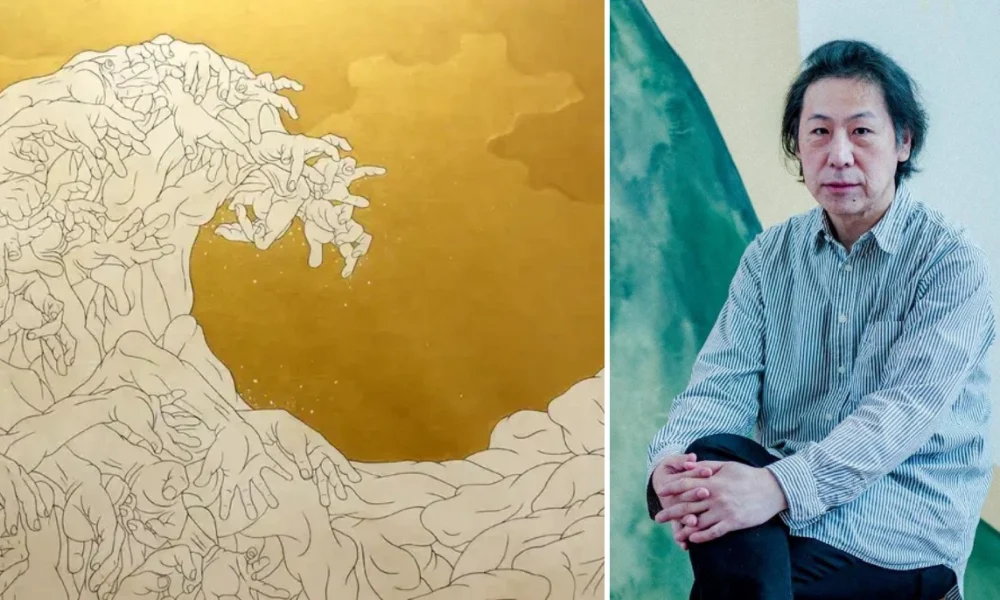
How could traditional Japanese woodblock printing speak to modern audiences? Keisuke Yamaguchi, known professionally as OZ, answers this question through his captivating artwork. Born in Nagano Prefecture in 1986, this Japanese artist has built an international reputation by breathing contemporary life into centuries-old ukiyo-e aesthetics. His work doesn’t just reference the past—it reimagines floating world imagery for today’s visual landscape.
Table Of Content
- Who is Keisuke Yamaguchi (OZ)?
- Early Life and Artistic Foundation
- Artistic Philosophy and Technique
- Notable Works and Projects
- Peninsula Tokyo Ukiyo-e Project
- Park Hotel Tokyo Artist Rooms
- Suntory Gin SUI Commercial
- Tohoku Earthquake Memorial Work
- Shrine Ema Dedications
- Live Painting Performances
- 2016 Ronin │ Globus Artist-in-Residence Program
- International Solo Exhibitions
- Art Fair Participation
- International Biennales and Festivals
- Awards and Recognition
- Artistic Impact
- Recent and Upcoming Activities
- Where to See His Work
- Collecting Yamaguchi’s Art
- Conclusion
From live painting performances at historic ruins to collaborations with luxury hotels, Yamaguchi’s art bridges cultural eras while maintaining deep respect for traditional Japanese techniques.
Who is Keisuke Yamaguchi (OZ)?
Keisuke Yamaguchi is a contemporary Japanese painter who merges traditional ukiyo-e visual language with modern compositional approaches. His professional name, “OZ,” reflects his artistic philosophy of creating otherworldly experiences through familiar Japanese imagery. Here’s the verified information table:
| Aspect | Details |
|---|---|
| Full Name | Keisuke Yamaguchi |
| Professional Name | OZ (尾頭) |
| Born | 1986, Nagano Prefecture, Japan |
| Education | Nagano National College of Technology (Architecture, 2003-2007); Nagaoka Institute of Design |
| Known For | Fusing ukiyo-e aesthetics with contemporary painting |
| Notable Collaborations | Peninsula Tokyo, Suntory Gin SUI, Park Hotel Tokyo |
| Key Award | Winner, Ronin │ Globus Artist-in-Residence Program (2016) |
| Exhibition Venues | Ronin Gallery (NYC), Museo Taller Luis Nishizawa (Mexico), Le Local Théâtre (Paris) |
| Art Fairs | Art Fair Tokyo, Art Fair Philippines, LA Art Show |
| Performance Count | 250+ live painting events |
| Current Base | Nagano, Japan (exhibits internationally) |
Early Life and Artistic Foundation
Growing up in mountainous Nagano Prefecture, Yamaguchi developed a profound connection to Shinto concepts of natural spirituality. This region, steeped in traditional Japanese culture, shaped his worldview that everything contains a hidden spiritual essence—what he calls “mono,” or the “something” within all things.
His early education focused on architecture rather than fine art. He attended Nagano National College of Technology from 2003 to 2007, studying architectural design. This technical training later influenced his compositional approach and spatial awareness in painting.
Following graduation, Yamaguchi continued at Nagaoka Institute of Design, where he studied Architecture and the Environment. During this period, his interest shifted from built structures to painted surfaces, recognizing that traditional Japanese visual language could communicate contemporary experiences.
Artistic Philosophy and Technique
Yamaguchi’s professional name “OZ” derives from the Japanese term “尾頭” (obashira), meaning “from head to tail” or “entirety.” This name reflects his holistic approach to Japanese cultural continuity—connecting historical artistic methods with present-day expression.
His technique draws heavily from ukiyo-e compositional principles: flattened perspective, bold outlines, layered depth through color blocks, and subjects that capture “floating world” temporality. However, instead of courtesans and kabuki actors, his subjects often reference natural forces, Shinto deities, and responses to contemporary Japanese experiences.
The artist works primarily in acrylic on canvas, translating Ukiyo-e’s characteristic flatness into modern paint application. His color palette frequently incorporates gold backgrounds—nodding to traditional Japanese screen painting (byōbu-e)—while his line work maintains the decisive clarity of woodblock carving.
Notable Works and Projects
Peninsula Tokyo Ukiyo-e Project
In 2024, Yamaguchi collaborated with The Peninsula Tokyo on an ambitious ukiyo-e revival project. Working with traditional engravers (Ms. Nagai and Ms. Abe) and master printer Mr. Ogawa, he created three original ukiyo-e designs depicting hotel life through blended Edo and contemporary lenses.
The project produced 100 prints of each design using authentic woodblock techniques—mountain cherry wood blocks, hand-carved details, Berlin blue pigments. Yamaguchi also painted canvas versions of each design, allowing viewers to compare traditional printing textures with contemporary paint application.
Park Hotel Tokyo Artist Rooms
Yamaguchi created Artist Room “Kabuki” at Park Hotel Tokyo in 2016, staying 16 days at the hotel during production. The room features dynamic paintings inspired by “Yanone,” a celebratory Kabuki program. Rather than depicting performers, he painted horse figures and abstracted human limbs in bold composition, capturing Kabuki’s movement vocabulary without literal representation.
He also designed the hotel’s B2F elevator hall space “HAZAMA” (meaning “in-between”), inspired by the roji garden path leading to tea ceremony rooms. Gold paint splashes on dark walls create a transitional space between everyday reality and the hotel’s “extraordinary” experience.
Suntory Gin SUI Commercial
Yamaguchi designed landscape artwork for Suntory’s Gin SUI web commercial, creating scenes from Mount Fuji to tea plantations. His work incorporated the kingfisher (kawasemi) motif and rendered landscapes in color tones matching the gin’s aesthetic identity.
Tohoku Earthquake Memorial Work
His 2016 piece responding to the 2011 Tohoku earthquake and tsunami features contorted hands rising to form a wave—referencing Hokusai’s “Great Wave” while evoking human resilience amid natural disaster. This work won him the inaugural Ronin │ Globus Artist-in-Residence Program, bringing international attention to his practice.
Shrine Ema Dedications
Yamaguchi maintains connections to traditional Japanese religious art by creating large ema (votive plaques) for Shinto shrines. Notable examples include:
- “Onbashirataisai Gyoretsuzu” (Onbashira Festival Procession) for Takei Shrine
- “Chitosenomiya Shukireisai Mikoshi Togyozu” for Chitose Shrine
- “Azumaku Kannondo Konjaku Ezu” for Tofukuji Azumaku Kannondo
These works bridge his contemporary art practice with centuries-old devotional traditions.
Live Painting Performances
Since 2001, Yamaguchi has conducted live painting performances emphasizing spontaneity and site-specificity. He has completed over 250 performances at locations including:
- Ueda Castle ruins in Nagano
- Central Park in New York City
- Zenkoji Temple festivals
- Various international art festivals
These performances integrate process and product, allowing audiences to witness ukiyo-e-inspired contemporary painting emerge in real time. The immediacy contrasts with traditional ukiyo-e’s multi-stage collaborative production (designer, carver, printer).
2016 Ronin │ Globus Artist-in-Residence Program
Yamaguchi won this inaugural program’s grand prize, earning a two-week New York residency at Globus Washitsu. The selection committee praised his artistic excellence, conceptual clarity, and original interpretation of “The Great Wave” theme commemorating the Tohoku earthquake’s fifth anniversary.
International Solo Exhibitions
- 2017: Museo Taller Luis Nishizawa (Toluca, Mexico); Le Local Théâtre (Paris, France)
- 2018: Park Hotel Tokyo Corridor Gallery 34
- 2019-2021: Matsuzakaya Nagoya (annual exhibitions)
- 2020: Ronin Gallery (New York)
Art Fair Participation
Yamaguchi has exhibited at major international art fairs, including:
- Art Fair Tokyo (2025)
- Art Fair Philippines (2020, 2026)
- LA Art Show (2019)
- Art on Paper NYC (2018-2019)
- IFPDA Fine Art Print Fair Cleveland (2017)
International Biennales and Festivals
- Yalova Biennale (Turkey, 2015)
- Fresh Winds Art Festival International Biennale (Iceland, 2014)
- Abiko International Open Air Art Exhibition (Japan, 2009-2014)
Awards and Recognition
2016 – Winner, Ronin │ Globus Artist-in-Residence Program (New York) 2020 – Selected for Hoshino Resort x Avex CREATORS WALL
His work also entered the permanent collection at the Azumino Toyoshina Museum of Modern Art in 2019.
Artistic Impact
Yamaguchi occupies a distinct position within contemporary Japanese art. Unlike superflat artists who critique consumer culture through anime and manga aesthetics, his work maintains closer ties to pre-modern Japanese visual traditions. He demonstrates that ukiyo-e principles remain relevant for expressing contemporary experiences without requiring wholesale reinvention.
His live painting performances make traditional aesthetics accessible to diverse audiences, removing the specialized knowledge barriers often associated with Japanese classical arts. By painting at castle ruins, shrine festivals, and international venues, he positions ukiyo-e-inspired contemporary art as a living practice rather than a museum artifact.
Through shrine ema commissions, Yamaguchi sustains reciprocal relationships between contemporary art and religious institutions. This approach differs from artists who reference Japanese tradition purely as aesthetic source material, instead maintaining functional continuity with devotional art practices.
Recent and Upcoming Activities
Yamaguchi maintains an active exhibition schedule. Recent and upcoming appearances include:
2025: Art Fair Tokyo 19 (Tokyo International Forum, February); “ambos” collage exhibition 2024: Vietnam International Artfair; Peninsula Tokyo permanent ukiyo-e display 2026: Art Fair Nagoya; Art Fair Philippines (Manila)
He continues conducting live painting workshops at schools throughout Azumino City (2019-2025) and performing at the annual “Matsuru” event in Niigata prefecture (2010-2019, 2023-present).
Where to See His Work
Yamaguchi’s paintings appear in several permanent collections and locations:
- Peninsula Tokyo – Three original ukiyo-e prints and matching canvas paintings (permanent display)
- Park Hotel Tokyo – Artist Room Kabuki (guest room), B2F HAZAMA elevator hall
- Azumino Toyoshina Museum of Modern Art – Permanent collection
- Ronin Gallery (New York) – Regular inventory of available works
- Gallery 82 (Nagano) – The primary representative gallery in Japan
Collecting Yamaguchi’s Art
His work remains accessible to mid-level collectors while gaining institutional recognition. Acrylic paintings typically range from intimate works to large-scale pieces suitable for commercial or residential display.
Limited edition ukiyo-e prints from the Peninsula Tokyo collaboration offer collectors the opportunity to own traditionally produced woodblock prints with contemporary design sensibility. These editions maintain connections to centuries-old printing methods while presenting fresh visual interpretations.
Conclusion
Keisuke Yamaguchi (OZ) represents a generation of Japanese artists who approach tradition not as a fixed historical artifact but as an adaptable visual language. His work demonstrates that ukiyo-e aesthetics can address contemporary subjects—natural disasters, spiritual searching, cultural continuity—without abandoning core compositional principles developed during the Edo period.
Through international exhibitions, corporate collaborations, shrine commissions, and live performances, Yamaguchi builds multiple pathways for audiences to encounter ukiyo-e-informed contemporary art. His practice suggests that traditional Japanese visual culture remains generative rather than merely preservable.
As Japanese contemporary art continues gaining global visibility, artists like Yamaguchi, who maintain deep connections to historical practices while speaking to present concerns, offer viewers experiences that are simultaneously familiar and unexpected. His ongoing work charts possibilities for traditional techniques to evolve without losing their cultural specificity.