

50 Women Who Changed the World: Pioneers, Activists, and Trailblazers
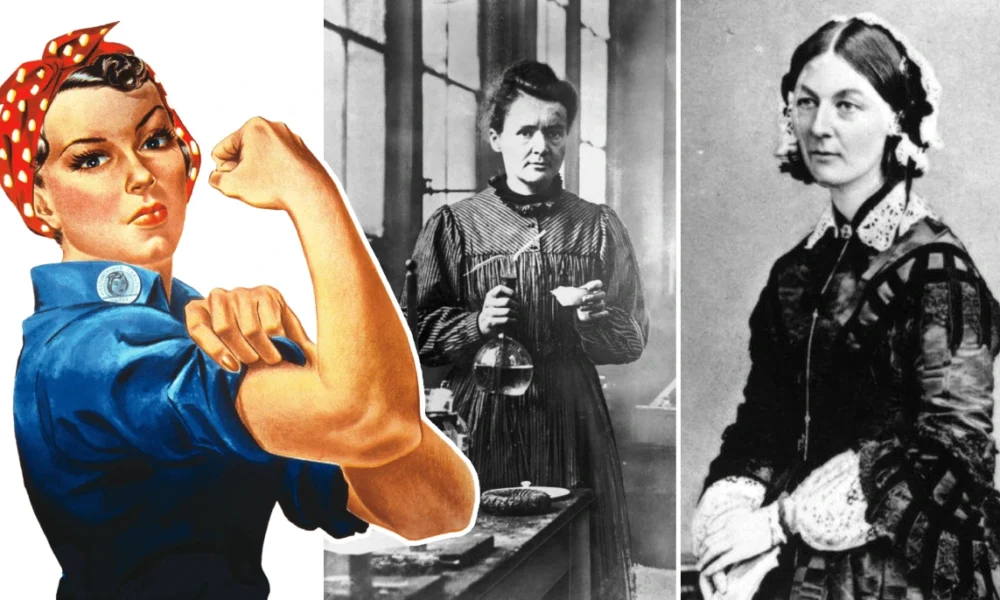
Throughout history, countless women have shattered barriers, challenged injustice, and transformed society. From scientists who unlocked the secrets of nature to activists who fought for human rights, these remarkable individuals refused to accept limitations imposed by their era.
Table Of Content
- Science and Medicine
- 1. Marie Curie (1867-1934)
- 2. Rosalind Franklin (1920-1958)
- 3. Jane Goodall (1934-Present)
- 4. Tu Youyou (1930-Present)
- 5. Rachel Carson (1907-1964)
- 6. Virginia Apgar (1909-1974)
- 7. Elizabeth Blackwell (1821-1910)
- Politics and Leadership
- 8. Cleopatra VII (69 BCE-30 BCE)
- 9. Queen Elizabeth I (1533-1603)
- 10. Eleanor Roosevelt (1884-1962)
- 11. Indira Gandhi (1917-1984)
- 12. Margaret Thatcher (1925-2013)
- 13. Angela Merkel (1954-Present)
- 14. Kamala Harris (1964-Present)
- 15. Jacinda Ardern (1980-Present)
- Civil Rights and Social Justice
- 16. Harriet Tubman (1822-1913)
- 17. Rosa Parks (1913-2005)
- 18. Sojourner Truth (1797-1883)
- 19. Emmeline Pankhurst (1858-1928)
- 20. Susan B. Anthony (1820-1906)
- 21. Malala Yousafzai (1997-Present)
- 22. Ida B. Wells (1862-1931)
- 23. Gloria Steinem (1934-Present)
- 24. Ruth Bader Ginsburg (1933-2020)
- 25. Audre Lorde (1934-1992)
- Arts and Literature
- 26. Jane Austen (1775-1817)
- 27. Maya Angelou (1928-2014)
- 28. Toni Morrison (1931-2019)
- 29. Frida Kahlo (1907-1954)
- 30. Zaha Hadid (1950-2016)
- 31. Georgia O’Keeffe (1887-1986)
- 32. Aretha Franklin (1942-2018)
- 33. Billie Holiday (1915-1959)
- Education and Philanthropy
- 34. Maria Montessori (1870-1952)
- 35. Helen Keller (1880-1968)
- 36. Florence Nightingale (1820-1910)
- 37. Mother Teresa (1910-1997)
- 38. Wangari Maathai (1940-2011)
- Exploration and Adventure
- 39. Amelia Earhart (1897-1937)
- 40. Sally Ride (1951-2012)
- 41. Mae Jemison (1956-Present)
- 42. Valentina Tereshkova (1937-Present)
- Business and Innovation
- 43. Madam C.J. Walker (1867-1919)
- 44. Oprah Winfrey (1954-Present)
- 45. Coco Chanel (1883-1971)
- 46. Grace Hopper (1906-1992)
- Sports
- 47. Billie Jean King (1943-Present)
- 48. Serena Williams (1981-Present)
- 49. Simone Biles (1997-Present)
- 50. Wilma Rudolph (1940-1994)
- Conclusion
This article highlights 50 women whose contributions fundamentally altered the course of human history. Their stories span continents, centuries, and fields—from medicine and mathematics to politics and civil rights. Some are household names; others deserve far wider recognition for their groundbreaking achievements.
What unites them is courage. They persisted despite facing discrimination, violence, and systemic oppression. They opened doors for generations of women who followed. Their legacies continue to shape our world today.
Science and Medicine
1. Marie Curie (1867-1934)
Polish-born physicist and chemist Marie Curie became the first woman to win a Nobel Prize and remains the only person to win Nobel Prizes in two different sciences. Her research on radioactivity led to the discovery of polonium and radium. During World War I, she developed mobile X-ray units to assist battlefield surgeons. Curie’s work laid the foundation for modern physics and cancer treatment, though her prolonged radiation exposure ultimately cost her life.
2. Rosalind Franklin (1920-1958)
British chemist Rosalind Franklin’s X-ray crystallography work was critical to discovering DNA’s double helix structure. Her famous “Photo 51” provided crucial evidence that Watson and Crick used in their model—without properly crediting her contribution. Franklin also conducted groundbreaking research on the molecular structures of viruses. She died of ovarian cancer at 37, possibly due to radiation exposure from her research.
3. Jane Goodall (1934-Present)
Primatologist Jane Goodall transformed our understanding of chimpanzees and animal intelligence. Starting in 1960, she observed wild chimpanzees in Tanzania’s Gombe Stream National Park, documenting their use of tools, complex social behaviors, and individual personalities. Her research challenged the notion that only humans could think and feel. Now in her nineties, Goodall continues advocating for conservation and animal welfare worldwide.
4. Tu Youyou (1930-Present)
Chinese pharmaceutical chemist Tu Youyou discovered artemisinin, a treatment that has saved millions of lives from malaria. She drew on traditional Chinese medicine texts to identify sweet wormwood as a potential cure, then tested it on herself before human trials. In 2015, she became the first Chinese woman to receive the Nobel Prize in Physiology or Medicine. Her work demonstrates how ancient knowledge combined with modern science can produce life-saving treatments.
5. Rachel Carson (1907-1964)
Marine biologist and author Rachel Carson sparked the modern environmental movement with her 1962 book “Silent Spring.” The work exposed the devastating effects of pesticides on ecosystems and human health, particularly DDT. Despite fierce attacks from the chemical industry, Carson’s meticulous research led to stricter regulations on pesticide use and inspired the creation of the Environmental Protection Agency. She died of breast cancer two years after the book’s publication, but her influence on environmental policy endures.
6. Virginia Apgar (1909-1974)
Anesthesiologist Virginia Apgar created the Apgar Score in 1952, a quick method for assessing newborn health one minute and five minutes after birth. The simple test—checking appearance, pulse, grimace, activity, and respiration—became standard worldwide. Before Apgar’s system, doctors often overlooked distressed newborns, leading to preventable deaths. Her innovation has saved countless infant lives and fundamentally changed neonatal care.
7. Elizabeth Blackwell (1821-1910)
In 1849, Elizabeth Blackwell became the first woman to receive a medical degree in the United States. Medical schools repeatedly rejected her application before Geneva Medical College in New York admitted her—reportedly as a joke. After graduating at the top of her class, Blackwell opened the New York Infirmary for Women and Children, staffed entirely by women. She trained generations of female physicians and proved women could excel in medicine.
Politics and Leadership
8. Cleopatra VII (69 BCE-30 BCE)
The last active pharaoh of Egypt, Cleopatra VII was a skilled politician and diplomat who spoke at least nine languages. She allied with Julius Caesar and later Mark Antony to protect Egypt’s independence during Rome’s expansion. Despite her kingdom’s eventual defeat, Cleopatra’s intelligence and political acumen allowed Egypt to remain autonomous far longer than would otherwise have been possible. History often focuses on her romantic relationships, but she was primarily a strategic leader defending her nation.
9. Queen Elizabeth I (1533-1603)
England’s Elizabeth I ruled for 45 years during a golden age of English culture and exploration. She navigated religious conflicts, defeated the Spanish Armada, and never married—maintaining her power by refusing to share it. Under her reign, England became a major European power, and figures like William Shakespeare flourished. Her success as an unmarried female monarch challenged assumptions about women’s fitness to rule.
10. Eleanor Roosevelt (1884-1962)
First Lady Eleanor Roosevelt transformed the role from ceremonial to activist. She held press conferences, wrote a daily newspaper column, and championed civil rights, women’s rights, and the poor. After President Franklin D. Roosevelt’s death, she served as a U.N. delegate and chaired the committee that drafted the Universal Declaration of Human Rights. Her advocacy gave voice to marginalized Americans and established human rights as a global priority.
11. Indira Gandhi (1917-1984)
India’s first and only female prime minister, Indira Gandhi led the world’s largest democracy for nearly 16 years across two terms. She guided India through the 1971 war with Pakistan that resulted in Bangladesh’s independence, promoted agricultural self-sufficiency through the Green Revolution, and conducted India’s first successful nuclear test. Her authoritarian Emergency period from 1975-1977 remains controversial, but her impact on modern India is undeniable. Gandhi was assassinated by her own bodyguards in 1984.
12. Margaret Thatcher (1925-2013)
Britain’s first female prime minister, Margaret Thatcher served from 1979 to 1990. Known as the “Iron Lady,” she privatized state-owned industries, reduced union power, and pursued free-market policies that transformed Britain’s economy. Her relationship with President Ronald Reagan helped end the Cold War. While her policies remain divisive, Thatcher proved that a woman could lead a major world power through significant economic and political change.
13. Angela Merkel (1954-Present)
German Chancellor Angela Merkel led Europe’s largest economy for 16 years (2005-2021). A physicist from East Germany, she became one of the world’s most powerful leaders, navigating the 2008 financial crisis, European debt crisis, and refugee crisis. Her decision to welcome over one million refugees in 2015 was controversial but reflected her moral leadership. Merkel’s pragmatic, science-based approach and steady hand made her a global statesman.
14. Kamala Harris (1964-Present)
In 2021, Kamala Harris became the first woman, first Black American, and first person of South Asian descent to serve as Vice President of the United States. Previously California’s Attorney General and a U.S. Senator, Harris broke barriers at each stage of her career. Her historic election represents progress in American representation, though gender and racial equality in leadership remain ongoing struggles.
15. Jacinda Ardern (1980-Present)
New Zealand Prime Minister Jacinda Ardern (2017-2023) became the world’s youngest female head of government at 37. She gained international attention for her compassionate response to the Christchurch mosque shootings, swift gun law reforms, and effective COVID-19 management. Ardern gave birth while in office and brought her infant to the U.N. General Assembly, normalizing working motherhood at the highest levels. She resigned in 2023, citing burnout—sparking important conversations about political leadership and mental health.
Civil Rights and Social Justice
16. Harriet Tubman (1822-1913)
Born into slavery, Harriet Tubman escaped to freedom in 1849, then risked her life to return South at least 13 times via the Underground Railroad, leading approximately 70 enslaved people to freedom. During the Civil War, she served as a Union spy, scout, and nurse. She later became active in the women’s suffrage movement. Tubman’s courage and commitment to justice made her an enduring symbol of freedom.
17. Rosa Parks (1913-2005)
On December 1, 1955, Rosa Parks refused to give up her bus seat to a white passenger in Montgomery, Alabama. Her arrest sparked the Montgomery Bus Boycott, a pivotal event in the Civil Rights Movement. Parks was already an experienced NAACP activist when she took her stand; her act of defiance was strategic civil disobedience. The yearlong boycott led to the Supreme Court ruling that bus segregation was unconstitutional.
18. Sojourner Truth (1797-1883)
Born into slavery as Isabella Baumfree, Sojourner Truth escaped with her infant daughter in 1826. She became a powerful speaker for abolition and women’s rights, delivering her famous “Ain’t I a Woman?” speech in 1851. Truth successfully sued to recover her son who had been illegally sold into slavery—one of the first cases where a Black woman won against a white man in court. Her advocacy connected the fights for racial and gender equality.
19. Emmeline Pankhurst (1858-1928)
British political activist Emmeline Pankhurst founded the Women’s Social and Political Union in 1903. The suffragettes used militant tactics—including hunger strikes, property destruction, and public protests—to demand voting rights. Pankhurst was imprisoned multiple times and endured force-feeding. Her radical approach was controversial, but it intensified pressure that contributed to women gaining the vote in Britain in 1918 (for women over 30) and 1928 (for all women over 21).
20. Susan B. Anthony (1820-1906)
American social reformer Susan B. Anthony spent five decades fighting for women’s suffrage. She traveled across the country giving speeches, petitioning Congress, and organizing campaigns. In 1872, she illegally voted in the presidential election and was arrested, fined $100, and refused to pay. Though she died 14 years before the 19th Amendment passed, Anthony’s tireless advocacy laid the groundwork for American women’s right to vote.
21. Malala Yousafzai (1997-Present)
Pakistani activist Malala Yousafzai began advocating for girls’ education at age 11. In 2012, the Taliban shot her in the head for speaking out. She survived and intensified her activism. At 17, she became the youngest Nobel Peace Prize laureate. Through the Malala Fund, she continues supporting girls’ education globally. In 2026, Malala remains active, recently pledging $300,000 for education in conflict zones including Gaza, Sudan, and Congo. Her courage inspired millions to defend education as a fundamental right.
22. Ida B. Wells (1862-1931)
Journalist and activist Ida B. Wells documented lynching in America through investigative reporting that exposed the brutal reality of racial violence. After a mob destroyed her newspaper office in Memphis, she moved to Chicago and continued her anti-lynching crusade. Wells co-founded the NAACP and fought for both racial justice and women’s suffrage. Her fearless journalism brought national attention to racial terrorism in the South.
23. Gloria Steinem (1934-Present)
Journalist and activist Gloria Steinem became a leading voice of the feminist movement in the 1960s and 1970s. She co-founded Ms. magazine, which covered women’s issues from a feminist perspective. Steinem organized protests, spoke nationwide, and helped establish the National Women’s Political Caucus. Her accessible writing and public speaking made feminism more mainstream and continues inspiring new generations.
24. Ruth Bader Ginsburg (1933-2020)
Before becoming the second woman on the U.S. Supreme Court in 1993, Ruth Bader Ginsburg argued groundbreaking gender discrimination cases. As a lawyer in the 1970s, she strategically chose cases that demonstrated how gender stereotypes harm everyone. On the Supreme Court, she became known for powerful dissents defending civil rights and gender equality. Ginsburg’s legal work dismantled discriminatory laws and expanded constitutional protections for women.
25. Audre Lorde (1934-1992)
Black lesbian feminist writer and activist Audre Lorde explored intersections of race, gender, sexuality, and class in her poetry and essays. Her works, including “Sister Outsider” and “The Cancer Journals,” challenged white feminism’s exclusion of marginalized voices. Lorde argued that differences among women should be celebrated, not ignored. Her concept of intersectionality remains central to modern social justice movements.
Arts and Literature
26. Jane Austen (1775-1817)
English novelist Jane Austen transformed literature with her wit, social commentary, and realistic female characters. Novels like “Pride and Prejudice” and “Sense and Sensibility” examined women’s limited options in Regency England while pioneering techniques like free indirect discourse. Published anonymously during her lifetime, Austen’s works are now recognized as masterpieces that continue influencing writers and readers worldwide.
27. Maya Angelou (1928-2014)
Poet, author, and civil rights activist Maya Angelou’s autobiography “I Know Why the Caged Bird Sings” became the first nonfiction bestseller by a Black woman. Her work explored themes of identity, racism, and resilience. Angelou recited her poem “On the Pulse of Morning” at President Clinton’s 1993 inauguration. Throughout her life, she worked as a singer, dancer, actress, and professor while producing over 30 books.
28. Toni Morrison (1931-2019)
Nobel Prize-winning novelist Toni Morrison explored Black American experiences with poetic language and unflinching honesty. Her novels, including “Beloved,” “Song of Solomon,” and “The Bluest Eye,” examined slavery’s legacy, racism, and identity. Morrison was the first Black woman to win the Nobel Prize in Literature (1993). Her work permanently changed American literature and gave voice to stories long marginalized.
29. Frida Kahlo (1907-1954)
Mexican artist Frida Kahlo created vivid self-portraits exploring pain, identity, and Mexican culture. After a devastating bus accident left her with lifelong injuries, Kahlo channeled her suffering into art. She married artist Diego Rivera but established her own distinctive style, blending surrealism with folk art traditions. Kahlo’s unflinching self-examination and celebration of Mexican heritage made her an international icon.
30. Zaha Hadid (1950-2016)
Iraqi-British architect Zaha Hadid pioneered bold, futuristic designs that transformed urban landscapes. She became the first woman to win the Pritzker Architecture Prize in 2004. Her buildings—including the Guangzhou Opera House and London Aquatics Centre—feature flowing curves and sharp angles that defy conventional architecture. Hadid proved women could lead in a male-dominated field and redefined what buildings could look like.
31. Georgia O’Keeffe (1887-1986)
American artist Georgia O’Keeffe created large-scale paintings of flowers, New York skyscrapers, and New Mexico landscapes. Her modernist works combined precision with sensuality, challenging viewers’ perceptions. O’Keeffe lived independently in New Mexico for decades, creating art on her own terms. She became one of the most significant American artists of the 20th century and a symbol of artistic independence.
32. Aretha Franklin (1942-2018)
The “Queen of Soul,” Aretha Franklin’s powerful voice and emotional depth revolutionized popular music. Her version of “Respect” became a civil rights and feminist anthem. Franklin won 18 Grammy Awards and became the first woman inducted into the Rock and Roll Hall of Fame in 1987. Her music transcended genres, influencing countless artists and providing the soundtrack to social change movements.
33. Billie Holiday (1915-1959)
Jazz singer Billie Holiday’s unique phrasing and emotional intensity changed vocal performance. Her rendition of “Strange Fruit,” about lynching in the South, became one of the first protest songs to reach a wide audience despite radio bans. Holiday faced racism, addiction, and legal persecution throughout her career but left an indelible mark on American music.
Education and Philanthropy
34. Maria Montessori (1870-1952)
Italy’s first female physician, Maria Montessori developed an educational approach emphasizing independence, hands-on learning, and respect for children’s natural development. Montessori schools, which began in Rome in 1907, now operate worldwide. Her methods transformed early childhood education by recognizing children as capable learners rather than empty vessels to fill with information.
35. Helen Keller (1880-1968)
Deaf and blind from age 19 months, Helen Keller learned to communicate with help from teacher Anne Sullivan. She became the first deafblind person to earn a Bachelor of Arts degree. Keller then spent her life advocating for people with disabilities, women’s suffrage, labor rights, and pacifism. Her autobiography and lectures demonstrated that disability does not limit human potential.
36. Florence Nightingale (1820-1910)
British social reformer Florence Nightingale founded modern nursing. During the Crimean War, she improved sanitary conditions and introduced systematic patient care, dramatically reducing death rates. Nightingale later established the first secular nursing school and used statistical analysis to advocate for healthcare reform. Her professionalization of nursing created career opportunities for women while improving medical care.
37. Mother Teresa (1910-1997)
Albanian-Indian Catholic nun Mother Teresa founded the Missionaries of Charity in 1950, serving the poor, sick, and dying in Calcutta. Her organization expanded globally, operating hospices and homes in over 130 countries. She received the Nobel Peace Prize in 1979. While her work has faced criticism regarding medical practices and religious motivations, Mother Teresa brought worldwide attention to extreme poverty.
38. Wangari Maathai (1940-2011)
Kenyan environmental and political activist Wangari Maathai founded the Green Belt Movement in 1977, which has planted over 51 million trees across Africa. She became the first African woman to receive the Nobel Peace Prize in 2004 for her contributions to sustainable development, democracy, and peace. Maathai connected environmental conservation with women’s rights and economic justice.
Exploration and Adventure
39. Amelia Earhart (1897-1937)
American aviator Amelia Earhart became the first woman to fly solo across the Atlantic Ocean in 1932. She set numerous aviation records and advocated for women in aviation. Earhart disappeared in 1937 while attempting to circumnavigate the globe at the equator. Though her final flight ended in mystery, she inspired generations of female pilots and adventurers.
40. Sally Ride (1951-2012)
Physicist Sally Ride became the first American woman in space when she flew on the Space Shuttle Challenger in 1983. She flew on two shuttle missions, spending over 343 hours in space. After leaving NASA, Ride promoted science education, especially for girls. She remained a private person, and her partner revealed after Ride’s death that she had been in a same-sex relationship for 27 years.
41. Mae Jemison (1956-Present)
In 1992, Mae Jemison became the first Black woman to travel to space aboard the Space Shuttle Endeavour. Before joining NASA, she worked as a doctor in West Africa. After leaving NASA, Jemison founded companies promoting science education and technology in developing countries. She appeared on “Star Trek: The Next Generation,” honoring Nichelle Nichols, whose portrayal of Lt. Uhura inspired Jemison’s space dreams.
42. Valentina Tereshkova (1937-Present)
Soviet cosmonaut Valentina Tereshkova became the first woman in space in 1963, orbiting Earth 48 times during a three-day mission. She remains the only woman to have flown a solo space mission. After her spaceflight, Tereshkova earned a doctorate in engineering and became a prominent member of Soviet and Russian politics. Her achievement proved women could endure spaceflight and participate in space exploration.
Business and Innovation
43. Madam C.J. Walker (1867-1919)
Born Sarah Breedlove to formerly enslaved parents, Madam C.J. Walker became America’s first self-made female millionaire. She created hair care products for Black women and built a successful business employing thousands of Black women as sales agents. Walker used her wealth to support education, the arts, and civil rights causes. Her entrepreneurial success challenged racist and sexist assumptions about who could achieve business success.
44. Oprah Winfrey (1954-Present)
Media mogul Oprah Winfrey transformed daytime television with “The Oprah Winfrey Show” (1986-2011), which reached millions daily. She became the first Black woman billionaire in 2003. Winfrey built a media empire including magazines, a television network, and production companies. Her influence extends beyond entertainment to philanthropy, particularly education for girls in South Africa. Winfrey’s life story—from poverty to unprecedented success—inspired millions.
45. Coco Chanel (1883-1971)
French fashion designer Coco Chanel revolutionized women’s fashion by rejecting restrictive corsets and elaborate designs in favor of comfortable, elegant simplicity. She popularized the little black dress, Chanel suit, and Chanel No. 5 perfume. Chanel freed women from impractical clothing while establishing herself as a successful businesswoman. Her classic designs remain influential today.
46. Grace Hopper (1906-1992)
Computer scientist and U.S. Navy rear admiral Grace Hopper helped develop COBOL, one of the first high-level programming languages. She coined the term “debugging” after removing an actual moth from a computer. Hopper advocated for machine-independent programming languages, making computers more accessible. Her innovations laid groundwork for modern computing, and she mentored numerous young programmers.
Sports
47. Billie Jean King (1943-Present)
Tennis champion Billie Jean King won 39 Grand Slam titles and fought for gender equality in sports. In 1973, she defeated Bobby Riggs in the “Battle of the Sexes,” watched by 90 million viewers worldwide. King championed equal prize money for women and founded the Women’s Tennis Association. She publicly acknowledged her sexuality in 1981 at great personal cost, becoming one of the first prominent athletes to come out.
48. Serena Williams (1981-Present)
American tennis player Serena Williams won 23 Grand Slam singles titles, the most by any player in the Open Era. She dominated women’s tennis for over two decades while facing racism and sexism. Williams advocated for equal pay and maternal health, particularly for Black women. Her powerful playing style and mental toughness changed expectations for female athletes. Williams retired from professional tennis in 2022.
49. Simone Biles (1997-Present)
Gymnast Simone Biles holds the most World Championship gold medals (25) and is widely considered the greatest gymnast of all time. She has five skills named after her—moves no other woman has successfully performed in competition. At the 2020 Tokyo Olympics (held in 2021), Biles withdrew from several events to protect her mental health, sparking global conversations about athletes’ wellbeing. Her openness about mental health and past abuse changed how we discuss athlete welfare.
50. Wilma Rudolph (1940-1994)
Wilma Rudolph overcame childhood polio and became the first American woman to win three gold medals in track and field at a single Olympics (Rome, 1960). Growing up in segregated Tennessee, Rudolph faced both racial discrimination and physical disability. Her Olympic triumph made her an international celebrity and helped break down racial barriers in sports. Rudolph used her fame to support civil rights and inspire young athletes.
Conclusion
These 50 women represent just a fraction of those who changed our world. They came from different countries, faced different challenges, and worked in different fields. Yet they share common threads: courage to challenge injustice, persistence despite obstacles, and commitment to making the world better.
Many fought for rights we now take for granted—the right to vote, to receive education, to work in our chosen fields, to control our own bodies. Others expanded human knowledge, created timeless art, or explored new frontiers. Some are still with us, continuing their work and inspiring new generations.
Their achievements remind us that progress requires action. These women didn’t wait for permission or for conditions to be perfect. They saw problems and worked to solve them. They faced sexism, racism, poverty, violence, and opposition from powerful institutions, but they persisted.
The struggle for equality continues. Women worldwide still face discrimination, violence, and limited opportunities. But these trailblazers showed that change is possible. They opened doors, shifted perspectives, and proved that women can excel in any field.
As we honor their legacies, we must ask ourselves: What injustices do we see? What changes do we want to make? The women on this list started as ordinary people who decided to take extraordinary action. Their stories challenge us to do the same.