

How to Integrate LIS and EMR Systems | Benefits, Challenges, and Implementation Steps
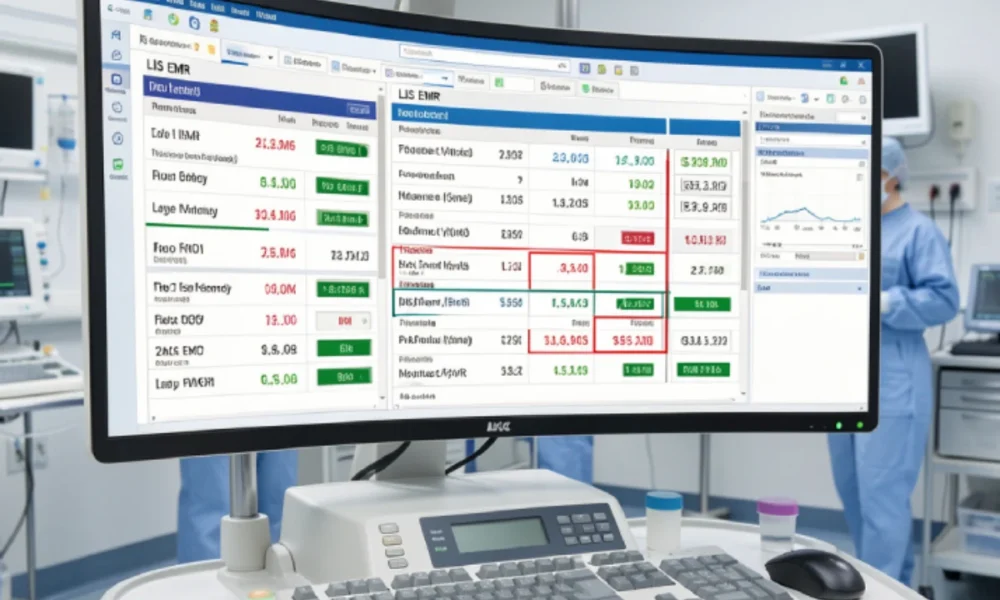
Healthcare organizations managing laboratory operations face a common challenge: disconnected systems that slow down test ordering, result reporting, and clinical decision-making. Laboratory Information Systems (LIS) manage the complete laboratory workflow, from specimen tracking to result validation. Electronic Medical Records (EMR) serve as the digital repository for patient medical histories, diagnoses, and treatment plans. When these systems operate independently, healthcare providers must rely on manual data entry, which introduces transcription errors and delays that can affect patient outcomes.
Table Of Content
- Understanding LIS and EMR Systems
- Why Integration Matters
- Key Benefits of Integration
- Real-Time Access to Laboratory Data
- Workflow Efficiency
- Data Accuracy and Patient Safety
- Regulatory Compliance
- Integration Standards and Protocols
- Common Integration Challenges
- System Compatibility
- Data Standardization
- Implementation Costs
- Organizational Change Management
- Implementation Approach
- Assess Current Systems
- Select Integration Method
- Implement Security Measures
- Conduct Testing
- Train Staff and Deploy
- Integration Types and Connectivity
- Measuring Success
- Future Developments
LIS and EMR integration creates a direct connection between laboratory operations and patient records, allowing test results to flow automatically into medical records without manual intervention. This connection transforms how healthcare providers access diagnostic information and make clinical decisions.
Understanding LIS and EMR Systems
A Laboratory Information System functions as the operational backbone of clinical laboratories. These specialized platforms manage test requisitions, specimen accessioning, instrument interfacing, quality control, and regulatory compliance specific to laboratory environments. LIS platforms handle high-volume testing workflows while maintaining CLIA, CAP, and HIPAA compliance through built-in audit trails and data security protocols.
Electronic Medical Records store comprehensive patient information within a single healthcare facility. EMRs contain patient demographics, clinical notes, medication lists, allergy information, vital signs, and laboratory results. While EMRs provide a complete view of patient care within one organization, Electronic Health Records (EHR) expand this capability by enabling data sharing across multiple healthcare institutions.
Why Integration Matters
Manual processes create bottlenecks in laboratory workflows. When physicians place test orders on paper or through phone calls, laboratory staff must manually enter this information into the LIS. After testing completes, someone must transcribe results back into the EMR. Each manual step introduces the possibility of data entry errors, transposed numbers, or misidentified patients.
Integration eliminates these manual touchpoints. When a physician orders a lab test through the EMR, that order transmits electronically to the LIS. Laboratory staff receive complete patient demographics, insurance verification, and clinical history with the order. After testing completes, results automatically populate the patient’s EMR, where physicians can review them immediately.
This automatic data exchange becomes especially important in emergency departments and intensive care units, where clinicians need rapid access to laboratory results to make time-sensitive treatment decisions. Integration ensures that test results reach providers within minutes rather than hours.
Key Benefits of Integration
Real-Time Access to Laboratory Data
Integrated systems provide physicians with immediate access to laboratory results as soon as they’re validated. This real-time visibility enables faster diagnosis and treatment adjustments. In cases where lab values indicate a concerning trend or abnormal finding, providers can intervene quickly rather than waiting for manual result delivery.
Healthcare providers can track laboratory values over time through graphical displays within the EMR. Trending lab results helps identify patterns in chronic disease management, medication response, and disease progression. This longitudinal view of laboratory data supports more informed clinical decisions.
Workflow Efficiency
Integration streamlines the entire laboratory ordering and reporting cycle. Physicians place orders directly from patient charts without phone calls or paper requisitions. Laboratory staff receive electronic orders with complete patient information, reducing time spent clarifying incomplete orders or tracking down missing details.
Automated result reporting eliminates the need for laboratory personnel to manually enter results into multiple systems. This reduction in manual data entry frees laboratory staff to focus on testing, quality control, and other value-added activities rather than administrative tasks.
Data Accuracy and Patient Safety
Manual transcription represents a significant source of medical errors. Studies show that manual data entry creates opportunities for wrong patient identification, transposed lab values, and incorrect units of measurement. Integration removes these transcription steps, ensuring that the exact laboratory result validated by laboratory personnel appears in the patient’s medical record.
Automated data exchange also ensures consistency across systems. When patient demographics update in the EMR, those changes can propagate to the LIS, maintaining synchronized patient information. This consistency helps prevent medical errors related to outdated contact information, insurance details, or emergency contacts.
Regulatory Compliance
Healthcare organizations must comply with HIPAA regulations governing electronic protected health information. Integrated systems can implement consistent security protocols across both platforms, including encryption, role-based access controls, and comprehensive audit logging. This unified approach to security simplifies compliance management and reduces the risk of data breaches.
CLIA and CAP require laboratories to maintain complete documentation of all testing activities. Integration supports regulatory compliance by ensuring that all test orders, results, and communications between systems are properly documented and traceable.
Integration Standards and Protocols
Healthcare interoperability relies on standardized communication protocols that enable different systems to exchange information accurately. HL7 (Health Level Seven) standards have served as the foundation for healthcare data exchange for decades.
HL7 v2 remains widely deployed across healthcare organizations. This standard uses pipe-delimited text segments to structure messages for patient admissions, test orders (ORM messages), and results reporting (ORU messages). While HL7 v2 enjoys nearly universal support among healthcare vendors, it requires careful implementation to handle vendor-specific variations and custom fields.
FHIR (Fast Healthcare Interoperability Resources) represents the next generation of healthcare data exchange standards. FHIR uses RESTful APIs with JSON or XML data formats, making it more accessible for modern web and mobile applications. FHIR’s resource-based model allows systems to request specific data elements rather than entire message structures. Major EMR vendors including Epic, Cerner (Oracle Health), and MEDITECH now provide FHIR endpoints, though implementation approaches vary by vendor.
Many healthcare organizations adopt a hybrid approach, maintaining HL7 v2 interfaces for real-time transactional data while implementing FHIR APIs for bulk data access, analytics, and patient-facing applications.
LOINC (Logical Observation Identifiers Names and Codes) provides standardized codes for laboratory tests and clinical observations. Using LOINC codes ensures that a CBC ordered in one system is recognized as the same test in another system. SNOMED CT offers standardized terminology for clinical concepts, supporting accurate data interpretation across different platforms.
Common Integration Challenges
System Compatibility
Not all LIS and EMR systems communicate seamlessly. Different vendors design systems with unique architectures, proprietary data formats, and varying levels of standards compliance. This compatibility challenge often requires middleware solutions or interface engines that translate data between systems.
Legacy LIS installations may lack native support for modern integration standards like FHIR. These older systems might require custom development work or third-party interface solutions to connect with contemporary EMR platforms.
Data Standardization
Laboratories and clinical systems may use different terminologies, formats, and coding schemes. One system might represent a test result as “Hgb,” while another uses “Hemoglobin” or a LOINC code. Mapping these different representations to ensure accurate data exchange requires careful planning and ongoing maintenance.
Unit standardization presents another challenge. Laboratory instruments might report results in different units (mg/dL versus mmol/L), requiring conversion and validation to ensure clinical accuracy.
Implementation Costs
Integration projects require significant financial investment. Healthcare organizations must budget for software licensing, interface development, testing environments, and ongoing maintenance. Smaller laboratories with limited IT resources may find these costs challenging.
However, organizations should evaluate the long-term return on investment. Integration reduces labor costs associated with manual data entry, decreases error rates that can lead to additional testing or adverse events, and improves overall operational efficiency. Many organizations find that efficiency gains and error reduction offset initial implementation expenses within 2-3 years.
Organizational Change Management
Staff members accustomed to existing workflows may resist new integrated systems. Laboratory personnel might need training on new order entry processes, while physicians require education on how to access laboratory results through the EMR. Comprehensive training programs and change management strategies help ensure successful adoption.
Implementation Approach
Assess Current Systems
Before beginning integration, healthcare organizations should evaluate their existing LIS and EMR capabilities. This assessment includes reviewing vendor support for integration standards, identifying current workflow bottlenecks, and understanding specific organizational needs. Documenting how data currently flows between laboratory and clinical departments helps identify integration points and requirements.
Organizations should also inventory legacy systems and understand their limitations. Some older platforms may require upgrades or replacement before integration becomes feasible.
Select Integration Method
Several integration approaches exist, each with different characteristics:
Point-to-Point Integration connects the LIS directly to a single EMR installation. This approach works well for organizations with straightforward integration needs but can become complex when connecting to multiple EMR systems.
Interface Engines act as central hubs that manage multiple connections. These middleware platforms translate data formats, route messages between systems, and provide monitoring capabilities. Popular interface engines include Mirth Connect, Rhapsody, and Corepoint.
API-Based Integration using FHIR enables more flexible, real-time data access. RESTful APIs allow systems to request specific data on demand rather than maintaining continuous message feeds.
Enterprise Integration Platforms provide comprehensive interoperability solutions that can connect LIS, EMR, billing systems, and other healthcare applications through a unified architecture.
Implement Security Measures
Integrated systems must protect patient data throughout transmission and storage. Security measures should include:
Encryption for data in transit using TLS/SSL protocols and for data at rest using strong encryption algorithms. This prevents unauthorized access to patient information during transmission between systems.
Role-Based Access Controls that restrict data access based on job function and clinical need. Laboratory staff require access to test orders and results, while billing personnel need financial information. Proper access controls ensure that users only see information relevant to their responsibilities.
Audit Logging that tracks all system access and data modifications. Comprehensive audit trails support compliance requirements and help identify security incidents.
Authentication Mechanisms including multi-factor authentication strengthen system security and prevent unauthorized access.
Conduct Testing
Thorough testing identifies issues before they affect patient care or operational workflows. Testing phases should include:
Unit Testing validates individual interface components, ensuring that data mappings correctly transform information between systems.
Integration Testing verifies that complete workflows function correctly, from test ordering through result reporting.
Performance Testing confirms that the integrated system handles expected transaction volumes without slowdowns or failures.
Security Testing validates that encryption, access controls, and audit logging function as designed.
Testing should occur in a dedicated environment that mirrors production systems but uses synthetic patient data to avoid HIPAA violations.
Train Staff and Deploy
Successful deployment requires comprehensive staff training on new workflows and system capabilities. Training programs should address different user groups including laboratory technicians, physicians, nurses, and administrative staff. Each group needs role-specific instruction on how integration affects their daily workflows.
Gradual rollout strategies reduce risk by implementing integration in phases. Organizations might begin with outpatient laboratory orders before expanding to emergency department and inpatient testing. This phased approach allows teams to identify and resolve issues without disrupting critical services.
Ongoing support during the transition period helps staff adapt to new processes and addresses questions as they arise. Establishing a dedicated support team for the first few weeks after go-live prevents minor issues from escalating into major problems.
Integration Types and Connectivity
Laboratories require different integration approaches depending on their operational model. Standalone laboratories typically implement robust LIS platforms with extensive customization for their specific workflows. These facilities often need point-to-point connections to multiple referring physician EMR systems.
Hospital-based laboratories may benefit from tighter integration with their institution’s EMR, especially if both systems come from the same vendor. Epic Beaker, for instance, integrates directly with Epic EMR environments, while MEDITECH Expanse offers similar tight coupling for MEDITECH users.
Reference laboratories serving multiple healthcare organizations require scalable integration solutions. Enterprise hub architectures allow a single LIS connection to communicate with numerous EMR platforms through a central integration point, reducing the complexity of maintaining multiple individual interfaces.
Cloud-based integration approaches use protocols like HL7 with Lower Layer Protocol (LLP) over SFTP or VPN to enable secure data exchange between cloud-hosted systems. These methods ensure encrypted transmission of patient data while supporting the scalability and accessibility of cloud platforms.
Measuring Success
Healthcare organizations should track key metrics to evaluate integration success:
Turnaround Time from test order to result availability in the EMR shows whether integration reduces delays.
Error Rates comparing manual transcription errors before integration to automated data exchange after implementation demonstrates quality improvement.
Staff Productivity measured by time spent on manual data entry and order clarification provides insight into operational efficiency gains.
Clinical Satisfaction gathered through physician surveys indicates whether integration improves clinical workflows and decision-making.
Return on Investment calculated by comparing implementation costs against labor savings, reduced errors, and operational improvements helps justify the integration investment.
Future Developments
Healthcare integration continues advancing as technology matures. Artificial intelligence and machine learning are beginning to enhance integrated systems through predictive analytics, automated result interpretation, and workflow optimization. Cloud-based platforms offer improved scalability and accessibility compared to on-premise installations.
FHIR adoption is accelerating, driven by federal regulations including the 21st Century Cures Act, which mandates that certified health IT provide FHIR-based APIs for patient data access. The ONC Interoperability Rules establish penalties up to $1 million per violation for organizations that unreasonably withhold patient data, making standards-based integration increasingly important for regulatory compliance.
Vendor consolidation and expanded partnerships are improving interoperability. Major LIS and EMR vendors now actively develop and maintain integration capabilities, reducing the burden on individual healthcare organizations to create custom interfaces.
Integrating Laboratory Information Systems with Electronic Medical Records represents a significant advancement in healthcare operations. Healthcare organizations gain improved access to diagnostic information, reduced manual workflows, and enhanced data accuracy. While implementation requires careful planning, appropriate resources, and ongoing maintenance, the benefits of integration justify the investment. Organizations that successfully implement LIS and EMR integration position themselves to deliver higher-quality patient care through faster access to complete, accurate laboratory information.