

Casey Coates: Environmental Designer, Activist, and Ted Danson’s Ex-Wife
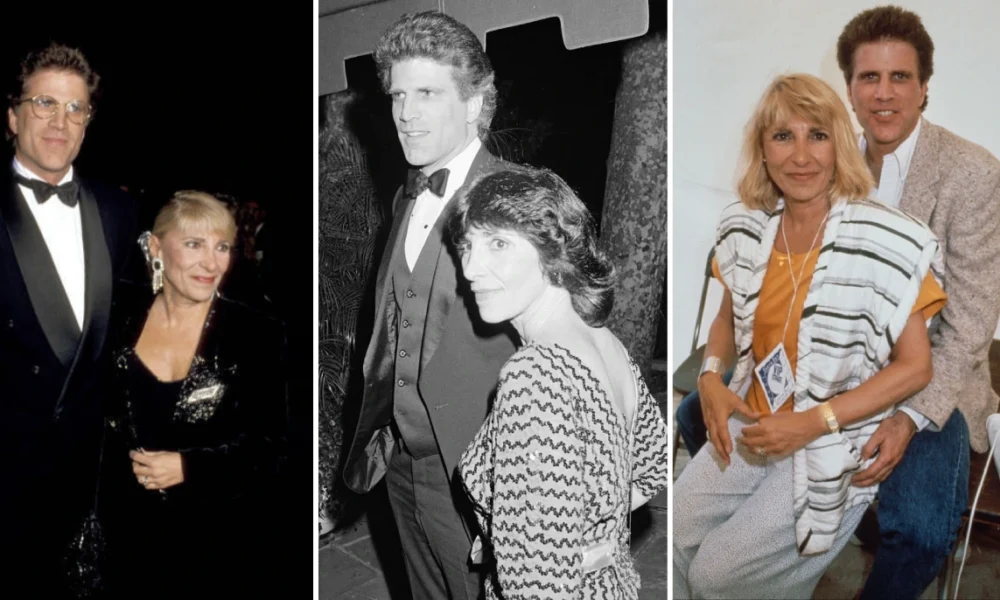
Born Cassandra Coates on March 13, 1938, in Long Island, New York, Casey Coates has built a career championing environmental causes through design and activism. While many recognize her as Ted Danson’s ex-wife, her contributions to sustainable design and renewable energy advocacy stand independently as her true accomplishments.
Table Of Content
- Early Life and Education
- Professional Career in Environmental Design
- Global Possibilities and Renewable Energy Advocacy
- Ocean Conservation Work
- Marriage to Ted Danson
- The Stroke and Recovery
- Children and Family Life
- Divorce and Aftermath
- Casey Coates Today
- Design Philosophy and Principles
- Professional Legacy
- Key Accomplishments
- Lessons from Casey Coates’ Journey
- Final Thoughts
Early Life and Education
Casey grew up on Long Island’s north shore in a creatively rich household. Her mother worked as an artist while her father pursued music, creating an environment that nurtured her artistic sensibilities from childhood. Some sources indicate Greek-American family roots.
After attending Great Neck High School, Casey enrolled at Lasell College in Boston before spending a year studying in London. This international experience broadened her perspective on design and sustainability.
Casey returned to New York and enrolled at Parsons School of Design, where she earned her BFA in Environmental Design in 1975, graduating with honors. This was decades before sustainability became mainstream in architectural conversations.
Professional Career in Environmental Design
Immediately after graduation, Casey joined the Ben Thomson firm in Cambridge, Massachusetts, where she began her professional journey in environmental design. Her early work focused on integrating solar power and sustainable principles into residential and commercial spaces.
Her career expanded to include leadership positions on multiple boards:
- Parsons School of Design Board of Governors
- Southern California Institute of Architecture (SCI-ARC)
- Environmental Media Association
Casey also served as a consultant for the Jimmy Carter Work Project in Los Angeles during the 1990s, helping implement sustainable practices in urban environments.
Global Possibilities and Renewable Energy Advocacy
In 1996, Casey established Global Possibilities, a nonprofit organization dedicated to promoting renewable energy solutions, particularly solar power. The organization works directly with corporations and individuals to implement practical renewable energy systems.
Through Global Possibilities, Casey has collaborated with major companies, including Sony Pictures Entertainment, Bloch Medical Group, and Higher Octave Music to adopt renewable energy practices.
Casey produced the one-hour documentary “Who’s Got The Power?” in 2007, focusing on global warming realities and renewable energy benefits. The film served as an educational tool to make complex environmental issues accessible to wider audiences.
Her own solar-powered home in Los Angeles, which she designed herself, demonstrates her commitment to sustainable living principles.
Ocean Conservation Work
In 1987, Casey and Ted Danson co-founded the American Oceans Campaign (AOC), a nonprofit organization focused on ocean protection, restoration, and preservation. The organization later merged with OCEANA, one of the largest international ocean conservation groups.
Her ocean conservation work reflects her understanding that environmental challenges are interconnected—sustainable land practices affect marine environments, and healthy oceans are vital for planetary health.
Marriage to Ted Danson
Casey met Ted Danson in the mid-1970s when both were involved in New York City’s creative arts scene. Ted was pursuing acting while Casey studied at Parsons. They married on December 24, 1977, and relocated to Los Angeles.
The couple’s shared commitment to environmental causes became a hallmark of their relationship. Despite their age difference (approximately 10 years), they built a partnership around environmental advocacy.
The Stroke and Recovery
On December 24, 1979—their second wedding anniversary—Casey gave birth to their daughter Kate. During childbirth, she suffered a severe stroke caused by undiagnosed high blood pressure. The stroke left her completely paralyzed on her left side.
Casey spent three and a half months in the hospital. Ted slept on the floor of her hospital room for the first three weeks, refusing to leave her side. A neurosurgeon warned that Casey might never walk again.
“I couldn’t bear to be alone. It was too devastating,” Casey told People magazine in 1982. “For the first month, I did nothing but cry. I permitted Ted to leave me. I thought I was going to be a wipe-out the rest of my life.”
Ted put his acting career on hold—despite his role in “The Onion Field” gaining traction—to care for Casey and their newborn daughter. With support from nannies and relatives, along with Ted’s dedication, Casey gradually recovered and regained her ability to walk.
The couple even turned their rehabilitation into a lighthearted competition at times, maintaining humor through the difficult process.
Children and Family Life
Kate Danson, born December 24, 1979, followed her father into entertainment. She appeared in CSI: Crime Scene Investigation, Dr. Horrible’s Sing-Along Blog, and worked in New York theater as co-artistic director of Triptych Theatre. She made her off-Broadway debut in “The Drowning Girls” in 2013.
Kate later shifted careers to become a certified doula and lactation educator after helping her stepsister during childbirth in 2012. She also works as a professional photographer and graduated from ArtCenter College of Design in Pasadena. Kate married director and producer Jesse Bochco in 2009.
In 1985, Casey and Ted adopted their second daughter, Alexis Danson. Alexis has pursued music under various pseudonyms, including Kat Danson and Lux Lovelle. Her song “It’s Like Summer” gained recognition after being featured on the reality show Dance Moms in 2012. Alexis maintains a relatively private life away from public attention.
Divorce and Aftermath
The marriage faced strain from multiple challenges, including Casey’s stroke recovery and the fundamental changes it brought to their relationship. During the late 1980s and early 1990s, Ted began an affair with actress Whoopi Goldberg, whom he met while filming “Made in America.”
Casey and Ted divorced in 1993 after 16 years of marriage. The divorce was one of Hollywood’s most expensive at the time, with reported settlements of around $30 million.
Ted married actress Mary Steenburgen in October 1995, having met her during the filming of “Pontiac Moon” in 1993. Despite the divorce, Casey and Ted reportedly maintain a respectful co-parenting relationship.
Casey authored the photography book “Angels Unaware,” a collection of juxtaposed photographs capturing the stark contrast between Los Angeles affluence and Skid Row’s deprivation. The work combines her artistic vision with social consciousness, highlighting urban inequality.
Casey Coates Today
As of 2026, Casey is 87-88 years old and continues living in her solar-powered Los Angeles home. While maintaining a lower public profile than during her marriage, she remains active in environmental advocacy circles.
Casey occasionally participates in environmental seminars and sustainability discussions. Her work through Global Possibilities continues to educate the public about renewable energy and climate change.
Her estimated net worth remains between $20-30 million, derived from her design career, documentary production, environmental consulting, and divorce settlement.
Design Philosophy and Principles
Casey’s approach to environmental design centers on several core concepts:
- Practical Sustainability – Design solutions must be both environmentally sound and functionally practical for everyday use.
- Solar Integration – Early adoption of solar energy technology in residential and commercial buildings.
- Natural Harmony – Creating spaces that work with natural systems rather than against them.
- Material Consciousness – Selecting building materials that minimize environmental impact.
Her philosophy emerged before “green building” entered mainstream architectural vocabulary, positioning her as a pioneer in sustainable design.
Professional Legacy
Casey’s influence extends beyond her individual projects. Her early work in solar-powered home design helped pave the way for today’s green building movement. The organizations she founded or co-founded continue their missions:
Global Possibilities still promotes renewable energy education and implementation. OCEANA, which absorbed the American Oceans Campaign, has become a leading international ocean conservation organization with offices in North America, South America, Europe, and Asia.
Young environmental designers and activists can learn from Casey’s approach of combining technical expertise with passionate advocacy, using professional skills as tools for environmental change.
Key Accomplishments
Casey’s career demonstrates sustained commitment to environmental causes:
- Founder and president of Global Possibilities (1996)
- Co-founder of American Oceans Campaign (1987)
- Producer of environmental documentary “Who’s Got The Power?” (2007)
- Author of the photography book “Angels Unaware.”
- Board member at multiple prestigious institutions
- Designer of solar-powered homes before mainstream adoption
- Environmental consultant to corporations and government projects
Lessons from Casey Coates’ Journey
Casey’s life offers several valuable insights:
- Resilience Through Adversity – Her recovery from a devastating stroke demonstrates remarkable strength and determination.
- Professional Independence – She built her career and reputation separate from her famous spouse.
- Early Adoption – Her commitment to solar energy and sustainable design preceded widespread acceptance.
- Multiple Platforms – She used design, organizational leadership, filmmaking, and photography to advance environmental causes.
- Practical Application – Rather than only advocating, she created living examples of sustainable principles.
Whether you’re interested in environmental design, renewable energy advocacy, or simply learning about remarkable individuals who’ve contributed to sustainable living, Casey Coates’ story provides both inspiration and practical lessons.
Her quiet dedication to environmental causes—choosing impact over publicity—offers a model for meaningful contribution. In an era of growing environmental urgency, her work demonstrates how individual commitment, combined with technical skill and organizational ability, can create substantial change.
Final Thoughts
What makes Casey Coates’ story worth telling isn’t celebrity connections or Hollywood drama – it’s how one person has consistently used their talents and resources to advocate for our planet.
In a world where environmental challenges grow more urgent each day, Casey’s practical, design-based approach to sustainability offers a valuable model. She shows us that effective environmental action isn’t just about protest or policy – it’s also about creating beautiful, functional alternatives that make sustainable living attractive and accessible.
Casey Coates reminds us that we can each use our unique skills – whatever they may be – to contribute to environmental solutions. That’s a message worth sharing.
What sustainable practices have you incorporated into your life or work? Share in the comments below!