

Barry Sanders Net Worth: How the NFL Legend Built and Managed His Fortune
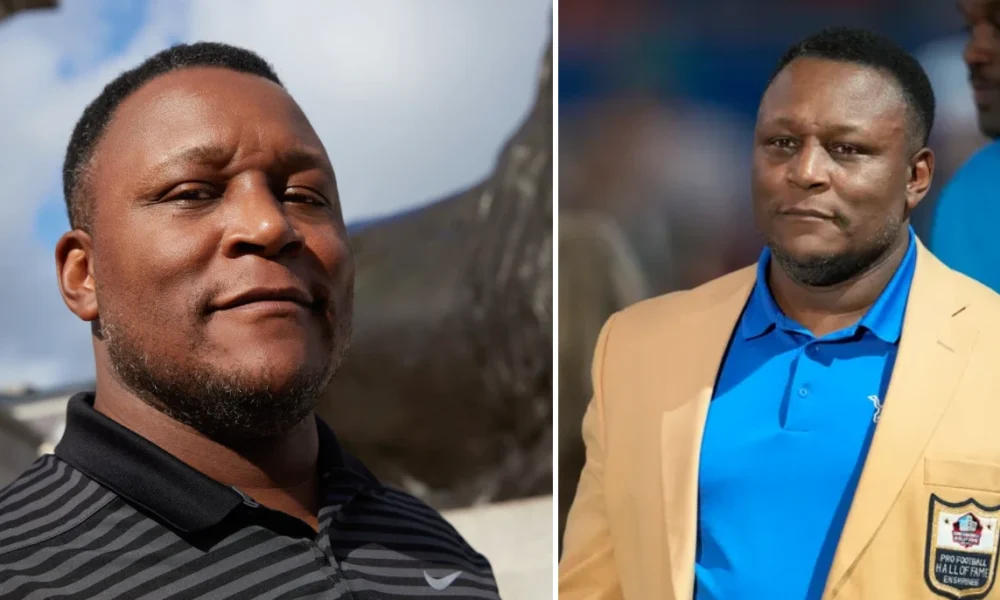
Barry Sanders is a retired NFL running back who played 10 seasons with the Detroit Lions from 1989 to 1998. As one of the most elusive runners in football history, he amassed 15,269 career rushing yards before shocking the sports world by retiring at age 31, just 1,457 yards short of breaking Walter Payton’s all-time rushing record of 16,726 yards.
Table Of Content
- Barry Sanders’ Net Worth in 2026
- NFL Contracts and Career Earnings
- 1. 1989 Rookie Contract
- 2. 1997 Contract Extension
- Early Retirement and Financial Consequences
- College Career and Heisman Trophy
- Career Statistics and Achievements
- Investment Strategy and Assets
- Post-Retirement Income Sources
- Family and Personal Life
- Documentary and Recent Activities
- Reconnection with Detroit Lions
- Financial Approach and Legacy
Barry Sanders’ Net Worth in 2026
Barry Sanders has an estimated net worth between $8 million and $20 million as of 2026. This range reflects varying estimates based on disclosed assets, investments, and income sources. His current financial standing is significantly impacted by his 1999 early retirement and subsequent signing bonus repayment to the Lions.
| Financial Category | Details |
|---|---|
| Estimated Net Worth | $8 million to $20 million |
| Total NFL Career Earnings | $33.8 million |
| Signing Bonus Repayment | $1.83 million (settlement) |
| Municipal Bond Holdings | $7 million (tax-exempt) |
| Stock Investments | $750,000 (primarily banking stocks) |
| Real Estate Portfolio | Four properties (Michigan and Kansas) |
| Current Annual Income | $851,000 (post-retirement, per 2002 court documents) |
Sanders generates current income through NFL pension benefits, autograph signing appearances, and returns from conservative investments in municipal bonds and stocks.
NFL Contracts and Career Earnings
Sanders signed two major contracts during his NFL career, both setting benchmarks for running backs at the time.
1. 1989 Rookie Contract
After initially being offered $2.6 million by the Lions, Sanders held out from training camp at his father William Sanders’ insistence. People questioned the holdout, but Sanders ultimately signed a 5-year, $9.5 million deal with a $2.1 million signing bonus. He donated $210,000 (10% of the bonus) to Paradise Baptist Church in Wichita.
2. 1997 Contract Extension
Sanders signed a record-breaking 6-year, $34.56 million contract with an $11 million signing bonus, making him the highest-paid running back in NFL history at the time. This deal was worth approximately $18 million in today’s money.
His total career earnings reached $33.8 million from NFL salaries alone. Endorsement deals with Nike, Pepsi, Gatorade, and Frito-Lay added an estimated $2 million annually during his playing years.
Early Retirement and Financial Consequences
On July 28, 1999, Sanders faxed his retirement announcement to the Wichita Eagle newspaper while boarding a flight to England. He was 31 years old, coming off a 1,491-yard season, and positioned to break Payton’s all-time rushing record within one or two seasons.
Sanders was only the third player in NFL history (after Eric Dickerson and OJ Simpson) to rush for 2,000 yards in a single season when he gained 2,053 yards in 1997. That same year, he shared the NFL MVP award with Green Bay quarterback Brett Favre.
The retirement triggered immediate financial consequences. The Lions filed a grievance demanding repayment of $7.37 million from his signing bonus. An arbitrator ruled Sanders must return $1.83 million immediately, with additional amounts due if he remained retired. He reportedly liquidated stock holdings to make this payment.
Beyond the bonus repayment, Sanders walked away from $20.9 million in remaining salary and lost millions more in endorsement opportunities. Court documents from a 2002 child support modification request revealed his annual income dropped from $6.4 million during his playing career to $851,000 post-retirement.
College Career and Heisman Trophy
Sanders attended Oklahoma State University after earning All-State honors at Wichita North High School in Kansas. He backed up future NFL star Thurman Thomas for his first two seasons before his breakthrough junior year.
His 1988 season ranks among the greatest individual performances in college football history. Sanders rushed for 2,628 yards and 37 touchdowns in just 11 regular-season games, earning the Heisman Trophy by a wide margin. He accepted the award via satellite from Tokyo, Japan, where the team was preparing for the Coca-Cola Classic. Sports Illustrated later named his 1988 season the third-most impressive college sports feat of all time.
In the 1988 Holiday Bowl (not included in official NCAA statistics), Sanders added 222 yards and five touchdowns in three quarters, bringing his season totals to 2,850 rushing yards and 42 touchdowns.
Career Statistics and Achievements
The Lions selected Sanders with the 3rd overall pick in the 1989 NFL Draft, one spot ahead of offensive tackle Tony Mandarich and two spots behind quarterback Troy Aikman. Lions coach Wayne Fontes had to convince management to draft the 5’8″ running back despite concerns about his size.
Career Accomplishments:
- 15,269 career rushing yards (4th all-time when he retired)
- 99 rushing touchdowns
- 10 consecutive Pro Bowl selections (every season)
- 6 First-Team All-Pro selections
- 4 NFL rushing titles (1990, 1994, 1996, 1997)
- 1997 NFL Most Valuable Player (co-winner with Brett Favre)
- 1994 and 1997 NFL Offensive Player of the Year
- 1989 NFL Offensive Rookie of the Year
- Pro Football Hall of Fame inductee (2004)
- 10 consecutive 1,000-yard rushing seasons (never below 1,000 yards)
- 14 consecutive 100-yard games in 1997 (NFL record)
- 5.0 yards per carry career average
- 99.8 rushing yards per game (second only to Jim Brown)
Sanders currently ranks 4th on the NFL’s all-time rushing yards list, behind Emmitt Smith (18,355), Walter Payton (16,726), and Frank Gore (16,000).
Investment Strategy and Assets
Sanders has maintained a conservative, low-risk investment approach focused on wealth preservation rather than growth.
Investment Portfolio:
- Tax-exempt municipal bonds: Approximately $7 million, providing steady interest income without federal tax liability
- Stock holdings: $750,000, primarily invested in banking institutions
- Real estate: Four properties total
Real Estate Holdings: His primary residence is a two-bedroom condo on a golf course in Detroit. In 2003, he purchased a home in West Bloomfield Township, Michigan, for $532,000, selling it in December 2017 for $510,000. He also owns a 7,000-square-foot lakefront mansion on 10+ acres in Wichita, Kansas, valued at approximately $1.5 million. His mother, Shirley Sanders, continues to live in the Kansas property year-round.
Post-Retirement Income Sources
Sanders generates income through multiple channels while maintaining a modest lifestyle:
- NFL Pension: As a 10-year veteran and Hall of Fame inductee, he receives monthly pension payments from the NFL retirement plan.
- Autograph Appearances: Sanders regularly participates in signing events and memorabilia shows, reportedly earning thousands per appearance. These events remain popular with collectors and Lions fans.
- Brand Partnerships: In 2021, Sanders signed a multi-year deal with BetMGM as a brand ambassador. He maintains partnerships with several companies and continues working with EA Sports for the Madden NFL franchise.
- Nike Endorsement: His longstanding relationship with Nike continues. In 2019, Nike released 2,053 pairs of the Air Zoom Turf 97 to commemorate the 20th anniversary of his retirement, with the number representing his 1997 rushing yards total.
Family and Personal Life
Sanders was born July 16, 1968, in Wichita, Kansas, to William and Shirley Sanders. He is one of 11 children. His father worked as a carpenter and roofer, instilling a strong work ethic. His brother, Byron Sanders, played running back at Northwestern University and was drafted by the Chicago Bears in the 9th round of the 1989 NFL Draft.
Sanders married Lauren Campbell, a WDIV Detroit news anchor, in November 2000. The couple divorced in February 2012 after 12 years of marriage. The divorce settlement included custody arrangements and property division.
He has four sons: Barry J. Sanders, Nick, Nigel, and Noah. Barry J. followed his father’s path, playing running back at Stanford University (2012-2015) and Oklahoma State University (2016). Nick played basketball at Michigan State University in 2022-2023.
After retirement, Sanders requested child support payment modifications, citing his reduced income. Court documents showed his annual earnings had declined by nearly 87% compared to his playing days.
Documentary and Recent Activities
In November 2023, Amazon Prime Video released “Bye Bye Barry,” a documentary examining Sanders’ career and retirement decision. Produced by NFL Films, the film became Prime Video’s most-watched documentary in the United States, surpassing the previous record held by “Kelce.”
The documentary features interviews with Eminem, Jeff Daniels, Tim Allen, Bill Belichick, Calvin Johnson, and other prominent figures. Sanders and his four sons traveled to England to retrace his steps from the 1999 retirement trip, addressing questions that had remained unanswered for 24 years.
The film is based on Sanders’ autobiography “Barry Sanders: Now You See Him: His Story in His Own Words,” co-written with Mark McCormick in 2003.
Reconnection with Detroit Lions
Sanders’ relationship with the Lions organization was strained for years following the retirement dispute and signing bonus repayment. However, in recent years, he has reconnected with the franchise, making appearances at games and team events.
A statue of Sanders was erected outside Ford Field, where fans continue to wear his #20 jersey. The Lions made their first postseason win since 1958 during the 1991 season, when Sanders helped lead them to a 12-4 record, though they lost 41-10 to the Washington Redskins in the NFC Championship Game.
Financial Approach and Legacy
Sanders has maintained a modest lifestyle compared to many athletes with similar career earnings. In 2002, he publicly stated he was living modestly and owned only one car, a stark contrast to the lavish spending patterns often seen among professional athletes.
This conservative approach helped him preserve his wealth decades after retirement. While his net worth may seem modest compared to current NFL stars who sign single contracts exceeding his total career earnings, it reflects both his early exit from the game and his practical financial management.
His decision to retire while still at his peak remains one of the most shocking moments in NFL history. He walked away healthy, having gained more rushing yards in 10 years than any player before him, and within striking distance of the record. Emmitt Smith, who eventually broke the record with 18,355 career rushing yards, acknowledged that Sanders would have likely surpassed Payton’s mark if he had continued playing.
Sanders’ legacy extends beyond statistics. His humility, sportsmanship, and refusal to celebrate touchdowns set him apart during an era of increasingly flamboyant players. He demonstrated that an athlete could prioritize personal fulfillment over records and financial gain, making choices that aligned with his values rather than external expectations.