

Best Electric Vehicles to Buy: Longest Range, Smart Features & Ownership Value Compared
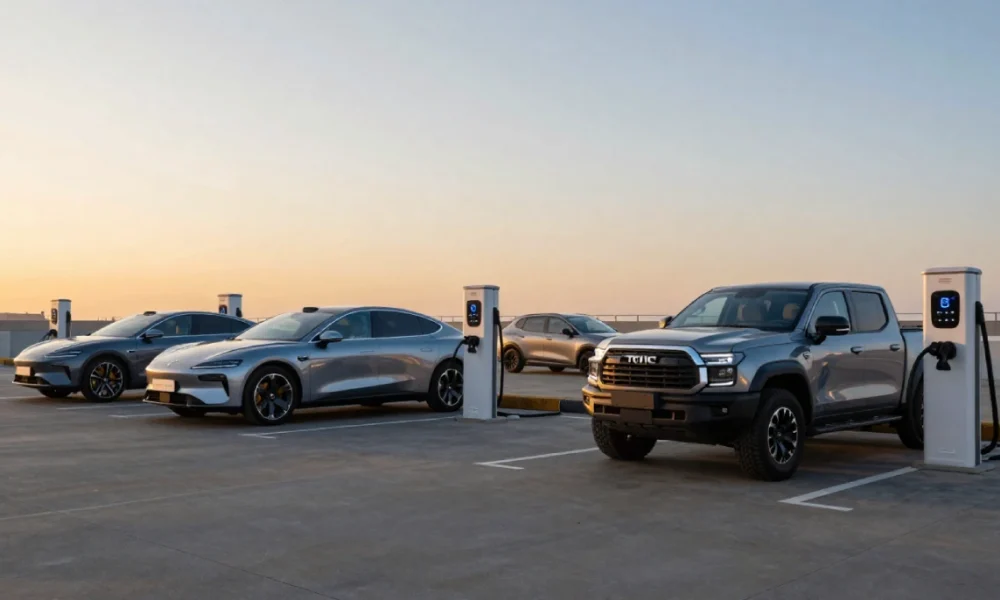
The best electric vehicles in 2026 offer EPA-rated ranges between 300 and 512 miles, 800-volt charging architecture, and advanced driver-assistance systems across a wide range of price points. Whether you drive a daily commute or take regular long-distance trips, there is now a purpose-built EV that fits your needs—if you know what to look for beyond the headline specs.
Table Of Content
- Why 2026 Is a Different Kind of EV Market
- Understanding EPA Range vs. Real-World Range
- Best Electric Vehicles 2026 with Longest Range
- Lucid Air — Longest Range of Any Production EV
- Rivian R1T and R1S — Best Long-Range Truck and SUV
- Tesla Model 3 and Model Y — Best Value for Range
- Hyundai Ioniq 6 — Best Long-Range EV Under $45,000
- Chevrolet Silverado EV and GMC Sierra EV — Best Long-Range Electric Trucks
- 2026 EV Comparison Table
- What Actually Affects Your Ownership Cost in 2026
- 1. Fuel savings
- 2. Maintenance costs
- 3. Resale value
- Charging Infrastructure: What You Need at Home and on the Road
- When More Range Is Not the Right Answer
- How to Shortlist the Right EV for You
Why 2026 Is a Different Kind of EV Market
The bar has moved significantly. A few years ago, 225 miles of range was considered acceptable for most buyers. Today, 300 miles is the accepted floor for a mainstream electric vehicle purchase, and several models now clear 400 miles on a single charge. That shift changes the question you should be asking. Range anxiety—the fear of running out of charge before reaching your destination—is less of a concern than it used to be for most buyers. The more relevant questions now are: how fast does it charge, what does ownership cost over five years, and which models hold their value best?
The 2026 EV market also looks different from a financial standpoint. The federal clean vehicle tax credit of up to $7,500 for new EVs expired on September 30, 2025, following the signing of the One Big Beautiful Bill Act. Buyers in 2026 can no longer rely on that federal subsidy when calculating purchase price. However, state-level incentives remain active in many regions, and the federal home EV charger tax credit (Section 30C) is still available through June 30, 2026, covering 30% of equipment and installation costs up to $1,000 in eligible locations. The absence of a federal purchase credit means sticker price and total cost of ownership carry more weight in your buying decision than they did previously.
Understanding EPA Range vs. Real-World Range
Before comparing specific models, you need to understand how EPA range figures are measured—and why your actual results will differ. The EPA uses a standardized laboratory test that simulates mixed city and highway driving. It gives you a reliable, apples-to-apples comparison between vehicles, but it does not guarantee what you will see on a particular day.
A practical rule of thumb: plan around 70–80% of the EPA figure for everyday driving in mixed weather. A vehicle rated at 400 miles EPA is a comfortable 280–320 miles in real-world conditions before you look for a charger. In cold weather (below freezing), expect a 20–30% range reduction as batteries lose efficiency and cabin heating draws additional power. At highway speeds above 70 mph, aerodynamic drag increases energy consumption meaningfully—driving at 80 mph versus 65 mph can reduce range by roughly 15–25%.
Two factors partially offset this in your favor. First, aerodynamic sedans like the Hyundai Ioniq 6, with its drag coefficient of 0.21, consistently achieve closer to 90–95% of their EPA figure on the highway. Boxier SUVs and trucks tend to land at 75–80%. Second, real-world testing organizations like Edmunds conduct independent range tests at a mix of 60% city and 40% highway driving, which gives you a more accurate secondary reference point than manufacturer claims alone.
Best Electric Vehicles 2026 with Longest Range
The following models represent the strongest options across different vehicle categories based on EPA-certified range figures, charging capability, and overall ownership value. All range figures cited below are EPA-rated unless noted otherwise.
Lucid Air — Longest Range of Any Production EV
The Lucid Air Grand Touring holds the top spot with an EPA-estimated 512 miles of range. No other production electric vehicle comes within 100 miles of that figure. The Air achieves this through Lucid’s in-house motor technology and a powertrain rated at 5.0 miles per kilowatt-hour (mi/kWh)—the highest efficiency rating among luxury EVs. Its 900-volt charging architecture allows the vehicle to add over 200 miles of range in approximately 12 minutes at a compatible 350 kW DC fast charger.
This is a luxury sedan starting well above $100,000, so it is not for everyone. But if you regularly drive rural corridors with sparse charging infrastructure, tow at highway speeds, or simply want maximum range cushion, the Air sets the standard that every other EV is measured against.
Rivian R1T and R1S — Best Long-Range Truck and SUV
The Rivian R1T pickup and R1S SUV both achieve an EPA-rated 410 miles with their respective Max battery packs. The R1T Max starts at $83,900, while the R1S Max battery option adds $7,000 to the base Dual-Motor trim of $83,990. Rivian’s quad-motor configuration delivers up to 1,025 horsepower in the R1S, which makes it genuinely capable off-road without sacrificing highway range.
Both vehicles use the NACS (North American Charging Standard) port, giving them access to Tesla’s Supercharger network in addition to other DC fast-charging networks. Rivian states a 20-minute charge session can recover up to 150 miles on these models. If you need a truck or large SUV that can handle a long road trip without a mid-day range crisis, the R1T and R1S represent the most balanced option in their respective categories.
Tesla Model 3 and Model Y — Best Value for Range
The 2026 Tesla Model 3 Long Range rear-wheel-drive trim achieves 363 miles of EPA range, while the Model Y Premium RWD reaches 357 miles. Both vehicles benefit from Tesla’s Supercharger network—now the most widely deployed DC fast-charging network in North America—with the Model Y capable of adding approximately 182 miles in 15 minutes at V4 Supercharger stations rated at 250 kW.
What makes these models stand out for most buyers is the combination of range, charging network access, software maturity, and price. The Model 3 starts under $45,000 in its Long Range configuration, and the Model Y remains one of the best-selling vehicles—electric or otherwise—in the U.S. market. Tesla’s over-the-air software updates also mean the vehicle you own today continues to gain features and refinements over time.
Hyundai Ioniq 6 — Best Long-Range EV Under $45,000
The Ioniq 6 SE rear-wheel-drive trim is EPA-rated at 342 miles and starts at $42,700, making it the most accessible long-range EV from a mainstream automaker in 2026. Its 77.4 kWh battery paired with Hyundai’s 800-volt electrical architecture enables a charge from 10% to 80% in approximately 18 minutes at a 350 kW DC fast charger. That charging speed rivals vehicles costing twice as much.
The Ioniq 6 also carries top safety ratings from both the IIHS and NHTSA, along with a standard suite of driver-assistance features. Its drag coefficient of 0.21 keeps real-world highway range close to the EPA estimate—a practical advantage on road trips. If your budget is under $45,000 and you want a car that charges fast, goes far, and comes with credible safety credentials, the Ioniq 6 is the most complete package at its price.
Chevrolet Silverado EV and GMC Sierra EV — Best Long-Range Electric Trucks
Both the Silverado EV and Sierra EV with their Extended Range battery packs achieve an EPA-rated 410 miles. The Silverado EV starts at $55,395 and is available in eight trim levels, while the Sierra EV Elevation and Denali trims with Extended Range start at $64,995. Both are dual-motor, all-wheel-drive configurations with 645 horsepower in their extended-range configurations—serious capability for towing and hauling.
GM estimates some higher-spec variants may reach closer to 490 miles, though those figures have not completed EPA certification at the time of writing. Use the confirmed 410-mile EPA figure as your benchmark.
2026 EV Comparison Table
The table below covers key purchase criteria to support your shortlisting decision.
| Vehicle | EPA Range (Best Trim) | Starting MSRP | Max DC Fast Charge | Segment |
|---|---|---|---|---|
| Lucid Air Grand Touring | 512 miles | ~$138,000 | 350 kW | Luxury Sedan |
| Rivian R1T (Max Pack) | 420 miles | $83,900 | ~250 kW | Electric Truck |
| Rivian R1S (Max Pack) | 410 miles | $90,990 | ~250 kW | Large SUV |
| Chevrolet Silverado EV | 410 miles | $55,395 | 350 kW | Electric Truck |
| Tesla Model S | 410 miles | ~$74,990 | 250 kW | Luxury Sedan |
| Tesla Model 3 | 363 miles | ~$43,990 | 250 kW | Sedan |
| Tesla Model Y | 357 miles | ~$44,990 | 250 kW | Compact SUV |
| Hyundai Ioniq 6 (SE RWD) | 342 miles | $42,700 | 350 kW | Sedan |
| Cadillac Lyriq (RWD) | 326 miles | ~$57,195 | 190 kW | Luxury SUV |
All range figures are EPA-certified. MSRP figures are approximate and exclude destination charges, taxes, and state incentives. Verify exact trim specs before purchase.
What Actually Affects Your Ownership Cost in 2026
Range is only one part of the ownership equation. With federal EV purchase tax credits gone as of October 2025, the out-of-pocket price gap between EVs and comparable gas vehicles has narrowed from the buyer’s perspective. That makes long-term ownership economics more important to evaluate carefully before signing.
1. Fuel savings
Fuel savings remain one of EV ownership’s strongest arguments. Charging at home on off-peak electricity rates typically costs a fraction of what equivalent gasoline mileage would run. Most EV owners charge overnight using a Level 2 home charger (240V), which costs roughly $500–$2,000 to install, depending on your electrical panel setup. That upfront cost is generally recovered within two to three years through fuel savings alone, though this varies significantly by local electricity and gas prices.
2. Maintenance costs
Maintenance costs are structurally lower for EVs than for internal combustion engine vehicles. There is no oil to change, no timing belt, no catalytic converter, and fewer brake replacements thanks to regenerative braking. The major maintenance variable is the high-voltage battery pack. Most manufacturers offer 8-year or 100,000-mile battery warranties on their traction batteries, which provides meaningful protection against the most expensive potential repair.
3. Resale value
Resale value is an area where the data is still evolving. Models from established brands with strong charging network access—particularly Tesla—have historically depreciated more slowly than early-generation EVs from other manufacturers. Battery range retention over time matters here: a vehicle that starts with 400+ miles of range retains more usable range after normal degradation than one that started at 250 miles. State incentives can also affect resale dynamics, since buyers in incentive-rich states see lower effective prices on new EVs, which can compress used values in those markets.
Charging Infrastructure: What You Need at Home and on the Road
Home charging is the foundation of practical EV ownership. If you park in a garage or driveway, a Level 2 charger (240V, typically 32–48 amps) can fully replenish most EVs overnight. For vehicles with 300+ miles of range, a Level 1 (standard 120V) outlet is generally insufficient for daily needs—you will add only 3–5 miles of range per hour of charging.
For road trips, DC fast charging is the relevant benchmark. There are two primary networks beyond Tesla’s Supercharger system: Electrify America and EVgo. Since 2023, most new non-Tesla EVs have adopted the NACS port or include an adapter, meaning vehicles from Hyundai, Rivian, GM, and others can now use Supercharger stations. This single change has done more to reduce road-trip anxiety than any range increase, because Tesla’s network remains the most consistently maintained public charging infrastructure in the U.S.
One important nuance: DC fast charging speed is limited by both the charger’s output and the vehicle’s onboard acceptance rate. A 350 kW charger is useless if the vehicle can only accept 150 kW. The Hyundai Ioniq 6 and Lucid Air both support 350 kW charging, while the Cadillac Lyriq is limited to approximately 190 kW—meaning longer charging stops on road trips despite similar range. Always check both numbers, not just the charger speed.
When More Range Is Not the Right Answer
Not every buyer needs 400 miles of range—and paying for it when you don’t affects both purchase price and resale flexibility. If your daily driving is under 60 miles and you have reliable home charging, a vehicle with 250–300 miles of EPA range will cover your needs with room to spare. The Chevrolet Equinox EV, for example, starts under $35,000 and provides a practical option for buyers whose primary use case is commuting and local driving, with occasional road trips where DC fast charging is available.
Buyers who frequently tow heavy loads should also note that towing significantly reduces EV range—sometimes by 40–50% or more, depending on load and speed. If towing is a regular need, you should plan your range requirements around the vehicle’s towing-reduced range, not its EPA highway figure. The Rivian R1T and Silverado EV are currently the most capable electric trucks for towing while maintaining reasonable road-trip viability.
How to Shortlist the Right EV for You
Start with your actual driving patterns, not the vehicle’s maximum capability. Calculate your average weekly mileage and identify your longest single-day trip in a typical month. Your EV’s usable range—roughly 80% of its EPA figure—should comfortably cover that single-day trip in one charge, or require only one brief charging stop.
From there, evaluate three additional factors in order of importance for your situation. First, charging access: do you have a dedicated parking space for home charging? If not, reliable public charging near your home or workplace becomes a critical requirement, and you should verify charger availability before buying. Second, software and feature ecosystem: Tesla’s Autopilot and over-the-air update capability, Hyundai’s BlueLink connected services, and Rivian’s adventure-focused trip-planning software all serve different user priorities. Third, warranty and service network: check whether your preferred brand has service centers accessible to you, as wait times for repairs at thinly distributed service networks can be a meaningful inconvenience.
Finally, verify your state’s current incentive programs before signing. Several states—including Colorado, Massachusetts, New Jersey, Oregon, and Maryland—offer rebates ranging from $2,250 to $5,000 that can meaningfully offset the loss of the federal credit. Check your state’s DMV or energy office, and search the Alternative Fuels Data Center (AFDC) by ZIP code for utility-level incentives as well.