

Caribbean Islands: A Regional Guide to Geography, Culture, and Travel Considerations
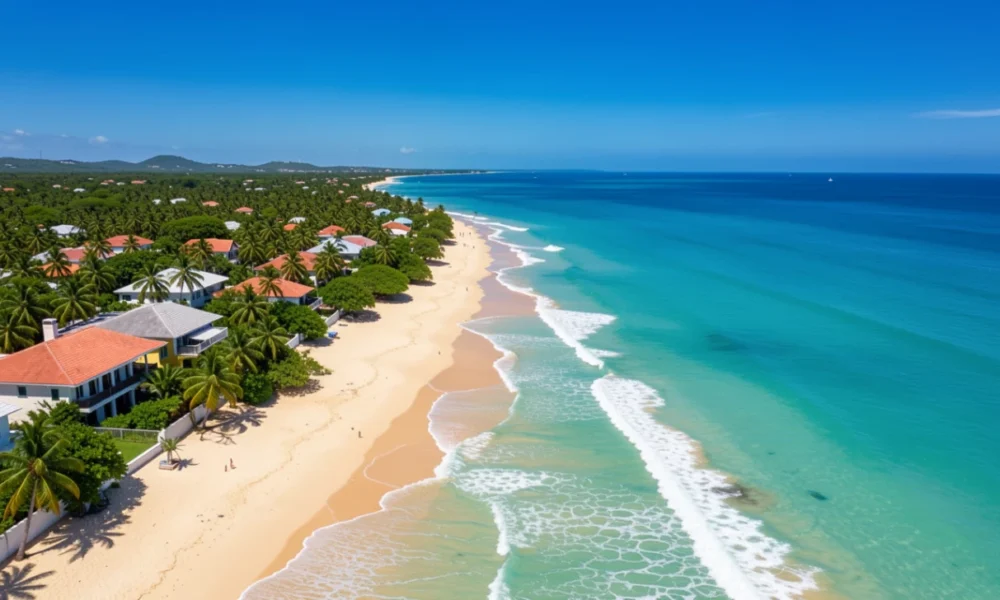
The Caribbean region comprises more than 7,000 islands, islets, reefs, and cays, stretching from the Bahamas in the north to Trinidad and Tobago in the south. While often associated with tourism, the islands are also home to distinct sovereign nations, overseas territories, and communities with histories shaped by indigenous habitation, European colonization, the transatlantic slave trade, indentured labor systems, and post-independence governance.
Table Of Content
- Understanding the Caribbean as a Region
- Jamaica
- Barbados
- Saint Lucia
- The Bahamas
- Puerto Rico
- Comparative Overview of Select Islands
- Seasonal Patterns and General Travel Timing
- Transportation and Island Accessibility
- Accommodation and Commercial Establishments
- Cultural Norms and Visitor Conduct
- Health and Safety Information
- Summary
This guide provides an overview of select Caribbean islands based on their geographical features, cultural background, and what visitors may reasonably expect when traveling there. It is intended for general informational purposes and does not constitute travel advice or endorsement of specific commercial establishments.
Understanding the Caribbean as a Region
The Caribbean is not a single destination but a diverse collection of territories. Linguistically, it includes Spanish-, English-, French-, and Dutch-speaking populations. Politically, it comprises independent nations such as Jamaica and Barbados, as well as overseas departments and territories of European countries and the United States.
Climatically, the region experiences a tropical climate with relatively consistent temperatures year-round. The Caribbean hurricane season officially runs from June 1 to November 30, with activity patterns varying annually and by latitude. Travelers should consult meteorological sources and official government travel advisories when planning itineraries.
Jamaica
Geography and status
Jamaica is an island nation located approximately 145 kilometers south of Cuba. It is the third-largest island in the Caribbean by land area.
Cultural and historical context
Jamaica’s contemporary identity reflects African, European, and Asian influences. The island was colonized by Spain in the late 15th century and later by England in 1655, remaining a British colony until independence in 1962. The country has made significant contributions to global music, particularly through the development of reggae and dancehall genres. The Rastafari movement, which emerged in Jamaica during the 1930s, continues to hold cultural and spiritual significance for communities on the island and abroad.
Common visitor considerations
Jamaica offers varied environments, including coastal resort areas, inland mountain ranges such as the Blue Mountains, and urban centers, including Kingston and Montego Bay. Culinary traditions include preparations such as jerk cooking, which involves seasoning and slow-smoking meat over pimento wood. Ackee, the national fruit, is typically served with saltfish.
Jamaican English is the official language, with Jamaican Patois (Jamaican Creole) widely spoken in informal settings.
Barbados
Geography and status
Barbados is the easternmost island of the Caribbean, situated approximately 434 kilometers northeast of mainland Venezuela. It gained independence from the United Kingdom in 1966 and became a republic in 2021, remaining a member of the Commonwealth.
Cultural and historical context
Barbados was uninhabited when English settlers arrived in 1627 and established a colony that relied heavily on sugar cultivation and enslaved African labor. The legacy of this period is visible in plantation great houses, some of which are now open as museums. Contemporary Barbadian (Bajan) culture reflects West African, British, and other Caribbean influences.
Common visitor considerations
Tourism infrastructure is concentrated along the west and south coasts. The island’s east coast, facing the Atlantic Ocean, features rougher surf and fewer developed swimming areas. The Friday night fish fry at Oistins is a regular community event attended by both residents and visitors. Barbados is also known for its long association with rum production; several historic distilleries offer tours.
Bajan dialect (Bajan Creole) is commonly spoken, while standard English is used in government and education.
Saint Lucia
Geography and status
Saint Lucia is a volcanic island nation located between Martinique and Saint Vincent. It is a Commonwealth realm, with King Charles III as head of state.
Cultural and historical context
Saint Lucia changed hands between France and Britain fourteen times before becoming a British colony in 1814. This contest is reflected in island place names, architecture, and the French-based Creole language (Kwéyòl) spoken alongside English. The island achieved independence in 1979.
Common visitor considerations
The Pitons, two volcanic plugs rising from the sea near Soufrière, are a UNESCO World Heritage Site. The island’s topography includes rainforest, sulphur springs, and coastal wetlands. Several former sugar and lime estates have been repurposed as heritage sites or accommodations.
Outdoor activities commonly available include hiking, boat tours, and visits to geothermal areas. Kwéyòl is an unofficial language; English is official.
The Bahamas
Geography and status
The Bahamas is an archipelago of approximately 700 islands and 2,400 cays, starting about 80 kilometers southeast of Florida. It is an independent country anda Commonwealth member.
Cultural and historical context
The Lucayan people inhabited the islands before Spanish arrival in the late 15th century. Later, the islands became a British colony and a center for privateering. The modern population is predominantly of African descent. The Bahamas gained independence in 1973.
Common visitor considerations
New Providence Island (home to Nassau) and Grand Bahama Island contain the majority of tourist infrastructure. The Out Islands, or Family Islands, are less developed and have lower population densities.
The swimming pigs of the Exumas are a phenomenon that originated through unknown circumstances; they are now managed by residents and tour operators. Marine tourism, including boating, fishing, and diving, is central to the economy. English is the official language.
Puerto Rico
Geography and status
Puerto Rico is an unincorporated territory of the United States, located east of the Dominican Republic. Its residents are U.S. citizens.
Cultural and historical context
Puerto Rico was colonized by Spain in 1508 and ceded to the United States in 1898 following the Spanish–American War. The island has a distinct national identity shaped by Taíno, African, and Spanish heritage. Spanish and English are both official languages, with Spanish being predominant in daily life.
Common visitor considerations
Old San Juan contains well-preserved Spanish colonial architecture and 16th- and 17th-century fortifications. El Yunque National Forest is a federally managed tropical rainforest in the Sierra de Luquillo. Bioluminescent bays, particularly Mosquito Bay in Vieques, support high concentrations of dinoflagellates that produce visible light when disturbed.
U.S. citizens do not require a passport for travel between the mainland and Puerto Rico. Customs inspections are not conducted on domestic flights. The island’s electrical grid and infrastructure have experienced disruptions; travelers should verify current conditions with official sources before arrival.
Comparative Overview of Select Islands
The table below summarizes characteristics of islands covered in this guide and several others frequently referenced in travel literature.
| Island / Territory | Status | Official Language(s) | Common Visitor Entry Points |
|---|---|---|---|
| Jamaica | Independent nation | English | Kingston, Montego Bay |
| Barbados | Independent republic | English | Bridgetown |
| Saint Lucia | Independent nation (Commonwealth realm) | English | Castries, Vieux Fort |
| The Bahamas | Independent nation | English | Nassau, Freeport |
| Puerto Rico | U.S. territory | Spanish, English | San Juan |
| Antigua and Barbuda | Independent nation (Commonwealth realm) | English | St. John’s |
| Saint Barthélemy (St. Barth’s) | French overseas collectivity | French | Gustavia (by air or sea) |
| Grenadines (part of St. Vincent and the Grenadines) | Independent nation | English | Kingstown, Bequia |
| U.S. Virgin Islands | U.S. territory | English | St. Thomas, St. Croix |
| British Virgin Islands | British Overseas Territory | English | Tortola |
Seasonal Patterns and General Travel Timing
Temperatures in the Caribbean remain relatively stable throughout the year, typically ranging from 24°C to 30°C (75°F to 86°F) in coastal areas. Precipitation varies by island topography and season.
December through mid-April is generally drier across most islands and coincides with peak tourism volume. Accommodation and airfare prices are typically at their highest during this period.
Late April through June and November are considered shoulder seasons, with reduced visitor numbers and more moderate pricing. Weather conditions remain favorable for travel in most areas.
July through October coincides with the Atlantic hurricane season. Travelers during this period should monitor forecasts and understand cancellation and refund policies. Some southern Caribbean islands, such as Trinidad and Tobago and Aruba, have historically experienced lower hurricane risk than northern and western islands.
Transportation and Island Accessibility
Air travel
Most Caribbean islands are served by international airports with connections to North America, Europe, and regional hubs. San Juan, Puerto Rico, functions as a major air transit point for the eastern Caribbean.
Ferry and inter-island travel
Regular ferry services operate between some islands, particularly in the eastern Caribbean and between the U.S. and British Virgin Islands. Not all neighboring islands have scheduled ferry connections; travelers should verify routes and timetables in advance.
Cruise tourism
Many Caribbean ports receive cruise ship visitors. Port infrastructure varies; some ports are located within walking distance of town centers, while others require organized transport.
Accommodation and Commercial Establishments
Accommodation types range from small guesthouses and locally owned hotels to large-scale resorts and vacation rentals. The Caribbean Hotel and Tourism Association and individual national tourism authorities maintain lists of member properties but do not endorse or inspect all establishments.
Travelers are advised to verify current operating status, safety certifications, and accessibility features directly with providers. Online booking platforms may not reflect recent changes in ownership or temporary closures.
Cultural Norms and Visitor Conduct
Caribbean societies vary in their customs, but certain general courtesies are widely observed:
- Greetings are considered important. Entering a shop, restaurant, or taxi without acknowledgment is often viewed as discourteous.
- Dress codes vary. Beachwear is generally considered inappropriate in shops, restaurants, and government buildings.
- Photography of individuals without explicit permission is discouraged.
- Dominoes is a common social activity in many islands, particularly in the English-speaking Caribbean. Observers should ask before photographing games.
These observations are based on documented social norms and should not be treated as exhaustive or universal.
Health and Safety Information
Travelers should consult official government health sources for current vaccination recommendations and entry requirements. Routine immunizations, including measles-mumps-rubella (MMR) and diphtheria-tetanus-pertussis, are typically advised.
Zika virus, dengue fever, and chikungunya have been reported in the Caribbean. Mosquito prevention measures are recommended.
Tap water safety varies by island. In Puerto Rico and some other territories, tap water is generally potable; in many others, bottled water is recommended.
Medical facilities range from well-equipped private hospitals in capital cities to basic clinics in remote areas. Travel health insurance covering medical evacuation is commonly recommended.
Summary
The Caribbean comprises dozens of inhabited territories, each with distinct geographical features, historical trajectories, and contemporary conditions. While tourism is a significant economic sector across the region, the islands are not interchangeable destinations. Understanding basic factual information about an island’s status, language, infrastructure, and cultural context allows travelers to form reasonable expectations and make informed decisions.
This guide is limited to general information and does not evaluate or rank specific locations, operators, or experiences. Conditions, regulations, and commercial offerings change over time; independent verification is necessary for trip planning.