

Does Closing an Old Loan Really Hurt Your Credit Score?
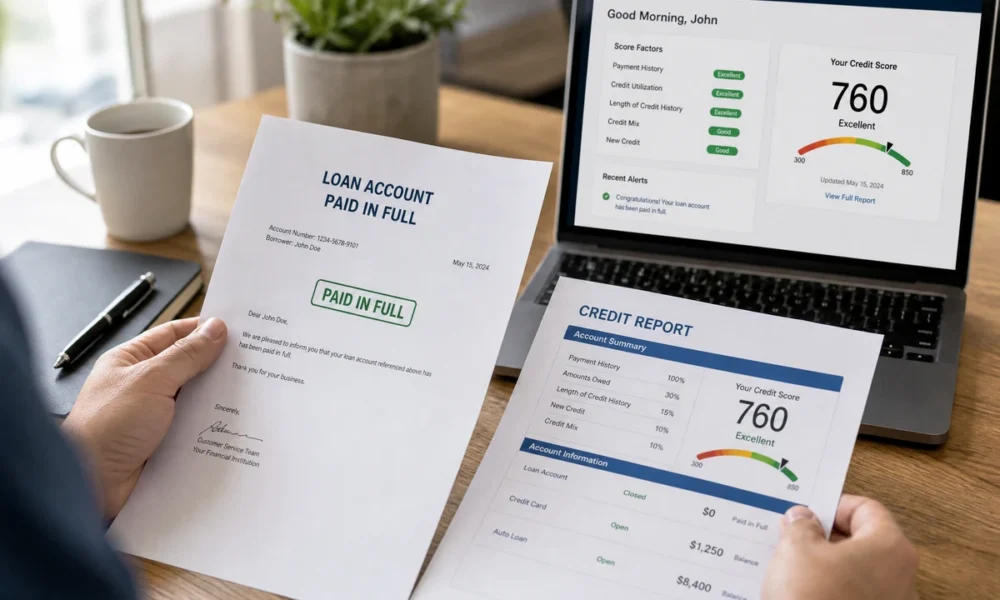
Closing an old loan is a moment many borrowers celebrate, but when you pay off a loan and close the account, it doesn’t simply disappear from your financial life. The lender reports the closure to credit bureaus, updating your credit report to reflect that the account is no longer active. While this feels like a financial win, it can quietly reshape parts of your credit profile that you may not expect, including your credit history length, credit mix, and overall score.
Table Of Content
- Why Closing an Old Loan Can Affect Your Credit History
- How Closing an Old Loan Impacts Your Credit Score
- The Role of Credit History Length After Closing an Old Loan
- How Closed Loans Affect Your Credit Mix
- Does Paying Off an Old Loan Lower Your Credit Score?
- Why Your Credit Score May Change After Loan Closure
- How Long Does a Closed Loan Stay on Your Credit Report?
- Difference Between a Closed Loan in Good Standing and a Negative Account
- Factors That Determine the Impact of Closing an Old Loan
- Should You Keep an Old Loan Open After Paying It Off?
- When Closing an Old Loan Is a Good Financial Decision
- When You Should Avoid Closing an Old Credit Account
- How to Maintain a Strong Credit History After Closing a Loan
- Common Mistakes People Make After Closing Old Loans
- How to Check and Dispute Incorrect Closed Accounts on Your Credit Report
- Frequently Asked Questions About Closing Old Loans and Credit History
- Does closing a loan hurt my credit score permanently?
- Will paying off my last installment loan hurt my credit mix?
- How long does a paid-off loan stay on my report?
- Final Thoughts: Managing Old Loans Without Damaging Your Credit
Why Closing an Old Loan Can Affect Your Credit History
Your credit history isn’t just about whether you pay bills on time. It also reflects how long you’ve managed credit responsibly and how many different types of accounts you’ve handled. Closing an old loan removes an active data point that credit scoring models use to judge your reliability. Even a well-managed, fully paid loan contributes positively to your file simply by existing, so its removal can shift the balance of information lenders see.
How Closing an Old Loan Impacts Your Credit Score
Credit scores are calculated using several factors, including payment history, credit utilization, length of credit history, credit mix, and new credit inquiries. Closing an old loan can influence more than one of these at once. If the loan was your oldest account, your average credit age may drop. If it was your only installment loan, your credit mix narrows. These changes don’t always cause a dramatic drop, but they can create a temporary dip that surprises many borrowers.
The Role of Credit History Length After Closing an Old Loan
Length of credit history typically accounts for a meaningful portion of your score. Older accounts show lenders a longer track record of responsible borrowing. When an old loan closes, some scoring models continue counting it for a period of time, while others adjust more quickly. Either way, losing your longest-standing account eventually shortens your average account age, which can nudge your score downward.
How Closed Loans Affect Your Credit Mix
Lenders like to see that you can manage different types of credit, such as credit cards, auto loans, mortgages, and personal loans. This is known as credit mix. If an old loan was your only installment account, closing it may leave your credit file weighted heavily toward revolving credit like credit cards. A less diverse credit mix can make your profile appear less balanced, even if your payment history remains excellent.
Does Paying Off an Old Loan Lower Your Credit Score?
Paying off a loan is always a positive financial step, but it can still cause a short-term score dip. This isn’t because paying off debt is bad; it’s because the account transitions from “active and in good standing” to “closed.” Some scoring models place slightly more weight on open, positively managed accounts. The good news is that this dip is usually temporary and often recovers within a few months if the rest of your credit habits stay strong.
Why Your Credit Score May Change After Loan Closure
Beyond credit mix and history length, closing a loan can also affect your credit utilization ratio if it was a secured installment loan tied to revolving credit limits, though this is more common with credit cards than loans. Additionally, removing an account can slightly alter the overall risk profile lenders’ algorithms calculate, since fewer data points are available to assess your borrowing behavior.
How Long Does a Closed Loan Stay on Your Credit Report?
A loan closed in good standing, meaning it was paid as agreed, typically remains on your credit report for up to ten years from the closure date. This is actually beneficial, since it continues contributing positively to your credit history length even after closure. Negative accounts, such as those with missed payments or defaults, usually stay for around seven years, which can be a longer-lasting drag on your score.
Difference Between a Closed Loan in Good Standing and a Negative Account
Not all closed loans affect your credit the same way. A loan closed in good standing continues to support your credit history and may still contribute positively for years. In contrast, a loan closed due to default, repossession, or charge-off signals risk to future lenders and can suppress your score for a much longer period. Understanding this distinction helps you gauge how concerned you should be about any particular closure.
Factors That Determine the Impact of Closing an Old Loan
Several elements determine how much a closure will affect you: the age of the account relative to your other credit lines, whether it was your only installment loan, your overall number of open accounts, and your current credit utilization. Borrowers with a thin credit file tend to feel the impact more strongly than those with several diverse, long-standing accounts.
Should You Keep an Old Loan Open After Paying It Off?
In most cases, loans don’t offer the option to stay “open” once fully paid, unlike credit cards. However, understanding this question helps frame your broader credit strategy. If you have the choice between paying off a loan early or letting it run its natural course, consider how it affects your credit mix and history length before making a final decision, especially if you’re planning a major purchase soon.
When Closing an Old Loan Is a Good Financial Decision
Despite the possible score dip, closing an old loan is often still the right move. Eliminating debt reduces interest costs, improves your debt-to-income ratio, and lowers financial stress. If you’re not planning to apply for new credit in the near future, any temporary score dip has time to recover, making early payoff a smart long-term choice.
When You Should Avoid Closing an Old Credit Account
If you’re preparing for a major financial decision, such as applying for a mortgage or auto loan in the next few months, it may be wise to time your loan closures carefully. Closing an old account right before a big application could cause an avoidable dip at the worst possible moment. Planning gives your credit profile time to stabilize.
How to Maintain a Strong Credit History After Closing a Loan
To offset the effects of closing an old loan, focus on paying all other accounts on time, keeping credit card balances low, and avoiding unnecessary new credit inquiries. Maintaining older accounts that remain open, such as a long-held credit card, helps preserve your average credit age and supports overall score stability.
Common Mistakes People Make After Closing Old Loans
Many borrowers assume paying off debt guarantees a higher score, then feel confused when it temporarily dips. Others open several new accounts right after closure to “replace” the closed loan, which can backfire due to new credit inquiries. Ignoring your credit report after a closure is another common mistake, since errors in reporting can go unnoticed for months.
How to Check and Dispute Incorrect Closed Accounts on Your Credit Report
After closing a loan, review your credit report from all three major bureaus to confirm the account is marked accurately as “closed” and “paid as agreed.” If you spot errors, such as incorrect balances or missed payment flags, file a dispute directly with the bureau. Correcting inaccuracies quickly prevents unnecessary damage to your credit history.
Frequently Asked Questions About Closing Old Loans and Credit History
Does closing a loan hurt my credit score permanently?
No, most effects are temporary and recover within a few months.
Will paying off my last installment loan hurt my credit mix?
It can, especially if you have no other installment accounts.
How long does a paid-off loan stay on my report?
Typically up to ten years if closed in good standing.
Final Thoughts: Managing Old Loans Without Damaging Your Credit
Closing an old loan is rarely something to avoid out of fear for your credit score. While it can cause short-term fluctuations by affecting your credit history length and mix, the long-term benefits of reduced debt usually outweigh the temporary dip. The key is timing your closures wisely, keeping other accounts healthy, and monitoring your credit report to ensure everything is reported accurately.