

The Business Case for Commercial Duct Cleaning: Efficiency, Health, and Cost Control
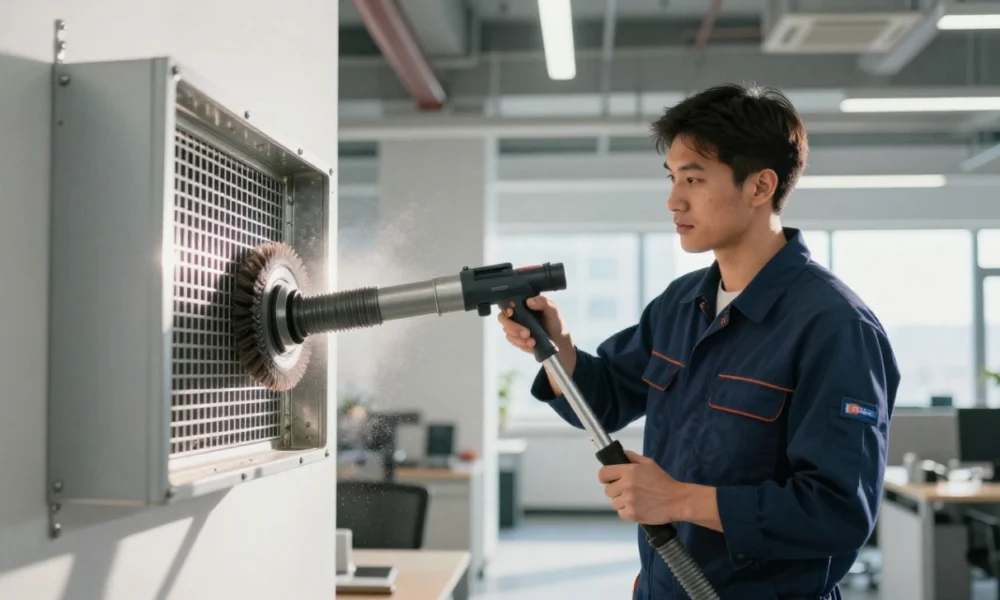
The connection between indoor air quality and business performance is often underestimated. For facility managers and business owners, the Heating, Ventilation, and Air Conditioning (HVAC) system represents far more than a temperature control mechanism. It is the respiratory system of the building, directly influencing energy consumption, employee health, and operational budgets. Commercial duct cleaning, the process of removing dust, debris, and biological contaminants from the HVAC ductwork, is a critical maintenance task that supports these business objectives.
Table Of Content
- How Duct Cleaning Impacts Indoor Air Quality
- Contaminants Found in Ductwork
- The Link Between Clean Ducts and Health
- Energy Efficiency and Operational Cost Savings
- Reducing System Strain
- Quantifiable Financial Returns
- Protecting Equipment Longevity and Avoiding Downtime
- Extending System Lifespan
- Preventing Emergency Repairs
- Professional Standards and Industry Recommendations
- The NADCA Standard
- The Professional Cleaning Process
- Signs Your Commercial Ductwork Requires Immediate Attention
- Conclusion: Duct Cleaning as a Strategic Investment
How Duct Cleaning Impacts Indoor Air Quality
Indoor Air Quality (IAQ) has become a central concern for commercial properties. The Environmental Protection Agency (EPA) indicates that indoor pollutant concentrations can be two to five times higher than typical outdoor concentrations. Since the average American spends approximately 90% of their time indoors, the quality of circulated air is a primary environmental health factor .
Contaminants Found in Ductwork
Over time, duct systems accumulate a variety of airborne particles. These include:
- Particulate Matter: Dust, pollen, and dander.
- Biological Contaminants: Mold spores, bacteria, and mildew, which can proliferate in the presence of moisture .
- Debris: Insects, rodent droppings, and other detritus that can enter the system .
When the HVAC system operates, these contaminants are distributed throughout the building. This circulation can trigger respiratory issues, allergic reactions, and general discomfort among occupants.
The Link Between Clean Ducts and Health
Research confirms that HVAC sanitation procedures are effective in reducing bioaerosol concentrations. Studies have shown that post-cleaning bioaerosol levels are measurably lower than pre-cleaning levels, indicating a tangible improvement in air purity. This reduction is particularly crucial in settings like healthcare facilities, schools, and offices where vulnerable populations or large numbers of people gather. Contaminated air is a known contributor to reduced cognitive function, with studies from Harvard and Syracuse University demonstrating that improved ventilation can more than double cognitive performance scores
Energy Efficiency and Operational Cost Savings
One of the most compelling arguments for regular commercial duct cleaning is its direct effect on energy consumption. An HVAC system burdened by obstructions must work significantly harder to maintain set temperatures.
Reducing System Strain
Dust and grime buildup restricts airflow. When airflow is restricted, the system runs longer cycles and consumes more electricity to achieve the desired climate control . According to the U.S. Department of Energy, HVAC systems can account for up to 40% of a commercial building’s energy use . Leaning the ductwork removes these barriers, allowing air to move freely and reducing the workload on fans and compressors.
Quantifiable Financial Returns
The financial impact of a clean system is significant. A buildup of just 0.42 inches of dirt on a heating or cooling coil can reduce efficiency by 21% . Fr a large facility, the savings are substantial. For example, a 100,000 square foot building with 400 tons of air conditioning can save approximately $22,500 per year with a clean HVAC system . This reduction in energy waste directly improves the company’s bottom line and contributes to sustainability goals.
Protecting Equipment Longevity and Avoiding Downtime
Commercial HVAC systems represent a major capital investment. Proactive maintenance, including duct cleaning, is essential to protect that investment.
Extending System Lifespan
Routine maintenance, such as cleaning evaporator coils, drain pans, and air ducts, prevents the premature aging of components. A well-maintained system can last 20 years or more, while a neglected system may begin to fail after just 10 to 12 years. By extending the operational life of the equipment, businesses can delay the substantial expense of a full system replacement.
Preventing Emergency Repairs
Run-to-failure maintenance models are consistently more expensive. Unplanned downtime often requires emergency service calls, which come at a premium and can disrupt business operations . Regular inspections and cleaning allow technicians to identify worn parts, minor leaks, or potential issues before they escalate into catastrophic failures. Proactive maintenance is reported to reduce the risk of costly breakdowns by as much as 95%.
Professional Standards and Industry Recommendations
Navigating commercial duct cleaning requires adherence to established protocols to ensure the work is effective and safe.
The NADCA Standard
The National Air Duct Cleaners Association (NADCA) is the primary authority setting standards for the industry. NADCA recommends that commercial, industrial, and healthcare facilities have their air handling units and ductwork inspected annually. Professional cleaning should be performed every 3 to 5 years for standard office environments, though facilities with higher contaminant loads (restaurants, manufacturing, healthcare) may require more frequent service .
The Professional Cleaning Process
Professional duct cleaning differs significantly from standard maintenance. The process typically involves:
- Inspection: A thorough assessment of the duct system, air handler, and registers to identify contamination levels and any physical damage.
- Dislodgement: Using specialized tools such as rotating brushes and air whips to loosen debris from duct surfaces
- Negative Pressure: Applying a high-powered vacuum, often equipped with HEPA filtration, to create negative pressure within the system. This ensures that dislodged contaminants are captured and removed from the building rather than being released into the occupied space .
- Sanitization: Applying EPA-registered agents to eliminate any remaining microbial growth.
- Final Inspection: A post-service check to verify system cleanliness and performance
Signs Your Commercial Ductwork Requires Immediate Attention
While adhering to a 3-to-5-year schedule is best practice, certain indicators suggest the need for immediate professional assessment:
- Visible Mold Growth: If mold is visible inside ducts or on other HVAC components, cleaning and remediation are urgent .
- Persistent Odors: Unpleasant or musty smells emanating from vents indicate microbial buildup or accumulated debris .
- Excessive Dust: If surfaces become dusty immediately after cleaning, or if dust is visibly blowing from supply registers, the ductwork is likely circulating contaminants .
- Unexplained Health Complaints: An increase in employee respiratory issues, headaches, or absenteeism can be linked to poor IAQ.
- Pest Infestation: Signs of insects or rodents in or around the building can lead to contamination within the ductwork.
Conclusion: Duct Cleaning as a Strategic Investment
Commercial duct cleaning extends beyond simple housekeeping. It is a strategic function that supports energy management, capital asset protection, and human resource health. By ensuring HVAC systems operate at peak efficiency, businesses control energy costs. By removing biological and particulate contaminants, they create a workspace that fosters employee well-being and productivity. Engaging a qualified, NADCA-certified service provider to perform regular inspections and cleanings is a data-backed decision that contributes to a healthier, more efficient, and more profitable business operation.