

The Complete 2026 Guide to Smart Car Buying and Cost-Saving Maintenance
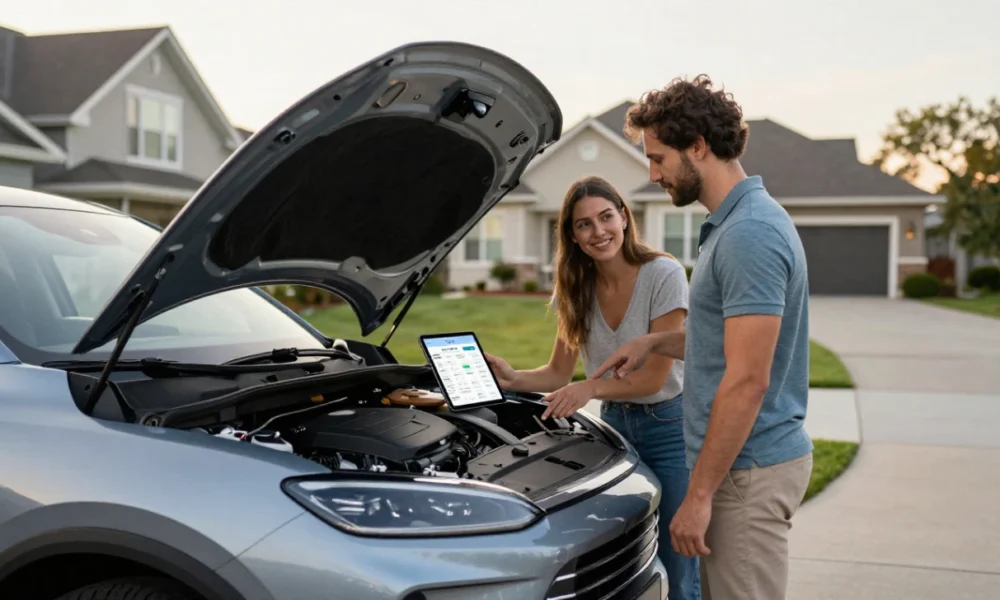
Buying and owning a car remains one of the most significant financial commitments for most households. With the average new car price exceeding $50,000 and ongoing costs like insurance and maintenance rising sharply, making informed decisions at every stage is more critical than ever. This guide provides a practical, step-by-step approach to navigating the entire ownership lifecycle—from the initial budgeting and research phases to long-term maintenance and financial protection—using the latest 2026 data and industry best practices.
Table Of Content
- Assessing Your Needs and Budget for a 2026 Purchase
- Define Your Vehicle Usage Profile
- Calculate a Realistic 2026 Budget
- Researching and Selecting the Right Car: A 2026 Perspective
- Key Evaluation Criteria for 2026 Models
- The Importance of Pre-Purchase Inspections
- Navigating the Purchase and Financing Process
- Secure Financing in Advance
- Modern Approach to Car Maintenance (2026 Update)
- Following the 2026 Maintenance Standard
- Condition-Based Maintenance for Key Components
- A Seasonal Maintenance Calendar for 2026
- Preparing for Emergencies and Ensuring Safety
Assessing Your Needs and Budget for a 2026 Purchase
Before exploring specific models, a clear-eyed assessment of your personal requirements and financial capacity is essential. This foundational step prevents impulsive decisions and ensures your vehicle aligns with your lifestyle and long-term financial health.
Define Your Vehicle Usage Profile
Begin by analyzing how you will primarily use the car. Ask yourself specific questions:
- Primary Use: Is this car mainly for a daily commute, frequent long-distance road trips, transporting a family, or weekend recreation?
- Passenger and Cargo Needs: How many passengers will you typically carry? Do you need to haul bulky items? Suggesta hatchback, SUV, or pickup truck.
- Driving Environment: Will you be driving mostly in dense city traffic, on open highways, or on rough, unpaved roads? This impacts priorities for fuel economy, ride comfort, and durability.
Calculate a Realistic 2026 Budget
A common mistake is focusing solely on the monthly loan payment. To get a true picture of affordability, you must account for the total cost of ownership. In 2026, ancillary costs have grown significantly. A good rule of thumb is to keep your total monthly transportation costs—including payment, insurance, fuel, and maintenance—between 15% and 20% of your gross monthly income.
Consider these average 2026 costs when building your budget:
- Insurance: The average annual premium is now approximately $2,700
- Maintenance & Repairs: For a car driven 15,000 miles a year, budget around $1,650 annually, according to AAA data.
- Fuel: Factor in your expected monthly mileage and the vehicle’s fuel efficiency.
- Taxes & Registration: These vary by state but can represent a significant upfront and recurring cost.
Researching and Selecting the Right Car: A 2026 Perspective
With a clear budget and needs profile, you can begin researching specific vehicles. The 2026 market offers distinct trends and considerations.
Key Evaluation Criteria for 2026 Models
When comparing vehicles, prioritize these factors for long-term satisfaction and value:
- Reliability and Owner Satisfaction: Consult trusted, data-rich sources like Consumer Reports, which surveys thousands of owners to provide reliability and satisfaction scores. Their 2026 Top Picks highlight models that excel in these areas, such as the Honda Civic, Toyota Camry, and Subaru Crosstrek
- Safety Features: Look for models that come standard with advanced safety systems, including automatic emergency braking with pedestrian detection—a feature now standard on all of Consumer Reports’ Top Picks for 2026 .
- Fuel Efficiency and Powertrain: The shift toward electrification is undeniable. For 2026, every one of Consumer Reports’ Top Picks is either a hybrid, available as a hybrid, or an electric vehicle . Consider the long-term fuel savings of a hybrid or EV against their typically higher upfront cost.
- Specific Models to Approach with Caution: Based on expert analysis of the 2026 market, certain vehicles carry higher ownership risks.
- Older Luxury SUVs: Out-of-warranty luxury models can lead to $10,000-$15,000 repair bills for complex systems like air suspension and electronics .
- Vehicles with Noted Reliability Issues: Some Ford models (particularly 2015-2019 EcoBoost trucks) and Nissans with CVT transmissions (2013-2019) have documented problems that can lead to costly repairs .
- Legacy Brand EVs: Be mindful that some traditional automakers are scaling back EV plans, which could impact future support and parts availability for discontinued models. Expect significant depreciation, with some EVs losing over 50% of their value in three years .
The Importance of Pre-Purchase Inspections
For used cars, a pre-purchase inspection (PPI) by an independent mechanic is non-negotiable. For a fee of around $150, a professional can identify hidden problems that could cost you thousands later . Always obtain a vehicle history report, such as a CARFAX, to check for accidents or title issues.
Navigating the Purchase and Financing Process
Armed with your research, you can approach the transaction with confidence.
Secure Financing in Advance
Before visiting a dealership, check with external lenders like credit unions or banks to get pre-approved for an auto loan. This gives you a clear understanding of the interest rates and terms you qualify for, putting you in a stronger negotiating position. Your credit score plays a pivotal role here—higher scores unlock lower rates .Effective Negotiation Strategies
Focus your negotiation on the out-the-door price, not the monthly payment. Be prepared to walk away if the deal doesn’t meet your budget or fair market value, which you can research using tools like Kelley Blue Book. In 2026, look for manufacturer incentives such as “conquest deals” (for switching brands) or “loyalty deals” (for staying with your current brand) to potentially lower the price .
Modern Approach to Car Maintenance (2026 Update)
Regular maintenance is the key to longevity and reliability. However, the approach to maintenance has evolved, moving away from a strict mileage-only schedule.
Following the 2026 Maintenance Standard
The outdated “one-size-fits-all” maintenance schedule is being replaced by a more nuanced approach. The 2026 update to maintenance standards (like China’s GB/T 18344-2025) emphasizes a combination of time, mileage, and actual component condition . This is especially relevant for low-mileage drivers. The principle is simple: some items wear out based on use (mileage), while others degrade over time, regardless of how little you drive.
Condition-Based Maintenance for Key Components
Adopt this practical, condition-based approach to save money without compromising your car’s health.
Oil and Fluids: Time Matters More Than You Think
- Engine Oil: For vehicles using full synthetic oil, a once-yearly change is sufficient for most low-mileage drivers, provided the annual mileage is under 10,000-12,000 miles. The oil’s lubricating properties degrade over time due to oxidation.
- Brake Fluid: This is a critical safety item. Brake fluid is hygroscopic, meaning it absorbs moisture from the air over time, which can lead to internal brake system corrosion and reduced braking performance. Have the brake fluid’s water content tested every two years and replace it only if it exceeds the manufacturer’s specification (typically around 3%)
- Other Fluids: Follow time-based guidelines for fluids like coolant (every 3-5 years) and transmission fluid (refer to owner’s manual, often 6-10 years), as they are also subject to degradation over time .
Tires, Belts, and Wear Items
- Tires: Regardless of tread depth, replace tires every six to ten years due to rubber hardening and degradation. The Rubber Manufacturers Association recommends ten years as an absolute maximum, but many experts suggest six years for safety. Check the manufacturing date on the tire sidewall.
- Filters and Spark Plugs: These should be inspected and replaced based on condition. A cabin air filter can be changed when it appears dirty, or airflow diminishes, not strictly at a 15,000-mile interval. Long-life spark plugs (e.g., iridium) can often last 100,000 miles or more.
A Seasonal Maintenance Calendar for 2026
Aligning maintenance tasks with the seasons helps prepare your vehicle for changing weather conditions
- Winter (Dec-Feb): Focus on the battery (test its strength) and tires (check pressure weekly and tread depth). Consider winter tires in snowy regions.
- Spring (Mar-May): Perform a fluid level check for all key systems. Inspect the undercarriage for rust or damage from winter road salt.
- Summer (Jun-Aug): Ensure the cooling system (radiator, hoses, coolant) and air conditioning are in top condition for long road trips.
- Fall (Sep-Nov): Check all lights, belts, hoses, and brakes to prepare for reduced daylight and harsher weather.
Preparing for Emergencies and Ensuring Safety
Despite best efforts, breakdowns can happen.
- Build an Emergency Kit: Your kit should include a first-aid kit, jumper cables, a flashlight with extra batteries, a basic tool kit, reflective triangles or flares, and a portable phone charger.
- Find a Trusted Mechanic: Establish a relationship with a repair shop before you need one. Seek recommendations from friends or look for accredited shops (e.g., AAA Approved Auto Repair).
- Review Your Insurance Coverage: Ensure you have adequate coverage. In 2026, shopping around for insurance is vital, as premiums have risen sharply. Compare quotes from multiple providers using online tools to find the best rate for your vehicle and driving profile .
By following these updated guidelines for buying, financing, and maintaining your vehicle, you can navigate the complexities of modern car ownership with greater confidence and financial prudence, ensuring your car remains a reliable asset for years to come.