

Diane von Furstenberg: The Woman Behind the Iconic Wrap Dress and Global Fashion Empire
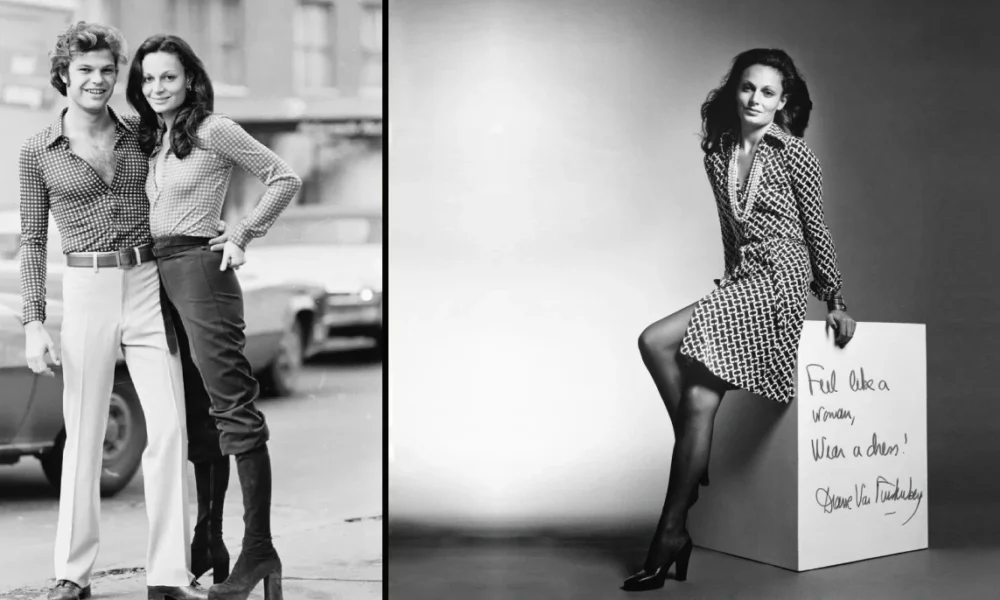
Born Diane Simone Michele Halfin on December 31, 1946, in Brussels, Belgium, Diane von Furstenberg transformed American fashion and built a global empire around a single garment. Her story is one of resilience, creativity, and an unwavering commitment to women’s empowerment.
Table Of Content
- Early Life and Family Background
- From Princess to Fashion Pioneer
- The Birth of an Icon: The Wrap Dress
- The 1970s: New York’s Cultural Scene
- Reinvention and the 1997 Comeback
- Marriage to Barry Diller and Philanthropy
- Leadership in the Fashion Industry
- Recognition and Honors
- The 50th Anniversary and Documentary
- The DVF Brand Today
- Celebrity Endorsements and Cultural Impact
- Published Works
- Personal Philosophy and Legacy
- Cultural Exhibitions and Archives
- Business Milestones
- Children and Grandchildren
- The Wrap Dress: Design Details
- Conclusion
Early Life and Family Background
Diane grew up as the daughter of Leon Halfin, an electronics distributor, and Lily Nahmias, a Holocaust survivor. Her mother’s experience surviving Auschwitz shaped Diane’s outlook on life profoundly. Lily Halfin weighed only 49 pounds when the camp was liberated, and she instilled in her daughter a powerful message: never be a victim.
This upbringing in a Jewish family that valued strength and independence laid the foundation for everything Diane would become. She attended boarding schools in Lausanne, Switzerland, and Oxford, England, before studying economics at the University of Geneva.
From Princess to Fashion Pioneer
At 18, while at university, Diane met Prince Egon von Fürstenberg, the elder son of Prince Tassilo zu Fürstenberg and Clara Agnelli, an heiress to the Fiat automotive fortune. They married in 1969, and Diane became “Her Serene Highness Princess Diane of Fürstenberg.” The couple had two children: Alexandre (born 1970) and Tatiana (born 1971).
The marriage, though short-lived, gave Diane her title and international recognition. The couple separated in 1972 and divorced in 1983, but she continued using the von Furstenberg name.
Before moving to New York in 1969, Diane worked in Paris as an assistant at a fashion photographer’s agency and later apprenticed under Italian textile manufacturer Angelo Ferretti in Como, where she discovered her passion for jersey fabric.
The Birth of an Icon: The Wrap Dress
When Diane arrived in New York, she carried a suitcase of jersey dresses she had made in Italy. Her meeting with Diana Vreeland, the legendary Vogue editor, proved pivotal. Vreeland declared her designs “absolutely smashing” and helped secure her spot on the New York Fashion Week calendar.
In 1972, Diane founded her eponymous company. She initially created T-shirt dresses and separates, experimenting with jersey knit fabric. The wrap dress evolved from a two-piece set: a wrap top paired with a matching skirt.
The defining moment came during the Watergate scandal when Diane saw Julie Nixon Eisenhower wearing her wrap top and skirt set on television while defending her father. This inspired Diane to combine the two pieces into a single garment.
In 1974, the wrap dress debuted. The original design featured long sleeves, silk jersey fabric, a fitted top, and a skirt that wrapped around the body and tied at the waist. Diane placed her first advertisement in Women’s Wear Daily with the tagline: “Feel like a woman, wear a dress!”
The timing was perfect. The wrap dress arrived during the women’s liberation movement when more women were entering the workforce. It offered a solution: feminine yet functional, comfortable yet stylish, affordable yet chic. The original retail price was $80.
Within the first year, Diane was producing 25,000 wrap dresses per week. By 1976, she had sold one million dresses. That same year, at age 29, she appeared on the cover of Newsweek, dubbed “the most marketable woman since Coco Chanel.”
The Costume Institute of the Metropolitan Museum of Art added the wrap dress to its permanent collection, cementing its place in fashion history.
The 1970s: New York’s Cultural Scene
During this period, Diane became a fixture in New York’s social scene. She was a regular at Studio 54, the legendary Manhattan nightclub, where she mingled with Andy Warhol, Diana Ross, and other cultural icons. She purchased Cloudwalk, an estate in Connecticut, for her 27th birthday in 1974 with her wrap dress earnings.
Diane expanded beyond dresses into cosmetics and fragrances. However, by the mid-1980s, market saturation and changing fashion trends led to declining sales. In 1983, she sold her cosmetics line to Beecham Pharmaceuticals. By 1985, the wrap dress was out of production.
Reinvention and the 1997 Comeback
Diane moved to Paris, where she founded Salvy, a French-language publishing house, in 1985. She published coffee-table books including “Beds” (1991), “The Bath” (1993), and “The Table” (1996).
In 1992, she partnered with QVC, the home shopping network, creating a collection called Silk Assets. This experience reconnected her with consumers and showed her that demand for her designs still existed.
In 1997, Diane made a bold decision: she bought back her dress line and relaunched her brand. The wrap dress returned, and a new generation discovered it. Vintage DVF dresses from the 1970s were already being sought after in thrift stores, signaling that the time was right.
The relaunch succeeded. Diane reintroduced the wrap dress alongside a full collection of ready-to-wear clothing and accessories. The brand regained momentum, and by the 2000s, DVF had established itself as a global luxury lifestyle brand.
Marriage to Barry Diller and Philanthropy
In 2001, Diane married Barry Diller, a media mogul known for his work with Paramount Pictures, Fox Broadcasting Company, and IAC. Together, they became one of New York’s most influential power couples.
The couple founded the Diller-von Furstenberg Family Foundation, which supports community building, education, human rights, arts, health, and environmental causes. Notable commitments include:
- More than $30 million to the High Line, the elevated park on Manhattan’s West Side
- $113 million toward creating a waterfront park on Pier 55 in the Hudson River
- Support for the Central Park Conservancy, Carnegie Hall, and the New School
In 2010, through the foundation, Diane established the DVF Awards. These annual honors recognize women leaders who display strength, courage, and commitment to women’s causes. Each recipient receives $50,000 to continue their work. Past honorees include Ruth Bader Ginsburg, Katy Perry, and Anita Hill.
Diane also serves on the board of Vital Voices, an organization that supports female leaders and social entrepreneurs worldwide. In 2010, she joined the Giving Pledge, committing to donate the majority of her wealth to charitable causes.
Leadership in the Fashion Industry
In 2005, the Council of Fashion Designers of America (CFDA) awarded Diane the Lifetime Achievement Award. The following year, she was elected president of the CFDA, a position she held until 2019.
During her tenure, she championed emerging designers through initiatives like the CFDA/Vogue Fashion Fund and the CFDA Fashion Incubator. She also advocated for the Design Piracy Prohibition Act to protect designers’ intellectual property.
Recognition and Honors
Diane’s contributions to fashion and women’s empowerment have earned numerous accolades:
- Time 100 Most Influential People (2015)
- Forbes named her the 68th most powerful woman in the world (2014)
- Inducted into the National Women’s Hall of Fame (2019)
- Chevalier de la Légion d’honneur from France (2020)
- Commandeur de l’Ordre de la Couronne from Belgium (2021)
- World Economic Forum Crystal Award (2025)
The 50th Anniversary and Documentary
In 2024, Diane celebrated the 50th anniversary of the wrap dress. Disney+ and Hulu released “Diane von Furstenberg: Woman in Charge,” a documentary directed by Sharmeen Obaid-Chinoy. The film premiered at the Tribeca Festival and features interviews with Oprah Winfrey, Hillary Clinton, and Marc Jacobs.
To commemorate the anniversary, Diane collaborated with crossword creator David Kwong to design a special print featuring DVF mantras like “truth,” “dare,” “freedom,” and “attitude.” The brand also introduced a 50th-anniversary capsule collection.
The DVF Brand Today
The company’s headquarters and flagship boutique are located in Manhattan’s Meatpacking District. DVF products are available in over 70 countries through more than 45 freestanding shops worldwide.
The wrap dress remains the brand’s signature piece. In recent years, DVF launched rewrap.com, a preloved marketplace that appeals to Gen Z consumers interested in sustainable fashion and vintage pieces.
The brand has faced challenges. In 2020, during the COVID-19 pandemic, DVF closed 18 of its 19 American stores and the UK division entered administration. Despite these setbacks, Diane remains committed to the brand’s future.
Celebrity Endorsements and Cultural Impact
The wrap dress has been worn by countless celebrities and public figures:
- Michelle Obama wore the Chain Link print wrap dress on the 2009 White House Christmas card
- Catherine, Duchess of Cambridge
- Gwyneth Paltrow
- Madonna
- Jennifer Lopez
- Priyanka Chopra
- Whitney Houston
The dress has also appeared in films, including Amy Adams in “American Hustle” and Penelope Cruz in “Broken Embraces.”
Published Works
Diane has authored several books:
- “Diane von Furstenberg’s Book of Beauty: How to Become a More Attractive, Confident, and Sensual Woman” (1976)
- “Diane: A Signature Life” (1998)
- “The Woman I Wanted to Be” (2014)
- “Own It: The Secret to Life” (2021)
Personal Philosophy and Legacy
Diane’s philosophy centers on self-confidence, independence, and living authentically. She frequently speaks about designing one’s own life and taking ownership of personal choices.
Her mother’s Holocaust survival remains a central influence. Diane often quotes her mother’s advice: “Fear is not an option.”
At nearly 80 years old, Diane continues to work, travel, and advocate for women’s rights. She reportedly swims in the sea for two hours each morning and hikes in the afternoons. She and Barry Diller own Eos, a three-masted super-yacht featuring a figurehead of Diane sculpted by artist Anh Duong.
Cultural Exhibitions and Archives
Beyond retail, Diane’s work has been celebrated through major exhibitions:
- “Diane von Furstenberg: Journey of a Dress” opened at the Manezh in Moscow (2009), curated by André Leon Talley. The exhibition traveled to São Paulo (2010) and Beijing (2011).
- “Woman Before Fashion” at the Fashion & Lace Museum in Brussels (2023)
Business Milestones
| Year | Milestone |
|---|---|
| 1970 | First collection presented at Gotham Hotel, New York |
| 1972 | Founded Diane von Furstenberg brand |
| 1974 | Wrap dress debuted |
| 1976 | Sold one million wrap dresses; appeared on Newsweek cover |
| 1985 | Wrap dress went out of production |
| 1997 | Relaunched brand and reintroduced wrap dress |
| 2001 | Married Barry Diller |
| 2006-2019 | Served as CFDA president |
| 2010 | Established DVF Awards |
| 2024 | Celebrated wrap dress 50th anniversary |
Children and Grandchildren
Diane’s son Alexandre von Furstenberg is a businessman and director of the Diller-von Furstenberg Family Foundation. Her daughter Tatiana von Furstenberg is a filmmaker and actress. Diane has five grandchildren, including model and fashion entrepreneur Talita von Fürstenberg, who carries on the family’s fashion legacy.
The Wrap Dress: Design Details
The wrap dress’s enduring appeal lies in its design intelligence:
- Jersey knit fabric provides stretch and comfort
- Wrap construction allows for adjustable fit
- V-neckline flatters multiple body types
- Tie waist creates definition
- Bold prints add visual interest
- Knee-length silhouette works for multiple occasions
- Easy to wear without zippers or complicated fastenings
Conclusion
Diane von Furstenberg’s influence extends far beyond fashion. She created a garment that became a symbol of female empowerment during a transformative period in American history. The wrap dress represented freedom, confidence, and the modern woman’s ability to define success on her own terms.
Through her business success, philanthropic work, and advocacy for women’s rights, Diane has built a legacy that inspires generations. Her journey from the daughter of a Holocaust survivor to a global fashion icon demonstrates resilience, vision, and the power of believing in oneself.
Today, the wrap dress remains as relevant as it was 50 years ago. It continues to appear in fashion editorials, on red carpets, and in the closets of women worldwide. As Diane herself has said, “The dress made me, but I made the dress.” This reciprocal relationship between designer and design captures the essence of her remarkable career.