

DIY vs. Professional Painting: Which is Right for Your House?
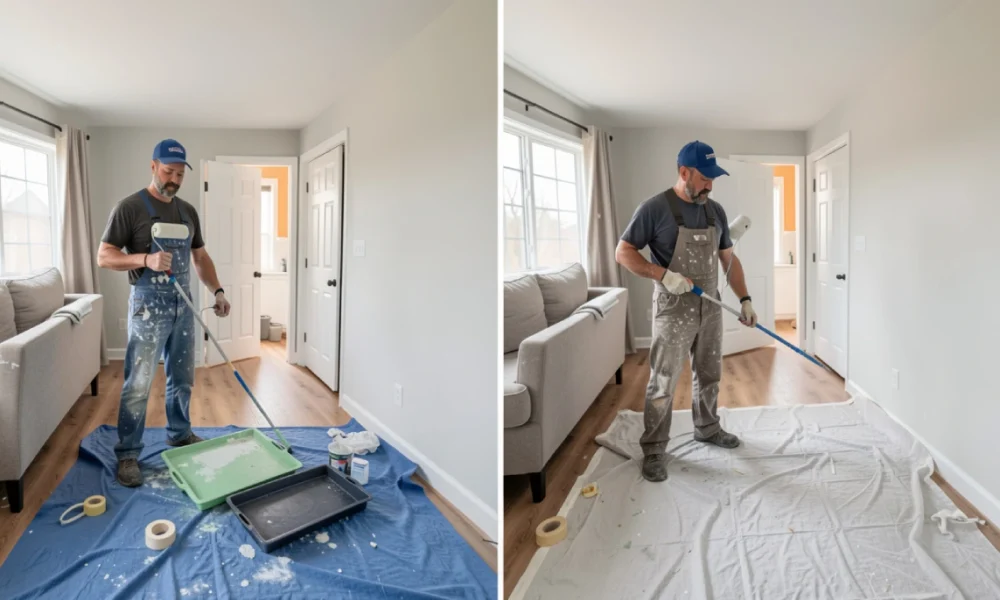
Deciding whether to paint your home yourself or bring in a professional is one of the most practical questions a homeowner faces before a refresh. Both routes have real advantages — and real trade-offs. The right choice depends on your budget, the scope of the project, your skill level, and how long you want the results to last.
Table Of Content
- Cost Comparison: What You’ll Actually Spend
- Time and Effort: What the Project Actually Requires
- Quality of Results: Finish, Durability, and Longevity
- Surface Preparation and Priming
- Paint Finishes: Matching the Right Sheen to Each Room
- When DIY Makes Sense
- When to Hire a Professional
- Safety Considerations
- Color Selection and Design Guidance
- How to Decide: A Simple Framework
This guide covers every major factor side by side so you can make a clear, informed decision.
Cost Comparison: What You’ll Actually Spend
At first glance, DIY painting appears to be the cheaper option. According to Angi, the average DIY exterior paint job runs between $500 and $2,000, depending on home size, paint quality, and supplies. For interior painting, DIY costs typically fall in the $200–$300 range for materials alone.
Professional painters generally charge $2–$6 per square foot for interior work, with total project costs varying based on your location, the number of rooms, surface conditions, and paint quality selected.
However, the cost gap narrows once you factor in hidden DIY expenses:
- Paint brushes, rollers, trays, and painter’s tape
- Drop cloths and plastic sheeting
- Primer (often a separate purchase)
- Equipment rental for ladders or scaffolding on taller structures
- Additional paint to correct uneven coverage or mistakes
If you already own most supplies and are painting a small space, DIY delivers genuine savings. For a whole-house project or a home with walls needing significant prep work, the material and time costs can make professional painting a more economical choice overall.
Time and Effort: What the Project Actually Requires
One of the most underestimated factors is time. DIY painting typically takes 40–80 hours of work spread across multiple weekends, depending on home size and surface condition. A single room often stretches across two or more days once prep, drying time between coats, and cleanup are included.
Professional crews, working with the right tools and enough hands, can complete most interior projects in 2–5 days and exterior jobs in approximately one week, weather permitting.
Before any paint is applied, surfaces must be cleaned, furniture moved and covered, edges taped, and any wall damage repaired. For DIYers, drywall patching, sanding, and degreasing walls can take longer than the painting itself — especially when problems like water stains or peeling are discovered mid-project.
Applying paint evenly without brush marks, streaks, or lap lines requires practice. On larger surfaces, maintaining a wet edge and achieving consistent coverage across multiple coats is harder than it looks. Professionals move efficiently because these are skills refined through repetition, not trial and error.
Quality of Results: Finish, Durability, and Longevity
The difference in finish quality between DIY and professional work is most visible over time. DIY paint jobs typically last 3–5 years before showing signs of fading, peeling, or needing touch-ups. Professional paint jobs, with proper surface preparation and high-quality materials, commonly last 7–10 years.
Common DIY problems include:
- Brush marks and roller texture are visible under certain lighting
- Uneven coverage from insufficient coats
- Paint peeling early due to skipped priming
- Drips and runs on vertical surfaces
- Poor cut-in lines along trim, ceilings, and corners
Professional painters have access to commercial-grade tools — including airless sprayers for exterior work — and apply technique-specific approaches to different surfaces. Many professional companies also offer workmanship warranties, meaning if the paint peels or fades prematurely within a defined period, they return to correct it at no additional cost.
Surface Preparation and Priming
Preparation is where most DIY paint jobs fall short. Clean, properly primed surfaces are what allow paint to bond correctly and last. Skipping or rushing this step is the primary reason paint fails early.
Before painting, walls must be free of grease, dust, mold, and loose material. Cracks and holes need to be filled and sanded flush. Professionals are trained to identify underlying problems — like moisture damage or previous paint layers that haven’t fully cured — and address them before they become a bigger issue.
Not all surfaces take paint the same way. Drywall, wood, metal, brick, and previously painted surfaces each respond to different primers. Using the correct primer improves paint adhesion, extends the life of the finish, and often reduces the number of coats required. Professionals understand these material-specific requirements; most DIYers apply a single all-purpose primer regardless of the surface type.
Paint Finishes: Matching the Right Sheen to Each Room
Choosing the correct paint finish is as important as choosing the color. Each finish performs differently depending on the amount of light, traffic, and moisture a surface receives:
| Finish | Best Use |
|---|---|
| Flat / Matte | Low-traffic areas, ceilings |
| Eggshell | Living rooms, dining rooms |
| Satin | Hallways, children’s rooms, kitchens |
| Semi-gloss | Trim, doors, window frames |
| High-gloss | Doors, cabinetry, high-impact areas |
Professional painters match finish types to each surface as a standard part of the job. DIYers who apply the wrong sheen — such as flat paint in a bathroom or kitchen — often face premature wear and difficulty cleaning.
When DIY Makes Sense
DIY painting is a practical choice in several specific situations:
- Painting a single room or accent wall
- Simple one-coat color refresh over a similar existing color
- Small touch-up work on previously painted surfaces
- When you have prior painting experience and proper tools on hand
- Budget is a strict constraint and the project is manageable in scope
When to Hire a Professional
Some projects go beyond what most homeowners can realistically handle safely or successfully:
- Whole-house interior or exterior painting
- Multi-story homes where working at height involves real risk
- Surfaces with significant damage, mold, or extensive drywall repair
- Specialty paints such as lacquers, which require professional application equipment and technique
- Large brick or masonry surfaces that need specific primers and coating systems
- High ceilings, staircases, or complex architectural trim
- Projects with tight deadlines or minimal tolerance for visible imperfections
Safety Considerations
Painting involves hazards that are easy to underestimate. Working on ladders — particularly for exterior second-story work — carries fall risk. Many paints and primers contain solvents that require proper ventilation. Older homes may have lead-based paint that must be handled according to EPA guidelines, including specific containment and disposal procedures.
Professional painters are trained in ladder and scaffold safety, handle hazardous materials correctly, and carry liability insurance and workers’ compensation coverage. If something goes wrong during a professional job, you are not financially responsible. With DIY, any injury or property damage falls on you.
Color Selection and Design Guidance
Professional painters often provide color consultation as part of their service, including advice on how different shades interact with natural and artificial light throughout the day. They can recommend specific finishes for different rooms and flag color combinations that tend to look different on a full wall than on a small sample swatch.
DIY projects give you complete creative control, which can be rewarding — though without experience in color theory and light behavior, outcomes can sometimes miss the mark. Many paint brands, including Sherwin-Williams, offer in-store color consultations that DIYers can use before committing to a purchase.
A quality paint job does more than change the color of a room. Exterior painting protects siding and wood trim from moisture, UV exposure, and temperature cycling. Interior painting on properly primed surfaces resists staining and scuffing, reducing the frequency of repainting over time.
Homeowners who attempt DIY on complex projects and encounter poor results often end up paying for professional correction on top of their original DIY costs. That doubles the expense. When factoring in durability, warranty coverage, and the likelihood of getting it right the first time, professional painting often delivers more value per dollar over a five-to-ten-year horizon.
How to Decide: A Simple Framework
Ask yourself the following before committing to either path:
- Scope — Is this one room or the whole house, interior and exterior?
- Surface condition — Do walls need significant repair before painting can begin?
- Height — Does the project require working above a single-story height safely?
- Timeline — Can you dedicate the weekends required, or does the project need to be finished quickly?
- Budget — Are you comparing short-term savings only, or the total cost over several years?
- Skill and tools — Do you have the supplies, experience, and patience to achieve the finish you want?
If most answers point toward complexity, scale, or safety concerns, a professional is the better investment. If the project is contained, straightforward, and you have a solid foundation of experience, DIY is entirely viable.
Ultimately, neither approach is universally better. What matters is matching the method to the actual demands of your project — and being honest about the time, tools, and skills you’re working with.