

Electric Vehicles in 2026: Technology, Costs, and the State of the EV Market
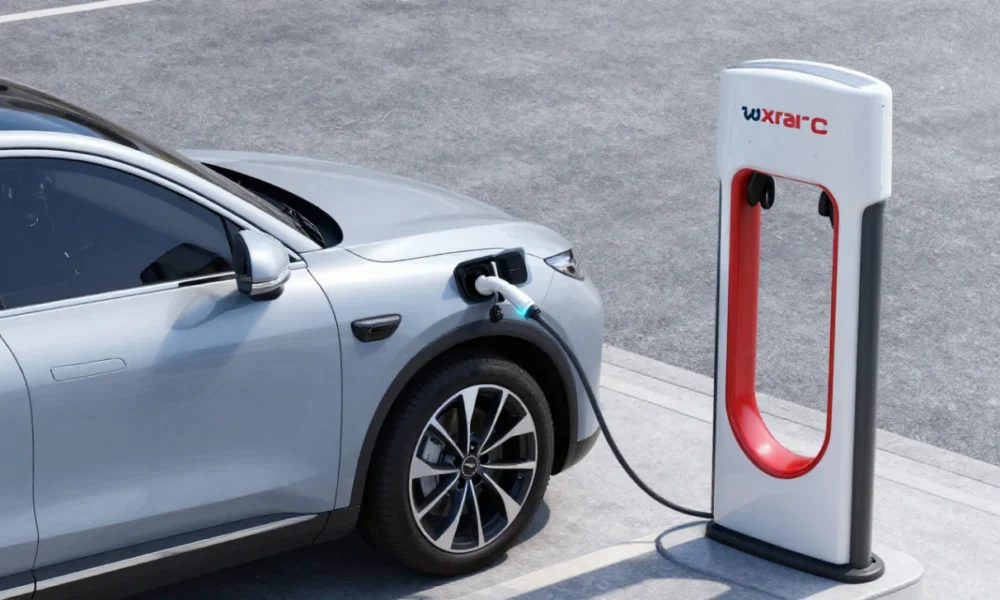
The transition to electric mobility has moved beyond a niche concept to become a central pillar of the global automotive industry. Concerns over greenhouse gas emissions and fossil fuel dependence continue to drive the shift, but the conversation has matured. It is no longer just about the promise of a greener future; it is about the tangible realities of electric vehicles (EVs) in the present. This overview examines the state of electric vehicles in 2026, covering the latest in technology, a realistic look at their environmental and economic impacts, and the infrastructure that supports them.
Table Of Content
- The Technology Behind Electric Vehicles in 2026
- The Next Generation of EV Batteries
- The Real-World Environmental Impact
- Tailpipe vs. Grid Emissions
- The Economic Equation in 2026
- Total Cost of Ownership and the Used EV Market
- The Expanding Charging Infrastructure
- A Global Patchwork of Charging Networks
- Home Charging: The Keystone of Convenience
- The Future of Electric Vehicles
The Technology Behind Electric Vehicles in 2026
While the basic principle of an EV—using electricity stored in a battery to power an electric motor—remains unchanged, the technology powering them is rapidly evolving. The market continues to offer three main types of EVs: Battery Electric Vehicles (BEVs), which run solely on battery power; Plug-in Hybrid Electric Vehicles (PHEVs), which combine a battery with a gasoline engine; and traditional Hybrid Electric Vehicles (HEVs) . However, the biggest advancements are happening in battery chemistry and performance.
The Next Generation of EV Batteries
The heart of the EV revolution is the battery, and 2026 is a pivotal year for new technologies beginning to reach the market.
- Solid-State Batteries Near Commercialization: After years of development, solid-state batteries are moving from the lab to pilot production. These batteries replace the liquid electrolyte found in current lithium-ion cells with a solid material, promising higher energy density, faster charging, and improved safety. Major players like CATL and BYD are ramping up pilot production, with a target to integrate them into commercial vehicles by 2027 . His technology could soon address two of the most persistent consumer concerns: driving range and charging time.
- The Rise of Sodium-Ion Batteries: As automakers focus on reducing costs, sodium-ion batteries are emerging as a viable alternative to lithium-ion, particularly for entry-level and short-range vehicles. Sodium is far more abundant and cheaper than lithium, leading to lower cell costs. While they offer lower energy density, their average cost has fallen to around $59 per kilowatt-hour, making them competitive with some lithium-ion chemistries . Chinese manufacturers are already incorporating them into small EVs and scooters, signaling a potential shift in how affordable electric mobility is achieved globally .
- Lithium-Ion Dominance Continues: Despite the emergence of new chemistries, lithium-ion batteries, particularly lithium iron phosphate (LFP) cells, remain the workhorse of the industry due to their balance of cost and performance.
The Real-World Environmental Impact
Electric vehicles are promoted for their potential to reduce transportation’s carbon footprint. While they are not “zero-emission vehicles” due to the electricity they draw from the grid, their overall impact is a significant improvement, and it is getting better as grids become cleaner.
Tailpipe vs. Grid Emissions
The most significant environmental benefit of an EV is the elimination of tailpipe emissions, which directly improves air quality in urban areas. However, a comprehensive view must include the emissions from electricity generation. A 2026 technical paper from SAE International notes that for a driver switching from a conventional vehicle to a BEV in the US, the reduction in gasoline use is partially offset by increased electricity consumption. The study found that on a grid where a third of power comes from zero-CO2 sources, the incremental CO2 emissions of a BEV are comparable to those of a strong hybrid vehicle .
Crucially, this relationship improves over time. Research published in the Proceedings of the National Academy of Sciences projects that while increased EV adoption may cause a slight uptick in power sector emissions initially, this effect drops sharply by 2032 as more renewable energy comes online. The net effect is a clear long-term benefit for the climate.
The Economic Equation in 2026
The financial case for buying an EV has become more nuanced. While the upfront cost can still be a barrier, long-term savings and a burgeoning used market are reshaping the economics.
Total Cost of Ownership and the Used EV Market
The total cost of ownership (TCO) for an EV can be favorable, but it is highly dependent on individual circumstances. Fuel and maintenance costs are generally lower. However, other factors play a significant role.
- Insurance: EV insurance premiums remain a notable long-term cost, typically 18-30% higher than for comparable gasoline vehicles due to the high cost of repairing or replacing battery and electronic systems
- Depreciation: New EVs experience rapid initial depreciation, in part due to the fast pace of technological advancement. While this is a downside for new-car buyers, it creates a significant opportunity in the used EV market. A 2026 study from the University of Michigan found that a three-year-old electric SUV can offer lifetime savings of nearly $9,500 compared to a new petrol SUV, as the second-hand buyer avoids the steepest part of the depreciation curve.
- Battery Longevity: Concerns over battery failure are a major hurdle for used EV buyers. However, real-world data is reassuring. Many EVs with over six years of use and more than 120,000 kilometers (approx. 75,000 miles) retain over 80% of their original battery capacity, and manufacturers typically offer lengthy warranties (e.g., 8 years/150,000 km). The battery is designed to outlast the car in many cases.
The Expanding Charging Infrastructure
The availability of charging infrastructure is the backbone of EV adoption, and 2026 has seen continued rapid expansion.
A Global Patchwork of Charging Networks
The growth of charging networks is a global story with regional variations. China, for instance, has built the world’s largest electric vehicle charging network. By the end of 2025, its total charging infrastructure surpassed 20 million units, achieving a ratio of 1.9 vehicles per charging point. This network is also evolving to include more high-power direct current (DC) fast chargers to reduce charging time significantly .
Other regions are actively scaling up. The Canadian government, as part of its new automotive strategy, announced over $84 million to add 8,000 new charging ports, aiming to improve accessibility and support its EV targets.
Home Charging: The Keystone of Convenience
Despite the growth of public networks, home charging remains the most convenient and cost-effective way to own an EV. The ability to install a dedicated charger and take advantage of off-peak electricity rates is a primary driver of low running costs. As one analysis notes, a lack of home charging can erode much of the financial benefit of an EV, as relying solely on public fast chargers can bring the per-kilometer cost much closer to that of a fuel-efficient gasoline car.
The Future of Electric Vehicles
The EV market in 2026 is characterized by moderated growth and intensifying competition. After a surge in 2025, global BEV sales are projected to grow by another 19% in 2026, reaching approximately 17.4 million units and capturing an estimated 19% share of the global light vehicle market . Hybrids and plug-in hybrids are also playing a key role in this transition, bridging the gap for consumers not yet ready to commit to a full BEV . The competitive landscape is also shifting, with Chinese automakers like BYD and Geely deepening their global integration and challenging established brands with competitive pricing and advanced technology. The industry is moving toward a future with a diverse mix of battery chemistries—from low-cost sodium-ion to high-performance solid-state—and a charging network that is finally beginning to match the scale of the vehicles it serves.