

Eric Montross Net Worth: NBA Career Earnings, College Legacy, and Life Beyond Basketball
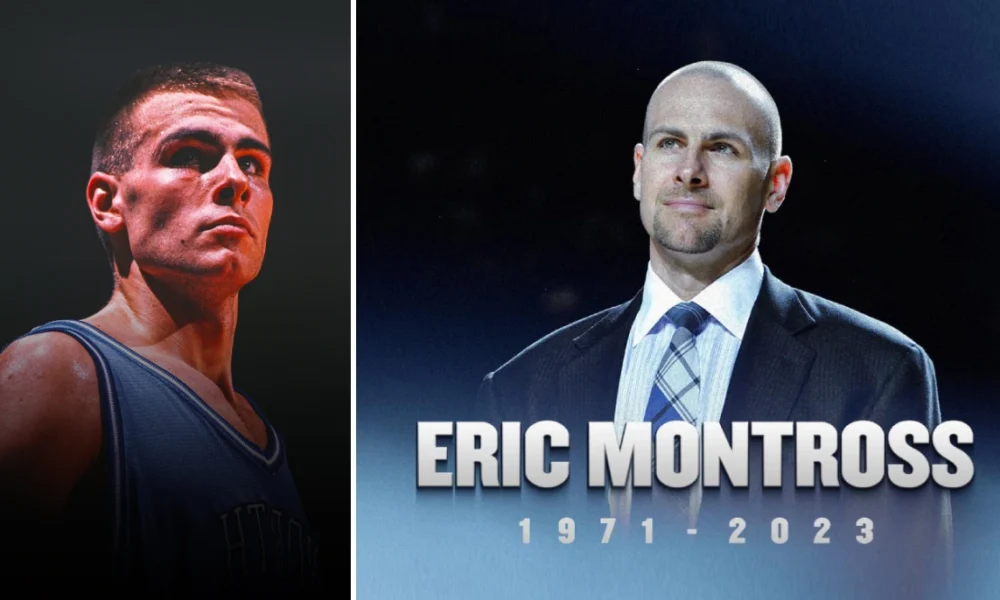
Eric Montross was a former NBA center, UNC national champion, and basketball broadcaster whose net worth at the time of his death in December 2023 was estimated between $5 million and $10 million. His financial success came primarily from his eight-season NBA career that earned him approximately $18.8 million, his 18-year broadcasting career with the Tar Heel Sports Network, and various investments, including real estate. Beyond his professional achievements, Montross became known for his philanthropy, particularly his work supporting cancer research and children’s healthcare through organizations like Vaccine Ambassadors and the Eric Montross Father’s Day Basketball Camp, which raised nearly $2 million for UNC Children’s Hospital.
Table Of Content
- High School and Family Basketball Legacy
- College Career at North Carolina
- Four-Year Performance and Statistics
- The “Bloody Montross” Game
- 1993 NCAA Championship
- Academic and Athletic Honors
- NBA Career and Salary Breakdown
- Complete Career Earnings
- Team Trades and Career Progression
- Career Statistics
- Retirement from Basketball
- Broadcasting and Post-NBA Career
- Philanthropic Work and Community Impact
- 1. Eric Montross Father’s Day Basketball Camp
- 2. Vaccine Ambassadors
- 3. Additional Charitable Involvement
- Personal Life and Family
- Cancer Diagnosis and Death
- Eric Montross Net Worth Breakdown
- Professional Legacy
- Conclusion
High School and Family Basketball Legacy
Born September 23, 1971, in Indianapolis, Indiana, Montross came from a basketball family with deep ties to the sport. His father, Scott Montross, played basketball at Michigan in the 1960s alongside Cazzie Russell, while his maternal grandfather, John Townsend, was an All-American at Michigan in the 1930s. Despite this family connection to Michigan, Montross chose a different path.
Standing 7 feet tall, Montross became one of the nation’s premier high school prospects at Lawrence North High School in Indianapolis. He led Lawrence North to the 1989 Indiana state championship and earned recognition as a McDonald’s All-American and USA Today All-American first team selection in 1990. His choice to attend North Carolina over Indiana, Michigan, and Duke became one of the most significant recruiting decisions of the era, particularly given Indiana coach Bob Knight’s strong pursuit and his family’s Michigan connections.
Interestingly, Montross was also a talented baseball pitcher in high school and was drafted by the Chicago Cubs in the 51st round (1,547th overall pick) of the 1994 MLB draft, though he never pursued professional baseball.
College Career at North Carolina
Four-Year Performance and Statistics
Montross played for legendary coach Dean Smith at UNC from 1990 to 1994, appearing in 139 games and establishing himself as one of the program’s premier centers. His college career statistics demonstrate his progression and consistency:
- Career averages: 11.7 points, 6.8 rebounds, 1.2 blocks per game
- Field goal percentage: 58.9% (showing exceptional efficiency around the basket)
- Total career points: 1,627 points
- Total career rebounds: Over 900 rebounds
His statistical progression showed steady growth. As a freshman in 1990-91, he averaged 5.8 points and 4.2 rebounds per game in a reserve role. By his sophomore year (1991-92), he had become a regular starter, averaging 11.2 points and 7.0 rebounds. His junior season (1992-93) saw him peak at 15.8 points and 7.6 rebounds per game while leading the team to a national championship.
The “Bloody Montross” Game
One of the most iconic moments in UNC basketball history occurred on February 5, 1992, when the Tar Heels faced the undefeated, top-ranked, and defending national champion Duke Blue Devils. During the game, Montross sustained a cut under his left eye while fighting for position under the basket. Blood dripped down his face and neck, staining his jersey, yet he left only briefly for stitches before returning to the court.
The image of Montross shooting free throws with blood streaming down his face became one of the most enduring photographs in the UNC-Duke rivalry. North Carolina upset Duke 75-73 in the final seconds, handing the Blue Devils their first loss of the season. Montross finished with 12 points, 10 rebounds, and three blocks. Years later, Montross reflected on the game, saying he could “wear the scars with a badge of honor” because the Tar Heels won.
1993 NCAA Championship
Montross played a central role in UNC’s 1993 national championship run, serving as the starting center. In the championship game against Michigan’s highly publicized “Fab Five,” North Carolina won 77-71. Montross contributed 16 points and 9 rebounds while using his defensive presence to neutralize Michigan’s frontcourt. In the national semifinal game, he scored 23 points, showcasing his offensive capabilities in high-pressure situations.
The championship team featured Donald Williams, who was named Most Outstanding Player of the Final Four, and George Lynch, both of whom worked alongside Montross to contain Michigan’s more heralded players.
Academic and Athletic Honors
Montross earned numerous accolades during his college career:
- Two-time consensus second-team All-American (1993, 1994)
- John Wooden All-America first team (1994)
- First-team All-ACC (1993)
- Second-team All-ACC (1994)
- Two-time All-ACC Tournament team (1993, 1994)
- NCAA East Region and Final Four All-Tournament team (1993)
- First-team Academic All-America (1994)
- Two-time Academic All-ACC honors
- Two-time ACC Tournament champion (1991, 1994)
His jersey number 00 was later retired by UNC and hangs in the rafters of the Dean Smith Center, recognizing his contributions to the program.
NBA Career and Salary Breakdown
The Boston Celtics selected Montross with the 9th overall pick in the 1994 NBA Draft. His rookie season proved to be his most productive at the professional level, averaging 10.0 points, 7.3 rebounds, and 0.8 blocks per game across 78 games. He earned NBA All-Rookie Second Team honors and participated in the 1995 NBA Rookie Challenge.
However, Montross never replicated his rookie success. The Celtics organization received criticism for selecting him over players like Eddie Jones, Jalen Rose, and Aaron McKie, who went on to have more successful NBA careers.
Complete Career Earnings
Over his eight-season NBA career, Montross played for six franchises. His complete salary breakdown (adjusted for inflation):
| Season | Team | Salary (Adjusted for Inflation) |
|---|---|---|
| 2003/04 | Toronto Raptors | $4,916,290 |
| 2002/03 | Toronto Raptors | $4,613,098 |
| 2001/02 | Toronto Raptors | $4,250,956 |
| 2000/01 | Detroit Pistons | $3,964,293 |
| 1999/00 | Detroit Pistons | $3,671,588 |
| 1998/99 | Detroit Pistons | $3,294,428 |
| 1997/98 | Philadelphia 76ers | $2,893,110 |
| 1996/97 | Dallas Mavericks | $2,492,275 |
| 1995/96 | Boston Celtics | $2,080,743 |
| 1994/95 | Boston Celtics | $1,649,237 |
Team Trades and Career Progression
Montross’s NBA career involved several trades:
- 1996: Traded from Boston to Dallas for a 1997 first-round pick
- 1997: Traded to New Jersey (along with Jim Jackson, Chris Gatling, George McCloud, and Sam Cassell)
- 1997: Traded to Philadelphia on draft day
- December 1997: Traded to Detroit (along with Jerry Stackhouse) for Aaron McKie and Theo Ratliff
- 2001: Traded to Toronto (along with Jerome Williams) for Kornél Dávid, Tyrone Corbin, and Corliss Williamson
His longest tenure came with the Detroit Pistons, where he played 167 games over three seasons, averaging 1.9 points and 2.8 rebounds per game. He finished his career with the Toronto Raptors, playing three seasons before injuries ended his playing days.
Career Statistics
Montross’s NBA career totals:
- 465 regular-season games (288 starts)
- 16 playoff games
- 4.5 points, 4.6 rebounds, 0.6 blocks, 0.4 assists per game
- 49.0% field goal percentage
- 47.8% free throw percentage
Retirement from Basketball
On August 26, 2003, Montross officially announced his retirement from professional basketball due to a chronic foot injury that had plagued him during his final seasons. The physical toll of moving his 250-pound, 7-foot frame up and down NBA courts for nearly a decade had taken its toll on his feet and ankles. The Toronto Raptors waived him in February 2004, officially ending his playing career.
While his eight-year NBA career was shorter than some had predicted when he entered the league as a lottery pick, injuries and the physical demands on big men ultimately limited his professional longevity.
Broadcasting and Post-NBA Career
After returning to Chapel Hill following his retirement, Montross transitioned into sports broadcasting. In 2005, he joined the Tar Heel Sports Network as the color commentator for UNC men’s basketball games, a position he held for 18 seasons until 2023.
Montross worked alongside play-by-play announcers Woody Durham and, later, Jones Angell, providing analysis informed by his experience playing under Dean Smith and his deep understanding of Carolina basketball. His conversational style and genuine enthusiasm for Tar Heel basketball made him a favorite among fans. He became known locally not just as a former player, but as one of the most accessible and friendly figures in Chapel Hill sports media.
Beyond broadcasting, Montross served as the Senior Director of Major Gifts at the Rams Club, the fundraising arm of UNC athletics. In this role, he worked with donors and alumni to support the university’s athletic programs, leveraging his relationships and his status as a championship player to benefit the next generation of Tar Heels.
Philanthropic Work and Community Impact
1. Eric Montross Father’s Day Basketball Camp
In 1994, while still playing at UNC, Montross befriended 16-year-old Jason Clark, a cancer patient at UNC Children’s Hospital. Deeply moved by this friendship and Jason’s courage, Montross asked the teenager to create a list of improvements needed at the children’s hospital.
Inspired by this conversation, Montross and his wife, Laura, founded the Eric Montross Father’s Day Basketball Camp in 1995. The camp, held annually on Father’s Day weekend, brought fathers and children together for basketball activities while raising funds for UNC Children’s Hospital. By the time of Montross’s death, the camp had raised nearly $2 million for the hospital, funding medical equipment, patient care improvements, and family support services.
2. Vaccine Ambassadors
Working with the Pan American Health Organization, Montross co-founded Vaccine Ambassadors along with Jackie Kaufman and Dr. Jacob Lohr. This Durham-based nonprofit organization focuses on providing equitable access to life-saving vaccines for children and families in Latin America and the Caribbean.
Since its founding in 2015, Vaccine Ambassadors has provided nearly 1 million vaccines covering 12 diseases, including routine childhood vaccinations and emergency vaccines. The organization purchases high-quality vaccines and related medical supplies, then coordinates their distribution to underserved communities in developing countries.
3. Additional Charitable Involvement
Montross served on the boards of multiple organizations:
- Be Loud! Sophie Foundation: Supporting young cancer patients at UNC
- Super Cooper’s Little Red Wagon Foundation: Supporting children facing medical challenges
- Various youth development and healthcare organizations throughout North Carolina
His charitable philosophy emphasized direct, hands-on involvement rather than simply writing checks. He regularly visited young patients in hospitals, attended fundraising events, and used his platform to raise awareness for causes he believed in.
Personal Life and Family
Eric Montross married Laura Montross, and together they had three children: daughters Sarah and Megan, and son Andrew. The family made Chapel Hill their permanent home, and Montross was known throughout the community as a devoted father who prioritized his family above all else.
Former UNC coach Hubert Davis, who was Montross’s teammate, described him as someone who “loved being a husband” and “loved being a dad.” Current UNC player Sean May, another big man from Indiana who won a national championship at Carolina, viewed Montross as a role model for how to balance professional success with family life and community engagement.
Montross’s personality stood out in a sports world often characterized by ego and self-promotion. He was described universally as kind, humble, and genuinely interested in others. Former teammates and colleagues noted that he never turned down interview requests, always made time for fans, and treated everyone with respect regardless of their status.
Cancer Diagnosis and Death
In March 2023, the Montross family released a statement announcing that Eric had been diagnosed with cancer. He received treatment at the UNC Lineberger Comprehensive Cancer Center, the same institution he had supported for decades through his philanthropic work.
The family requested privacy but expressed gratitude for the overwhelming support from the UNC community and basketball world. They noted that the encouragement from so many people was “welcomed as a necessary part of beating cancer one day at a time.”
Montross faced his illness with the same determination and grace that characterized his playing career and his life. He continued his charitable work and maintained his connections to the UNC community even while undergoing treatment.
Eric Montross passed away on December 17, 2023, at age 52, surrounded by loved ones at his Chapel Hill home. The family’s statement emphasized that he “battled with his signature determination and grace” and that they were “grateful for the tremendous support and the truly overwhelming love expressed by so many people.”
His death prompted an outpouring of tributes from across the basketball world. North Carolina Governor Roy Cooper wrote that Montross’s “contributions to the UNC community and our state went far beyond his championship basketball skills.” ESPN analyst Jay Bilas called him “the nicest, kindest person one could ever know.” Current UNC coach Hubert Davis simply said: “I am devastated. Eric was my friend. He was my teammate.”
Eric Montross Net Worth Breakdown
Eric Montross’s net worth of $5 million to $10 million came from multiple sources accumulated over his professional career:
| Income Source | Estimated Amount | Details |
|---|---|---|
| NBA Salary | $18.8 million | Eight seasons (1994-2004) across six teams |
| Broadcasting Career | Undisclosed | 18 years (2005-2023) with Tar Heel Sports Network |
| Endorsements | Undisclosed | Various sponsorships during playing career |
| Rams Club Position | Undisclosed | Senior Director of Major Gifts |
| Investments | Undisclosed | Real estate and other financial investments |
His financial approach reflected his midwestern upbringing and practical mindset. Rather than pursuing high-profile endorsements or flashy lifestyle choices, Montross made conservative financial decisions that provided long-term stability for his family. His real estate investments in the Chapel Hill area proved particularly wise, as the region experienced significant growth during his post-playing career.
Professional Legacy
Eric Montross’s professional accomplishments include:
- UNC jersey number 00 retired and hanging in the Dean Smith Center rafters
- Member of UNC’s 1993 NCAA Championship team
- Two-time All-American
- NBA lottery pick (9th overall, 1994)
- Eight-year NBA career with six franchises
- 18-year broadcasting career
- Nearly $2 million raised for UNC Children’s Hospital
- Co-founder of Vaccine Ambassadors, providing nearly 1 million vaccines internationally
However, those who knew him best emphasized that his greatest legacy had nothing to do with statistics, awards, or financial success. Former UNC teammate George Lynch noted Montross’s competitive fire but also his fundamental kindness. UNC officials described him as “one of the most recognizable ambassadors of the University and Chapel Hill.”
His former broadcast partner’s family noted that Montross showed extraordinary kindness during the late years of announcer Woody Durham’s career, demonstrating respect and patience that meant everything to the Durham family.
Conclusion
Eric Montross built a net worth estimated between $5 million and $10 million through his basketball career, broadcasting work, and financial investments. His NBA earnings of $18.8 million formed the foundation of his wealth, supplemented by nearly two decades in sports media and fundraising.
Yet Montross himself would likely bristle at having his life measured primarily through financial metrics. He was a man who valued relationships over recognition, service over status, and family over fame. The nearly $2 million he helped raise for sick children, the million vaccines distributed through his organization, and the countless individuals he touched through simple acts of kindness represent a legacy that transcends net worth calculations.
His story demonstrates that professional success and personal character need not be mutually exclusive. Eric Montross was a champion on the court, a dedicated professional off it, and above all, a fundamentally decent human being whose impact on Chapel Hill and beyond will endure far longer than any financial figure.