

8 Evidence-Based Strategies for Autism Every Parent Should Know
Raising an autistic child comes with questions that no manual fully answers. Parents want to help their child thrive, but the flood of conflicting advice online can make it hard to know where to start. This guide brings together eight evidence-based strategies for autism that are grounded in research and used by therapists, educators, and families around the world. They are practical, they are proven, and they can be adapted to fit your child’s specific needs.
Table Of Content
- Understanding Autism: Behavior as Communication, Not Misbehavior
- Why Evidence-Based Strategies Matter for Your Child’s Growth
- Strategy 1: Parent-Led, Child-Focused Interaction and Play
- Strategy 2: Creating Predictable Routines with Visual Supports
- Strategy 3: Building Functional Communication Skills at Home
- Strategy 4: Using Positive Reinforcement to Shape Behavior
- Strategy 5: Addressing Sensory Needs for a Calmer, Happier Child
- Strategy 6: Teaching Social Skills Naturally Through Everyday Moments
- Strategy 7: Fostering Independence with Step-by-Step Teaching
- Strategy 8: Emotional Regulation and Coping Skills for the Whole Family
- Collaborating with Educators, Therapists, and Your Support Village
- The Essential Role of Parent Self-Care and Community
- Celebrating Progress and Planning for a Confident Future
Understanding Autism: Behavior as Communication, Not Misbehavior
Every behavior serves a purpose. When an autistic child cries, shuts down, runs away, or repeats an action, they are usually trying to tell you something: I’m overwhelmed, I don’t understand, I need a break, or I’m excited. Viewing behavior through this lens changes how parents respond. Instead of asking “How do I stop this?”, the more useful question is “What is my child trying to communicate?”
This shift matters because punishing or suppressing a behavior without addressing its cause rarely works long-term. A child who screams because a room is too loud needs quieter surroundings, not a consequence. Understanding this connection between behavior and communication is the foundation for every strategy that follows.
Why Evidence-Based Strategies Matter for Your Child’s Growth
Not every parenting technique that works for neurotypical children works the same way for autistic children. Autism affects how a child processes sensory input, language, and social cues, so approaches need to account for these differences. Evidence-based strategies are methods that have been tested in clinical studies and shown to produce real, measurable improvements in communication, behavior, and quality of life.
Choosing evidence-based approaches also protects families from wasting time and money on unproven methods. It gives parents a clear, realistic sense of what to expect and how to track progress over weeks and months.
Strategy 1: Parent-Led, Child-Focused Interaction and Play
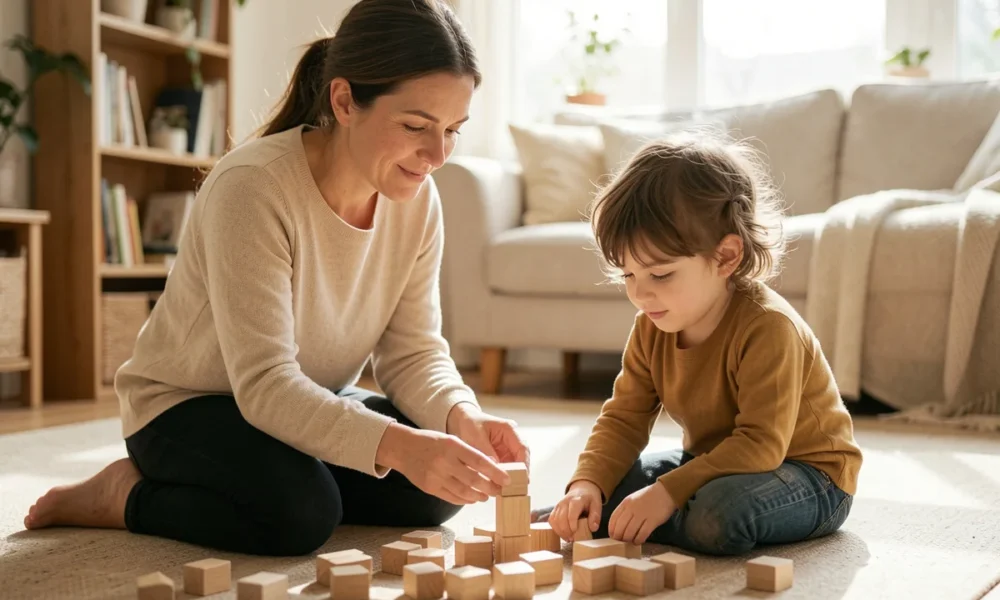
One of the most effective ways to build connection and communication is through play that follows your child’s lead. Instead of directing the activity, sit down at your child’s level, follow their interests, and join in. If they line up toy cars, line up cars with them. If they spin a wheel, watch and narrate what they’re doing.
This approach, often used in programs like the Early Start Denver Model and Floortime, builds trust and opens natural opportunities for language and interaction. Children are far more likely to engage and communicate when the interaction starts with something they already care about.
Strategy 2: Creating Predictable Routines with Visual Supports
Unpredictability is a major source of stress for many autistic children. A consistent daily routine reduces anxiety and helps children understand what comes next. Visual schedules, picture cards, and simple timers give children a way to see the structure of their day rather than relying only on spoken instructions, which can be harder to process in the moment.
Start small. A morning routine board showing “wake up, brush teeth, get dressed, breakfast” can prevent meltdowns before they start. Update the schedule together as your child grows and their needs shift.
Strategy 3: Building Functional Communication Skills at Home
Communication doesn’t have to mean spoken words. Some children communicate through gestures, picture exchange systems, sign language, or speech-generating devices. What matters most is that your child has a reliable way to express needs, wants, and feelings.
Speech-language pathologists can help identify the right communication method for your child, but parents play the biggest role in reinforcing it daily. Model language throughout everyday routines, respond promptly to any communication attempt, and celebrate small wins like a pointed finger or a single word request.
Strategy 4: Using Positive Reinforcement to Shape Behavior
Positive reinforcement means rewarding behaviors you want to see more of, rather than focusing solely on stopping unwanted behavior. This might involve praise, a preferred activity, a small treat, or extra playtime. Applied Behavior Analysis (ABA) and other behavioral therapies rely heavily on this principle, and parents can use simplified versions at home.
The key is consistency. Reinforce the behavior immediately, keep instructions clear, and make sure the reward genuinely motivates your child. Over time, this approach builds new skills while reducing frustration for both child and parent.
Strategy 5: Addressing Sensory Needs for a Calmer, Happier Child
Many autistic children experience sensory input differently. Sounds may feel louder, lights may feel harsher, and certain textures may feel unbearable. Others may seek out sensory input, craving movement, pressure, or specific sounds.
Pay attention to what triggers distress and what helps your child feel calm. Noise-canceling headphones, weighted blankets, fidget tools, and quiet spaces at home can make a significant difference. An occupational therapist trained in sensory integration can assess your child’s specific profile and recommend targeted strategies.
Strategy 6: Teaching Social Skills Naturally Through Everyday Moments
Social skills develop best in real situations rather than isolated lessons. Use daily moments, such as grocery shopping, playground visits, or family meals, as low-pressure opportunities to practice greetings, turn-taking, and reading facial expressions.
Social stories, which describe a situation and the expected behavior in simple language, can prepare your child for new or challenging environments. Role-playing at home before a birthday party or school event also reduces anxiety and builds confidence for the real interaction.
Strategy 7: Fostering Independence with Step-by-Step Teaching
Independence grows through small, manageable steps rather than big expectations. Break tasks like brushing teeth, getting dressed, or making a snack into individual steps, and teach each one separately before combining them. This method, sometimes called task analysis, allows children to master skills at their own pace.
Celebrate each completed step, even if the full task isn’t finished yet. Over time, these small wins build toward genuine self-sufficiency, which supports your child’s confidence well into adolescence and adulthood.
Strategy 8: Emotional Regulation and Coping Skills for the Whole Family
Emotional regulation is a skill that takes time to develop, especially when a child also has to manage sensory and communication challenges. Teach simple coping tools such as deep breathing, counting, or moving to a quiet space when emotions run high. Model these strategies yourself so your child sees them used in real life, not just talked about.
This isn’t only about the child. Parents and siblings benefit from learning these same tools, since family stress levels directly affect a child’s ability to stay regulated. A calmer household supports a calmer child.
Collaborating with Educators, Therapists, and Your Support Village
No parent should navigate this journey alone. Build a team that includes teachers, therapists, doctors, and extended family members who understand your child’s needs. Share strategies that work at home so they can be reinforced at school, and vice versa.
Regular communication with this team, whether through meetings, shared notebooks, or quick check-ins, keeps everyone aligned. Consistency across environments helps your child generalize skills faster and feel more secure.
The Essential Role of Parent Self-Care and Community
Supporting an autistic child is rewarding, but it can also be exhausting. Parents who neglect their own well-being often find it harder to stay patient and consistent, which affects the whole family. Make space for rest, ask for help when needed, and connect with other parents who understand the daily reality of raising an autistic child.
Local support groups, online communities, and respite care services exist for a reason. Using them isn’t a sign of failure. It’s a practical step that keeps you able to show up for your child day after day.
Celebrating Progress and Planning for a Confident Future
Progress with autistic children often looks different than expected timelines suggest. A new word, a moment of eye contact, or a calmer transition between activities are meaningful milestones worth celebrating. Keep a simple record of these moments to look back on during harder days.
As your child grows, strategies will need to evolve alongside their changing needs and strengths. Stay flexible, keep learning, and trust that consistent, evidence-based support gives your child the best possible foundation for a confident, independent future.