

The Evolution of Movie Technology From Celluloid to CGI
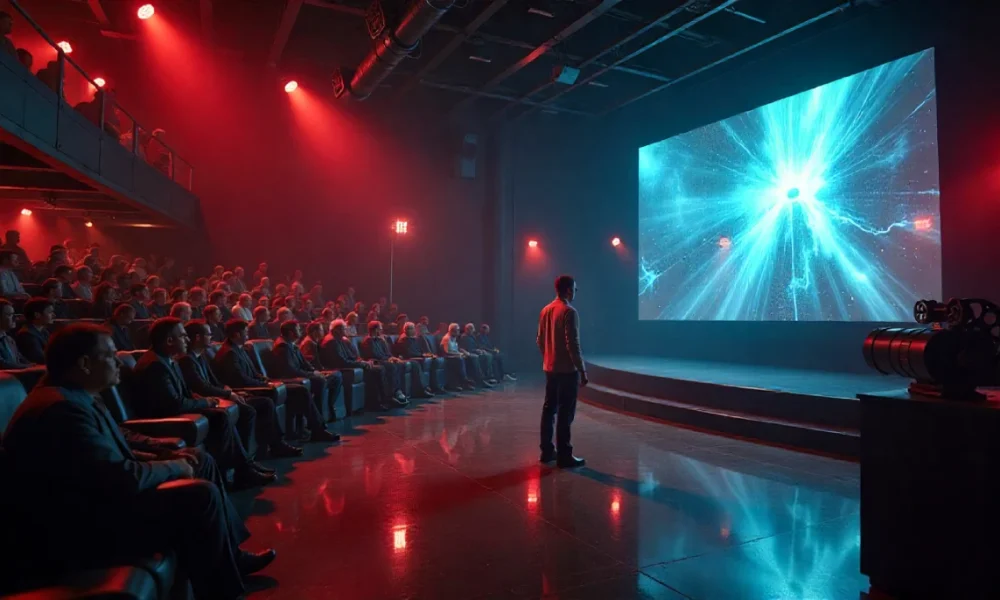
The story of cinema is a story of technological revolution. Each major leap in movie technology—from the first flickering projections to today’s digital worlds—has fundamentally reshaped the art of filmmaking, the structure of the industry, and the experience of the audience. This evolution is driven by a constant dialogue: visionary inventors create new tools, and pioneering filmmakers use them to tell stories in ways previously unimaginable.
Table Of Content
- The Early Years: Invention of Motion Picture Technology
- Origins of Motion Picture Technology
- Contributions of Key Inventors
- Development of the First Motion Picture Camera and Celluloid Film
- The Silent Era: Advancements in Film Technology
- Impact of the Silent Era on Movie Technology
- Evolution of Film Projection, Lenses, and Photography
- The Introduction of Sound: Transition to Talkies
- Technological Advancements Leading to Sound
- Impact of Sound on the Movie Industry
- Challenges and Innovations during the Transition
- The Golden Age of Hollywood: Technological Innovations
- Technological Advancements during the Golden Age
- Influence of Technological Innovations on Film Production and Presentation
- Introduction of Color Film and Its Impact on the Industry
- The Rise of Animation and Special Effects
- Evolution of Animation Technology
- Impact of Special Effects on Movie Technology
- The Digital Revolution: Transition to 3D and CGI
- Emergence of Digital Technology in Filmmaking
- Transition from 2D to 3D Films
- Influence of CGI on Modern Filmmaking
- Trends and Innovations in Movie Technology
- Impact of Technologies on Movies
- Predictions for the Future of Movie Technology
- Conclusion
By tracing the journey of cameras, sound, color, and visual effects, we see not just a list of inventions, but how technology expanded the very language of cinema.
At its core, movie technology refers to the equipment, processes, and techniques used for motion picture production, post-production, and exhibition. This includes cameras, film stock, editing equipment, audio recording devices, and projection systems. As these technologies advanced, they empowered filmmakers to construct increasingly sophisticated visual narratives, turning a novelty into a dominant global art form and industry.
The Early Years: Invention of Motion Picture Technology
While movies feel modern, the origins of motion picture technology stretch back to the 19th century. Pioneering inventors built the foundation by solving the puzzle of capturing and displaying moving photographic images.
Origins of Motion Picture Technology
The principles were established long before cinema’s official birth. In the 1830s, devices like the phenakistoscope and zoetrope used spinning discs or drums with sequential drawings to create the illusion of movement through stroboscopic animation. However, true motion pictures required the ability to photograph movement.
A key breakthrough came in 1878 when Eadweard Muybridge used a series of cameras to photograph a galloping horse, proving it had all four hooves off the ground simultaneously. This experiment demonstrated the possibility of deconstructing motion into a sequence of still images, a foundational concept for film.
Contributions of Key Inventors
Several innovators built mechanisms for shooting and exhibiting motion pictures. Thomas Edison led with his Kinetoscope in 1891, a peephole device for individual viewing. The concept of public projection was realized by Auguste and Louis Lumière with their Cinématographe. This remarkable device, which functioned as a camera, projector, and film printer, was used to host the world’s first commercial film screening in Paris in 1895.
Development of the First Motion Picture Camera and Celluloid Film
The breakthrough that allowed the industry to blossom was the combination of a practical camera with flexible, durable film stock. In the late 1880s, inventors like Louis Le Prince experimented with cameras using paper and then celluloid film.
The pivotal advancement was the adoption of celluloid film as a standard. This flexible, transparent medium, originally invented in the 1870s and later mass-produced by companies like Eastman Kodak, was superior to glass plates or paper. It could be easily threaded through a camera and projector, was durable enough for repeated use, and allowed for the long strips needed for multi-minute films. This made reliable recording and exhibition possible on a commercial scale.
The Silent Era: Advancements in Film Technology
Between 1895 and the 1910s, cinema evolved from a novelty into a major narrative art form. During this silent era, filmmaking technology improved in tandem with growing visual storytelling sophistication.
Impact of the Silent Era on Movie Technology
This period saw film transition from a scientific curiosity into a global industry. As the first movie studios formed and film stars rose, engineers refined the core tools needed to make longer, more complex films. While early films were only a minute long, by 1914, feature-length storytelling was established, necessitating more reliable cameras, editing equipment, and projection systems.
Evolution of Film Projection, Lenses, and Photography
A major focus was on improving projection for larger screens and longer shows. Key inventions like the Latham loop (1896) were crucial; this simple loop of film above and below the projector gate relieved tension, preventing film from snapping during projection and allowing for longer, uninterrupted reels.
Lenses and film stock also advanced rapidly. Orthochromatic film, more sensitive to light than earlier types, enabled better interior and nighttime photography. Techniques like soft focus, masking, and cross-cutting were developed, allowing for more sophisticated continuity editing and early special effects.
- The Latham loop (1896): A slack loop of film in the projector that reduced tension and prevented breakage, enabling longer films.
- Stop-motion (1897): An animation technique where objects are moved incrementally between photographed frames.
- Early Special Effects: Innovations like double exposure, time-lapse, and hand-coloring.
- Artificial Lighting (1914): The use of artificial lights allowed for controlled filming conditions independent of sunlight.
The Introduction of Sound: Transition to Talkies
The 1927 release of The Jazz Singer, featuring synchronized dialogue, ushered in the age of “talkies” and revolutionized the industry. Adding sound required a complete overhaul of production and exhibition, fueling rapid innovation in recording and amplification.
Technological Advancements Leading to Sound
Early attempts used separate phonograph discs (like Warner Bros.’ Vitaphone system), but these were unreliable. The final breakthrough was sound-on-film technology, such as Fox-Case’s Movietone, which converted sound into light waves and recorded them as an optical soundtrack directly onto the film strip. This guaranteed synchronization and became the new standard.
Impact of Sound on the Movie Industry
The arrival of talkies affected every part of filmmaking. Production moved to soundproofed stages, cameras had to be housed in bulky blimps to silence their noise, and actors now needed trained voices. Theatres underwent expensive renovations to install new sound systems. By the early 1930s, the silent era was effectively over.
Challenges and Innovations during the Transition
The transition was fraught with challenges. Issues with microphone placement, recording fidelity, and camera noise forced rapid engineering solutions. Innovations like boom microphones, directional mics, and the development of Automated Dialogue Replacement (ADR) emerged to improve sound quality. This period triggered one of the most disruptive and transformative chapters in cinema history.
The Golden Age of Hollywood: Technological Innovations
From the 1930s to the 1950s, the classic Hollywood studio system flourished. This era saw studios refine and maximize technology to improve film quality, efficiency, and spectacle, cementing cinema as the dominant form of popular entertainment.
Technological Advancements during the Golden Age
This period was marked by refinement and the introduction of color. Film stock became finer-grained and more sensitive. Optical printers enabled sophisticated effects like seamless dissolves and composites. The most pivotal advancement was the introduction of viable color film processes.
Influence of Technological Innovations on Film Production and Presentation
Techniques developed here became standard. The boom mic gave greater freedom in sound recording, while improved lighting allowed for dramatic cinematography. In response to the new threat of television, the industry innovated to draw audiences back to theaters. This led to the development of widescreen formats like Cinerama (1952) and CinemaScope (1953), which offered expansive, immersive images that TVs could not match.
Introduction of Color Film and Its Impact on the Industry
While early color processes existed, Technicolor’s three-strip process (introduced in 1932) was a breakthrough. It used a special camera to record red, green, and blue light on separate film strips, which were then combined to produce vibrant, full-color prints with remarkable fidelity. After the sensational success of films like The Wizard of Oz (1939), color became an expected feature of major Hollywood productions, revolutionizing production design, costume, and cinematography.
The Rise of Animation and Special Effects
Alongside live-action, the 20th century saw animation and special effects become sophisticated arts of their own, enabling fantastic worlds that expanded cinema’s creative horizons.
Evolution of Animation Technology
Animation began with hand-drawn cel animation and stop-motion. Walt Disney’s Snow White (1937) demonstrated the narrative potential of feature-length cel animation. Later, xerography (used in 101 Dalmatians, 1961) allowed animators to photocopy drawings directly onto cels, enabling more graphic styles. The path to fully digital filmmaking began with early computer animation experiments in the 1970s and 80s.
Impact of Special Effects on Movie Technology
Special effects evolved from in-camera tricks to complex optical and digital processes. The Golden Age relied on practical effects: miniatures, matte paintings, rear projection, and elaborate makeup. A major shift began with the motion-control photography developed for Star Wars (1977), which allowed for precise, repeatable camera moves to composite spaceships against starfields. This film ushered in the era of the effect**-driven blockbuster and paved the way for digital tools.
- Chroma Key Compositing: The evolution of blue and green screen techniques allowed actors to be seamlessly placed into any background.
- Stop-Motion Innovations: Techniques like Ray Harryhausen’s “Dynamation” brought mythical creatures to life.
- Computer-Generated Imagery (CGI): Early use in films like Westworld (1973) hinted at its future potential.
The Digital Revolution: Transition to 3D and CGI
By the 1990s, digital technology had begun a revolution as profound as the introduction of sound. It transformed every stage of filmmaking, from image capture to editing, visual effects, and final projection.
Emergence of Digital Technology in Filmmaking
The shift to digital formats opened new creative dimensions. Editing transitioned from physically cutting film to non-linear editing systems (NLEs) like Avid and Final Cut Pro, offering incredible flexibility. Digital cameras like the RED and ARRI Alexa provided high-quality, affordable alternatives to film, with greater dynamic range and instant playback. Most significantly, the rise of CGI meant that virtually any visual could be created or altered on a computer.
Transition from 2D to 3D Films
While 3D had periodic booms in the 1950s and 1980s, digital technology enabled its modern revival. Digital projection provided the precise alignment needed for polarized 3D glasses, and CGI made the creation of stereoscopic images more practical. Blockbusters like Avatar (2009) demonstrated that digital 3D could offer a deeply immersive experience, making it a staple for major releases.
Influence of CGI on Modern Filmmaking
CGI has had the most transformative impact on visual storytelling since the advent of sound. Beginning with landmarks like the liquid metal T-1000 in Terminator 2: Judgment Day (1991) and the believable dinosaurs in Jurassic Park (1993), it showed that computers could create photorealistic elements that interacted with live action. Animation fully transitioned to CGI with pioneers like Pixar’s Toy Story (1995). Performance capture technology, as used for Gollum in The Lord of the Rings (2001) and the Na’vi in Avatar, blurred the line between actor and digital character, providing new tools for emotional performance.
Trends and Innovations in Movie Technology
Movie technology continues to advance, with current innovations focusing on immersion, efficiency, and accessibility. The future points toward more interactive and democratized forms of filmmaking and viewing.
Today’s leading innovations are less about speculation and more about practical tools reshaping production. Virtual Production, using massive LED walls (like ILM’s StageCraft technology), allows actors to perform within real-time digital environments, revolutionizing visual effects workflows. High-frame-rate filming and resolutions beyond 4K are explored for new visual textures. Furthermore, the democratization of technology continues; high-quality digital cameras and editing software are more accessible than ever, empowering independent creators.
Impact of Technologies on Movies
These technologies are changing how films are made and seen. Streaming platforms like Netflix and Disney+ have transformed distribution, creating new avenues for films and changing audience viewing habits. Artificial Intelligence (AI) is beginning to assist in tasks from script analysis and visual effects rendering to generating realistic digital textures, though it remains a tool to augment human creativity. The rise of remote collaboration tools also facilitates global filmmaking teams.
Predictions for the Future of Movie Technology
Looking ahead, the lines between different media may continue to blur. Technologies like virtual reality (VR) and augmented reality (AR) could lead to new, immersive narrative formats. The integration of real-time rendering (technology from video games) into film pipelines could further streamline production. The core challenge and opportunity will remain the same: how storytellers harness these evolving tools to connect with audiences in meaningful ways.
Conclusion
From the flickering images of the Lumière brothers to the digital worlds of today, movie technology has traveled an incredible distance in just over a century. Each major transition—silent to sound, black-and-white to color, physical to digital—brought disruption but also unlocked vast new creative landscapes.
The evolution shows that technology is more than just tools; it is a fundamental driver of cinematic language. It has democratized filmmaking, globalized distribution, and continually redefined what is possible on screen. As we look forward, the promise of new technologies is not just sharper images or more impressive effects, but the ongoing expansion of cinema’s power to tell our stories, share our emotions, and imagine our futures.