

12 First Day of Middle School Activities That Work (2026 Guide)
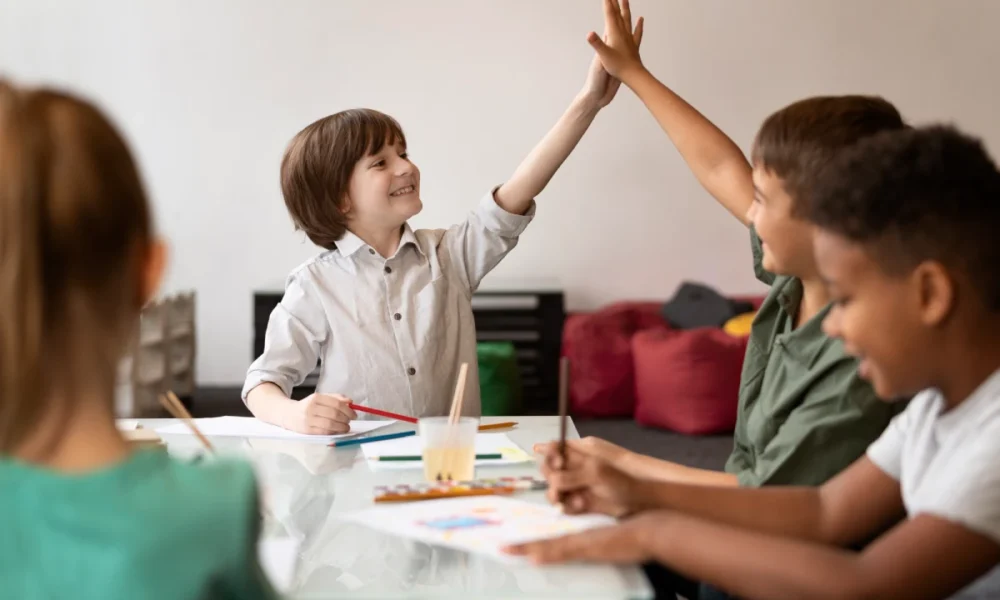
The first day of middle school sets the tone for the entire year. You need activities that help students feel comfortable, build connections, and get excited about learning.
Table Of Content
- What Makes a Good First Day Activity?
- Why the First Day Matters
- Icebreakers and Community Building
- 1. Human Scavenger Hunt
- 2. Two Truths and a Lie
- 3. Collaborative Mural
- 4. Mystery Photo Challenge
- Getting to Know You and Setting Goals
- 5. Future Time Capsules
- 6. Talent Showcase
- 7. Dream Collages
- 8. “Would You Rather…?” Dilemmas
- Active Learning and Themed Activities
- 9. Escape the Classroom
- 10. Minute to Win It Challenges
- 11. Global Guest Speaker
- 12. Classroom Norms Creation
- Conclusion
An engaging first day reduces anxiety and creates a positive classroom environment. Students who feel welcomed on day one participate more actively and develop a stronger sense of belonging throughout the year.
What Makes a Good First Day Activity?
Good first day of middle school activities help students connect with classmates, ease transition anxiety, and preview what they’ll learn. Focus on icebreakers that require movement and conversation, goal-setting exercises that give students ownership, and team challenges that build collaboration skills from the start.
Why the First Day Matters
Middle school represents a major transition. Students face new teachers, classmates, routines, and expectations. This causes anxiety and uncertainty. Your first day activities shape how students view your classroom. Students who feel positive about day one attend more eagerly and participate more actively.
Middle schoolers also need opportunities to take ownership of their learning. Interactive activities let students shape their classroom experience while building leadership and collaboration skills.
A thoughtful first day creates engagement and sets up a productive year.
Icebreakers and Community Building
These activities help students learn names, find common interests, and start building relationships.
1. Human Scavenger Hunt
Time needed: 15-20 minutes
Students mingle and find classmates who match specific statements. Create a list like:
- Has climbed a mountain
- Speaks more than one language
- Has visited another continent
- Has a pet lizard
- Plays a musical instrument
Students introduce themselves and record the names of classmates who fit each statement. Set a timer and have students share findings afterward.
This gets everyone moving and talking immediately.
2. Two Truths and a Lie
Time needed: 20-30 minutes (depending on class size)
Each student shares three statements about themselves—two true, one false. Classmates guess which statement is the lie. This activity promotes active listening and helps students open up. You learn intriguing facts about each student while they practice public speaking in a low-pressure setting.
3. Collaborative Mural
Time needed: 30-40 minutes
Break students into small groups of 4-5. Give each group art supplies and assign them one section of a larger mural. Choose a unifying theme like “What Makes Our Classroom Community Strong” or “Our Goals for This Year.” Groups create their section, then you display all sections together as one complete mural. This builds teamwork and gives students a visual reminder of their shared goals.
4. Mystery Photo Challenge
Time needed: 15-20 minutes
Before students arrive, hide photos around your classroom. Use images of school clubs, sports teams, or key concepts from your subject area. Split students into teams of 3-4. Teams search for photos and identify what each represents. The first team to find and correctly identify all photos wins. This builds anticipation for the year while teaching students to work together under time pressure.
Getting to Know You and Setting Goals
These activities help you understand your students’ interests and aspirations.
5. Future Time Capsules
Time needed: 20-25 minutes
Students write letters to their future selves. Prompt them to reflect on:
- Who they are right now
- Their goals for this school year
- One piece of advice they’d give themselves
- What they’re nervous or excited about
Collect letters in a decorated container. Seal it and mark it with a date later in the year—perhaps the last week of school or winter break. When you reopen it, students see how much they’ve grown.
6. Talent Showcase
Time needed: 30-45 minutes
Students demonstrate unique skills—not performances. Think of solving a Rubik’s cube, pen spinning, origami, card tricks, or speed typing. Give each student 1-2 minutes to show their talent. This works better than traditional talent shows because every student has some skill they can share without elaborate preparation. Students express themselves, and you learn what they’re passionate about.
7. Dream Collages
Time needed: 30-40 minutes
Provide magazines, printed images, colored paper, glue sticks, scissors, and markers. Students create vision boards representing their hopes and goals for middle school. After completion, do a gallery walk. Students view each other’s collages and discuss common themes. Hang collages in your classroom as visual reminders of what students want to achieve.
8. “Would You Rather…?” Dilemmas
Time needed: 15-20 minutes
Present thought-provoking scenarios related to your subject area or future possibilities:
- “Would you rather explore the ocean floor or outer space?”
- “Would you rather be able to speak every language or play every instrument?”
- “Would you rather solve world hunger or cure all diseases?”
Students choose and explain their reasoning. This promotes critical thinking and reveals how students approach complex problems.
Active Learning and Themed Activities
These activities preview content while keeping students engaged.
9. Escape the Classroom
Time needed: 40-50 minutes
Turn your classroom into an escape room. Create a themed story and design 5-7 puzzles that align with concepts students will learn this year. For example, in a science class, students might solve chemistry equations to find combinations, or in English, decode literary references to unlock the next clue. Divide students into teams of 4-5. Set a timer. Teams work together to escape before time runs out. This introduces curriculum content in an engaging format.
10. Minute to Win It Challenges
Time needed: 30-40 minutes
Host 5-7 one-minute competitive games using classroom materials:
- Stack 10 cups one-handed
- Bounce ping pong balls into cups from across the room
- Balance the most books on your head
- Move cookies from forehead to mouth without using hands
Between games, insert quick curriculum teasers or questions about class expectations. Teams earn points for both game performance and correct answers. This combines fun competition with learning.
11. Global Guest Speaker
Time needed: 30-45 minutes
Connect with someone from a different country or culture to visit virtually or in person. This could be a colleague, a former student who moved abroad, or someone from an organization like the Peace Corps. Students prepare questions beforehand. Hearing directly from someone with different life experiences builds cultural appreciation and teaches engaged listening.
12. Classroom Norms Creation
Time needed: 20-30 minutes
Students work in small groups to brainstorm classroom norms they want to follow. Give them categories:
- How we treat each other
- How we handle disagreements
- How we support learning
- What respect looks like in our classroom
Groups share ideas. You compile them into one class agreement that everyone signs. Post it prominently. When students create the rules, they follow them more consistently.
Conclusion
A well-planned first day creates the foundation for your entire year. These activities:
- Reduce transition anxiety
- Build a sense of belonging
- Encourage active participation
- Strengthen student-teacher relationships
- Generate enthusiasm for learning
- Teach collaboration and problem-solving
- Preview important concepts and themes
Choose 3-4 activities that fit your teaching style and available time. The most important element is showing genuine interest in your students. When they feel you care about who they are and what they’ll accomplish, they show up ready to learn. Your first day doesn’t need to be perfect. It needs to be welcoming, engaging, and authentic. That creates a positive classroom environment where real learning happens.