

Free-to-Play First-Person Shooter Games: Characteristics, Evolution, and Player Considerations
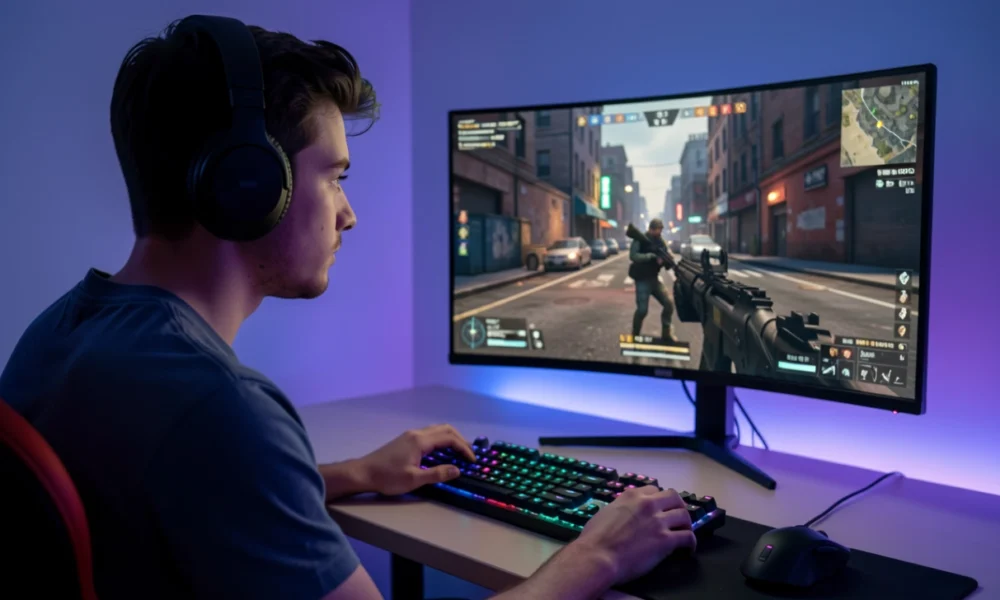
First-person shooter (FPS) games place the player inside the perspective of the protagonist, creating immersive combat and movement experiences. Since the late 1990s, the genre has been associated with both single‑player campaigns and competitive multiplayer modes.
Table Of Content
- What Defines a Free‑to‑Play FPS Game?
- Factors That Contribute to the Popularity of Free FPS Games
- Low Barrier to Entry
- Scalable Performance Requirements
- Ongoing Content Updates
- Cross‑Platform Play and Progression
- Diversity Within Free FPS Offerings
- Monetisation Approaches in Free FPS Games
- Community and Competitive Ecosystems
- Hardware Considerations and Accessibility
- Esports and Professional Play
- Battle Royale and Its Influence on the Genre
- Considerations for Players
- Conclusion
The introduction of free‑to‑play (F2P) distribution models allowed players to access full multiplayer FPS titles without an upfront purchase. Instead of a one‑time payment, developers generate revenue through optional in‑game transactions. This model expanded the audience for FPS games and influenced how the genre is designed, updated, and sustained.
This article provides an overview of free‑to‑play FPS games, their common characteristics, monetisation methods, hardware considerations, and the role of community and esports. It is intended for players, students of game design, and anyone interested in the contemporary structure of online shooters.
What Defines a Free‑to‑Play FPS Game?
A free‑to‑play FPS game is a multiplayer shooter that can be downloaded and played without a purchase. Revenue is generated after the player enters the game, typically through microtransactions for cosmetic items, seasonal battle passes, or convenience‑oriented upgrades.
Unlike early shareware or time‑limited demos, modern F2P shooters offer the core multiplayer experience at no cost, with all gameplay‑affecting content either available immediately or unlockable through play. This model relies on retaining a large, active player base over months or years rather than maximising initial sales.
Factors That Contribute to the Popularity of Free FPS Games
Low Barrier to Entry
Removing the purchase requirement enables curious players to try a title without financial commitment. This is especially relevant for younger players or those in regions where retail game prices are comparatively high. Once inside the game, the quality of the experience – responsiveness, matchmaking, social features – determines whether the player stays and potentially spends.
Scalable Performance Requirements
Many free‑to‑play shooters are optimised to run on a wide spectrum of hardware. Support for older graphics APIs and adjustable resolution scales allows the same game to be played on decade‑old office computers and high‑refresh‑rate gaming rigs. This scalability enlarges the addressable player base, particularly in territories where dedicated gaming hardware is less common.
Ongoing Content Updates
Live service models depend on regular injections of new content. Maps, weapons, characters, limited‑time modes, and seasonal events give players reasons to return. The cadence of updates – weekly, monthly, or per season – helps maintain player counts and creates predictable moments for community engagement and commerce.
Cross‑Platform Play and Progression
A growing number of free FPS titles support cross‑platform play, allowing users on PC, console, and mobile devices to participate in the same matches. Cross‑progression, where unlocked items and rank carry over between platforms, further reduces friction for players who switch devices. This interoperability reinforces the “play anywhere, with anyone” appeal.
Diversity Within Free FPS Offerings
While all free FPS games share the first‑person perspective and the absence of an entry fee, they differ substantially in pacing, team size, setting, and mechanical depth.
Tactical shooters emphasise precise aiming, limited health, and round‑based objectives. Success relies on map knowledge, communication, and economic management.
Hero shooters assign players to distinct characters with unique abilities. Team composition and ability synergy become as important as gunplay.
Battle royale titles place large numbers of players on a single map, tasking them with scavenging equipment and being the last individual or squad standing. The random distribution of loot and shrinking play area introduce variability that reduces the dominance of pure mechanical skill.
Arcade‑style shooters offer fast respawns, simplified movement, and pick‑up‑and‑play mechanics. These titles often appeal to casual players seeking short, low‑stakes sessions.
Well‑known examples that illustrate this diversity include Counter‑Strike 2 (tactical), Valorant (tactical with hero abilities), Apex Legends (hero‑based battle royale), Warface (class‑based PvE and PvP), and Overwatch 2 (hero shooter). Each title applies the free‑to‑play model differently while retaining the core feedback loop of aiming, moving, and competing.
Monetisation Approaches in Free FPS Games
F2P shooters employ several revenue mechanisms that are designed to be non‑disruptive to competitive fairness.
Cosmetic skins alter the appearance of weapons, characters, vehicles, or equipment. Rare or animated skins carry social status and are often the primary purchase driver.
Battle passes are time‑limited progression systems. Players earn rewards by completing in‑game challenges over a season. A premium tier of the pass grants access to exclusive items, incentivising purchase while allowing free players to obtain some rewards through play.
Direct purchase of items is used for cosmetics or convenience items such as XP boosts. Gameplay‑altering gear – weapons, attachments, or characters with unique abilities – is typically unlockable through play or, in some titles, purchasable directly. The latter approach is sometimes viewed critically by communities that equate performance with time spent rather than money spent.
Loot boxes (randomised rewards) have been used historically but have declined in certain regions due to regulatory classification as gambling. Many developers have replaced them with direct purchase or battle‑pass systems.
All of these methods share the goal of converting engaged, long‑term players into paying customers while leaving the optional nature of expenditure intact.
Community and Competitive Ecosystems
A healthy player community extends the lifespan of a free FPS title beyond what development resources alone can achieve.
User‑generated content – guides, highlight clips, live streams, and esports broadcasts – provides free marketing and helps new players learn game systems.
Grassroots competitions and third‑party tournament organisers have historically nurtured talent that later moves into official leagues. Even without formal organisation, informal pick‑up games and community‑run servers keep older titles populated.
Developer‑community feedback loops are especially visible in free‑to‑play games. Because player retention directly affects revenue, developers often maintain public roadmaps, host public test environments, and adjust balance based on telemetry and forum discussion. Communities that feel heard are more likely to remain active and recommend the game to others.
Hardware Considerations and Accessibility
One of the enduring appeals of free FPS games is their ability to run on modest hardware.
Scalable graphical settings allow players to prioritise frame rate over visual fidelity. Competitive titles, where low input latency is paramount, often feature simplified shaders and reduced model detail to maintain high and stable frames per second on low‑end systems.
Cloud gaming services offer an alternative path for players whose devices cannot run a given title locally. By streaming the game from remote servers, these platforms decouple performance from local hardware. The model is not unique to FPS games, but it reinforces the principle that free‑to‑play titles should be as accessible as possible.
Mobile adaptations of popular PC FPS franchises have also emerged, translating core mechanics to touch controls. While control schemes differ, the availability of the same or similar titles on multiple device classes continues to expand the player pool.
Esports and Professional Play
Several free‑to‑play FPS titles support substantial esports ecosystems.
Round‑based tactical shooters are particularly suited to spectating because each round contains discrete moments of tension, individual highlights, and clear win conditions. Production overlays, spectator cameras, and replay systems developed for these games have become sophisticated, helping new viewers understand the action.
The free entry model also benefits grassroots competition: aspiring players can practise without a recurring subscription or game purchase. Talent scouts and organisations often recruit from ranked ladders, and successful players may transition to salaried positions on professional teams.
While not every free FPS title achieves esports longevity, those that do typically share design traits: predictable netcode, spectator‑friendly pacing, and mechanical depth that rewards thousands of hours of practice.
Battle Royale and Its Influence on the Genre
The emergence of the battle royale format reshaped the free‑to‑play FPS landscape.
By increasing player counts to 100 or more and introducing a survival‑oriented win condition, battle royale modes reduced the emphasis on individual mechanical dominance. Luck, positioning, and third‑party encounters became legitimate factors in outcomes, broadening the skill range that could enjoy the mode.
Squad‑based battle royale titles also function as social spaces. Voice chat, shared objectives, and the extended downtime between engagements create opportunities for conversation and informal play. This social layer attracts friend groups who may not ordinarily play competitive shooters together.
The commercial success of battle royale implementations has led many established FPS franchises to introduce their own versions, often free‑to‑play and cross‑platform, further cementing the format as a permanent subgenre rather than a temporary trend.
Considerations for Players
When selecting a free‑to‑play FPS game, players may evaluate several factors:
- Matchmaking region and population – active player bases ensure short queue times and balanced skill brackets.
- Anti‑cheat effectiveness – persistent cheating degrades the experience; titles with robust, kernel‑level or server‑side detection are generally preferred.
- Monetisation fairness – whether gameplay‑affecting items can be earned through reasonable play or effectively require purchase.
- Control scheme and input support – some titles separate controller and mouse‑and‑keyboard lobbies, while others mix them with optional aim assist.
- Update frequency – titles with infrequent patches may feel stale or remain unbalanced for extended periods.
No single free FPS game suits all preferences. Sampling several titles, observing community sentiment, and verifying system compatibility remain recommended practices.
Conclusion
Free‑to‑play first‑person shooter games have become a permanent and substantial segment of the interactive entertainment industry. By removing the purchase barrier, developers gain access to a global audience that includes both competitive veterans and casual participants.
The success of a free FPS title depends on a combination of responsive gunplay, regular content updates, fair monetisation, and a healthy community. Hardware scalability and cross‑platform support further broaden accessibility, while esports ecosystems provide aspirational pathways for skilled players.
As the genre continues to evolve, the free‑to‑play distribution model remains a proven method for sustaining large, engaged player bases over many years. For players, the abundance of high‑quality, no‑cost options offers an opportunity to explore a wide range of shooting mechanics, settings, and social dynamics without upfront investment.