

How Can We Heal Ourselves Through Nature? The Science of Forest Therapy and Nature Connection
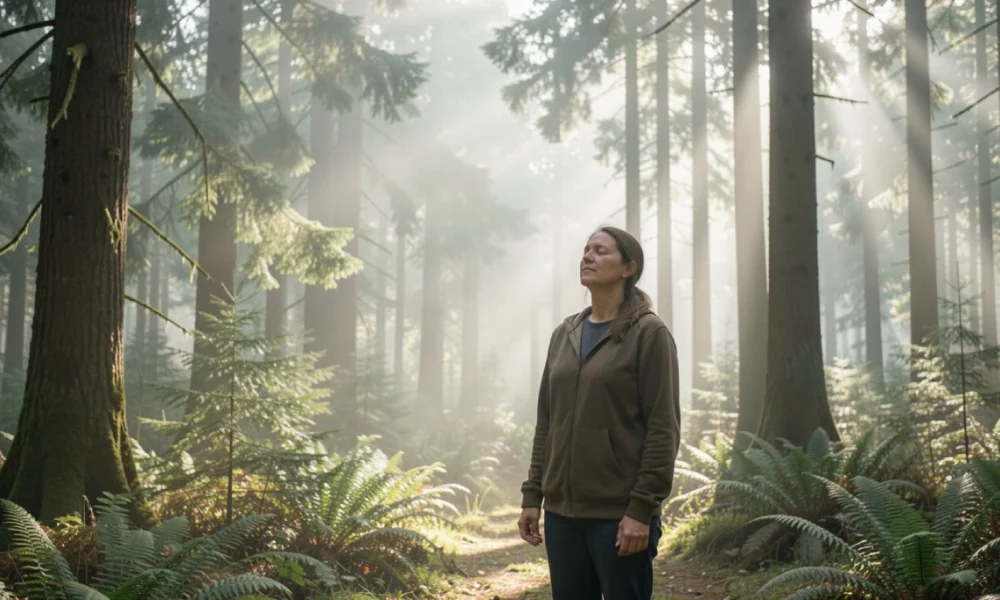
A growing body of peer-reviewed research confirms that spending time in natural environments produces measurable improvements in mental and physical health — from lower cortisol levels and reduced blood pressure to improved immune function and reduced symptoms of depression. As urbanization accelerates and screen time climbs, the case for deliberate nature exposure has never been stronger. Forest therapy, rooted in the Japanese practice of shinrin-yoku, offers one of the most well-studied pathways to this kind of healing.
Table Of Content
- What Is Forest Therapy?
- The Science: How Nature Heals the Body and Mind
- Phytoncides and Immune Function
- Stress Hormones, Blood Pressure, and Heart Health
- Mental Health: Depression, Anxiety, and Rumination
- Cognitive Function and Attention
- The 120-Minute Threshold
- Types of Nature-Based Therapy
- Guided vs. Self-Guided Forest Therapy
- What a Certified Forest Therapy Guide Does
- What Forest Therapy Hub Offers
- How to Begin Healing Through Nature
- Participant Experiences
- Conclusion
What Is Forest Therapy?
Forest therapy — often called forest bathing — is a guided or self-directed practice of slow, sensory immersion in a natural environment. It is not a hike, a workout, or a nature identification walk. The emphasis is on presence: breathing the air, noticing light through leaves, listening to wind and water, and allowing the body’s stress systems to downregulate naturally.
The practice originated in Japan in the 1980s, when rapid urbanization and a sharp rise in stress-related illness prompted the Japanese government to invest in shinrin-yoku — literally “taking in the forest atmosphere” — as a public health strategy. Since then, researchers, including Dr. Qing Li of the Nippon Medical School and the Japanese Society of Forest Medicine, have produced decades of evidence supporting its physiological and psychological benefits.
Forest therapy is distinct from other outdoor activities because the goal is not exertion or achievement. As Dr. Li has written, it is simply about being in nature — and allowing nature to do its work.
The Science: How Nature Heals the Body and Mind
Phytoncides and Immune Function
Trees release airborne compounds called phytoncides — natural antimicrobial oils that form part of a plant’s defense system against bacteria, fungi, and insects. When humans breathe phytoncides, particularly in evergreen forests of pine, cedar, and cypress, the body responds with measurable immune changes.
Research has found that phytoncide exposure increases the activity and number of natural killer (NK) cells — white blood cells that target virus-infected and cancerous cells. In studies by Dr. Li, a three-day forest immersion produced NK cell increases that persisted for more than 30 days after the trip. Forest air also contains higher oxygen concentrations and compounds like 3-carene, which animal studies suggest may reduce inflammation, lower anxiety, and improve sleep quality.
Stress Hormones, Blood Pressure, and Heart Health
A study comparing forest walks to urban walks found that participants who walked in a forest had cortisol levels 12 percent lower, along with reduced blood pressure and heart rate, compared to those who walked in a city. Research in Japan showed that these relaxation benefits lasted three to five days after a forest visit for urban office workers. Heart rate variability — a key marker of autonomic nervous system balance — also improves following forest exposure.
Studies have consistently shown improvements across nearly all standard markers of physiological stress when time in nature is compared to equivalent time in urban settings.
Mental Health: Depression, Anxiety, and Rumination
Research from the University of Michigan found that interacting with nature can serve as a clinically useful supplement to existing treatments for major depression. A study at Stanford University found that participants who took a 90-minute walk through a natural setting showed reduced neural activity in the area of the brain associated with rumination — repetitive negative thinking that is a risk factor for depression and anxiety. A similar walk in an urban setting produced no such change.
Research has also found that forest therapy can support recovery from trauma and PTSD, and that spending time in natural environments reduces symptoms of ADHD in school-aged children.
Cognitive Function and Attention
Exposure to natural environments improves focus, working memory, and attention. This is consistent with Attention Restoration Theory (ART), which proposes that natural settings restore directed attention capacity that is depleted by demanding cognitive tasks. Even brief exposure helps: one study found that viewing a green roof for just 40 seconds measurably restored attention compared to viewing concrete.
The 120-Minute Threshold
A large UK study of nearly 20,000 people found that spending at least 120 minutes per week in nature was associated with significantly better self-reported health and well-being. This threshold — roughly 17 to 20 minutes per day — appears to be the minimum effective dose. The time does not need to be accumulated in a single visit; multiple shorter outings during the week produce similar results.
Types of Nature-Based Therapy
Forest therapy sits within a broader category called nature-based therapies, or ecotherapy, which encompasses several structured approaches:
| Type | Description |
|---|---|
| Forest Therapy (Shinrin-Yoku) | Slow, sensory immersion in forested environments, guided or self-directed |
| Horticultural Therapy | Evidence-based therapy using plants and gardening to achieve clinical or rehabilitative goals |
| Wilderness Therapy | Adventure-based interventions in wilderness settings, targeting emotional and behavioral health |
| Adventure Therapy | Structured outdoor challenges (hiking, climbing, kayaking) to build self-confidence and resilience |
| Outdoor Mindfulness | Mindfulness-based practices conducted in natural settings |
These approaches are not substitutes for conventional medical or psychological treatment. Clinicians, including Dr. Michelle Loy of NewYork-Presbyterian/Weill Cornell Medical Center, describe nature exposure as a valuable complement to traditional therapies such as medication and cognitive behavioral therapy (CBT) — not a replacement.
Guided vs. Self-Guided Forest Therapy
Both forms of forest therapy produce health benefits, but research points to meaningful differences in their effects. A study published in the International Journal of Environmental Research and Public Health found that self-guided forest therapy offers greater opportunity for personal introspection and inner reflection, while guided programs produce greater positive emotional change and social bonding through interaction with others and the facilitator.
Participants in guided programs rated the experience as more therapeutic and relaxing overall. This suggests that working with a trained guide — particularly for individuals dealing with anxiety, depression, or burnout — can deepen and accelerate the benefits.
What a Certified Forest Therapy Guide Does
The Association of Nature and Forest Therapy (ANFT) trains and certifies forest therapy guides worldwide. These guides do not lead conventional nature walks or educational tours. Instead, they create slow, intentional sessions structured around a series of open-ended “invitations” — prompts that direct participants to attend to particular sensations, surroundings, or inner states. Sessions typically last two to three hours.
Guides are responsible for selecting appropriate locations, managing participant safety, adapting sessions to different ages and abilities, and creating a non-judgmental environment in which participants feel free to move at their own pace.
What Forest Therapy Hub Offers
Forest Therapy Hub is a professional nature connection facilitation organization with certified specialists trained to guide individuals and groups through structured forest therapy experiences. Their approach draws on both the shinrin-yoku tradition and broader nature-based therapy frameworks.
Services include:
- Personalized one-on-one and group forest therapy sessions in diverse natural settings
- Programs tailored to specific populations, including those managing stress, chronic anxiety, or seeking to reconnect with themselves
- Community-building experiences designed to extend the benefits of connection beyond individual sessions
- Specialist guidance for participants of all ages, backgrounds, and mobility levels
Forest Therapy Hub is also a member of the NATURELAB Project consortium, funded through the European Union’s Horizon programme, which aims to design and implement nature-based therapy programs for populations with specific health conditions across 15 locations in Peru, the Netherlands, Germany, Portugal, and Greece.
How to Begin Healing Through Nature
Formal forest therapy programs offer a structured and supported entry point, but anyone can begin accessing nature’s benefits with minimal resources.
Practical starting points:
- Start with 20 minutes: Even a short daily walk in a park or green space can begin to shift stress biomarkers. Aim to build toward 120 minutes per week.
- Slow down deliberately: Forest therapy’s core principle is unhurried presence. Leave headphones behind and attend to sensory experience — sound, texture, smell, light.
- Engage all senses: Notice the specific sounds of wind, birds, or running water. Touch bark or soil. Smell the air. Researchers describe this as “drinking in” the forest.
- Seek evergreen environments when possible: Pine, cedar, and cypress forests release the highest concentrations of phytoncides.
- For urban residents: Green roofs, city parks, indoor plants, and even window views of trees can produce measurable well-being benefits. Forest therapy guides can also bring nature-based exercises indoors for participants with limited mobility.
- Try a guided session: For those dealing with anxiety, depression, or trauma, a certified guide can meaningfully enhance the experience.
Forest therapy can be practiced in every season. Each season offers a distinct set of sensory experiences, and research suggests that regular, year-round engagement with natural environments produces more sustained benefits than infrequent long visits.
Participant Experiences
“The forest therapy session was a life-changing experience. I felt a deep sense of calm and peace I hadn’t felt in a long time. The specialist’s guidance helped me slow down and truly appreciate the beauty of nature — I left feeling refreshed and reconnected with myself.” — Sarah, 32
“As someone who struggles with anxiety, I was hesitant at first, but the specialist’s gentle and supportive approach put me at ease. The session helped me feel more grounded and present, and I noticed a significant improvement in my overall well-being.” — Michael, 28
Conclusion
The evidence for nature as a contributor to human health is substantial and still growing. Phytoncide exposure, reduced cortisol, improved NK cell activity, restored attention, and lower rates of rumination are not incidental — they are reproducible findings across independent research programs in Japan, the UK, the United States, and Europe. Whether through a certified forest therapy program or a daily 20-minute walk in a local park, reconnecting with natural environments is one of the most accessible, evidence-supported health practices available.
Forest Therapy Hub’s certified specialists offer a structured and personally guided path into this practice — one that is particularly valuable for those navigating stress, anxiety, or the cumulative weight of modern life. For everyone else, the starting point is simpler: step outside, slow down, and let your senses do the rest.