

How to Start a Mobile Car Wash Business in 2026: A Complete Step-by-Step Guide
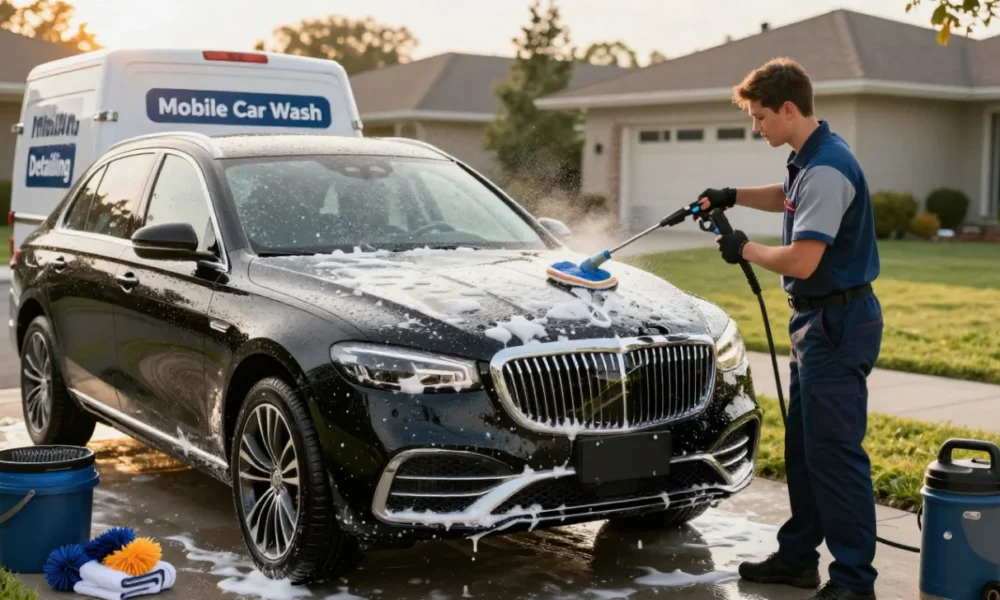
The mobile car wash industry is transforming vehicle maintenance by prioritizing customer convenience and operational flexibility. With the global market for mobile car washing projected to reach $13.6 billion by 2030 (growing at a CAGR of 7.1% from 2024), entrepreneurs have a significant opportunity to enter a service sector with strong demand and scalable potential. Unlike traditional fixed-location car washes, a mobile model allows you to bring professional cleaning services directly to customers at their homes, workplaces, or other preferred locations. This guide provides a structured approach to launching and growing a successful mobile car wash business in 2026, covering everything from initial planning to financial management.
Table Of Content
- Understanding the Mobile Car Wash Business Model
- Developing a Comprehensive Business Plan
- Service Area and Target Market
- Services and Pricing Structure
- Management and Staffing
- Essential Equipment, Vehicle, and Legal Setup
- Equipment and Tool Selection
- Outfitting Your Service Vehicle
- Legal and Insurance Requirements
- Effective Marketing Strategies for Customer Acquisition
- Digital Presence
- Offline and Community Marketing
- Operations Management and Client Retention
- Ensuring Service Excellence
- Retention Strategies
- Financial Management and Scaling Your Business
- Tracking and Managing Finances
- Strategies for Growth
- Conclusion
Understanding the Mobile Car Wash Business Model
A mobile car wash service eliminates the need for customers to travel to a physical facility. Instead, you transport all necessary equipment—water, power sources, cleaning solutions, and tools—to the vehicle’s location. This model has gained substantial traction due to its inherent advantages for both business owners and customers.
Key advantages of this model include:
- Lower Barrier to Entry: Significant reduction in startup costs by avoiding commercial real estate, building construction, and related overhead.
- Customer Convenience: Saves clients time by eliminating travel and wait times, allowing them to maintain their routines while their vehicle is serviced
- Operational Flexibility: Freedom to schedule jobs and define service areas, enabling organic growth aligned with demand.
- Scalability: Capacity is not limited by physical space; growth is achieved by adding technicians and vehicles to serve more customers.
Developing a Comprehensive Business Plan
A detailed business plan serves as the foundation for long-term success. It guides decision-making and is essential for securing financing. Your plan should address the following components:
Service Area and Target Market
Define your initial geographic focus. Analyze local demographics to identify potential customer concentrations, such as residential neighborhoods, business districts with commuter parking, and commercial properties with vehicle fleets. Consider population density, average income levels, and the prevalence of multi-vehicle households .
Services and Pricing Structure
Clearly outline your service offerings. Structure pricing to be transparent and competitive. Key factors influencing pricing include vehicle size (sedan, SUV, truck), the scope of work (exterior-only vs. full interior/exterior), and the level of cleaning required (standard maintenance vs. deep detail) .
Develop tiered packages to cater to different customer needs and budgets:
- Basic Wash: Exterior hand wash, wheel cleaning, and hand drying.
- Full-Service Detail: Basic wash plus interior vacuuming, window cleaning, dashboard and console wipe-down, and tire dressing.
- Premium Detailing: Full-service detail with additional services like clay bar treatment, paint polishing, wax application, and leather conditioning .
Management and Staffing
Outline your hiring plan for the initial phase. As the business grows, you may need to add administrative support and additional technicians. Consider a succession plan for long-term sustainability.
Essential Equipment, Vehicle, and Legal Setup
Proper setup is critical for delivering professional service efficiently and complying with regulations.
Equipment and Tool Selection
Investing in quality equipment ensures consistent results and durability. A basic mobile setup requires a combination of power sources, water supply, and cleaning tools .
| Component | Key Considerations | Best Use Case |
|---|---|---|
| Pressure Washer | Electric models (e.g., Greenworks 2000 PSI) are quiet and maintenance-free; ideal for wheels and exteriors. | Efficient cleaning and rinsing. |
| Water Pump & Tank | 12V pump (e.g., SEAFLO 33 Series) with a 50-100 gallon tank ensures consistent water flow from your vehicle. | Supplying water for washing and rinsing. |
| Vacuum System | Powerful wet/dry vac (e.g., DEWALT 10 Gallon) with strong suction for deep interior cleaning and pet hair removal. | Interior cleaning. |
| Polisher | Dual-action polisher (e.g., Rupes LHR 15ES) with 15mm orbit for efficient, swirl-free paint correction. | Paint correction, waxing, and polishing. |
| Cleaning Supplies | pH-balanced car shampoo, microfiber wash mitts and towels (drying, polishing, glass), wheel & tire cleaner, interior cleaner, glass cleaner, detailing brushes. | All aspects of washing, drying, and detailing. |
| Steam Cleaner (Optional) | High-temperature steam cleaner (e.g., Dupray Neat) for sanitizing and loosening grime in tight spaces without harsh chemicals. | Deep cleaning vents, cup holders, and leather. |
| Drying Equipment | Handheld blower (e.g., Metrovac Sidekick) or air mover to dry complex areas and prevent water spots. | Achieving a spot-free finish. |
Outfitting Your Service Vehicle
Select a reliable van, SUV, or truck with ample cargo space to organize and transport your equipment securely.
- Install storage systems to separate clean and dirty tools, maintaining hygiene and efficiency.
- Equip the vehicle with safety gear, including a first aid kit, reflective vests, and spill kits.
- Add professional signage and graphics to your vehicle; this serves as a mobile advertisement, building brand recognition as you travel to jobs.
Legal and Insurance Requirements
Compliance with local, state, and federal regulations is non-negotiable. Requirements vary by location, so thorough research is essential.
- Business Structure: Register your business, typically as a Limited Liability Company (LLC), to provide personal liability protection.
- Licenses and Permits: Obtain a general business license. Check if your city or county requires a mobile vendor permit. Crucially, understand and comply with local water runoff and environmental regulations; this may involve specific permits for wastewater disposal.
- Insurance: Secure appropriate coverage to protect your business, employees, and customers’ vehicles. Essential policies include:
- Commercial auto insurance for your service vehicle.
- General liability insurance to cover property damage or accidents involving customers.
- Garage keeper’s liability insurance to cover damage to a customer’s vehicle while in your care
Effective Marketing Strategies for Customer Acquisition
With operations established, a strategic marketing plan is necessary to attract and retain customers. A multi-channel approach ensures consistent visibility.
Digital Presence
- Professional Website: Create an informative, mobile-optimized website with clear descriptions of services, pricing packages, and an easy booking system. Implement local SEO by using relevant keywords and creating a Google Business Profile to appear in local search results and on Google Maps .
- Social Media Marketing: Maintain active profiles on platforms like Instagram and Facebook. Post high-quality photos and videos of your work, before-and-after transformations, customer testimonials, and special promotions. Engage with your local community online.
- Online Booking and Software: Utilize mobile detailing software or apps (like VehicleHub) to manage appointments, track customer history, process payments, and optimize service routes for efficiency .
Offline and Community Marketing
- Direct Mail: Design and distribute flyers or brochures in targeted neighborhoods, highlighting your convenience and introductory offers.
- Partnerships: Establish relationships with local businesses (e.g., auto dealerships, rental car agencies, corporate fleets) to offer wash packages for their vehicles in exchange for referrals or branding visibility .
- Local Sponsorships: Sponsor local events, sports teams, or community gatherings. Offering to provide wash services at these events can introduce your business to a captive audience.
Operations Management and Client Retention
Flawless execution and a focus on customer experience are the most powerful tools for building a loyal client base and generating positive word-of-mouth.
Ensuring Service Excellence
- Consistency and Punctuality: Arrive on time for every appointment. Complete services within the estimated timeframe to build trust and reliability.
- Quality Workmanship: Pay meticulous attention to detail. Consistently delivering superior results justifies your pricing and encourages repeat business.
- Professionalism: Maintain a polite and respectful demeanor with every customer interaction. Small gestures, like a quick follow-up message, can enhance the client experience.
Retention Strategies
- Customer Follow-Up: Check in with customers after a service to ensure their satisfaction and address any issues immediately. This demonstrates that you value their business.
- Loyalty Programs: Implement a rewards program, such as a punch card or a digital system w, where frequent washes earn a discount or a free service. Subscription-based models (e.g., monthly fees for a set number of washes) are gaining popularity as they provide predictable revenue and encourage customer loyalty
- Solicit Feedback: Regularly survey customers to gather insights for continuous service improvement. Positive reviews can be featured on your website and social media.
Financial Management and Scaling Your Business
As your customer base grows, sound financial practices and strategic planning will enable you to scale profitably.
Tracking and Managing Finances
- Monitor Key Metrics: Diligently track income and expenses. Understand your variable costs (e.g., supplies, fuel) and fixed costs (e.g., insurance, software subscriptions) to manage cash flow effectively. Industry operating margins for car washes average between 14% and 26% .
- Pricing Adjustments: Regularly review your pricing against operating costs and competitor rates. Conduct price sensitivity tests before implementing major changes.
- Efficient Billing: Invoice clients promptly and offer convenient digital payment options to minimize outstanding receivables.
Strategies for Growth
- Expand Revenue Streams: Introduce higher-margin services such as ceramic coating, paint protection film application, or headlight restoration to increase average ticket value .
- Target Commercial Accounts: Actively pursue contracts with corporate fleets, car dealerships, and rental companies. Servicing multiple vehicles on a recurring schedule provides stable, high-volume income.
- Secure Financing for Expansion: Once your initial operation is profitable and cash flow is stable, consider Small Business Administration (SBA) loans or other financing to invest in additional vehicles, equipment, and technicians. This directly multiplies your service capacity .
- Hire and Train Staff: Develop a training program for new technicians to ensure they meet your quality and customer service standards. Grooming capable staff allows you to take on more jobs or step back from daily operations to focus on strategic growth.
Conclusion
Starting a mobile car wash business in 2026 offers a viable path to entrepreneurship with lower upfront investment and greater flexibility compared to traditional brick-and-mortar establishments. Success in this growing market depends on a blend of strategic planning, operational excellence, and customer-centric service. By developing a thorough business plan, investing in the right equipment, ensuring full legal compliance, implementing effective marketing, and prioritizing client retention, you can build a reputable and profitable enterprise. The mobile model not only meets the modern demand for convenience but also provides a scalable framework for long-term business growth and sustainability.