

Keanu Reeves Net Worth: Career Earnings, Backend Deals, and Franchise Revenue Breakdown
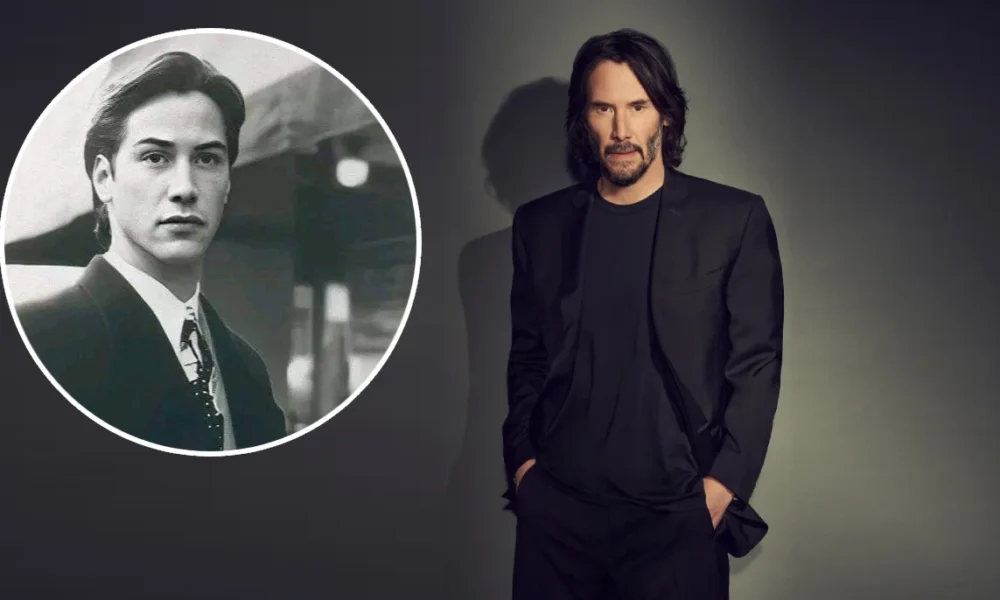
Keanu Reeves is a Canadian actor, musician, producer, and philanthropist with a net worth of $380 million. His wealth stems from starring roles in billion-dollar franchises, strategic backend profit-sharing agreements, and a career spanning over four decades. His films have grossed more than $4.6 billion at the worldwide box office after adjusting for inflation.
Table Of Content
- Net Worth and Career Earnings
- The Matrix Franchise Earnings
- John Wick Franchise Revenue
- Box Office Performance
- Backend Deal Strategy
- Film Salary Examples
- Real Estate Portfolio
- Arch Motorcycle Company
- Music Career: Dogstar
- Early Life and Career Beginnings
- Additional Revenue Streams
- Personal Life
- Philanthropy and Generosity
- Industry Recognition
- Conclusion
Net Worth and Career Earnings
Reeves’ $380 million net worth places him among Hollywood’s wealthiest actors. Unlike many celebrities, his fortune derives almost entirely from film salaries and backend deals rather than endorsements or business ventures. His total box office earnings reflect performances in over 70 films, with lead roles in 42 of them.
The actor’s salary evolution demonstrates significant growth: from $3,000 for his 1986 film debut in Youngblood to $15 million upfront for John Wick: Chapter 4. His first million-dollar paycheck came with Speed (1994) at $1.2 million, escalating to $8 million for The Devil’s Advocate (1997).
The Matrix Franchise Earnings
The Matrix franchise represents Reeves’ largest single source of wealth, generating over $200 million across four films through a combination of upfront salaries and backend profit participation.
For the original 1999 film, Reeves negotiated $10 million upfront plus approximately 15% of box office gross. The film earned $460 million worldwide on a $63 million budget, bringing his total compensation to around $35 million—equivalent to $53 million after inflation.
The Matrix Reloaded and The Matrix Revolutions (both 2003) provided even more substantial paydays. Reeves earned $30-35 million upfront per film plus backend participation. The sequels generated $740 million and $430 million respectively, bringing his per-film earnings to approximately $83.3 million each, totaling around $250 million from the first three Matrix films combined.
For The Matrix Resurrections (2021), industry estimates place his compensation between $12-14 million upfront plus additional backend revenue.
Reeves famously shared portions of his backend earnings with special effects teams and costume designers, gifting bonuses totaling over $75 million to crew members he believed were crucial to the franchise’s success.
John Wick Franchise Revenue
The John Wick series demonstrates Reeves’ willingness to accept lower upfront salaries for projects he believes in, with compensation increasing as the franchise gained commercial success.
Salary progression:
- John Wick (2014): $1-2 million
- John Wick: Chapter 2 (2017): $5-7 million
- John Wick: Chapter 3 – Parabellum (2019): $10-12 million
- John Wick: Chapter 4 (2023): $15 million
The franchise has generated over $1 billion at the global box office, with the fourth installment alone earning $447 million worldwide. Starting with Chapter 3, Reeves negotiated profit percentage deals in addition to base salary, along with points on backend revenue from home media sales and streaming rights.
Beyond compensation, Reeves maintains significant creative influence over the franchise through his partnership with director Chad Stahelski, providing input on stunts, character development, and overall story direction.
Box Office Performance
Reeves’ highest-grossing films demonstrate versatility across genres:
- Toy Story 4 (2019): $1.073 billion (voice role as Duke Caboom)
- The Matrix Reloaded (2003): $741.8 million
- Sonic the Hedgehog 3 (2025): $492 million (voice role as Shadow)
- The Matrix (1999): $460 million
- John Wick: Chapter 4 (2023): $447 million
- The Matrix Revolutions (2003): $427 million
- Speed (1994): $350 million
- John Wick: Chapter 3 – Parabellum (2019): $327.3 million
- Something’s Gotta Give (2003): $266.7 million
- The Day the Earth Stood Still (2008): $233 million
Backend Deal Strategy
Reeves pioneered backend profit-sharing arrangements that transformed his financial trajectory. Rather than accepting only upfront salaries, he negotiated for percentages of box office gross—a practice uncommon in the late 1990s outside of top-tier stars like Tom Cruise and Will Smith.
For The Matrix sequels, his reported 15% box office gross participation meant earnings scaled directly with commercial performance. This approach proved highly profitable as the films became cultural phenomena.
The actor has also demonstrated flexibility in salary negotiations, frequently accepting reduced upfront pay for independent films or to help studios afford other talent. He turned down $11 million for Speed 2: Cruise Control, citing script concerns, and deferred $2 million of his Devil’s Advocate salary to secure Al Pacino for the project.
Film Salary Examples
Major studio productions:
- The Matrix (1999): $10 million upfront
- The Matrix sequels (2003): $30-35 million upfront each
- John Wick: Chapter 4 (2023): $15 million
- Speed (1994): $1.2 million
Independent and smaller budget films:
- Knock Knock (2015): $500,000-$1 million
- Replicas (2018): $1-3 million
- Man of Tai Chi (2013): $1-2 million
Voice acting roles:
- Toy Story 4 (2019): $1-2 million
- The SpongeBob Movie: Sponge on the Run (2020): Similar range
Real Estate Portfolio
Reeves maintains a modest real estate portfolio compared to actors with similar wealth. His primary residence is a Hollywood Hills mansion purchased in the early 2000s for approximately $5 million, currently valued at $8-10 million. The property sits on a private lot with views of Los Angeles, featuring around 5,000 square feet with multiple bedrooms, a pool, and extensive gardens.
He previously owned another Hollywood Hills property sold in 2010 for $2.9 million. For extended periods during his career, Reeves lived primarily in hotels while filming rather than maintaining permanent addresses.
Arch Motorcycle Company
In 2011, Reeves co-founded Arch Motorcycle Company with Gard Hollinger. The company produces custom motorcycles starting at $78,000 each, combining Reeves’s passion for riding with entrepreneurship. While Arch Motorcycle generates annual revenue of approximately $1.3 million—modest compared to his film earnings—the venture represents his commitment to the motorcycle community.
Personal motorcycle collection:
- Harley-Davidson Dyna Wide Glide
- Norton Commando motorcycles
- Custom Arch Motorcycles
- Ducati 998
- West Coast Choppers
Vehicle collection:
- 1969 Porsche 911
- Volvo 122
- Ferrari 365 GTS/4 Daytona Spider (previously owned)
Music Career: Dogstar
Reeves has been the bassist for alternative rock band Dogstar since 1991, formed after a chance encounter with drummer Robert Mailhouse in a supermarket. The band toured extensively throughout the 1990s, opening for David Bowie and Bon Jovi, and playing festivals including Glastonbury.
Dogstar released two albums during their initial run—Our Little Visionary (1996) and Happy Ending (2000)—before disbanding in 2002. The band reunited in 2022 after jamming during the COVID-19 pandemic, releasing their third album Somewhere Between the Power Lines and Palm Trees (2023) and embarking on a 25-date North American tour.
Reeves cites Joy Division’s Peter Hook as a major bass-playing influence and purchased his first bass guitar in 1987.
Early Life and Career Beginnings
Born September 2, 1964, in Beirut, Lebanon, Keanu Charles Reeves is the son of Patricia Taylor (English costume designer) and Samuel Nowlin Reeves Jr. (geologist of Chinese-Hawaiian descent). His father earned his GED while serving time in prison in Hawaii for selling heroin at Hilo International Airport.
After his parents separated when he was three, Reeves moved frequently—from Beirut to Sydney, Australia, then New York City, before settling in Toronto, Canada. He struggled with dyslexia throughout school, changing schools multiple times before dropping out of high school without graduating.
Despite academic challenges, Reeves excelled as a hockey goaltender and was nicknamed “The Wall” during his high school career. He harbored dreams of playing professional hockey for Canada until injuries ended that ambition.
At 15, Reeves began acting in Toronto through Canadian television productions, commercials, and theater. His first notable appearance was in a Coca-Cola commercial, followed by a role in the TV series Hangin’ In (1984). At 20, he drove to Los Angeles in a 1969 Volvo with $3,000, determined to pursue acting professionally.
Career breakthrough timeline:
- Youngblood (1986): Film debut, $3,000 salary
- River’s Edge (1986): First critical recognition
- Bill & Ted’s Excellent Adventure (1989): Breakthrough role as Ted “Theodore” Logan
- Point Break (1991): Established action credentials
- Speed (1994): Confirmed action star status, $1.2 million salary
Additional Revenue Streams
Endorsements and partnerships:
- Yves Saint Laurent Fall Menswear campaign (2019): Reportedly $1 million
- Cyberpunk 2077 (2020): Voice and likeness for character Johnny Silverhand
- Video game appearances: Bill and Ted’s Adventures (1991), The John Wick Chronicles, Fortnite, PayDay 2, The Matrix video game adaptations
Reeves co-founded production company Company Films, which produced Henry’s Crime (2010), a film in which he also starred. He produced the documentary Side by Side (2012) and directed the martial arts film Man of Tai Chi (2013).
Reeves co-created and co-wrote the comic book series BRZRKR with Matt Kindt. A film adaptation written by Mattson Tomlin is in development for Netflix, with Reeves attached to produce and star, followed by a planned two-season anime series produced by Production I.G.
Personal Life
Reeves has never married. His most significant relationship was with Jennifer Syme, whom he met in 1998 at a party for Dogstar. On December 24, 1999, Syme gave birth to their stillborn daughter, Ava Archer Syme-Reeves, at eight months into her pregnancy. The couple separated shortly after. Tragically, Syme died in a car accident on April 2, 2001.
In 1993, Reeves lost a close friend and actor, River Phoenix, to a drug overdose outside the Viper Room in Los Angeles.
Since 2019, he has been in a public relationship with artist Alexandra Grant. The couple confirmed their relationship at the 2019 LACMA Art + Film Gala after years of friendship and collaboration on books including “Ode to Happiness” and “Shadows.”
Philanthropy and Generosity
Reeves is known for quiet philanthropy, often donating to causes without seeking publicity. He has supported children’s hospitals, cancer research, and individual crew members on film sets.
Notable acts of generosity include:
- Gifting 12 Harley-Davidson motorcycles (ranging from $7,000 to $40,000+ each) to the stunt crew of The Matrix Reloaded
- Providing a $20,000 Christmas bonus to a Matrix set builder facing family difficulties
- Taking substantial pay cuts to help studios afford co-stars like Al Pacino (The Devil’s Advocate) and Gene Hackman (The Replacements)
Industry Recognition
In 2020, The New York Times ranked Reeves as the fourth-greatest actor of the 21st century. In 2022, Time magazine named him one of the 100 most influential people in the world. Despite his commercial success, he has received minimal award recognition from major industry bodies, though his cultural impact remains substantial.
Reeves has repeatedly stated that financial compensation is secondary to artistic fulfillment. In a Chicago Tribune interview, he said, “Money is the last thing I think about. I could live on what I’ve already made for the next few centuries.”
This philosophy manifests in his willingness to accept lower salaries for independent projects, turn down lucrative sequels with weak scripts, and prioritize creative control over maximum compensation. His career demonstrates that strategic backend negotiations combined with franchise longevity can generate wealth exceeding traditional upfront salary maximization.
Conclusion
From struggling actor to $400 million Hollywood legend, Keanu Reeves has built his fortune one memorable role at a time. What makes his success story special isn’t just the mind-blowing paychecks but how he’s handled his wealth – living relatively simply, giving generously to film crews, and valuing good storytelling over easy money. His career proves that in Hollywood, playing the long game and choosing quality projects can lead to both artistic respect and major financial rewards.
Unlike many celebrities whose fame fades after a few big hits, Keanu has managed to stay relevant and in demand for over three decades. Whether he’s dodging bullets as Neo, seeking vengeance as John Wick, or making us laugh as himself in a romantic comedy cameo, audiences can’t get enough of him. With his career still going strong and the value of his franchises continuing to grow, Keanu’s impressive net worth seems likely to keep climbing for years to come.