

Linda Fiorentino Net Worth: Career Earnings and Life After Hollywood
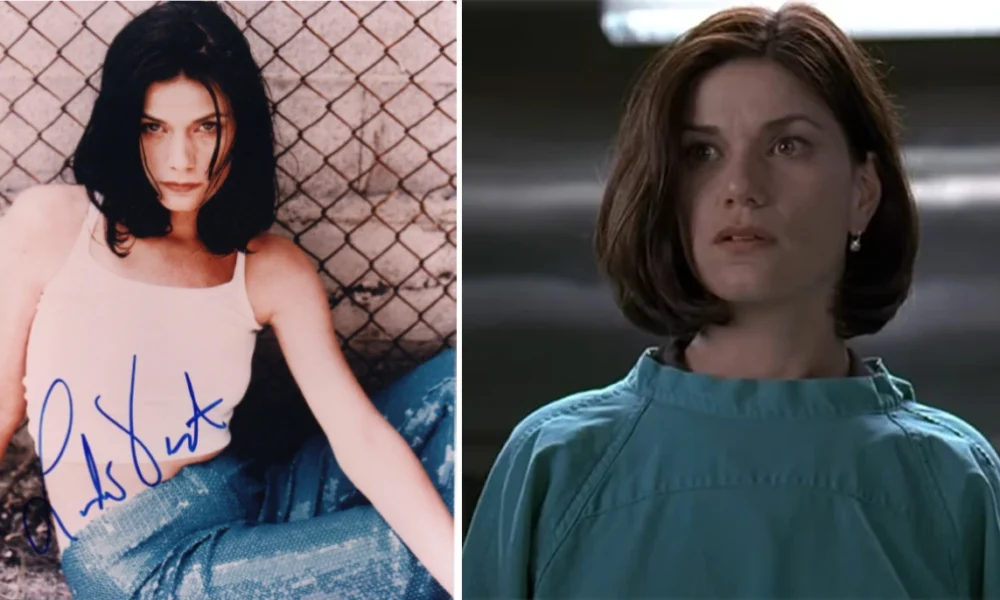
Born Clorinda “Linda” Fiorentino on March 9, 1958, in Philadelphia, Pennsylvania, the American actress has a net worth estimated at $3 million. Her wealth stems primarily from her film career during the 1980s through early 2000s, with earnings from both blockbuster films like Men in Black and critically acclaimed independent cinema such as The Last Seduction.
Table Of Content
- Career Earnings and Financial Standing
- Early Life and Education
- Film Career
- 1985: Three Film Debut Year
- Career Breakthrough: The Last Seduction
- Major Studio Films
- Late Career and Direct-to-Video Releases
- Industry Recognition and Cultural Impact
- Career Decline and Controversies
- 1. Declined Opportunities
- 2. Legal Controversies and Personal Associations
- Personal Life
- Conclusion
Known for her “raven hair, intense gaze and low voice,” Fiorentino became a notable figure in 1990s cinema before stepping away from public life.
Career Earnings and Financial Standing
Fiorentino’s net worth comes from her work in film, with her highest-profile commercial success being Men in Black (1997), which grossed over $589 million worldwide. Interestingly, she won the role in a poker game with director Barry Sonnenfeld, along with approximately $1,200 in cash.
Her performance in The Last Seduction (1994) established her as a serious dramatic actress, earning critical acclaim despite independent films typically paying less than major studio productions. Real estate investments have also contributed to her financial position. In 1996, she purchased a property in Westport, Connecticut, for $578,000 and sold it in 2014 for $1,100,000.
Beyond acting, Fiorentino has been an active photographer since 1987, having studied at the International Center of Photography in New York City, providing an additional creative outlet and potential income source.
Early Life and Education
Fiorentino grew up in an Italian-American family as the third of eight children. Her father worked as a steel contractor while her mother was a housewife. The family initially lived in South Philadelphia before relocating to the Turnersville section of Washington Township in New Jersey.
She attended Washington Township High School in Sewell, New Jersey, graduating in 1976 after excelling in basketball, baseball, and cheerleading. A “bright student” who reportedly “argued with the nuns about the Bible,” she pursued higher education at Rosemont College in Pennsylvania, earning a bachelor’s degree in political science in 1980.
After college, Fiorentino trained at the Circle in the Square Theater School in Manhattan while working as a bartender at the Kamikaze nightclub, where actor Bruce Willis also worked.
Film Career
1985: Three Film Debut Year
Fiorentino made her professional screen debut in 1985 with three films, immediately establishing her screen presence.
- Vision Quest — Her first role as Carla, the romantic interest of a high school wrestler played by Matthew Modine. She beat out Rebecca de Mornay, Rosanna Arquette, and Demi Moore for the role. Film critic Roger Ebert praised her as “enigmatic without being egotistical, detached without being cold, self-reliant without being suspicious.”
- Gotcha! — She starred as Sasha Banicek, a Czech spy who seduces a UCLA student played by Anthony Edwards in this espionage comedy directed by Jeff Kanew. The film combined Cold War intrigue with comedy, filmed in Los Angeles, Paris, and Berlin.
- After Hours — Directed by Martin Scorsese, she played Kiki Bridges, an eccentric downtown sculptor, in this critically acclaimed black comedy.
Career Breakthrough: The Last Seduction
Her career-defining role came as Bridget Gregory in the 1994 neo-noir film The Last Seduction, directed by John Dahl. She portrayed a manipulative woman who double-crosses her husband (played by Bill Pullman) in a drug deal, then involves a local man (Peter Berg) in a murderous scheme.
The New York Times described Fiorentino as “a sleek seductress who, like the femmes fatale of Barbara Stanwyck’s day, will stop at nothing to get her way.” She improvised the film’s most controversial scene.
Her performance earned:
- New York Film Critics Circle Award for Best Actress
- London Film Critics’ Circle Award for Actress of the Year
- Independent Spirit Award for Best Actress
- BAFTA Award nomination for Best Actress in a Leading Role
Despite universal acclaim, she was ineligible for an Academy Award nomination because the film aired on HBO before its theatrical release—considered one of the most significant Oscar snubs in film history.
Major Studio Films
- Jade (1995) — Directed by William Friedkin, she played psychologist Anna Katrina Maxwell-Gavin in this erotic thriller. Co-starring Chazz Palminteri and David Caruso, the film received poor reviews and underperformed commercially. Co-star Michael Biehn later called it “a jumbled mess.”
- Men in Black (1997) — She portrayed Dr. Laurel Weaver/Agent L opposite Will Smith and Tommy Lee Jones in this science fiction action comedy. The film became a massive commercial success and cultural phenomenon, earning an Academy Award for Best Make-Up.
- Dogma (1999) — In Kevin Smith’s religious satire, she played Bethany Sloane, an abortion clinic worker who discovers she’s related to Jesus Christ. This fantasy comedy became a cult classic, though Smith later stated he would not work with her again, citing on-set difficulties.
- Other Notable Films
- The Moderns (1988) — She appeared as the wife of an art collector in 1920s Paris in this period piece directed by Alan Rudolph.
- Queens Logic (1991) — She starred in this coming-of-age ensemble film alongside Kevin Bacon and John Malkovich.
Late Career and Direct-to-Video Releases
- Body Count (1998) — She appeared in this direct-to-video heist film alongside Ving Rhames, John Leguizamo, David Caruso, and Donnie Wahlberg.
- In 2000, Fiorentino appeared in three films: Ordinary Decent Criminal, directed by Thaddeus O’Sullivan and co-starring Kevin Spacey; What Planet Are You From? with Garry Shandling; and Where the Money Is, a heist film co-starring Paul Newman and directed by Marek Kanievska.
- Liberty Stands Still (2002) — Directed by Kari Skogland, she played Liberty Wallace, the Vice President of Marketing for a gun manufacturer, held hostage by a sniper (Wesley Snipes) seeking revenge. The film premiered at the Palm Springs International Film Festival on January 18, 2002, but went straight to DVD.
- Once More With Feeling (2009) — Her last confirmed film role was in this straight-to-video independent comedy-drama.
Industry Recognition and Cultural Impact
Beyond her awards, Fiorentino was placed No. 66 on the 1995 edition of Empire magazine’s list of the 100 Sexiest Stars in Film History by reader poll. Her performances established new standards for complex female characters in contemporary cinema, particularly femme fatales who succeeded in their schemes rather than facing consequences.
Career Decline and Controversies
1. Declined Opportunities
Before her breakthrough, Fiorentino was approached by Tom Cruise and director Tony Scott for the role of Charlotte “Charlie” Blackwood in Top Gun. Despite getting along with Cruise and recognizing the film’s commercial potential, she declined due to objecting to its “pro-military stance.” The role went to Kelly McGillis.
In a 1994 appearance on The Late Show with David Letterman, Fiorentino revealed she temporarily stopped acting after Warner Bros. executive Mark Canton told her during Vision Quest filming, “You have a great ass, but I think your jeans need to be tighter.”
2. Legal Controversies and Personal Associations
Fiorentino’s personal relationships created significant negative publicity. She dated private investigator Anthony Pellicano, who was later convicted of wiretapping and racketeering. During Pellicano’s 2009 prosecution, Fiorentino was dating the prosecutor in the case, FBI agent Mark Rossini.
Rossini pleaded guilty to illegally accessing FBI computers and passing information about Pellicano to Fiorentino, who then provided it to Pellicano’s lawyers. Although Fiorentino claimed she was using the information for film research, the scheme failed to help Pellicano avoid prison.
These associations, combined with reports of difficult onset behavior, significantly impacted her career prospects as studios became more risk-averse about controversial associations.
Personal Life
Fiorentino was married to film director John Byrum from June 23, 1992, to 1993. She has expressed a desire for children but stated she never felt the urge to settle down in the traditional sense, preferring to focus on her career. She has maintained a fiercely independent reputation, avoiding the typical Hollywood spotlight.
Fiorentino’s last confirmed film role was in Once More With Feeling (2009), a straight-to-video independent film. Her last public appearance was in October 2010 at the National Italian American Foundation’s 35th Anniversary Awards Gala.
Since then, she has maintained complete privacy with no interviews, news updates, or social media presence. Now in her mid-60s, she has not announced a formal retirement but appears to have permanently stepped away from the entertainment industry and public life.
Unlike many former actors who transition to producing, directing, or other creative ventures, Fiorentino has made a clean break from Hollywood. Her extended absence—over 15 years—suggests she prefers a private life away from the industry’s demands.
Conclusion
Linda Fiorentino’s career reflects a rare Hollywood trajectory defined as much by artistic impact as by deliberate withdrawal. Rising quickly in the mid-1980s, she delivered a body of work that left a lasting imprint on 1990s American cinema, particularly through her subversion of the traditional femme fatale archetype in The Last Seduction. Commercial success in Men in Black secured her financial standing, while critically acclaimed performances cemented her reputation as an actress unafraid of complexity or controversy.
Yet Fiorentino’s story is not one of gradual decline or reinvention, but of intentional distance. Industry conflicts, personal controversies, and an aversion to Hollywood’s culture coincided with her decision to step away entirely, leaving behind a relatively brief but influential filmography. Her estimated $3 million net worth reflects steady earnings from peak-career studio films, independent projects, and real estate, rather than the long-term accumulation seen in actors who remained active.