

Luxury Living Trends: How Comfort, Wellness, and Design Are Redefining Opulent Homes
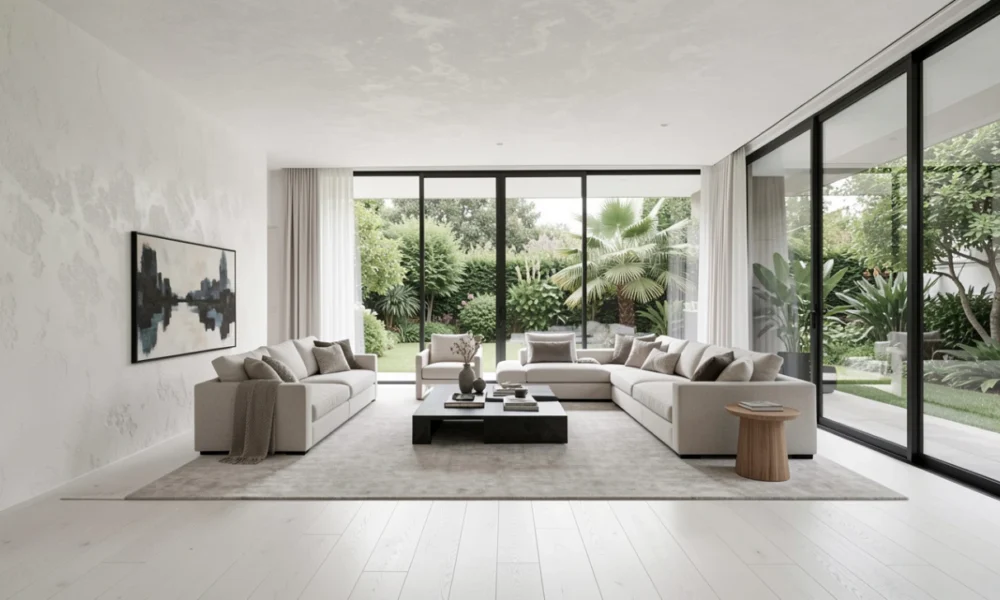
Luxury living is no longer measured in square footage or grand facades. In 2026, high-net-worth individuals and discerning homeowners are redefining what opulence means — prioritizing intentional design, personal well-being, and spaces that genuinely support how people live. The result is a quieter, more considered form of luxury, one where every design decision carries purpose.
Table Of Content
- How the Definition of Luxury Has Shifted?
- The Rise of Quiet Luxury in Interior Design
- Key Design Elements in 2026 Luxury Interiors
- Wellness-Focused Design: Beyond the Home Gym
- Smart Home Technology: From Novelty to Expectation
- Sustainable Materials and Energy-Efficient Design
- Flexible Spaces and Multigenerational Living
- The Psychology of Living Well
- Luxury Living in Practice: Three Contemporary Examples
- 1. Oceanfront Villa, Cabo San Lucas, Mexico
- 2. Penthouse, Mayfair, London
- 3. Eco-Luxury Resort Villa, Bali, Indonesia
- What Defines Luxury Living in 2026
How the Definition of Luxury Has Shifted?
For much of the 20th century, luxury homes signaled status through scale and spectacle — oversized chandeliers, marble-clad grand entrances, and prestigious addresses. That definition has been narrowing for years and has now fundamentally changed.
In 2026, the global luxury housing market has entered a new phase of evolution. Where luxury was once defined by square footage, opulence, and prestigious addresses, today the focus has shifted toward a more refined dimension: experience-driven living, holistic well-being, and long-term value creation.
According to the Coldwell Banker Global Luxury 2026 Trend Report, demand for larger home footprints and more land increased throughout 2025, as buyers desire more space for multi-purpose living — supporting work, wellness, and multigenerational family gathering. Size still matters, but the reasons behind it have changed entirely.
The Rise of Quiet Luxury in Interior Design
One of the most defining aesthetic movements shaping luxury interiors in 2026 is what designers are calling “quiet luxury” — a disciplined restraint that replaces showroom perfection with spaces that feel genuinely lived in.
Minimalism is evolving — no longer cold or stark. 2026 brings a warmer, more livable interpretation grounded in natural materials, soft palettes, and a sense of peaceful restraint. Rather than showroom perfection or one-time trends, design is embracing collections that reflect where homeowners have been and who they are — heirloom pieces combined with thoughtful new accents, rooms that feel lived-in and layered with meaning.
One of the most significant luxury home design trends is the move away from stark minimalism toward “heritage quality” — fixtures and hardware that act as dense, architectural objects with story, substance, and sculptural depth. In decorative finishes, designers are increasingly specifying unlacquered brass and custom bronze products engineered to age gracefully as part of a long-term luxury home lifestyle.
This shift applies to materials across the board. Earthy tones, walnut and white oak cabinetry, soft plaster walls, and textured stone are appearing in homes where polished marble and chrome once dominated.
Key Design Elements in 2026 Luxury Interiors
| Design Element | What It Looks Like in 2026 |
|---|---|
| Natural Materials | White oak, walnut, reclaimed stone, soft plaster, unlacquered brass |
| Textural Layering | Velvet upholstery, plush rugs, linen, and woven accents combined |
| Curated Objects | Heirloom pieces, artisanal accents, and collected works — not staged sets |
| Reflective Finishes | Polished nickel, silver-toned surfaces, and aged glass used with restraint |
| Palette | Muted greens, terracotta, and sandy neutrals, with jewel-tone accents |
Wellness-Focused Design: Beyond the Home Gym
Wellness amenities have moved from optional extras to baseline expectations in the luxury segment. Rather than isolated gym rooms, luxury homes now incorporate wellness through natural light, calming materials, spa-inspired bathrooms, and quiet retreat spaces — design choices that support both physical and mental well-being as part of everyday living.
Home wellness spaces are booming, with steam showers and infrared saunas topping wish lists. Steam showers provide spa-level rejuvenation, while infrared saunas with enhancements like chromotherapy and Himalayan pink salt walls offer detox and respiratory benefits. These are no longer weekend-retreat features — they appear in primary residences across luxury markets.
Air purification systems, circadian-rhythm lighting, sleep-regulation technology, and dedicated mindfulness spaces round out the wellness picture. Smart technology now includes wellness systems that adapt lighting to match sleep cycles, smart blinds, and temperature-regulating materials — reflecting a growing understanding that well-being begins at home.
Biophilic design principles remain central to this approach. Research consistently supports the connection between natural materials, natural light, and reduced stress levels. Indoor water features, planted walls, and floor-to-ceiling glazing that connect interior spaces to gardens or landscapes are now standard in high-end new builds.
Smart Home Technology: From Novelty to Expectation
Technology in luxury homes continues to advance, but the focus has shifted from novelty to ease. The question is no longer whether a luxury home has smart systems — it is how well those systems disappear into daily life.
In 2026, indoor-outdoor integration remains a top priority, with motorized retractable screens, automated shading systems integrated with platforms like Lutron and Somfy, and high-tech decking materials that prioritize temperature regulation and longevity. Smart home features like motorized shades adjust automatically based on sunlight levels or preset schedules.
Beyond convenience, technology has become a key component of home security. Privacy and security rank as the top concerns for wealthy homebuyers. Global spending on smart-home security is projected to reach $39 billion by 2029, according to a July 2025 report by Statista. Facial recognition entry, AI-assisted surveillance, and perimeter detection are increasingly standard in high-end residential developments.
The modern luxury kitchen has evolved into a highly specialized, multi-functional space. Concealed work hubs, integrated prep and cleanup zones, and built-in beverage systems — offering filtered, sparkling, boiling, and chilled water from a single tap — reflect the rise of performance-oriented kitchen design as a core luxury feature.
Sustainable Materials and Energy-Efficient Design
Sustainability has matured well past its early trend phase. Sustainability remains essential in 2026, but it is more refined and design-forward. Luxury homeowners are choosing responsibly sourced materials, energy-efficient systems, and long-lasting craftsmanship that reduces waste over time. Green design is no longer an add-on; it is integrated into the architecture and interior experience.
Solar panels, geothermal heating, rainwater harvesting, and passive energy design are common in luxury builds across Europe, North America, and the Asia-Pacific. Responsible sourcing of timber, stone, and metals is increasingly expected — not as a marketing point, but as a baseline standard for premium construction.
The psychological appeal of sustainable design also connects to a broader shift in values. Buyers in the luxury segment are increasingly drawn to homes that reflect environmental awareness alongside aesthetic refinement — spaces that will hold their relevance and their value as climate considerations shape the broader property market.
Flexible Spaces and Multigenerational Living
The Coldwell Banker Global Luxury 2026 Trend Report describes how the modern luxury home must support multihyphenate lives — accommodating work, wellness, entertainment, and multigenerational family gathering within a single, well-designed footprint.
According to Sotheby’s International Realty’s 2026 Luxury Outlook report, high-net-worth buyers are increasingly looking for properties that can accommodate extended families. Millennials and Gen Xers are driving this shift as they search for homes that work for both young children and aging parents. Nearly one in five luxury purchases in the United States is made by buyers who plan to live with relatives beyond their immediate family.
This has significant design implications. Multigenerational suites — self-contained living quarters with separate entrances, kitchenettes, and accessible design — are now among the most requested features from luxury buyers. Flexible floor plans that allow rooms to serve multiple purposes without constant reconfiguration have also become a priority for architects and interior designers working at the top end of the market.
The Psychology of Living Well
The appeal of a well-designed luxury home is not purely aesthetic. Research in environmental psychology supports what experienced designers have long observed: the spaces people inhabit significantly affect their mood, productivity, and sense of calm.
Carefully controlled acoustics, layered lighting that can shift from energizing to restorative, natural materials that feel grounded underfoot, and views that extend beyond interior walls all contribute to a measurable improvement in how people feel in a space. Proximity to water is increasingly associated with the concept of Blue Mind — a scientifically supported state of calm and mental well-being triggered by water environments — which is driving sustained demand for waterfront and water-view properties globally.
This psychological dimension also helps explain the sustained appeal of biophilic design — the incorporation of natural elements, materials, and views into residential interiors. It is not a style preference. It is a response to human biology, and luxury design has taken that seriously.
Luxury Living in Practice: Three Contemporary Examples
1. Oceanfront Villa, Cabo San Lucas, Mexico
Designed to work with the coastal landscape rather than against it, this villa uses curved architectural forms, natural stone, reclaimed wood, and textured plaster throughout. Infinity-edge pool terracing, open living pavilions, and native planting create a living environment where the boundary between inside and outside largely disappears.
2. Penthouse, Mayfair, London
London’s Mayfair continues to attract buyers seeking urban luxury with genuine architectural weight. This penthouse balances minimalist volume with careful material selection — polished concrete, antique-finished metalwork, and custom cabinetry in aged oak — alongside a fully integrated smart home system and a private rooftop terrace offering unobstructed city views.
3. Eco-Luxury Resort Villa, Bali, Indonesia
Constructed from locally sourced bamboo and traditional thatched materials, this resort villa represents a well-established model for sustainable luxury in tropical settings. Solar power generation, rainwater collection, and handcrafted interior furnishings combine to create an experience that is both premium and consciously built — a standard that private luxury developers across Southeast Asia are now working to meet.
What Defines Luxury Living in 2026
The defining quality of luxury living in 2026 is intention. The most desirable homes are not necessarily the largest or the most lavishly appointed. They are the ones where every element — the materials, the technology, the spatial layout, the connection to nature — has been considered in relation to how the people who live there will actually experience it.
Today’s discerning homeowners are prioritizing homes that feel intentional, enduring, and deeply personal. Luxury buyers value thoughtful design, advanced functionality, and spaces that support well-being without sacrificing beauty.
That combination — well-being, beauty, and enduring quality — is what the luxury residential market is measuring itself against in 2026. And for buyers, designers, and developers navigating this space, understanding that shift is the most useful starting point.