

Military Sexual Assault Lawyers: Legal Rights and Representation for Survivors
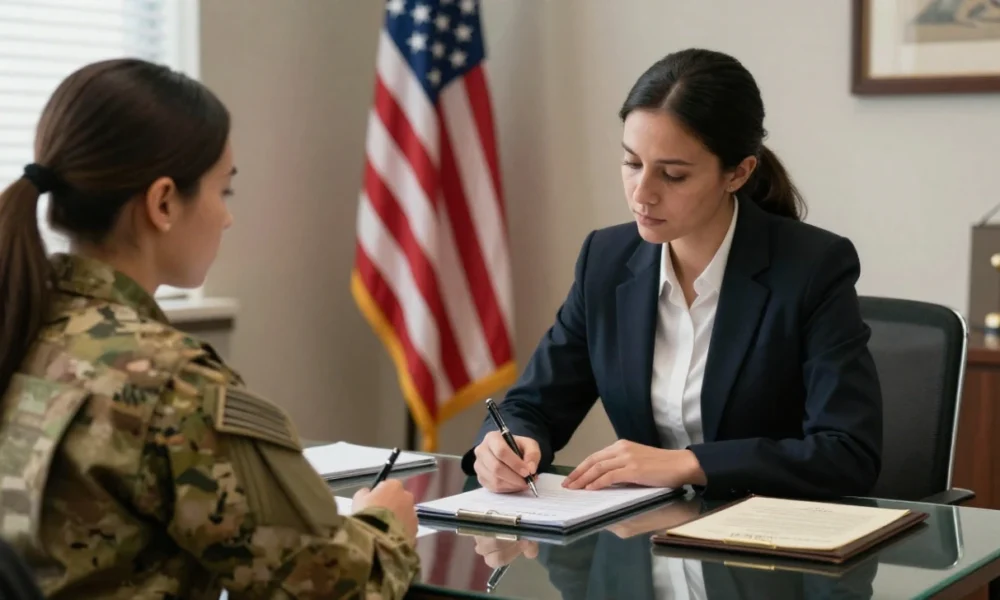
Sexual assault within military ranks is a grievous issue that undermines core military values and unit trust. Navigating the aftermath of such trauma is complex and emotionally taxing, with survivors facing unique legal challenges and bureaucratic procedures. Military sexual assault lawyers specialize in providing essential support and guidance to protect the rights of service members and veterans who have experienced sexual trauma.
Table Of Content
- Understanding Military Sexual Assault Lawyers and Legal Resources
- Special Victims’ Counsel: Dedicated Representation for Survivors
- Who Qualifies for Victims’ Legal Counsel
- The Military Justice System and Its Complexities
- Recent Structural Reforms
- Navigating Reporting Options
- Restricted vs. Unrestricted Reporting
- Victim Rights Under the UCMJ
- Court-Martial Proceedings and Victim Participation
- Protection of Victim Privacy
- Assistance with Veterans Affairs Benefits Claims
- Discharge Upgrades and Benefits Restoration
- Civilian Attorney Options for Victims
- Potential Advantages of Civilian Counsel
- Building a Support System Beyond Legal Representation
- Available Support Resources
- Empowering Survivors Through Legal Education
- Key Information for Survivors
- Ongoing Policy Developments
- Looking Ahead: Reforms and Resources
This article explains the role these legal professionals play in advocating for military sexual trauma survivors, with a focus on practical information about available legal resources, reporting options, and pathways to justice.
Understanding Military Sexual Assault Lawyers and Legal Resources
Military sexual assault lawyers serve as advocates for individuals who have experienced sexual violence in the military context. These attorneys are familiar with both civil and military law, enabling them to navigate the Department of Defense’s unique legal systems. Their role extends beyond traditional legal duties to include advising clients, maintaining confidentiality, and championing their clients’ rights throughout the legal process.
Special Victims’ Counsel: Dedicated Representation for Survivors
Since 2013, the military has provided Special Victims’ Counsel (SVC)—also known as Victims’ Legal Counsel in some branches—to advocate on behalf of sexual assault survivors. These are judge advocates (military attorneys) with extensive military justice backgrounds who have completed certified victims’ advocacy courses .
SVCs provide several critical services:
- Accompany victims to interviews with investigators and prosecutors
- Advocate against intrusive evidence gathering that would compromise vithe ctim privacy
- File legal motions and appear in court on behalf of clients
- Explain court-martial procedures and evidentiary matters
- Assist with obtaining Military Protective Orders (MPOs)
Importantly, communications between SVCs and victims are confidential and protected by the attorney-client privilege. These attorneys do not report to commanding officers, law enforcement, or prosecutors—they operate under separate supervision to maintain independence.
Who Qualifies for Victims’ Legal Counsel
Legal assistance through SVC programs is available to specific categories of individuals who are victims of sexual assault under the Uniform Code of Military Justice (UCMJ) :
- Members of the Armed Forces on active duty
- Reservists serving on active duty
- Members and former members are entitled to retired pay
- Military dependents of service members and retirees
- Department of Defense employees who are victims of sexual assault
Civilians who are not dependents typically do not automatically qualify for military-provided legal counsel, though some branches may grant exceptions under extraordinary circumstances. Approximately 900 civilians report military sexual assault annually, and advocates continue to push for expanded coverage
The Military Justice System and Its Complexities
The military operates under the Uniform Code of Military Justice (UCMJ), a federal legal system that governs service member conduct across all branches i, including the Army, Navy, Air Force, Marine Corps, and Coast Guard. This system runs parallel to civilian law but operates with different rules, procedures, and authority structures.
Recent Structural Reforms
The National Defense Authorization Act for Fiscal Year 2022 (NDAA22) introduced historic changes to how the military prosecutes sexual assault and other victim-centric offenses .Key reforms include:
Special Trial Counsel (STC): The military now employs specially trained prosecutors called Special Trial Counsel who exercise independent authority over 11 “covered offenses,” including sexual assault. These attorneys, not commanders, now make prosecution decisions for these cases . Each military service must establish dedicated offices supervising STC activities under senior attorneys with significant military justice experience .
Juge-Only Sentencing: For offenses after December 27, 2023, military judges—rather than panel members—determine sentences in general and special courts-martial. This change applies to all non-capital cases and aims to increase sentencing consistency.
Sentencing Parameters: Military judges must now impose sentences within parameters established by the President, though they may deviate with explained reasoning
These reforms apply to Department of Defense services, with the Coast Guard establishing analogous structures within the Department of Homeland Security.
Navigating Reporting Options
Military reporting structures offer different paths with varying implications for confidentiality and legal recourse.
Restricted vs. Unrestricted Reporting
Restricted reporting allows sexual assault victims to confidentially disclose an assault to specified individuals—Sexual Assault Response Coordinators (SARC), Sexual Assault Victim Advocates (SAVA), or healthcare personnel—without triggering an official investigation. This option enables victims to access medical treatment and counseling while maintaining privacy.
Unrestricted reporting initiates an official investigation through military criminal investigators (such as CID or NCIS) and triggers the full military justice process.
Under federal law, victims must be informed of both options and their implications as soon as they seek assistance from SARC, SAVA, military criminal investigators, or trial counsel. Legal assistance remains available regardless of which reporting option the victim selects
Victim Rights Under the UCMJ
All crime victims within the military justice system have enumerated rights under the Victims’ Bill of Rights, including :
- The right to be treated with fairness and respect for dignity and privacy
- The right to reasonable protection from the accused
- The right to notice of public proceedings
- The right to be present at public proceedings
- The right to reasonably confer with trial counsel (prosecutor)
- The right to receive restitution
- The right to be heard at sentencing and certain other hearings
- The right to proceedings free from unreasonable delay
- The right to be informed about the conviction, sentencing, and release of the offender
Sexual assault victims possess additional specific rights, including :
- The right to request a civilian investigation instead of a military one
- The right to a military victims’ counsel (for those who qualify)
- The right to decline testifying at Article 32 hearings (probable cause hearings)
- The right to attend and receive recordings of Article 32 hearings
- The right to express prosecution preferences
Court-Martial Proceedings and Victim Participation
When a case proceeds to court-martial, victims may participate with legal representation. There are three types of court-martial :
- Summary court-martial: For minor offenses, with limited penalties
- Special court-martial: For more serious offenses, the maximum penalty is 12 months confinement, forfeiture of pay, and rank reduction
- General court-martial: For most serious offenses, penalties can include lengthy imprisonment and dishonorable discharge
SVCs can attend interviews with investigators, trial counsel, and defense counsel. They help ensure victims understand proceedings and that their rights are protected throughout the process
Protection of Victim Privacy
Military Rules of Evidence provide specific protections for victims :
- MRE 412: Protects the victim’s prior sexual history from admission
- MRE 513: Protects the victim’s mental health records
- MRE 514: Protects communications with victim advocates
- MRE 615: Grants victims the right to attend all open court-martial sessions
Victims have the right to appeal trial judge rulings that violate these protections to military appellate courts.
Assistance with Veterans Affairs Benefits Claims
Survivors of military sexual assault may be eligible for benefits from the Department of Veterans Affairs (VA), including healthcare and disability compensation for conditions resulting from Military Sexual Trauma (MST)
Discharge Upgrades and Benefits Restoration
Many survivors received less-than-honorable discharges due to misconduct that resulted from untreated trauma related to sexual assault. Lawyers can assist with discharge upgrade applications, which may restore access to VA benefits .
The Kurta memo, a Department of Defense policy directive, encourages consideration of mental health conditions such as PTSD and experiences of military sexual trauma when reviewing discharge upgrade requests .
Recent successful advocacy examples include :
- An Army veteran who had been denied benefits for nearly twenty years due to an Other Than Honorable discharge received full VA benefits, including $26,000 in retroactive payments and ongoing monthly disability compensation for service-connected PTSD.
- An Air Force veteran secured a full upgrade to “Honorable” discharge status from the Air Force Discharge Review Board after demonstrating that exemplary service was disrupted by sexual assault trauma.
These outcomes demonstrate that persistence and knowledgeable legal representation can overcome systemic barriers to benefits.
Civilian Attorney Options for Victims
While military-provided SVCs offer free representation to qualifying victims, some survivors choose to retain civilian attorneys who specialize in military law
Potential Advantages of Civilian Counsel
Civilian attorneys may offer:
- Experience with sexual assault cases in military courts
- Independence from mithe litary chain of command concerns
- Ability to represent clients not eligible for SVC services (such as some civilians)
- Zealous advocacy without fear of military retaliation
Civilian counsel can represent victims from initial reporting through all stages, including interviews with investigators, discussions about prosecution decisions, plea agreement terms, and court appearances to protect victim privacy.
Building a Support System Beyond Legal Representation
Recovery requires more than legal vindication—it demands a holistic approach to healing. Military sexual assault attorneys often collaborate with mental health professionals, advocacy groups, and peer support networks to build a supportive ecosystem around survivors.
Available Support Resources
Sexual Assault Response Coordinators (SARC) and Sexual Assault Victim Advocates (SAVA) provide essential support services regardless of reporting method. These professionals offer crisis intervention, accompaniment to medical appointments, and referrals to counseling services.
Federal law requires coordination between Dethe partment of Defense and the Department of Veterans Affairs to ensure survivors receive information about available VA services. This includes annual training for SARCs and Uniformed Victim Advocates on VA resources for sexual trauma, and posting information about these services in Family Advocacy Program offices, mental health care offices, and high-traffic areas
Empowering Survivors Through Legal Education
Understanding one’s legal rights and military procedures is empowering. Lawyers serve an educational role by helping survivors make informed decisions about their legal options.
Key Information for Survivors
- Legal assistance and SARC/SAVA services are optional and may be declined in whole or in part at any time
- Notice of SVC availability must be provided before any military criminal investigator or trial counsel interviews the victim about the alleged assault, subject to exigent circumstances exceptions
- Victims may request expedited transfer in unrestricted report cases
Ongoing Policy Developments
The military justice system continues to evolve. Recent and upcoming developments include:
Independent Legal Advocacy (ILA) Pilot (United Kingdom) Beginning Spring 2026, victim-survivors of sexual offences committed by UK Service personnel will receive free, independent legal advice through a pilot program—a first for the UK Service Justice System. While this specific program applies to the UK jurisdiction, it reflects broader international recognition of victims’ legal support needs.
Armed Forces Bill Measures: New protective orders enabling swifter action against perpetrators and providing service police with enhanced pre-charge custody authorities represent ongoing efforts to strengthen victim protections.
Military Justice Review Panel: A panel of 13 private-sector criminal law experts now conducts independent periodic reviews of UCMJ operations, ensuring continued assessment and improvement of the military justice system
Looking Ahead: Reforms and Resources
The legal landscape for military sexual assault survivors continues to evolve. With each case they handle, specialized attorneys not only represent individuals but also contribute to shaping the discourse and driving reforms that improve systemic responses to sexual trauma.
For survivors seeking legal assistance:
- Active duty members and dependents should contact their installation’s SVC program or legal office
- Veterans should consult with attorneys specializing in VA benefits and discharge upgrades
- All individuals have the right to seek second opinions from civilian counsel regarding their legal options
The combination of dedicated victims’ counsel, recent structural reforms, and coordinated support services provides survivors with more robust pathways to justice and recovery than were previously available within the military system.