

Off-Grid Living | A Complete Beginner’s Guide to Self-Sufficient Life
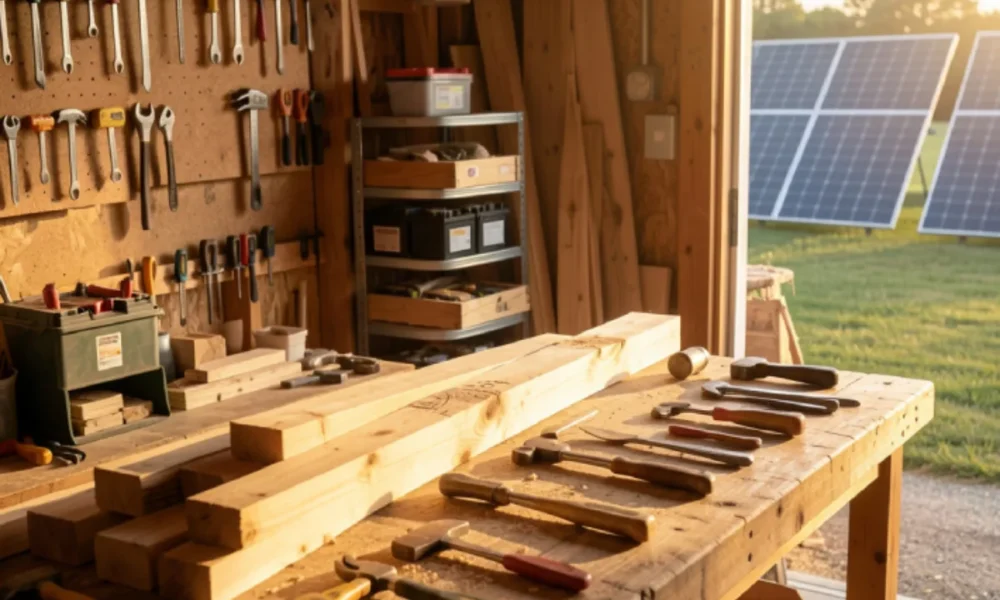
Interest in off-grid living has grown steadily since 2020, driven by rising utility costs, recurring power outages, and greater awareness of environmental impact. According to available estimates, the average American household spends between $2,000 and $4,000 annually on utilities—costs that off-grid households largely eliminate once their core systems are established. Going off-grid means generating your own electricity, sourcing your own water, managing waste independently, and often producing your own food—without relying on public utility systems.
Table Of Content
- What Does Off-Grid Living Actually Mean?
- Choosing the Right Location
- Climate and Terrain
- Land Size and Soil Quality
- Water Access
- Connectivity
- Understanding Legal Requirements Before You Buy
- Zoning and Land Use
- Building Permits and Code Compliance
- Rainwater Harvesting Laws
- Energy Systems
- Solar Power
- Wind Energy
- Other Heat and Energy Sources
- Water Sourcing and Filtration
- Rainwater Harvesting
- Well Water
- Springs and Surface Water
- Waste Management
- Composting and Vermiculture
- Greywater and Blackwater Systems
- Reducing Waste Inputs
- Sustainable Food Production
- Garden Systems and Soil Building
- Permaculture Design
- Food Preservation
- Livestock
- Essential Skills and Tools
- Practical Knowledge
- Hand Tools and Power Tools
- Communication and Emergency Preparedness
- Financial Planning
- Common Mistakes to Avoid
- Building Community and Support Networks
This guide covers every major area of off-grid life: choosing land, setting up energy and water systems, managing waste, producing food, building practical skills, and understanding the legal requirements before you commit.
What Does Off-Grid Living Actually Mean?
At its core, off-grid living means creating a home that operates independently from public utility infrastructure—electricity lines, municipal water, natural gas, and sewage systems. However, it is not an all-or-nothing arrangement.
There are several levels of off-grid independence:
- Complete off-grid: Total disconnection from all public utilities, with self-managed power, water, waste, and food production.
- Partial off-grid: Independence from one or more utilities while maintaining others—for example, solar power combined with municipal water.
- Grid-tied with backup: Remaining connected to utilities but maintaining independent systems for resilience during outages.
Many people entering this lifestyle begin with partial independence and add systems over time. Understanding which level suits your goals and budget will shape every decision that follows.
Choosing the Right Location
Land selection is the single most consequential decision in any off-grid plan. The wrong parcel can undermine your ability to grow food, harvest water, or generate power regardless of how well-designed your other systems are.
Climate and Terrain
South-facing slopes in the northern hemisphere receive maximum solar exposure, making them well-suited for solar panel installations. Moderate annual rainfall matters if you intend to harvest rainwater, and a growing season of at least six months supports meaningful food production. Areas prone to flash flooding, severe wildfire risk, or prolonged extreme cold add costs and complexity to infrastructure planning.
When considering terrain, hills and elevated land offer privacy and views but can complicate road access during heavy snowfall or storms. Year-round road access is essential not just for daily life but for emergency response.
Land Size and Soil Quality
Most homesteads operate on one to five acres, which is sufficient to support a family with a productive garden, small livestock, and the necessary infrastructure. If you plan to harvest timber for heating or cooking fuel, you may need an additional one to five forested acres. Assess soil quality before purchasing—soil that is rocky, compacted, or heavily clay-based will require significant amendment before supporting productive gardens.
Water Access
Proximity to a reliable natural water source—a spring, stream, or aquifer—reduces the complexity and cost of your water system. Verify water rights at the county level before purchasing, as mineral rights and water rights are often separate from surface land ownership.
Connectivity
Even off-grid households benefit from some form of digital communication. Satellite internet services now provide broadband-level connectivity in most rural areas, supporting remote work, telemedicine access, and ongoing learning. A signal booster may be needed for mobile phone coverage, and HAM radio or satellite phones serve as reliable backups when cellular signals are unavailable.
Understanding Legal Requirements Before You Buy
Off-grid living is legal across all 50 U.S. states, but state law alone does not determine what you can or cannot do. County zoning ordinances and local health department rules typically have the final say—and two properties in the same state can operate under entirely different rules depending on county.
Zoning and Land Use
Your land must be zoned for residential, agricultural, or homestead use to support permanent dwelling. Many counties prohibit long-term occupancy in structures that do not meet minimum size or foundation standards. Tiny homes, yurts, and alternative structures may require special permits or variances. Always verify at the county level before purchasing land.
Building Permits and Code Compliance
Most permanent off-grid dwellings require building permits, even in rural counties. Structures under approximately 400 square feet may qualify for exemptions in some jurisdictions, but this threshold varies. Well drilling typically requires a permit and a licensed driller. Septic systems require health department approval. Going off-grid does not exempt a property from building codes—it simply means the energy and utility systems are self-managed rather than utility-provided.
Rainwater Harvesting Laws
The legality of rainwater collection for drinking purposes varies significantly. Some states actively encourage it with tax incentives; others restrict collection to non-potable uses; and a small number, such as Mississippi, require grid-tied connections and restrict disconnection. Research state-specific laws and verify with the county health department before designing a water system.
States generally considered favorable for off-grid living include Missouri, Arkansas, Tennessee, Idaho, Montana, and Wyoming. States with stricter utility connection requirements include Nevada, Mississippi, and parts of California, though rural counties in those states may still offer workable options.
Energy Systems
Solar Power
Solar energy is the most widely used power source for off-grid homes. Panel costs dropped approximately 26 percent over the decade from 2013 to 2022, and residential solar continues to become more accessible. A complete off-grid solar system with battery storage typically costs between $15,000 and $50,000 depending on energy demand and system capacity.
Bifacial solar panels capture light on both sides and perform better in reflected light conditions, making them useful on sites where direct sunlight is partially obstructed. Pairing panels with lithium iron phosphate (LiFePO4) battery banks provides stable storage across a wide temperature range. An inverter converts stored DC power to AC for household use.
The residential clean energy tax credit (30% through 2032 under IRS guidelines, though subject to Congressional review) can meaningfully reduce upfront solar installation costs for eligible homeowners.
Wind Energy
Small-scale residential wind turbines work well as a complement to solar, particularly during overcast periods or in coastal and high-elevation locations where wind is consistent. Wind and solar systems often offset each other seasonally—solar peaks in summer while wind can be stronger in winter months.
Other Heat and Energy Sources
Geothermal heating uses stable ground temperatures (typically 55–60°F year-round at shallow depth) to reduce heating and cooling loads. Earth-bermed or underground homes exploit the same principle passively. Propane and wood-burning stoves are common secondary heating sources for winter months. Biogas systems using organic waste are used in some homesteads to generate cooking fuel, though they require careful management.
Water Sourcing and Filtration
Rainwater Harvesting
A properly designed rainwater collection system can capture up to 600 gallons from a 1,000 square foot roof in a single inch of rainfall. Food-grade gutters, first-flush diverters (which redirect the initial runoff that carries the most contaminants), mesh guards, and sealed storage tanks form the foundation of a clean collection system. A first-flush diverter routes the first portion of rain away from storage until the roof surface has been rinsed.
For potable use, filtration is mandatory regardless of collection method. Modern multi-stage filtration systems—combining sediment pre-filters, activated carbon filters, UV purifiers, and ceramic membrane filters—can produce water quality that meets or exceeds municipal standards.
Well Water
Drilled wells reaching deep aquifers provide reliable water supply independent of rainfall patterns. Well depth depends on the local water table, and costs vary accordingly. Well drilling requires a permit in most counties and must meet health department standards for casing depth and construction to prevent surface contamination. Annual water testing for bacteria, nitrates, and pH is recommended regardless of well depth.
Springs and Surface Water
Natural springs offer gravity-fed water supply with minimal pumping infrastructure, but must be properly developed and covered to prevent contamination. Surface water from streams requires multi-stage filtration and regular testing, as it is more susceptible to agricultural runoff, wildlife activity, and seasonal variation in quality.
Waste Management
Composting and Vermiculture
Composting converts food scraps, garden trimmings, and certain paper products into nutrient-rich soil amendment. A well-managed compost pile using a carbon-to-nitrogen ratio of approximately 25–30:1 breaks down material in four to twelve weeks under ideal conditions. Vermiculture—using red wriggler worms to process organic material—accelerates decomposition and produces worm castings, a concentrated soil amendment.
Greywater and Blackwater Systems
Greywater (from sinks, showers, and laundry) and blackwater (from toilets) require separate handling. Greywater can be treated through constructed wetlands, mulch basins, or sand filter systems and reused for irrigation in many jurisdictions. Composting toilets, which are NSF-certified models, are legal in most states and eliminate the need for a septic tank for blackwater. Where composting toilets are not permitted, a properly permitted septic system with leach field is required.
Reducing Waste Inputs
Zero-waste consumption habits reduce the volume of materials that must be managed on-site. Buying in bulk, avoiding single-use packaging, and repurposing materials before disposal—glass jars for storage, metal containers for tools—reduces both waste volume and ongoing supply costs.
Sustainable Food Production
Garden Systems and Soil Building
Regenerative gardening practices—cover cropping to prevent erosion and fix nitrogen, crop rotation to manage soil-borne disease, and composting to build organic matter—improve long-term soil fertility without purchased inputs. Companion planting (such as the Three Sisters combination of corn, beans, and squash, which has supported self-sufficient food production for centuries) can reduce pest pressure and improve yields without synthetic pesticides.
Integrated pest management (IPM) controls pests through biological controls, habitat manipulation, and targeted intervention rather than routine chemical application.
Permaculture Design
Permaculture design applies ecological principles to create food-producing landscapes that require less labor over time. By observing sunlight, water flow, and wind patterns on a property, a permaculture design groups plants by their water and maintenance needs, places perennial crops in long-term positions, and integrates trees, shrubs, and ground cover in productive combinations.
Food Preservation
Preserving seasonal abundance is as important as growing it. Pressure canning, water-bath canning, lacto-fermentation, dehydration, and cold storage in a root cellar extend the shelf life of harvests by months or years. Learning multiple preservation methods reduces dependence on refrigeration and allows for year-round consumption of home-grown produce.
Livestock
Small livestock—chickens, goats, and rabbits—are well-suited to homestead-scale production. Chickens provide eggs and meat and require relatively little space. Goats produce milk for drinking or cheese-making and can graze land unsuitable for cultivation. Natural foragers like pigs can process food scraps and improve compacted soil. Any livestock plan should account for feed during winter months, veterinary access, and basic animal husbandry skills.
Essential Skills and Tools
Practical Knowledge
Self-sufficiency depends on a broad base of practical skills built over time rather than acquired all at once. Gardening, food preservation, basic carpentry, mechanical repair, first aid, and water system maintenance are the most immediately useful areas. Prioritize the skills most relevant to your planned systems and location.
Hand Tools and Power Tools
Off-grid households need both categories. Hand tools—axes, handsaws, draw knives, and manual garden implements—remain functional when power is unavailable or insufficient. Power tools run efficiently on a well-designed solar system and accelerate most construction and maintenance tasks. Regular sharpening and preventive maintenance extend tool lifespan considerably, which matters when access to replacements requires significant travel.
Communication and Emergency Preparedness
Confirm that emergency services—fire, medical, and search-and-rescue—can physically reach your property. Maintain a supply of prescription and over-the-counter medications appropriate to your household’s needs. A comprehensive first aid kit and basic wilderness medicine training are practical considerations for remote sites. HAM radio licensing provides a reliable communication channel that operates independently of cellular and internet infrastructure.
Financial Planning
Initial off-grid setup costs vary widely depending on the systems chosen, land cost, and how much construction is done by the homeowner. Rough estimates commonly cited in the industry place a complete off-grid setup—including land, energy system, water system, and dwelling—between $45,000 and $150,000. A solar-only system with battery storage runs $15,000–$50,000. Tiny homes on foundations range from $20,000 to $80,000 in materials and labor.
The long-term financial case is straightforward: eliminating utility bills worth $2,000–$4,000 per year accumulates to $20,000–$40,000 over a decade. Off-grid properties in many rural areas also carry lower property taxes than comparable urban parcels. The break-even point on the energy system investment typically arrives within several years of installation, after which ongoing costs are primarily maintenance.
Starting with a partial off-grid approach—adding systems incrementally rather than attempting full independence immediately—allows costs to be spread over time and skills to be built alongside the infrastructure.
Common Mistakes to Avoid
Underestimating water requirements. Households typically use 50–100 gallons of water per person per day. A water system sized only for drinking and cooking will fall short of actual demand.
Buying land before verifying county regulations. Two adjacent parcels can have entirely different legal requirements. Always contact the county planning and health departments before purchasing.
Oversizing the solar system. It is more cost-effective to first reduce energy consumption through efficient appliances and passive design, then size the solar system to match actual reduced demand.
Neglecting medical and emergency access. Off-grid sites often have limited road access and cellular coverage. Planning for emergencies—including the ability of first responders to reach the property—is a practical necessity, not an afterthought.
Attempting too much at once. Off-grid competence develops over seasons and years. Beginning with one or two core systems and expanding methodically produces better outcomes than attempting full independence immediately.
Building Community and Support Networks
Off-grid living does not require isolation. Many people in this lifestyle maintain active relationships with neighbors, local farming communities, and online networks organized around specific skills—homesteading, solar installation, permaculture design, and food preservation.
Skill-sharing with neighbors, whether grid-connected or not, creates practical reciprocity: access to equipment, emergency assistance, labor exchange, and local knowledge about weather patterns, soil conditions, and regional suppliers. Organizations such as eco-villages and intentional communities offer shared infrastructure and collaborative decision-making for those who prefer collective off-grid arrangements.
Online forums and regional homesteading groups provide access to experienced practitioners who can provide guidance specific to climate, soil type, and state regulations—resources that prove valuable both in the planning phase and after the transition.