

Prefab Buildings: A Data-Driven Guide to Speed, Cost Savings, and Quality
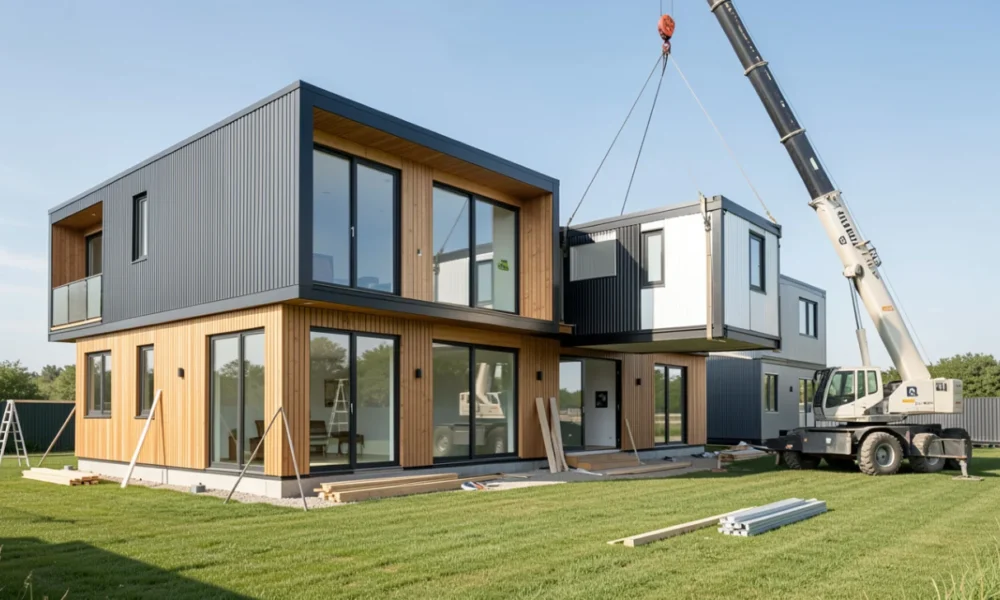
In the world of modern construction, prefabricated buildings have moved from a niche alternative to a mainstream solution for residential, commercial, and industrial projects. Facing labor shortages, rising material costs, and an urgent need for housing, the industry is increasingly turning to off-site construction methods. Prefabrication, or “prefab,” involves manufacturing building components—from wall panels to fully finished volumetric modules—in a controlled factory environment before transporting them to the site for final assembly. This approach offers a strategic shift from traditional, site-based building, providing measurable advantages in speed, cost, quality, and sustainability.
Table Of Content
Understanding Prefabricated Construction
To understand the benefits of prefab, it is important to distinguish it from traditional methods and other off-site techniques. Traditional construction is sequential, with foundations, framing, and finishes all completed on-site. This makes it highly susceptible to weather delays, skilled labor availability, and on-site coordination issues
Prefabrication encompasses a spectrum of approaches. A common distinction is between panelized systems and volumetric modular construction .
- Panelized Construction: This involves manufacturing flat components like wall, floor, and roof panels in a factory. These panels are then shipped to the site and assembled to form the structure. This method offers significant design flexibility and is efficient toforransport
- Volumetric Modular Construction: This is a more advanced method where entire rooms or sections of a building (e.g., a hotel room or apartment unit) are constructed and finished—including fixtures and fittings—in a factory. These 3D modules are then transported and stacked on-site like “giant Lego bricks” .This method maximizes off-site work, further reducing on-site construction time .
The Benefits of Prefabricated Buildings
Accelerated Project Timelines
One of the most compelling advantages of prefab is the significant reduction in construction schedules. Factory production and site work (like foundations) happen concurrently, which dramatically shortens overall project duration .
Data from the construction industry highlights this speed advantage. While a conventional house in Australia can take an average of 55 weeks to build, many prefab manufacturers complete and hand over a home in approximately 16 weeks . A project using cross-laminated timber (CLT) for a row of terraces in Sydney cut construction time from an estimated 18 months to just six months . In Canada, one manufacturer reports they can complete a house in about eight days of factory work, excluding planning and foundation preparation . Thistime savings translates directly to faster occupancy, earlier rental income, and reduced financing costs.
Cost-Effectiveness and Predictability
Prefab construction offers greater cost certainty and potential savings compared to traditional building. The primary savings come from reduced on-site labor, faster project completion, and minimized material waste. Some analyses suggest prefabricated systems can be approximately 30% less expensive than conventional construction across various metrics. A Chinese study on prefabricated building quality found that optimized processes could lower construction costs per unit area by 8.8%
However, the cost equation depends on several factors. Material costs can represent more than 50% of the total in prefab projects . Transportation is another significant factor, as modules must be engineered to withstand the stresses of travel, and shipping large volumetric units can be costly, especially over long distances . Despite these variables, the predictability of factory production leads to fewer costly surprises and change orders than traditional on-site work .
Enhanced Quality Assurance
The factory environment is a key differentiator for quality. Unlike a traditional construction site, where workers contend with weather, temperature swings, and varying site conditions, a factory provides a controlled setting with consistent processes. This allows for what is known as “tighter tolerance,” meaning the finished product deviates less from the architectural specifications .
This precision has direct performance implications. For example, a more accurately built building envelope results in fewer air leaks, leading to better energy efficiency and lower heating and cooling costs . Advanced quality control measures, including non-contact online inspection systems, are increasingly used during production to ensure components meet exacting dimensional standards before they ever leave the factory . Research indicates that improved quality management can reduce issues in the prefabrication stage by 44% and cut on-site assembly errors by over 62% .Improvedd On-Site Safety
Moving a significant portion of construction work into a factory setting inherently improves safety. Factory environments reduce or eliminate many of the most dangerous aspects of site work, such as working at height in variable weather, operating heavy machinery in congested areas, and performing manual handling tasks in uncontrolled conditions. Repetitive tasks in a controlled environment with engineered safety systems lead to fewer accidents and injuries, protecting the workforce.
Versatility and Design Flexibility
Modern prefabrication has shed its outdated association with low-quality, uniform structures. Today, it offers remarkable versatility. Architects are increasingly using materials like cross-laminated timber (CLT) for projects ranging from multi-residential housing to high-end custom homes .CLT panels, made from layers of timber, are precise, strong, and store carbon, offering a sustainable alternative to concrete and steel. Customization is a standard offering. Companies allow clients to choose from a range of design options to fit their needs and lifestyles. While volumetric modules may have size constraints related to transport, panelized systems offer near-limitless design possibilities.
Sustainability and Reduced Waste
Prefab construction aligns strongly with sustainable building practices. The precision of factory manufacturing allows for exact material quantities, which drastically reduces on-site waste compared to traditional stick-framing. Materials like timber from certified sustainable plantations are commonly used. For example, a project using 173 cubic meters of CLT can store an estimated 80.63 tonnes of CO2-eq, an environmental benefit equivalent to taking 60 cars off the road for a year.
Furthermore, the energy efficiency of the completed building is often superior due to the precision of the construction, leading to lower operational energy use over the building’s lifetime
Challenges and Future Outlook
Despite its many benefits, the prefab industry faces challenges. A lingering stigma from mid-20th-century prefab “temporary” buildings still exists, though it is being actively challenged by industry awards and high-profile projects showcasing architecturally designed, high-quality prefab homes. Logistical hurdles, particularly the transport of large modules and the need for specialized cranes, require careful planning and add cost . However, governments are taking notice. In response to housing crises, significant funding is being directed to the sector. For instance, the Canadian government has proposed over $25 billion in loans to support innovative prefab home builders, aiming to scale up the industry and establish robust supply chains. Similar initiatives in Australia are funding streamlined planning processes and voluntary certification schemes for manufacturers. These investments signal a strong future for prefabricated construction as a cornerstone of modern, efficient, and sustainable building.