

The Role of Logistics in Business Operations, Components and Strategy
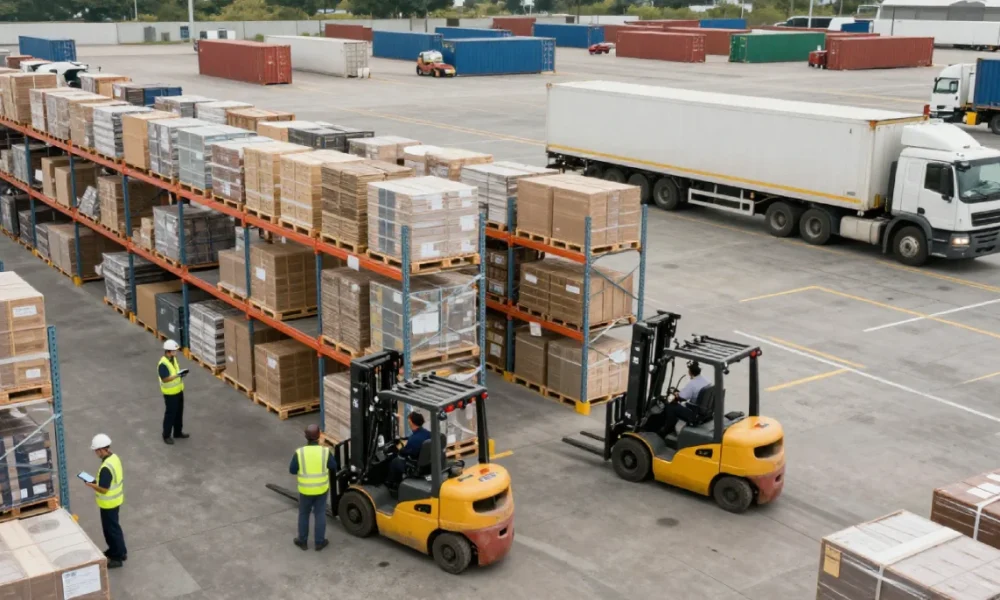
The role of Logistics in Business Operations refers to the overall process of managing how resources and goods are acquired, stored, and transported to their final destination. It encompasses the flow of materials and products from suppliers and vendors through various intermediaries and activities until they ultimately reach the end consumer.
Table Of Content
- Key Components of Logistics
- Transportation
- Warehousing
- Inventory Management
- Order Fulfillment
- Role of Logistics in Supply Chain Management
- Logistics Planning and Strategy
- Transportation in Logistics
- Modes of Transportation
- Transportation Management
- Warehousing and Distribution
- Warehouse Functions
- Warehouse Management
- Inventory Management
- Importance of Inventory Management
- Inventory Control Methods
- Order Fulfillment and Customer Service
- Order Fulfillment
- Customer Service
- Technology and Innovation in Logistics
- Emerging Trends
- Logistics Performance Measurement
- Key Performance Indicators
- Continuous Improvement
- Global Logistics and International Trade
- Challenges of Global Logistics
- Opportunities
- Sustainable Logistics Practices
- Importance of Sustainability
- Green Logistics Practices
- Risk Management in Logistics
- Logistics Risks
- Risk Mitigation Strategies
- Outsourcing and Third-Party Logistics (3PL)
- Benefits of 3PL
- Implementation Considerations
- Conclusion
In a business context, logistics generally refers to all the activities involved in the efficient movement of finished goods from the point of production to the marketplace. It involves the planning, implementation, and control of the physical flow of materials and the associated information flow from the point of origin to the point of consumption.
The importance of logistics in modern business can hardly be overstated. Efficient logistics operations are vital to keeping companies competitive and lean. By mastering logistics, businesses can achieve faster turnaround times, respond better to customer demands, minimize tied-up capital, and reduce operating expenses related to stocking and delivery of products. Logistics is the backbone for optimizing supply chain processes and gaining an edge over rivals in today’s complex and globalized markets.
Key Components of Logistics
Several key functions make up the broader logistics operation. The major components of business logistics include:
Transportation
Transporting goods from suppliers to manufacturing centers to warehouses and finally to market is essential. The choice of transportation modes—truck, rail, air, ship, or a multimodal solution—depends on factors like cost, speed, delivery time, and flexibility. A reliable transportation model tailored to business needs is necessary for smooth operations.
Warehousing
Warehousing provides a buffer inventory to allow continuous production and sales operations. Warehouses for storing and value-adding activities are a vital part of the distribution network. Effective warehouse management improves inventory turnover and boosts customer service.
Inventory Management
Inventory constitutes a major cost component for any business. Keeping stocking levels appropriate using inventory management techniques balances the costs of inventory and shortage/stockout risks. This ensures no working capital is unnecessarily tied up in inventory.
Order Fulfillment
The complete process from order taking, order processing, and order delivery requires quick and accurate execution. Efficient pick, pack, and ship procedures coupled with strong order tracking systems help get the right products to customers fast.
Role of Logistics in Supply Chain Management
Logistics forms an integral part of supply chain management (SCM). While SCM covers the broader interconnected network of activities used to plan, control, and execute the flow of goods and services, logistics represents a key component of executing those supply chain flows.
The interconnectivity between logistics and broader supply chain activities is vital for success in today’s omnichannel marketplace. Supply chains have to be flexible and efficient to deal with factors like global sourcing, just-in-time inventory, e-commerce delivery demands, global competition, and rising customer expectations. Logistics provides the physical framework for the supply chain by linking a company’s trading partners—suppliers, carriers, third-party companies, and information systems providers.
When logistics is tightly synchronized with other SCM elements like procurement, production planning, and sales order management, it improves overall supply chain results in terms of cost minimization, timely order fulfillment, flexibility to demand changes, and investment utilization.
Companies that invest in modernizing logistics and embedding it into their supply chains gain increased competitiveness. Logistics improvements can help reduce supply chain costs significantly, depending on the industry. A high-performing logistics system also allows companies to get products to market faster, enlarge their customer base, and expand into new geographical territories.
Logistics Planning and Strategy
Designing an appropriate logistics network with cost-efficient transportation routing, streamlined facility usage, and coordinated material flows requires careful planning and strategic analysis. Important decisions have to be made regarding:
- Location and capacity of production and storage facilities
- Transportation modes to be used
- Inventory policies
- Order management procedures
- Warehouse layout and operations
- Handling of reverse logistics
- Logistics information systems to be deployed
Various factors that influence logistics decision-making include:
- Company strategy: The company’s competitive positioning and core competencies influence the logistics strategy, such as a cost leadership model that demands very lean logistics.
- Product characteristics: Attributes like shelf-life, seasonality, fragility, and bulkiness determine inventory volumes, handling procedures, storage needs and transport modes.
- Market characteristics: Factors like forecasted demand, customer location distribution, and order patterns dictate logistics infrastructure and distribution planning.
- External environment: Regulations, geopolitical factors like trade policies, and trends like sustainability concerns affect logistics operations.
Companies often use network modeling tools and total cost analysis to evaluate trade-offs between facility investments, transportation expenses, and inventory carrying costs. Cost-to-serve analysis helps identify which customer segments or products generate the best logistics returns. Aligning logistics planning with overall corporate strategy and continuously adapting to internal and external variables is key to deriving maximum value from the supply chain.
Transportation in Logistics
Transporting inventory efficiently is a core aspect of logistics. Choosing the modes of transport and managing transport operations has a significant influence on supply chain performance.
Modes of Transportation
- Road Transportation via trucks offers extensive geographic coverage and route flexibility. It is best suited for smaller loads over shorter distances.
- Rail Transportation provides lower rates for bulk freight over long distances but is less flexible. Intermodal solutions combining rail and trucking can capture cost advantages of volume rail hauls.
- Air Transportation is the fastest but most expensive transport option, best suited for small, high-value, or urgently required loads.
- Water Transportation by sea is typically the most economical option for large volumes of non-urgent freight with lenient delivery times. Inland water transport is also an economical option.
- Intermodal combines multiple modes, like truck and rail, for cost and service advantages over single modes. It often utilizes containerization for easy transfers between modes.
Companies select transportation modes based on balancing trade-offs between speed, reliability, tracking visibility, susceptibility to loss or damage, and landed costs. For maximum efficiency, combining multiple modes to use their strengths is generally recommended.
Transportation Management
Strategic transportation management is key to smooth logistics operations. Companies must work on transport load planning, establish policies on freight consolidation, reduce empty vehicle backhauls, use transportation synergies across locations, and adapt dynamically to changing conditions.
Sophisticated transportation management systems (TMS) integrated with order processing and GPS tracking provide companies with end-to-end visibility and control over their transport workflows from factory gate to customer doorstep. This improves delivery reliability, total landed costs, and asset utilization.
As supply chains become more complex, effective transportation management will grow increasingly vital for logistics success.
Warehousing and Distribution
For finished goods companies, warehouses are an indispensable link between production and consumer markets. Strategic distribution center placement and efficient warehouse operations give companies a vital edge.
Warehouse Functions
Warehouses serve several functions:
- Break Bulk: Consolidating large shipments from suppliers into smaller batches for customers.
- Postponement: Customizing standard products with specialized packaging, labeling, or configuration closer to the final market.
- Transhipment: Cross-docking products from inbound to outbound shipments with minimal storage in between.
- Storage: Buffering inventory stocks to cover demand fluctuations and production variability.
- Value-Added Services: Providing additional processing on products like product mixing, assembly, or quality inspections.
Improving warehouses for greater accuracy, speed, traceability, and inventory turns enhances logistics flexibility and reduces costs.
Warehouse Management
Warehouse management systems (WMS) play a key role in efficient inventory control. Modern WMS software handles functions like slotting, picking, replenishment, kitting, cycle counting, and wave planning for better space and labor utilization.
Automation via technologies like automated storage and retrieval systems, automated guided vehicles, conveyor systems, and robotics boosts productivity and throughput in high-volume distribution centers. However, companies must balance automation investments with flexibility needs.
Superior warehouse management streamlines the link between inbound supply and outbound shipments in the logistics chain.
Inventory Management
Inventory constitutes the most illiquid yet indispensable asset for any company. Keeping inventory levels appropriate requires masterful balancing of holding costs against stockout risks via inventory control techniques.
Importance of Inventory Management
Suboptimal inventory control can create challenges for companies via:
- Excess inventory: Unnecessary working capital tied up, product deterioration, storage costs, and pilferage.
- Stockouts: Customer dissatisfaction, revenue losses, production stoppages.
Effective inventory management provides a competitive edge through:
- Improved cash flows: Reduced inventory investment and carrying costs.
- Better customer service: Consistent product availability and shortened lead times.
- Enhanced production efficiency: Smoother product flows with lower expediting costs.
Inventory Control Methods
Major techniques companies use to manage their inventory levels include:
- ABC analysis: Classifying products based on annual dollar usage to devise differentiated inventory policies for each class.
- Economic order quantity (EOQ): Balancing order sizes against inventory holding costs to determine the appropriate order quantity.
- Safety stock: Buffer inventory to cover variability in demand or supply during lead times.
- Just-in-time (JIT): Pull-based stock replenishment based on consumption rather than forecasts.
- Drop shipping: Fulfilling orders directly from suppliers to reduce the need for own stock.
Continuous monitoring of inventory performance via days of supply, turns ratio, and availability metrics, coupled with using new models like demand-driven planning, enables companies to keep inventories lean, flexible, and aligned with strategy.
Order Fulfillment and Customer Service
The ultimate goal of any logistics system is to fulfill customer orders accurately and rapidly. Supply chains can gain a significant competitive advantage by providing superior order fulfillment and after-sales service.
Order Fulfillment
To provide quick and accurate order delivery, companies must execute:
- Fast and accurate order processing: Via integration of order management systems with inventory data, accounts, and billing.
- Prompt and error-free picking: With warehouse workflows and product location strategies.
- Reliable packaging and shipping: Using appropriate containers and durable external packaging.
- Responsive order handling: With flexibility to meet priority/rush orders and seasonal peaks.
- Real-time order tracking: Via shipment events and status updates to the customer.
- Returned goods handling: To efficiently accept, process, and re-integrate product returns.
Customer Service
Meeting and exceeding customer service expectations gives companies an edge. Key facets of customer service include:
- Supply chain visibility: Providing inventory availability and order status updates proactively.
- Exception handling: Resolving effectively any problems like stockouts or shipping delays.
- Support: Assisting customers with inquiries, issues, or complaints.
- Personalization: Customizing logistics to accommodate unique customer needs.
With logistics forming the backbone of order fulfillment, companies must design their supply chains to be demand-driven rather than forecast-driven.
Technology and Innovation in Logistics
Technology is both an enabler and a disruptor in modern logistics. Innovation and digitalization of logistics have become pivotal to boosting efficiency.
Key technological influences on logistics include:
- Real-time coordination: Via logistics management software, IoT sensors, collaborative tools, and control towers that enable companies to track shipments, monitor inventory levels, and respond to disruptions as they occur.
- Automation: Of warehousing, materials handling, and inventory tracking activities, which reduces labor costs and improves accuracy in order processing.
- Advanced analytics: To examine network design, flows, and strategic decision making, helping companies identify bottlenecks and improve route planning.
- Artificial intelligence: Enhancing planning, forecasting, vehicle routing, and predictive maintenance by analyzing historical patterns and suggesting improvements to operational workflows.
- Robotics and drones: To automate pick and pack, transportation, and inventory counting, particularly in high-volume distribution centers.
- Blockchain: Improving traceability and security across fragmented logistics operations by creating transparent, tamper-proof records of transactions.
Transportation management systems (TMS), for instance, can reduce freight costs by 5-15% through better load consolidation and carrier selection. Warehouse automation can increase picking accuracy to above 99% while reducing labor requirements.
Emerging Trends
Major trends shaping logistics technology include:
- Logistics marketplaces: On-demand matching of shippers with carriers for greater efficiency.
- Electrification: Of transportation fleets to reduce environmental impact.
- Autonomous vehicles: For automated last-mile delivery services.
- Cloud logistics: Platform-as-a-service options for logistics management needs.
- Omnichannel logistics: Integrated cross-channel order fulfillment capabilities.
- Hyperlocal logistics: On-demand micro-warehouses to enable speedy delivery.
- Big data analytics: To refine forecasting, manage loads, and model disruptions.
With logistics growing more technology-intensive, continued innovation will be imperative for logistics performance breakthroughs.
Logistics Performance Measurement
“What gets measured gets improved” holds for logistics as with any other business function. Strong logistics performance measurement using relevant KPIs is indispensable for progress.
Key Performance Indicators
Core KPIs used to gauge logistics performance include:
- Perfect order percentage: % of orders delivered accurately, damage-free, and on time.
- Cash conversion cycle: Time from paying suppliers to collecting from customers.
- Inventory turnover: How fast inventory sells through revenues.
- On-time shipments: % of orders shipped on or before quoted delivery dates.
- Total logistics cost per unit: Influence of logistics costs relative to output volume.
- Days of inventory: Average days of inventory on hand based on the rate of consumption.
- Fill rate: % of demand filled from available stock without backorders/lost sales.
Continuous Improvement
Monitoring logistics KPIs allows:
- Benchmarking versus competitors, past performance, and targets.
- Trend analysis to identify improvement areas.
- Diagnosing causes behind supply chain health metrics.
- Simulating future scenarios.
This supports continuous improvement by helping companies quantify operational performance, pinpoint problem spots, and remedy them through data-driven decision making.
Global Logistics and International Trade
Global sourcing, overseas markets, and international trade partnerships bring new dimensions to business logistics. Logistics systems must be designed for maximum flexibility to navigate global complexities.
Challenges of Global Logistics
Key challenges faced in global logistics include:
- Longer lead times: Due to farther sourcing locations and slower overseas transport.
- Regulatory variations: Navigating customs regulations, duties, quotas, and paperwork.
- Exchange rate fluctuations: Influence on input costs and export competitiveness.
- Political uncertainties: Potential disruptions due to trade disputes or geopolitical conflicts.
- Infrastructure constraints: Limited transport access or underdeveloped logistics facilities in some regions.
- Tracing and visibility: Difficulty tracking status across continents and multiple partners.
Opportunities
Globalized logistics also offers strategic opportunities to:
- Access cheaper labor and raw materials for reduced production costs.
- Penetrate new growth markets: By tailoring distribution to local consumer needs.
- Use international trade pacts: To gain preferential access and tariff reductions.
- Spread logistics risks: Across countries through multi-region diversification.
With global supply chains being the norm, adapting logistics strategy to balance global efficiencies and localization needs is a key imperative.
Sustainable Logistics Practices
Sustainability and corporate social responsibility have become essential components of contemporary logistics. Green logistics initiatives can both reduce environmental footprints and yield cost benefits.
Importance of Sustainability
Key drivers making sustainability an urgent priority include:
- Climate change risks: Logistics contributes significantly to greenhouse gas emissions.
- Regulations: Emission limits and higher energy efficiency standards.
- Consumer pressure: Demands for ethical and eco-friendly supply chain practices.
- Cost savings: Via better transportation, green warehouses, and recycling programs.
- Corporate image: Reputational gains from demonstrating sustainable operations.
Green Logistics Practices
Initiatives companies can adopt encompass:
- Intermodal shift: Using more rail/water transport to reduce trucking emissions.
- Fleet electrification: Transitioning to electric vehicles for last-mile delivery services.
- Warehouse renewable energy: Generating onsite solar/wind energy to power facilities.
- Packaging reduction: Right-sizing packaging and utilizing renewables like plant fibers.
- Waste management: Reusing, reselling, or recycling equipment, containers, and packaging.
- Route management: Improving load factors and mileage efficiency with planning tools.
- Carbon measurement: Calculating emissions across transport and facilities to identify reduction opportunities.
A triple bottom line approach, considering planet and people alongside profits, is imperative for future-focused logistics.
Risk Management in Logistics
Logistics activities involve substantial risks from internal and external variability. Proactively assessing and mitigating these risks via contingency planning is key to protecting company performance.
Logistics Risks
Major vulnerabilities faced by logistics operations include:
- Supply risks: Disruptions of material flow from suppliers—natural disasters, shortages, quality issues, or financial problems.
- Operational risks: Warehousing and transport problems like capacity shortfalls, bottlenecks, labor disputes, or equipment breakdowns.
- Demand risks: Customer order volatility—spikes, cancellations, and forecast inaccuracies.
- External uncertainty: Natural disasters, political instability, conflicts, or economic factors disrupting logistics flows.
- Physical threats: Theft, pilferage, tampering, damage, or loss of goods.
- Cyberthreats: Information system failures or data breaches disrupting logistics visibility.
Risk Mitigation Strategies
Logistics resilience can be improved through:
- Business continuity planning (BCP): Contingency protocols to handle supply chain disruptions, such as identifying alternate suppliers or backup transportation routes before issues occur.
- Flexibility: In sources, transportation modes, and distribution channels to bypass constraints. For example, maintaining relationships with multiple carriers allows companies to shift freight when one mode faces delays.
- Redundancy: Extra capacity buffers in inventory, warehousing, and fleet. Safety stock serves as a hedge against supply disruptions, while backup warehouse capacity can accommodate overflow during peak periods.
- Total supply chain visibility: To swiftly identify any problems or delays and re-route flows. Real-time tracking systems enable companies to react before minor issues become major disruptions.
- Risk modeling and simulation: Quantitatively assessing disruption probabilities and influences through scenario planning and stress testing.
- Collaboration: With partners to collectively strengthen risk preparedness and share information about potential threats.
With supply chains prone to turbulence, logistics risk management and mitigation are a strategic necessity.
Outsourcing and Third-Party Logistics (3PL)
Many companies find it effective to outsource some or all logistics activities to external specialists. Third-party logistics (3PL) providers offer expertise and economies of scale.
Benefits of 3PL
Key advantages of outsourcing logistics via 3PL include:
- Cost savings: Avoiding investments in facilities, technology, and personnel training.
- Flexibility: Scalability to adjust to changing market conditions and seasonal peaks.
- Advanced capabilities: Accessing 3PL provider skills, expertise, and technology.
- Global reach: Using 3PL established networks for international shipments.
- Focus: Concentrating internal resources on core competencies rather than logistics execution.
Implementation Considerations
However, poor supplier management can undermine outsourcing success. Key factors to manage include:
- Alignment with strategy: Setting logistics outsourcing goals consistent with business needs.
- Due diligence in selection: Thoroughly evaluating 3PLs on capabilities, stability, and compatibility.
- Contracts: Developing comprehensive agreements covering costs, KPIs, transparency, and flexibility.
- Ongoing oversight and integration: Monitoring 3PL performance and enabling coordination with internal operations.
Used judiciously, logistics outsourcing provides companies with access to specialized capabilities.
Conclusion
Logistics forms the backbone of supply chain operations. Mastering logistics provides businesses with the flexibility and customer responsiveness required to compete in today’s dynamic markets. By using logistics to enhance process integration, companies can achieve measurable improvements in key metrics—cost minimization, speed, service levels, and asset turns.
However, logistics must keep changing from being a cost center to a value center. As logistics challenges become more complex in the future, continued focus on strategy alignment, risk management, and technology adoption will be vital. With real-time coordination and end-to-end supply chain transparency becoming the norm, data-driven, well-designed logistics systems will be the hallmark of industry leaders. Companies that transform their logistics operations to be flexible, sustainable, and resilient will gain a sustained competitive advantage.