

Scott Cawthon Net Worth: The FNAF Creator’s Financial Success Story
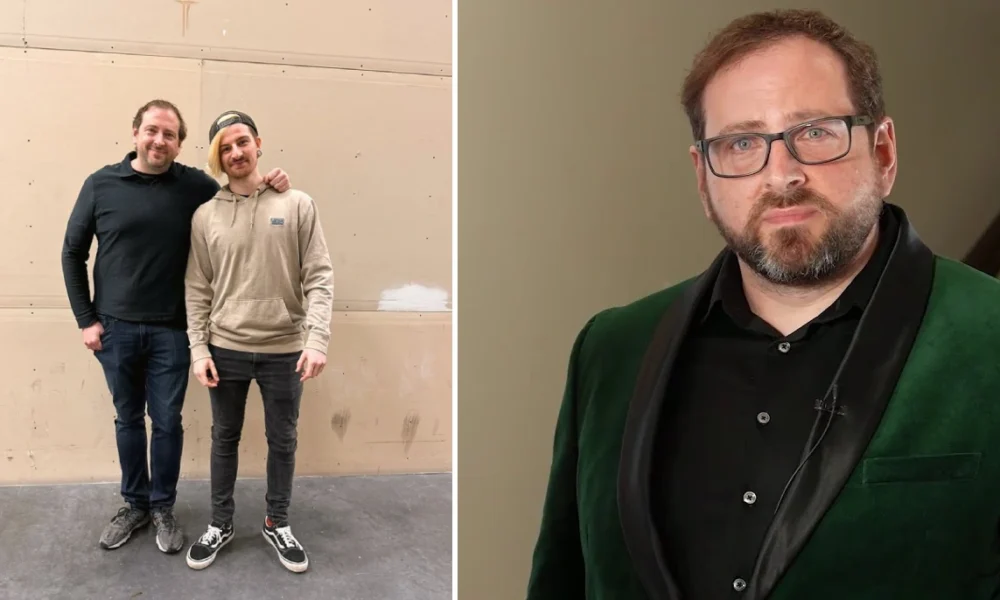
Scott Cawthon is an American video game developer with an estimated net worth between $70 million and $90 million as of 2025-2026. He created the Five Nights at Freddy’s (FNAF) horror franchise in 2014, which became a global phenomenon spanning video games, merchandise, novels, and theatrical films. As an independent developer who retained full ownership of his intellectual property, Cawthon captured substantially higher profit margins compared to studio-backed developers, building his fortune primarily through Steam, mobile platforms, licensing agreements, and media adaptations.
Table Of Content
- Who is Scott Cawthon?
- Early Career and Background
- The Turning Point: Chipper & Sons Lumber Co.
- Five Nights at Freddy’s Creation and Viral Success
- Scott Cawthon Net Worth Breakdown
- Video Game Sales
- Merchandise and Licensing Deals
- Book Publishing
- Film Adaptation Revenue
- Platform Revenue Distribution
- Development Process and Technical Details
- Career Milestones and Franchise Expansion
- Retirement and Controversy
- Personal Life and Family
- Social Media and Community Engagement
- Impact on Independent Game Development
- Current Net Worth Trajectory
- Conclusion
Who is Scott Cawthon?
Scott Braden Cawthon, born June 4, 1978, in Houston, Texas, is the creator of the Five Nights at Freddy’s survival horror franchise. Before achieving mainstream success, he spent over a decade developing Christian-themed animations and family-oriented games through Hope Animation, earning minimal income from these projects. His career shifted dramatically when critical feedback about unsettling character designs inspired him to create an intentionally frightening game, leading to FNAF’s release and commercial breakthrough.
Early Career and Background
Cawthon discovered game development at age 13 when his mother purchased Klik & Play, a game creation program that came on four floppy disks. He created his first game, Doofas, during his teenage years while experimenting with the software on a 60 MHz Acer computer with 8 MB of RAM.
After attending The Art Institute of Houston in 1996, Cawthon learned computer graphics and animation but taught himself game programming. He used Clickteam Fusion (the evolved version of Klik & Play) and Autodesk 3ds Max for 3D modeling throughout his career. Before FNAF, Cawthon worked retail jobs at Family Dollar and Target to support himself while developing indie games that generated only $40-50 monthly.
His early portfolio included Christian media projects like The Pilgrim’s Progress (an eight-part animated series released in 2007) and games such as RPG Max, The Desolate Hope, and Sit N’ Survive. None achieved commercial success.
The Turning Point: Chipper & Sons Lumber Co.
In the early 2010s, Cawthon released Chipper & Sons Lumber Co., a family-friendly resource management game featuring anthropomorphic beaver characters running a lumber business. Critics described the characters as unnaturally stiff and disturbing, with one reviewer noting they looked like “scary animatronic animals.”
This harsh reception pushed Cawthon into depression. He questioned his career choice and experienced a crisis of faith, even expressing suicidal thoughts to his doctor. When his life insurance policy was cancelled after the insurer learned of these statements, Cawthon hit rock bottom. He later recalled thinking, “Now even my death had no value.”
Rather than abandoning game development, Cawthon reframed the criticism. If unintentionally creepy characters could disturb players, he reasoned that deliberately designing frightening animatronics for a horror game might succeed. This insight became the foundation for Five Nights at Freddy’s.
Five Nights at Freddy’s Creation and Viral Success
Cawthon developed the first FNAF game entirely alone using Clickteam Fusion 2.5 for programming and Autodesk 3ds Max for character modeling. He submitted the game to Steam Greenlight in June 2014, followed by submissions to IndieDB and Desura, where it gained traction.
The game was released on Steam on August 8, 2014, priced at $4.99. Mobile versions followed quickly: iOS on September 11 and Android on August 27. Cawthon noted in interviews that iOS became his most profitable platform, with Steam close behind, while Android surprisingly underperformed.
FNAF introduced minimalist horror mechanics: players assumed the role of a night security guard at a defunct pizza restaurant, monitoring security cameras and managing limited power while avoiding hostile animatronic characters. The game’s jump scares, atmospheric tension, and hidden lore embedded in environmental details created sustained player engagement.
YouTube and Twitch drove the game’s viral spread. Content creators like Markiplier shared reaction videos, with the game’s jump scares generating millions of views. This organic promotion accelerated FNAF’s visibility without traditional marketing expenditure. Cawthon acknowledged that YouTube Let’s Play videos played a significant role in the franchise’s explosive growth.
Scott Cawthon Net Worth Breakdown
Scott Cawthon’s net worth reached an estimated $70-90 million by 2024-2025, accumulated through multiple revenue streams within the FNAF ecosystem.
| Year | Estimated Net Worth |
|---|---|
| 2017 | $25 million |
| 2018 | $30 million |
| 2019 | $35 million |
| 2020 | $60 million |
| 2021 | $70 million |
| 2024 | $70 million |
| 2025 | $90 million |
Video Game Sales
The FNAF series includes nine main entries and four spin-offs developed by Cawthon between 2014 and 2021. Estimated sales figures and revenue per title:
- Five Nights at Freddy’s: 1.5 million copies, $15 million
- Five Nights at Freddy’s 2: 2.5 million copies, $25 million
- Five Nights at Freddy’s 3: 3.5 million copies, $35 million
- Five Nights at Freddy’s 4: 4.5 million copies, $45 million
- Sister Location: 1.5 million copies, $15 million
- Freddy Fazbear’s Pizzeria Simulator: 1 million copies, $10 million
- Ultimate Custom Night: 1.5 million copies
The first game alone sold over 10 million copies on Steam. Multiple sources report Cawthon earned over $20 million from game sales. The franchise generated an estimated $500 million in total revenue since its inception.
As an independent developer using Clickteam Fusion, Cawthon retained full intellectual property rights. This meant he received the majority of digital sales revenue after platform fees from Steam, iOS App Store, Google Play, Xbox, and PlayStation marketplaces, without sharing profits with publishers or development studios.
Merchandise and Licensing Deals
FNAF merchandise became a significant income source. Products include action figures, plush toys, apparel, Halloween costumes, board games, and collectibles. Retailers like Hot Topic, Target, and GameStop carried official products. Over 1 million merchandise units sold, generating $10 million in revenue.
Licensing agreements with companies like Funko (for collectible figures) and various apparel manufacturers generated royalty payments based on product sales. The franchise’s recognizable animatronic characters made it attractive for licensing across multiple product categories.
Book Publishing
Cawthon co-authored a series of novels with writer Kira Breed-Wrisley, expanding FNAF’s narrative universe. Published by Scholastic Inc., the books include:
- Five Nights at Freddy’s: The Silver Eyes (December 2015)
- The Twisted Ones
- The Fourth Closet
Scholastic released an audiobook version of The Silver Eyes on October 5, 2016. The novel ranked as a New York Times bestseller. Cawthon published 25 books total inspired by the games, including companion guides and character encyclopedias, generating substantial book royalties.
Film Adaptation Revenue
Blumhouse Productions partnered with Cawthon to produce a theatrical adaptation. Initially, Warner Bros. acquired film rights in April 2015, with director Christopher Columbus attached, but the project stalled for years. Cawthon was highly protective of the story and screenplay, lengthening development. Blumhouse eventually took over production.
Five Nights at Freddy’s (2023), directed by Emma Tammi, opened with $80 million domestically and $52.6 million internationally for a global debut of $132.6 million. The film was produced on a budget of $20-25 million. It became:
- Blumhouse’s largest opening weekend ever
- Blumhouse’s highest-grossing film of all time, surpassing Split ($278.5 million)
- The highest-grossing horror film of 2023, beating The Nun II and M3GAN
Final box office: approximately $291 million globally. The film was simultaneously released on Peacock streaming, becoming the platform’s most-watched title ever. Despite a day-and-date release, the film generated an estimated $161 million in profits.
Cawthon co-wrote the screenplay and served as producer, earning backend participation and profit-sharing. He attended theatrical screenings incognito to witness audience reactions, later stating the film “succeeded beyond my wildest dreams.”
Five Nights at Freddy’s 2 (2025), also directed by Emma Tammi with Cawthon as screenwriter and producer, opened to $64 million domestically and $46 million internationally ($109 million global debut). Produced on a $36 million budget, the sequel remained highly profitable despite a lower opening compared to the first film.
Platform Revenue Distribution
According to Cawthon’s interviews, revenue distribution across platforms ranked:
- iOS (most profitable)
- Steam (close second)
- Android (surprisingly lowest)
This platform hierarchy influenced his porting strategy, with iOS releases prioritized for maximum revenue capture.
Development Process and Technical Details
Cawthon developed FNAF games solo using Clickteam Fusion 2.5, a 2D game engine. He created 3D character models and environments in Autodesk 3ds Max, then rendered them as 2D images for use in Clickteam. This workflow allowed him to create visually sophisticated games within a 2D engine’s limitations.
In interviews, Cawthon explained: “I know Fusion like the back of my hand, which is wonderful. When you know the tools, then you can concentrate on game creation!” He briefly considered learning Unity but realized it would take years to match his proficiency in Clickteam Fusion.
The first FNAF game was developed over approximately six months. Cawthon described his process as improvisational: “Nothing is ever written (aside from the scripts for ‘phone guy’). I usually just get an idea for a game and then toss and turn in bed about it until finally I just start working.”
For sound design, Cawthon purchased most sound effects and music from stock libraries, then created custom audio. He discovered that sound channel manipulation in Clickteam Fusion significantly enhanced the horror atmosphere.
Career Milestones and Franchise Expansion
The FNAF franchise earned a Guinness World Record for “most video game sequels in a single year” for games released between August 2014 and June 2015, demonstrating Cawthon’s rapid development pace.
Starting in 2019, Cawthon partnered with Steel Wool Studios to develop newer entries like Five Nights at Freddy’s: Help Wanted (VR) and Security Breach (open-world). Clickteam LLC handled console and mobile ports for the original games, releasing them on PlayStation 4, Xbox One, and Nintendo Switch on November 29, 2019.
In August 2020, Cawthon announced the Fazbear Fanverse Initiative, funding and publishing FNAF fan games developed by community creators. This program supported indie developers while expanding the franchise universe.
Retirement and Controversy
On June 16, 2021, Cawthon announced his retirement from active game development via his website, citing a desire to spend more time with his family. The announcement followed controversy when his political donations to Republican candidates became public, leading to online criticism, doxing, and harassment.
Despite stepping back, Cawthon retained ownership of the FNAF intellectual property and continued earning royalties from ongoing franchise activity. He remains involved as a producer and screenwriter for film adaptations, but no longer develops games.
Personal Life and Family
Cawthon lives in Salado, Texas, with his wife and six children. Two of his sons are named Ian Cawthon and Braden Cawthon. Braden is an author, keeping creativity running in the family. Cawthon maintains a private lifestyle, rarely sharing personal details publicly.
A devout Christian, Cawthon created animated films and games based on Christian principles before transitioning to horror. In 2019, he created a special charity game for a St. Jude Children’s Research Hospital fundraiser hosted by MatPat (Game Theory), which was streamed with Markiplier and Dawko.
Social Media and Community Engagement
Cawthon maintains a YouTube channel with over 2 million subscribers, where he posts game trailers, teasers, and announcements. He communicates with fans through Reddit, Steam forums, and his official website Scottgames.com.
Despite his wealth, Cawthon maintains a modest lifestyle focused on family and creative projects, avoiding the spotlight. He does not maintain an active presence on Twitter or other mainstream social media platforms.
Impact on Independent Game Development
Scott Cawthon’s success demonstrated the financial viability of solo indie game development. FNAF proved that developers using accessible tools like Clickteam Fusion could achieve commercial success comparable to studio-produced titles without external funding, publishers, or venture capital.
His approach influenced subsequent indie developers to pursue niche horror genres and rely on community-driven marketing through YouTube and Twitch rather than traditional advertising. The financial model—retaining intellectual property ownership, self-publishing across multiple platforms, and expanding into merchandise and media adaptations—became a template for indie developer success.
Cawthon’s story, from struggling developer earning $40 monthly to multi-millionaire creator within a single year resonated throughout the indie game community, inspiring developers to persist through early failures.
Current Net Worth Trajectory
Scott Cawthon’s net worth continues growing passively through:
- Ongoing sales of existing FNAF games across Steam, iOS, Android, PlayStation, Xbox, and Nintendo Switch
- Merchandise royalties from licensed products sold globally
- Book royalties from Scholastic publications
- Film revenue from theatrical releases and streaming distribution on Peacock
- Potential sequels and media expansions
The franchise’s sustained popularity, particularly among younger audiences, ensures continued revenue generation even without Cawthon’s active involvement in game development. Industry analysts expect his net worth to exceed $100 million if additional FNAF films achieve similar box office performance.
Conclusion
Scott Cawthon’s journey from struggling indie developer to multi-millionaire is nothing short of inspiring. His estimated net worth of $70 million is a testament to his creativity, perseverance, and smart business decisions. Through Five Nights at Freddy’s, Cawthon not only built a financial empire but also left a lasting mark on the gaming industry.
For aspiring developers and entrepreneurs, Cawthon’s story is a reminder that success often comes from turning challenges into opportunities. With the right idea and determination, anyone can achieve their dreams—just like Scott Cawthon did.