

Signs Your Siding Is Worn Out and Needs Replacement
Siding serves as your home’s first line of defense against weather, moisture, and pests while defining its exterior appearance. This protective layer endures constant exposure to rain, snow, UV rays, and temperature fluctuations, gradually losing its effectiveness over time.
Table Of Content
- 10 Warning Signs Your Siding Is Worn Out
- 1. Cracks, Holes, and Visible Damage
- 2. Warping, Buckling, or Sagging Panels
- 3. Bubbling or Blistering Surface
- 4. Peeling or Chipping Paint
- 5. Severe Fading or Color Loss
- 6. Mold, Mildew, or Fungus Growth
- 7. Rot or Soft Spots
- 8. Rising Energy Bills
- 9. Interior Water Damage Signs
- 10. Loose or Missing Panels
- Vinyl vs Fiber Cement: Material Comparison
- Durability and Weather Resistance
- Lifespan and Longevity
- Fire Resistance
- Maintenance Requirements
- Cost Considerations
- Aesthetic Options
- When to Repair vs Replace
- Professional Inspection Benefits
Recognizing when siding has reached the end of its useful life protects your home from costly structural damage and maintains property value. Minor issues like small cracks may only require targeted repairs, but widespread deterioration signals the need for complete replacement. Understanding the warning signs helps homeowners make informed decisions before minor problems escalate into expensive repairs.
10 Warning Signs Your Siding Is Worn Out
1. Cracks, Holes, and Visible Damage
Even small cracks create entry points for moisture infiltration, allowing water to penetrate the protective layer and reach the underlying structure. Walk around your home’s perimeter to inspect for chips, splits, or holes. These openings invite pests like termites and carpenter ants while exposing sheathing to water damage.
Use a screwdriver to gently probe suspicious areas. If the material beneath feels soft or spongy rather than solid, moisture has already compromised the structure.
2. Warping, Buckling, or Sagging Panels
Warped siding indicates water has penetrated behind the panels, causing the material to expand and contract. Buckling occurs when panels bend outward due to trapped moisture or improper installation. This distortion breaks the watertight seal, allowing additional water intrusion and accelerating deterioration.
Sagging panels suggest the fasteners have loosened or the underlying structure has weakened from rot. These issues require immediate professional inspection to assess the extent of hidden damage.
3. Bubbling or Blistering Surface
Blisters and bubbles beneath the siding surface reveal trapped moisture between layers. This condition means the waterproofing has failed and water is accumulating where it cannot escape. The trapped moisture creates ideal conditions for mold growth and wood rot in the wall cavity.
Bubbling typically appears after periods of high heat or humidity. If left unaddressed, the moisture damage extends to insulation and framing members.
4. Peeling or Chipping Paint
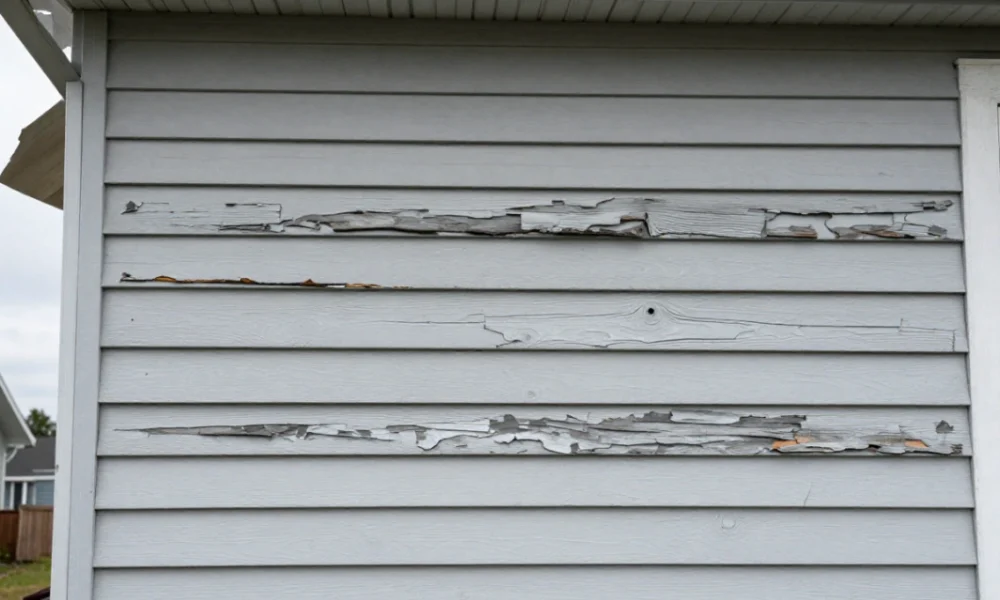
Quality siding should hold paint for 8-10 years under normal conditions. If paint peels, chips, or requires repainting every 3-6 years, the problem lies with the siding material rather than the paint itself. Frequent paint failure indicates the surface can no longer provide adequate adhesion.
Paint serves as a protective seal against moisture penetration. When this barrier breaks down, the exposed material absorbs water like a sponge, leading to accelerated deterioration.
5. Severe Fading or Color Loss
While some fading from sun exposure is normal, extreme or uneven discoloration signals that the protective finish has broken down. When siding loses its weatherproofing capabilities, it becomes less effective at repelling water and withstanding the elements.
Severely faded siding has likely exceeded its expected lifespan and no longer performs as designed. This condition often precedes more serious issues like moisture penetration and structural damage.
6. Mold, Mildew, or Fungus Growth
Occasional algae in shaded areas is common and easily cleaned. However, mold or mildew growing near seams, or large areas of fungal growth indicate ongoing moisture problems. These organisms thrive in damp conditions, revealing that water is accumulating behind or within the siding.
Mold poses health risks, including respiratory issues and allergies. If growth returns repeatedly after cleaning, the moisture source must be eliminated through siding replacement.
7. Rot or Soft Spots
Wood siding is particularly vulnerable to rot when moisture penetrates the surface. Dry rot occurs when fungi attack the wood fibers, causing them to deteriorate. Early stages show discoloration and slight warping, while advanced rot appears as soft, crumbly material that flakes when touched.
Test suspected areas with a screwdriver or firm pressure. If the surface gives way or feels spongy, rot has compromised the structural integrity. Vinyl siding itself won’t rot, but trapped moisture behind it causes the wood sheathing underneath to decay.
8. Rising Energy Bills
Damaged or aging siding reduces insulation performance, forcing HVAC systems to work harder to maintain indoor temperatures. Gaps, cracks, or warped panels allow heated and cooled air to escape while letting outdoor air infiltrate.
If energy costs have increased significantly after ruling out attic leaks, drafty windows, and insulation issues, compromised siding may be the culprit. The constant air exchange makes it difficult to maintain comfortable temperatures year-round.
9. Interior Water Damage Signs
Failing siding often reveals itself through interior symptoms before exterior problems become obvious. Peeling wallpaper, bubbling paint on interior walls, or soft drywall indicate moisture is penetrating from the outside. Water stains on walls or ceilings near exterior walls point to siding failure.
Check windowsills for cracks or soft spots. Compromised sills allow water to infiltrate wall cavities, potentially causing mold growth and damage to electrical systems if outlets are nearby. Interior moisture problems demand immediate attention to prevent extensive structural damage.
10. Loose or Missing Panels
Panels that have separated from the house or are entirely missing leave the underlying structure exposed to weather and pests. This condition results from failed fasteners, storm damage, or deteriorated attachment points.
Protruding nails suggest moisture has reached interior studs, causing them to swell and push fasteners outward. Sunken nails indicate the siding itself is swelling from water absorption. Both scenarios require professional assessment.
Vinyl vs Fiber Cement: Material Comparison
When replacing worn siding, understanding material differences guides the selection process.
Durability and Weather Resistance
Fiber cement siding withstands extreme weather conditions, including high winds, hail, and temperature fluctuations. Its composition of cement, sand, and cellulose fibers provides impact resistance and structural stability. This material maintains its integrity in harsh climates where other options fail.
Vinyl siding offers good moisture resistance but becomes brittle in extreme cold and can warp under intense heat. UV exposure causes gradual fading and weakens the material over time. While vinyl performs adequately in moderate climates, it lacks the resilience of fiber cement in challenging conditions.
Lifespan and Longevity
Fiber cement siding lasts 30-50 years with proper maintenance, offering exceptional long-term value. The material’s solid construction preserves its protective qualities throughout decades of service.
Vinyl siding typically requires replacement after 20-30 years. In regions with intense sun exposure, deterioration can begin showing after just 10-15 years. The shorter lifespan means more frequent replacement cycles.
Fire Resistance
Fiber cement carries a Class 1(A) fire rating and will not ignite when exposed to direct flame. This fire resistance provides crucial protection in wildfire-prone areas and improves overall home safety.
Vinyl siding is more fire-resistant than wood but can still catch fire at high temperatures. The material may melt or release fumes when exposed to extreme heat.
Maintenance Requirements
Vinyl siding demands minimal upkeep beyond occasional cleaning with soap and water. However, damaged panels require replacement, and color matching becomes difficult as existing siding fades over time.
Fiber cement requires repainting every 10-20 years to maintain appearance and protective coating. Regular caulking inspection and sealing prevent moisture infiltration. Despite higher maintenance needs, fiber cement’s durability reduces long-term repair frequency.
Cost Considerations
Vinyl siding costs $3-8 per square foot installed, making it the more affordable option. Labor costs are lower due to lightweight materials and straightforward installation.
Fiber cement ranges from $6-13 per square foot installed. The material weighs significantly more than vinyl (300 pounds vs 60-70 pounds per 100 square feet), requiring specialized tools and experienced installers. Despite higher initial investment, fiber cement recoups approximately 77.6% of costs at resale compared to vinyl’s 74.7%.
Aesthetic Options
Fiber cement offers superior texture depth and authentic wood-like appearance through deep embossing. The material accepts paint well and provides extensive customization options, including smooth, grooved, stucco, and wood grain finishes.
Vinyl comes in numerous colors and styles with improved textures that mimic natural materials. However, the thinner profile limits embossing depth, creating a less realistic wood appearance. Color options are extensive, though fading over time requires eventual replacement rather than repainting.
When to Repair vs Replace
Minor localized damage affecting only a few panels can often be patched or replaced selectively. If the majority of siding remains in good condition and maintains its protective qualities, targeted repairs extend its functional life.
Complete replacement becomes necessary when multiple warning signs appear simultaneously, when damage is widespread, or when the siding has exceeded its expected lifespan. Moisture infiltration that has reached framing or insulation requires full replacement to prevent ongoing structural damage.
Frequent repairs indicate systemic failure rather than isolated incidents. In these cases, replacement proves more cost-effective than continued patchwork fixes.
For those considering broader home updates, exploring affordable makeover ideas can complement exterior improvements. When handling any renovation work, following proper safety protocols protects against common injuries.
Professional Inspection Benefits
Contractors identify hidden damage beneath the surface that homeowners cannot detect during visual inspections. They assess whether moisture has compromised sheathing, framing, or insulation, providing accurate cost estimates for necessary repairs.
Professional evaluation determines if problems stem from poor installation, material failure, or normal aging. This information guides the decision between repair and replacement while ensuring new siding receives proper installation that prevents future issues.
Seasonal inspections, particularly in spring after winter weather and fall before harsh conditions arrive, catch developing problems before they require extensive remediation.
Worn siding compromises your home’s protection against moisture, pests, and energy loss while diminishing curb appeal and property value. Recognizing warning signs early prevents expensive structural damage and allows for planned replacement rather than emergency repairs. Whether selecting durable fiber cement or cost-effective vinyl, addressing siding failure promptly protects your investment and maintains home comfort for years ahead.