

The Art of Crafting a Perfect Coat: From Concept to Creation
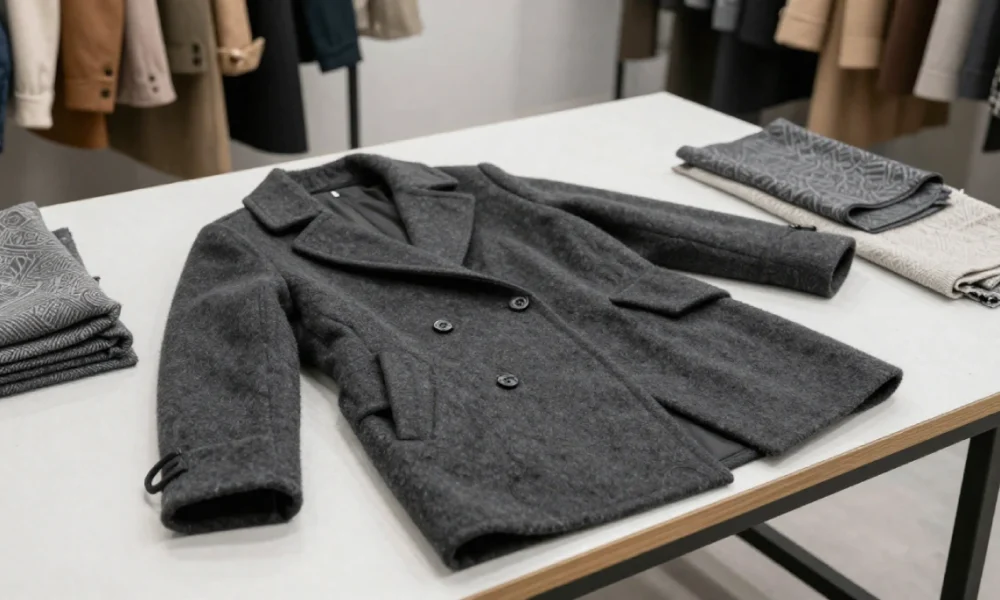
Producing a well-made coat is one of the more demanding processes in apparel manufacturing. For wholesalers, brand owners, and distributors, mastering each stage — from initial concept through to finished outerwear — directly affects product quality, customer satisfaction, and margins. This guide walks through every critical step in the coat manufacturing process, with practical detail on what separates competent production from genuinely high-quality outerwear.
Table Of Content
- Understanding Market Trends Before You Design
- Design and Technical Development
- 1. Sketching and Technical Drawings
- 2. Material Selection
- Pattern Making
- Manufacturing: Cutting, Assembly, and Finishing
- Cutting
- Assembly and Sewing
- Customization
- Quality Control
- Sustainability in Coat Manufacturing
- Bringing the Coat to Market
- Conclusion
Understanding Market Trends Before You Design
Sound market research is the starting point for any coat that will sell. Before committing to a silhouette or fabric, manufacturers and brand teams need a clear picture of where consumer demand is heading — across style, function, and price point.
Trend analysis should cover current outerwear silhouettes, dominant color directions, and material preferences. If demand is shifting toward technical outerwear with weather-resistant finishes, that shapes everything from fabric choice to hardware. If heritage-style wool overcoats are gaining traction in your target channel, the manufacturing specifications will look entirely different.
Target audience definition is equally important. Outerwear for urban commuters prioritizes packability and weather protection. Coats aimed at fashion-forward buyers emphasize silhouette and detailing. Outdoor performance wear demands waterproof membranes, sealed seams, and thermal insulation ratings. Knowing your buyer determines which design decisions are worth the cost and which are irrelevant to the end user.
When the product concept aligns with verified demand and a clearly defined customer, the likelihood of strong sell-through increases significantly.
Design and Technical Development
1. Sketching and Technical Drawings
The design phase moves from rough concept to manufacturable specification. Initial sketches establish the coat’s overall silhouette — length, fit, and the placement of functional elements like pockets, collar style, and closures. From these sketches, designers produce technical drawings, often called tech packs, which include precise measurements, seam placement, hardware specifications, and construction notes. These documents are what pattern makers and production teams actually work from, so their accuracy directly affects how closely the finished coat matches the original design intent.
Digital design tools have made this stage faster and more accurate. CAD-based pattern software allows for 3D visualization of the garment before any physical sample is cut, which reduces early-stage errors and speeds up revision cycles.
2. Material Selection
Fabric selection has a direct impact on cost, performance, and market positioning. Common coat fabrics include:
- Wool and wool blends — naturally insulating and breathable, well-suited for mid-weight and heavyweight coats. Merino wool offers finer texture; tweed provides structure and durability.
- Gabardine — a tightly woven wool-cotton blend that holds its shape well, often used in trench coats and overcoats.
- Nylon — lightweight and water-resistant, a practical shell fabric for performance-oriented outerwear.
- Polyester — versatile, low-maintenance, and resistant to shrinking; commonly used in linings and synthetic-fill coats.
- Fleece — used primarily as a lining, offering warmth without bulk and quick-drying properties.
Beyond aesthetics, fabric performance criteria — wind resistance, water repellency, breathability, and weight — should be evaluated against the coat’s intended use. A lining choice matters too: cupro and Bemberg are preferred in premium coats for breathability, while polyester linings are more cost-effective for mid-market products.
For insulation, the two main options are down (measured by fill power, with 700–900 fill power considered premium) and synthetic alternatives like PrimaLoft, which maintains warmth when wet and suits brands with sustainability or animal welfare commitments.
Pattern Making
Pattern making translates the design into the precise templates used for cutting fabric. This stage determines fit, silhouette consistency, and efficient material usage — all of which have downstream effects on cost and quality.
There are two main approaches:
- Manual drafting — skilled pattern makers create block patterns by hand using rulers, measuring tapes, and pattern paper. This method offers fine control and is well-suited to complex, bespoke, or small-batch production.
- Digital patterning — CAD software generates and modifies patterns on screen, enables virtual fitting simulations, and makes pattern storage and sharing straightforward. This is the standard approach for volume production.
Each pattern piece — front panels, back panels, sleeves, collar, facings — must include properly marked grainlines, notches, and seam allowances to ensure accurate cutting and assembly. Errors at this stage compound through every subsequent step.
Manufacturing: Cutting, Assembly, and Finishing
Cutting
Accurate cutting is essential. Fabric must be smoothed and properly aligned before cutting to avoid grain distortion. Automated cutting systems improve speed and consistency in volume production, while hand-cutting remains appropriate for natural materials like leather, which vary pelt to pelt and require more selective judgment.
Assembly and Sewing
The order of assembly matters. Core panels are typically joined first, followed by collar and detail work, with pressing and finishing at the end. Seam choice affects both durability and appearance:
- Plain seams — the standard; quick and clean for most applications.
- Flat-felled seams — used where strength is needed, such as side and shoulder seams in heavy outerwear.
- French seams — fully enclosed, used in unlined or lightweight garments for a clean interior finish.
- Bound seams (Hong Kong or bias-bound) — used inside unlined coats for a finished internal look.
Stitch density is a reliable quality indicator: 8–12 stitches per inch is the accepted range for premium outerwear, with bar-tacking at stress points like pocket mouths and buttonholes. Single-needle tailoring — more labor-intensive than double-needle — produces longer-lasting seams and is a mark of quality in higher-end production.
Customization
For B2B clients requiring branded outerwear, customization at the manufacturing stage can include embroidered logos, heat-transferred branding, custom lining prints, and proprietary color specifications. Hardware choices — zipper pulls, button types, snap closures — are also part of this phase. YKK zippers are widely recognized as a quality benchmark in the outerwear industry. Corozo buttons, made from natural tagua nut, are a preferred choice in premium and sustainable lines.
Quality Control
Quality control is not a single checkpoint — it runs throughout production. For coats reaching B2B buyers, consistent quality across a full production run is as important as the quality of any individual piece.
Inspection protocols should cover stitch regularity, seam tension, hardware function, lining attachment, and overall construction. Puckered seams indicate poor tension control; gaping buttonholes signal rushed execution. Coats intended for cold-weather use should meet minimum weight specifications — 600g or above for winter wool is a common benchmark.
Durability testing moves beyond visual inspection. Seam stress tests, waterproofing assessments (typically measured using the Hydrostatic Head test for technical fabrics), and wear-simulation across different body types all help identify weaknesses before a product goes to market. For custom or branded styles, any defect in fit or construction affects not just the individual coat but the brand it represents.
Sustainability in Coat Manufacturing
Sustainability has moved from a niche selling point to a baseline expectation in many market segments, particularly for brands selling into European and North American wholesale channels. Manufacturers are increasingly using recycled synthetic fills (such as recycled Thermore insulation), waterless dyeing processes, and bio-based material alternatives. Certification programs like GOTS (Global Organic Textile Standard) and bluesign provide third-party verification for brands making environmental claims. For B2B buyers, supplier transparency on material sourcing and production conditions is becoming a standard part of procurement evaluation.
Bringing the Coat to Market
Once a coat has passed quality control, the focus shifts to packaging, branding, and distribution.
Branding and packaging should reflect the product’s positioning. A premium wool overcoat warrants packaging and hangtags that communicate quality and care. A performance technical coat benefits from packaging that highlights weather-resistance ratings and functional features. Consistency between the product and its presentation builds trust with retail buyers and end consumers.
Distribution channel strategy determines how the product reaches its buyer. Direct-to-retailer, wholesale, and direct-to-consumer channels each have different margin structures, lead time requirements, and minimum order considerations. Choosing the right channel — or combination of channels — depends on the brand’s existing relationships, production capacity, and target price points.
Conclusion
Producing a coat that performs well in the market requires attention across every stage: market research, technical design, pattern engineering, fabric selection, precise manufacturing, and thorough quality control. Each decision compounds — a poorly chosen fabric undermines good construction; weak quality control wastes sound design work. For B2B firms, getting this process right is the difference between outerwear that moves through retail channels and product that sits. Whether the brief is a branded corporate jacket, a fashion-forward wool overcoat, or a technical performance coat, the fundamentals remain the same: start with verified demand, build to a clear specification, and hold quality standards through every step of production.