

Understanding Car Accidents: Causes, Types, Legal Rights, and Prevention Strategies
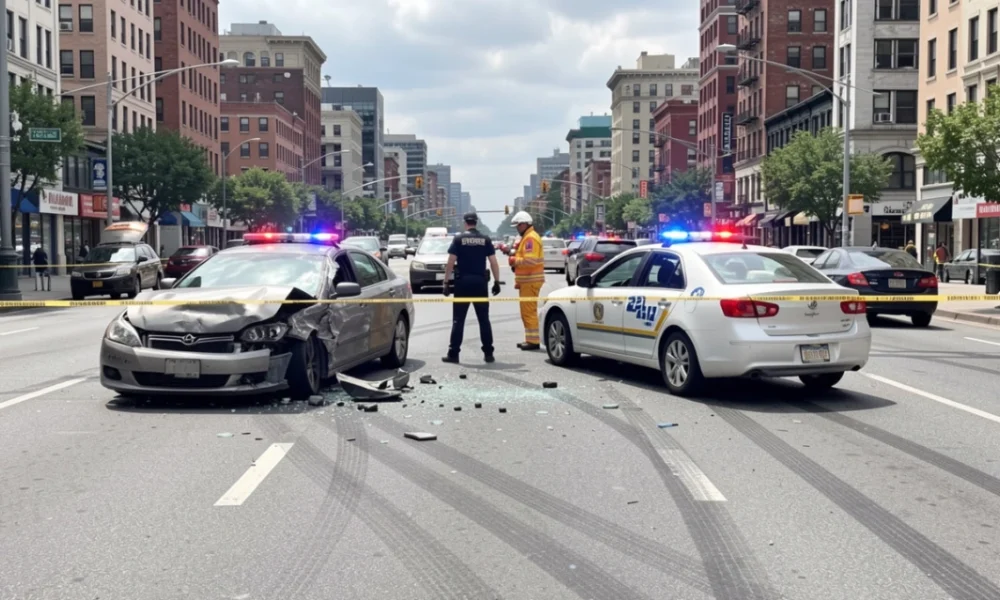
Car accidents represent urgent public safety crises that occur daily on roadways worldwide. According to the World Health Organization, approximately 1.3 million people die in road crashes annually—translating to 3,287 deaths every day. Yet data from the National Highway Traffic Safety Administration (NHTSA) reveals that human error contributes to 94% of serious crashes, meaning most accidents are preventable through better awareness and driving practices.
Table Of Content
- Common Types of Car Accidents
- Rear-End Collisions
- Side-Impact Crashes (T-Bone)
- Head-On Collisions
- Sideswipe Accidents
- Single-Vehicle Crashes
- Leading Causes of Road Collisions
- Distracted Driving
- Speeding
- Impaired Driving
- Weather-Related Hazards
- Vehicle Defects
- Driver Fatigue
- Legal Aspects of Car Accidents
- Personal Injury Claims
- Insurance Processes
- Documentation Requirements
- Impact on Victims and Families
- Physical Injuries
- Psychological Trauma
- Financial Burdens
- Family Impact
- Notable Car Accident Cases
- Prevention Strategies and Safety Measures
- Defensive Driving Techniques
- Advanced Driver-Assistance Systems (ADAS)
- Essential Safety Practices
- Teen Driver Considerations
- Conclusion
From distracted driving to vehicle defects like faulty airbags (exemplified by Takata recalls), the contributing factors are numerous and varied. When collisions occur at high speeds, consequences extend beyond property damage. The aftermath triggers a complex web of insurance claims, personal injury lawsuits, and legal proceedings that can reshape lives.
Recent 2025 data show encouraging progress—NHTSA reports an estimated 8.2% decline in roadway deaths during the first half of 2025 compared to 2024, with 17,140 fatalities recorded. Despite this improvement, these numbers remain unacceptably high, underscoring the continued need for comprehensive safety measures and driver education.
Common Types of Car Accidents
Understanding different collision types helps drivers recognize risks and respond appropriately. Each accident category presents distinct hazards and injury patterns.
Rear-End Collisions
These are the most frequent accident types, accounting for approximately 29% of all crashes according to NHTSA data. While they represent only 7.5% of fatal collisions, rear-end impacts commonly cause whiplash, spinal injuries, and traumatic brain injuries. These accidents typically occur when the following driver fails to maintain an adequate distance or becomes distracted. The three-second rule—maintaining at least three seconds of following distance—can significantly reduce rear-end collision risk.
Side-Impact Crashes (T-Bone)
Side-impact collisions occur when one vehicle’s front strikes another vehicle’s side, typically at intersections. These accidents are particularly dangerous because vehicle sides offer less protection than front or rear structures. Despite representing approximately 30% of crashes, side-impacts account for 45% of crash fatalities. Common causes include running red lights, failure to yield, and misjudging traffic signals.
Head-On Collisions
Though less common, head-on crashes are the deadliest collision type. According to the Insurance Institute for Highway Safety, head-on collisions accounted for nearly 11% of all fatal crashes in 2022. These accidents typically occur due to wrong-way driving, impaired driving, or crossing centerlines. The combined force of two vehicles traveling in opposite directions creates catastrophic impacts.
Sideswipe Accidents
Sideswipe collisions happen when parallel-traveling vehicles make contact. While comprising roughly 20% of crashes, they cause approximately 10% of accident injuries and 7.8% of deaths. These accidents frequently result from unsafe lane changes, failure to check blind spots, or drifting between lanes.
Single-Vehicle Crashes
These accidents involve only one vehicle colliding with fixed objects, rolling over, or running off the road. Weather conditions, driver fatigue, speeding, and loss of vehicle control are primary contributors.
Leading Causes of Road Collisions
Distracted Driving
Research indicates that distracted driving is the leading cause of car accidents in the United States. Texting while driving increases crash risk by 23 times. Activities like phone use, eating, adjusting controls, or multitasking divert critical attention from road conditions.
Speeding
Speeding contributes to nearly 29% of all traffic fatalities, according to NHTSA. Exceeding posted limits reduces reaction time and increases crash severity. When drivers travel faster, stopping distances lengthen and collision forces intensify dramatically.
Impaired Driving
Drunk driving accounts for one-third of traffic deaths in the United States. Driving under the influence of alcohol or drugs impairs judgment, slows reaction times, and creates false confidence. A blood alcohol concentration (BAC) of 0.08 or higher constitutes legal intoxication in most states.
Weather-Related Hazards
The National Safety Council recorded a 20% increase in weather-related deaths over recent years. Rain, ice, snow, fog, and sun glare reduce visibility and traction. Drivers must adjust speed and increase following distance during adverse conditions—doubling or tripling normal safe distances.
Vehicle Defects
Manufacturing flaws such as faulty airbags (Takata recalls) or defective ignition switches (GM’s 2014 scandal) can cause accidents even when drivers operate responsibly. These defects often trigger large-scale recalls and product liability lawsuits.
Driver Fatigue
Drowsy driving causes approximately 824 deaths annually, though actual numbers may be significantly higher. Studies suggest up to 1.2 million crashes could involve drowsy driving each year. Truck driver fatigue is particularly concerning given the commercial vehicle size and weight.
Legal Aspects of Car Accidents
Establishing fault is critical in accident claims. States apply different liability standards:
- Fault-based states: The at-fault driver’s insurance covers damages
- No-fault states: Each driver’s insurance pays their medical expenses regardless of fault
- Comparative negligence states that courts divide fault percentages between parties, reducing compensation proportionally
- Contributory negligence states: Even 1% fault can bar recovery entirely
Negligence claims require proving four elements: duty of care, breach of that duty, causation linking the breach to injuries, and measurable damages.
Personal Injury Claims
Victims not at fault may file personal injury lawsuits to recover:
- Medical expenses (emergency care, surgeries, rehabilitation, prescriptions)
- Lost wages and diminished earning capacity
- Property damage
- Pain and suffering
- Emotional distress
Insurance Processes
After accidents, insurance companies investigate claims through adjusters who evaluate damage, interview parties, and determine payouts. Key insurance concepts include:
- Subrogation: The insurer’s right to recover paid amounts from at-fault parties
- Collision coverage: Pays for vehicle damage regardless of fault
- Comprehensive coverage: Covers non-collision damage (theft, weather, vandalism)
- Uninsured/underinsured motorist coverage: Protects when at-fault drivers lack adequate insurance
Documentation Requirements
Preserving evidence strengthens claims significantly. Essential documentation includes:
- Accident scene photographs
- Police reports
- Medical records and bills
- Witness statements
- Dash camera footage
- Expert accident reconstructions
Impact on Victims and Families
Physical Injuries
The Centers for Disease Control reports that 2.1 million people visit emergency rooms annually due to car crash injuries. Common injuries include:
- Traumatic brain injuries (TBIs): Affecting cognitive function, behavior, and physical abilities
- Spinal cord damage: Potentially causing partial or complete paralysis
- Whiplash: Affecting 20% of crash survivors with chronic pain
- Broken bones: Ranging from simple fractures to compound breaks requiring extensive surgery
- Internal bleeding and organ damage
- Facial injuries and lacerations
Research indicates that 20% of crash survivors experience chronic pain requiring ongoing treatment.
Psychological Trauma
Mental health impacts are equally devastating. Post-traumatic stress disorder (PTSD), anxiety, and depression commonly follow serious accidents. Many victims develop driving phobias or experience flashbacks and panic attacks.
Financial Burdens
Medical bills accumulate rapidly, especially for severe injuries requiring lifelong care. The American Traffic Safety Services Association estimates serious car accidents generate $460 billion in direct economic costs. When victims cannot work, families face compound financial stress from medical expenses and lost income simultaneously.
Family Impact
Families often transition into caregiver roles overnight, managing hospital visits, rehabilitation appointments, and household responsibilities. This caregiving strain affects family dynamics, employment, and emotional well-being.
Despite these challenges, many survivors find unexpected resilience. Support groups and counseling provide critical assistance, while some accident victims become passionate road safety advocates, transforming personal tragedy into community protection efforts.
Notable Car Accident Cases
High-profile accidents often drive systemic changes in vehicle safety standards and regulations. Paul Walker’s 2013 Porsche crash sparked debates about performance vehicle safety standards, while Tracy Morgan’s 2014 collision led to strengthened trucking regulations and hours-of-service rules.
These cases demonstrate how individual tragedies can catalyze improvements in laws, vehicle design, and public awareness about road safety:
- Claire Bonga Car Accident
- Ethan Hall Car Accident
- Alfred Valles Car Accident
- Alana Factor Car Accident
- Rico Wade Car Accident
- Lil Tay Car Accident
- Michael Doggett Car Accident
- Clayton Hughes Car Accident
- Kylie Roberto Car Accident
- Russell Jankowski Car Accident
- Julia Black Car Accident
- Brittany Johns Car Accident
- Sarah Rocco Keller Williams Car Accident
- Reed Rohlman Car Accident
- Jake Navarro Car Accident
- Dan Bongino’s Wife’s Accident
Prevention Strategies and Safety Measures
Defensive Driving Techniques
Defensive driving anticipates potential hazards and prepares appropriate responses. Key principles include:
- Maintain safe following distances: Apply the three-second rule in normal conditions, increasing to five or six seconds in adverse weather
- Scan ahead constantly: The Federal Motor Carrier Safety Administration recommends scanning approximately 15 seconds ahead (quarter-mile on highways)
- Anticipate other drivers’ actions: Never assume others will follow rules or signal intentions
- Keep escape routes available: Always identify alternative paths if situations deteriorate rapidly
- Make yourself visible: Drive with headlights on during rain or reduced visibility; use turn signals consistently
Advanced Driver-Assistance Systems (ADAS)
Modern vehicles incorporate technology designed to prevent collisions before they occur:
- Automatic Emergency Braking (AEB): Detects potential collisions and applies brakes autonomously
- Lane Departure Warning and Lane Keep Assist: Alerts drivers when drifting and provides steering corrections
- Blind Spot Monitoring: Warns when vehicles occupy hard-to-see areas
- Adaptive Cruise Control: Maintains safe following distances automatically
- Driver Monitoring Systems: Tracks attention levels and alerts drowsy or distracted drivers
While ADAS features contribute to declining fatality rates, they cannot replace attentive, responsible driving. Drivers must remain engaged regardless of available technology.
Essential Safety Practices
- Always wear seat belts—they reduce death risk by 45% and injury risk by 50% in front seats
- Never drive impaired by alcohol, drugs, or medications affecting alertness
- Eliminate distractions by silencing phones and avoiding eating, grooming, or other activities
- Obey speed limits and adjust speed for conditions
- Perform regular vehicle maintenance on brakes, tires, lights, and windshield wipers
- Take breaks every two hours on long drives to combat fatigue
- Adjust driving for weather—slow down and increase following distance
- Exercise caution in work zones and school zones
- Watch carefully for pedestrians and cyclists
- Stay calm and avoid aggressive driving or road rage
- Carry emergency equipment (flashlight, flares, first-aid kit)
- Understand graduated driver licensing programs for teen drivers
Teen Driver Considerations
Teenagers aged 16-19 face the highest accident rates among all age groups. In 2022, 2,883 teens died in crashes, with unintentional injuries from accidents representing the leading cause of death for this demographic. Teen driver fatalities involving speeding reached 43% from 2015-2019. Graduated driver licensing programs that restrict nighttime driving and passenger numbers have proven effective in reducing teen crash rates.
Conclusion
Understanding car accidents requires examining multiple dimensions—from causes and collision types to legal processes and prevention strategies. While recent statistics show encouraging progress with an 8.2% decline in fatalities during early 2025, ongoing vigilance remains critical.
Every driver carries responsibility for themselves, passengers, and others sharing the road. Knowledge about accident causes, awareness of legal rights, and commitment to prevention strategies create safer roadways for everyone. Defensive driving techniques, combined with modern safety technologies and consistent rule-following, significantly reduce accident risk.
Support community safety initiatives, including school zone speed cameras, sobriety checkpoints, and infrastructure improvements. Advocate for vehicle safety innovations such as mandatory automatic emergency braking systems. Always buckle up.
If accidents occur despite precautions, stay calm, document everything thoroughly, prioritize medical attention, and consult legal professionals when needed to protect your rights and secure appropriate compensation.