

What a Laser Scanning Dimensional Control Design Engineer Does and Why It Matters
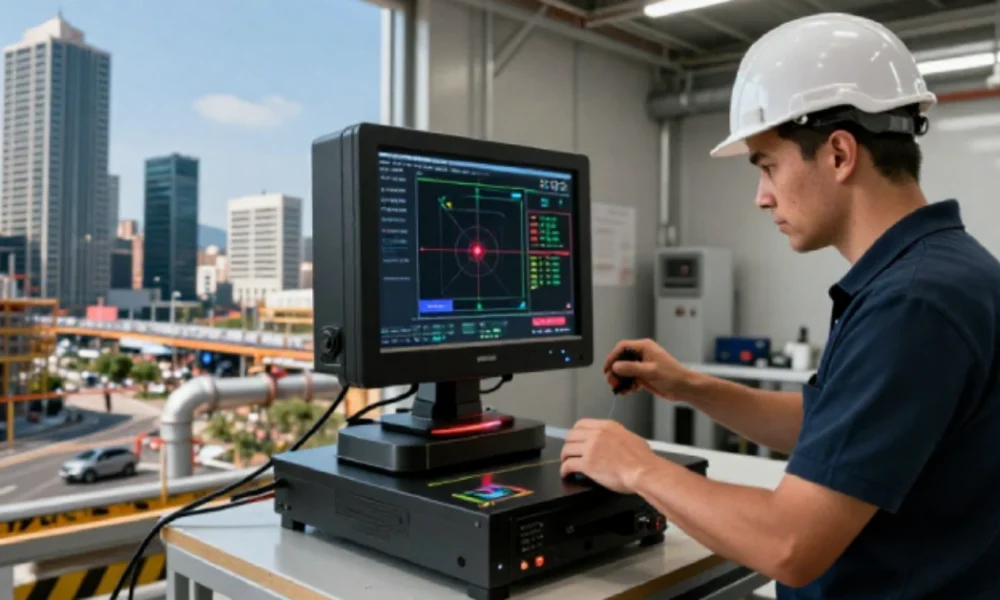
Modern engineering projects leave no margin for measurement error. From offshore pipeline installations to high-rise renovations, even a few millimeters of deviation can force costly rework, delay schedules, or compromise structural safety. This is the environment in which a laser scanning dimensional control design engineer operates.
Table Of Content
- What Is a Laser Scanning Dimensional Control Design Engineer?
- How 3D Laser Scanning Works
- The Role of Dimensional Control in Engineering Projects
- Key Industries and Applications
- Oil, Gas, and Energy
- Construction and Architecture
- Manufacturing and Quality Control
- Automotive and Aerospace
- Healthcare and Medical Devices
- Outputs and File Formats
- Market Growth and Technology Trends
- Safety and Infrastructure Maintenance
- Accuracy Standards and Professional Practice
- Frequently Asked Questions
- What is a laser scanning dimensional control design engineer?
- How accurate is 3D laser scanning?
- What is the difference between laser scanning and dimensional control?
- What industries use dimensional control engineering most?
- What software do dimensional control engineers use?
- How long does a scanning project take?
These professionals combine field survey expertise with advanced 3D metrology tools to capture precise as-built conditions, validate designs against real-world geometry, and support every phase of a project’s lifecycle — from FEED (front-end engineering design) through construction and ongoing maintenance.
What Is a Laser Scanning Dimensional Control Design Engineer?
A laser scanning dimensional control design engineer specializes in capturing accurate spatial data from physical environments using LiDAR (Light Detection and Ranging) systems, laser trackers, and high-definition surveying (HDS) equipment. The captured data takes the form of a point cloud — a dense collection of millions of X, Y, and Z coordinate measurements that together represent the exact geometry of a structure, facility, or component.
These engineers are responsible for more than just operating scanning hardware. Their work spans:
- Planning and executing field scanning campaigns
- Establishing survey control networks to ensure scan registration accuracy
- Processing and cleaning raw point cloud data using specialist software such as Autodesk ReCap, FARO Scene, or InnovMetric PolyWorks
- Producing as-built CAD drawings, 3D BIM models, or IFC datasets for downstream engineering use
- Performing critical interface fit-up checks and clash analysis between design models and existing conditions
- Supporting dimensional inspection against geometric tolerancing requirements
True dimensional control goes beyond laser scanning alone. It combines scan data with conventional survey control techniques — total station measurements, photogrammetry, and UAV-based capture — to produce results that are fully auditable and verified as fit for purpose.
How 3D Laser Scanning Works
A laser scanner emits rapid pulses of laser light across a scene. Each pulse reflects off a surface and returns to the sensor. By measuring the time of flight or phase shift of the returning signal, the scanner calculates precise distances to thousands of points per second.
When multiple scan positions are registered together into a single coordinate system, the result is a dense point cloud that represents every visible surface in three dimensions. Depending on the scanner type and range, accuracy typically falls between ±1 mm and ±6 mm under field conditions — sufficient for clash detection, prefabrication planning, and as-built documentation.
Common scanner types used in dimensional control work include:
For projects requiring sub-millimeter tolerances — such as offshore tie-in points or precision machinery alignment — laser trackers and portable CMM (coordinate measuring machine) probes are combined with scan data to meet the tightest geometric tolerancing specifications.
The Role of Dimensional Control in Engineering Projects
Dimensional control is a structured methodology for managing dimensional accuracy throughout a project’s lifecycle. It is not simply the act of scanning; it is the process of ensuring that every measurement is taken, verified, and documented to a standard that is demonstrably fit for purpose.
As-built documentation is one of the most common deliverables. When a facility undergoes modification, renovation, or expansion, the design team needs accurate records of existing geometry. Point clouds captured by dimensional control engineers provide that baseline, eliminating reliance on outdated paper drawings that may no longer reflect site reality.
Clash detection is another primary application. By importing point cloud data or the resulting BIM model into coordination software such as Autodesk Navisworks, engineers can identify spatial conflicts between existing structures and proposed new elements before construction begins. In one documented case, a pre-construction clash analysis revealed nearly 100 design conflicts at a distribution facility — all resolved before a single component was installed.
Prefabrication support depends heavily on dimensional accuracy. Assemblies manufactured off-site must fit precisely within congested in-situ environments. Dimensional engineers provide the interface measurements that fabricators need to guarantee clash-free installation, reducing the risk of expensive field modifications.
Critical interface surveying is used at tie-in points where new pipework, structural elements, or mechanical systems must connect to existing infrastructure. These corridors of interest require 1 mm accuracy techniques that go beyond what standard laser scanning delivers on its own.
Key Industries and Applications
Oil, Gas, and Energy
Offshore platforms, refineries, and processing plants involve dense, congested pipework and structural steelwork in potentially hazardous environments. Dimensional control engineers scan these facilities to support modification projects, ensuring new components can be fabricated and installed with precision. The combination of scan-to-CAD workflows and critical interface fit-up surveys is standard practice on major projects including platform life extension programs and wellhead pressure management installations.
Construction and Architecture
In the Architecture, Engineering, and Construction (AEC) sector, 3D laser scanning supports both new build and retrofit work. Scan-to-BIM workflows convert point cloud data into parametric Revit models, which architects and engineers use for renovation planning, MEP coordination, quantity take-offs, and permit documentation. According to Trimble’s Geospatial Report 2025, 3D laser scanning reduces on-site measurement time by up to 70% and improves accuracy by more than 90% compared to traditional methods. SCANM2
Manufacturing and Quality Control
Quality control and inspection held approximately 40% of the 3D scanning market by application. Grand View Research Manufacturers use structured light scanners and laser trackers to compare fabricated parts against original CAD models, verifying that components meet geometric tolerancing specifications before assembly.
Automotive and Aerospace
The automotive industry held the largest end-use segment of the 3D scanning market in 2024, driven by continuous demand for precision in design and manufacturing. Grand View Research Key applications include design validation, tooling verification, and sub-millimeter measurement for lightweight component manufacturing — particularly for electric vehicle battery assemblies. Aerospace work covers fuselage inspection, jig alignment, and reverse engineering of legacy parts.
Healthcare and Medical Devices
Medical device manufacturers and prosthetics producers use 3D scanning to capture patient-specific anatomy and verify device dimensions against specification. In Canada, the increasing incidence of osteoarthritis and rheumatoid conditions is driving adoption of 3D scanning in orthopedics, surgical planning, and prosthetics. Coherent Market Insights
Outputs and File Formats
Dimensional control engineers deliver data in formats suited to the downstream workflow:
The level of detail (LOD) in BIM deliverables typically ranges from LOD 100 to LOD 500, depending on the project’s requirements for design, construction, or ongoing facility management use.
Market Growth and Technology Trends
The global 3D scanning market was valued at approximately USD 4.28 billion in 2024 and is projected to reach USD 7.51 billion by 2030, growing at a CAGR of 10.1%. North America led the global market with a 40.1% share in 2024, and laser scanners accounted for 45.3% of the product segment. Grand View Research
Several developments are reshaping how dimensional control work is carried out in practice.
AI-assisted point cloud processing is automating feature extraction, surface fitting, and deviation mapping — tasks that previously required significant manual effort. This reduces post-processing time and improves consistency across large datasets.
Portable and smartphone LiDAR sensors are lowering the cost of entry for routine capture tasks, though high-accuracy engineering work continues to require survey-grade instrumentation and qualified personnel.
Digital twins — persistent, data-rich 3D models of facilities — are being maintained throughout an asset’s operational life, with scan data updated periodically to reflect modifications. This supports asset management, predictive maintenance, and regulatory compliance documentation.
4D BIM and temporal clash detection extend coordination beyond spatial conflicts to incorporate construction sequencing. Teams can now identify both physical overlaps and scheduling conflicts before work begins on site.
UAV and mobile scanning allow rapid capture of large or inaccessible structures, eliminating the need for scaffolding or rope access in hazardous areas and reducing overall survey time on complex sites.
Safety and Infrastructure Maintenance
Dimensional control services contribute directly to safety outcomes on complex infrastructure projects. Detailed as-built models allow engineers to assess the condition of aging structures without requiring personnel to access potentially hazardous areas. Hidden structural damage, corrosion, or geometric deformation can be identified from scan data and measured against original design tolerances.
For maintenance programs, periodic scanning of critical infrastructure — bridges, pipelines, processing facilities — creates a documented record of dimensional change over time. Deviations from baseline geometry can indicate deterioration that warrants intervention before it creates a structural or operational risk. This makes dimensional control an integral part of both asset lifecycle management and regulatory compliance.
Accuracy Standards and Professional Practice
Dimensional control engineers working on high-stakes projects are expected to comply with recognized standards, including RICS guidance notes on measured surveys and the ISO 17123 series covering field verification of geodetic and surveying instruments. Survey control networks must be established and documented to provide an auditable basis for all scan registrations.
The principle that a survey result must be “fit for purpose” applies not just to the data itself, but to the engineering judgment used in selecting appropriate methods. Laser scanning is appropriate for rapid, reliable surveying of inaccessible, complex, or congested areas. Where the required tolerances necessitate dimensional control techniques, more traditional instrumentation is used alongside or instead of scanning. Engineerlive
Frequently Asked Questions
What is a laser scanning dimensional control design engineer?
A laser scanning dimensional control design engineer captures precise spatial measurements of physical structures and environments using LiDAR and related technology, then processes that data into usable outputs — point clouds, as-built CAD drawings, BIM models, and dimensional inspection reports — for engineering design, construction, and asset management purposes.
How accurate is 3D laser scanning?
Under typical field conditions, survey-grade terrestrial scanners achieve accuracy within ±2 to ±6 mm, suitable for as-built documentation, BIM coordination, and clash detection. For high-precision industrial metrology applications — such as machinery alignment or offshore pipe fit-up — laser trackers and portable CMMs deliver accuracy below ±0.1 mm.
What is the difference between laser scanning and dimensional control?
Laser scanning is the method of capturing spatial data. Dimensional control is the broader discipline that uses scan data alongside conventional survey techniques to manage and verify dimensional accuracy throughout a project. Dimensional control includes establishing survey control networks, verifying scan registrations, performing critical interface checks, and producing documented evidence that all measurements meet the required specification.
What industries use dimensional control engineering most?
Oil and gas, construction and infrastructure, automotive and aerospace, manufacturing, and healthcare all rely heavily on dimensional control services. Any industry where components must fit together precisely, or where existing conditions must be accurately documented before modification, benefits from this work.
What software do dimensional control engineers use?
Common platforms include Autodesk ReCap (point cloud capture and management), FARO Scene and Leica Cyclone (scan processing and registration), InnovMetric PolyWorks (industrial metrology and inspection), Autodesk Revit (BIM modeling from point clouds), and Autodesk Navisworks (clash detection and coordination). Output formats include RCP, E57, DWG, RVT, and IFC.
How long does a scanning project take?
Duration varies with project scope. A single-floor commercial space can be scanned and processed in one to two days. A large industrial facility or offshore platform may require weeks of fieldwork followed by additional weeks of processing and BIM modeling. Critical interface surveys at specific tie-in points can often be completed in hours once site access is confirmed.