

What Kindergarten Workbooks Teach: A Complete Parent Guide
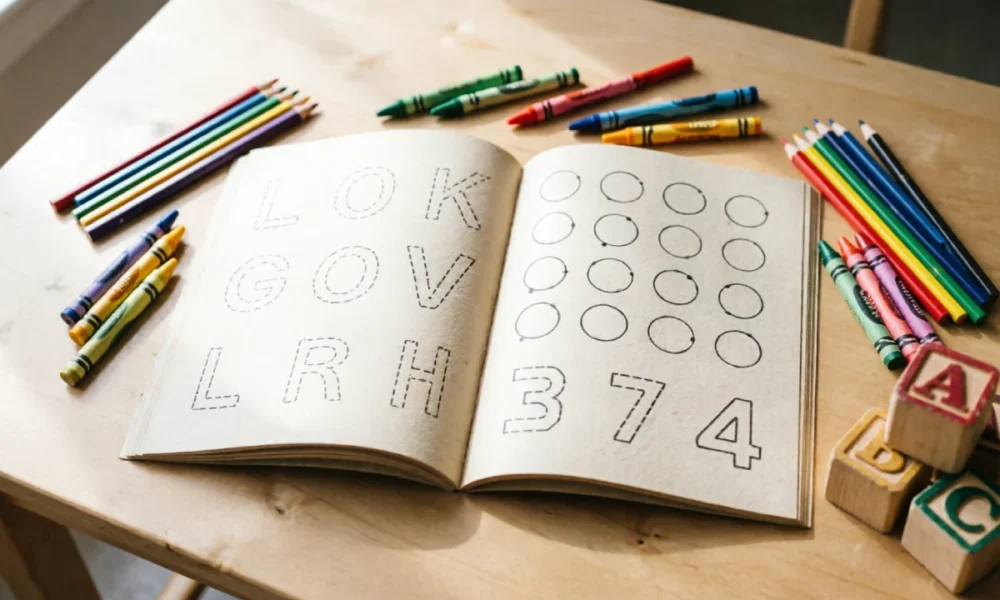
Kindergarten workbooks cover far more than coloring pages and simple counting. A well-built workbook touches literacy, math, fine motor control, logical thinking, and early science and social studies concepts. Each page is usually tied to a specific skill a five- or six-year-old is expected to develop before first grade. Parents who look closely will notice that even a page that looks like a game, such as a maze or a matching exercise, is quietly building attention span, pattern recognition, or hand control. Understanding what kindergarten workbooks teach, section by section, makes it easier to pick materials that actually support a child’s growth instead of just keeping them busy.
Table Of Content
- Early Literacy and Reading Skills Your Child Will Build
- Math and Numeracy Foundations Covered in Workbooks
- Handwriting, Fine Motor Skills, and Writing Development
- Cognitive, Logic, and Problem-Solving Skills Developed Through Workbooks
- Science, Social Studies, and Real-World Knowledge Introduced
- Social-Emotional Growth and Independent Learning Habits
- Why These Skills Matter for Long-Term Academic Success
- How to Choose the Right Kindergarten Workbook for Your Child
- Different Types of Kindergarten Workbooks Explained
- Teacher-Approved and Parent-Recommended Workbook Examples
- Practical Tips to Integrate Workbook Learning into Daily Routines
- Fun Supplementary Activities That Complement Workbook Lessons
- FAQs
- What do kindergarten workbooks actually teach a child?
- How many workbooks does a kindergartner really need?
- How much time should a child spend on workbooks each day?
- What if my child refuses to sit down and do workbook pages?
- Are workbooks enough to prepare a child for first grade?
- Final Thoughts: Turning Workbooks Into a Tool for Lifelong Learning
Early Literacy and Reading Skills Your Child Will Build
Literacy sections introduce letter recognition, phonics, and beginning sight words. Children trace letters, match uppercase and lowercase pairs, and sound out simple three-letter words. Many workbooks also include short picture-based stories that build comprehension by asking a child to answer a question about what happened. These exercises lay the groundwork for reading fluency, since a child who can already recognize sounds and basic words enters first grade with far less struggle.
Math and Numeracy Foundations Covered in Workbooks
Numeracy pages typically start with number recognition and counting to twenty or higher, then move into simple addition and subtraction using pictures rather than abstract symbols. Shape recognition, sorting by size or color, and basic measurement concepts like “more” and “less” also appear. These pages are designed to build number sense gradually, so a child understands quantity before being asked to memorize equations.
Handwriting, Fine Motor Skills, and Writing Development
Tracing lines, shapes, and letters strengthens the small hand muscles a child needs for controlled writing. Cutting practice, dot-to-dot pages, and coloring within lines all serve the same purpose. Fine motor pages might look repetitive, but each one builds the pencil grip and hand-eye coordination a child needs before they can write full sentences comfortably.
Cognitive, Logic, and Problem-Solving Skills Developed Through Workbooks
Puzzle pages, sequencing exercises, and simple pattern-completion tasks train a child to think through steps logically. A page asking a child to circle what comes next in a sequence of shapes is training the same reasoning skill used later in math word problems. These sections build patience and persistence alongside logic, since a child has to look, compare, and decide before marking an answer.
Science, Social Studies, and Real-World Knowledge Introduced
Many workbooks include short sections on seasons, weather, animals, plants, and community helpers like doctors or firefighters. These pages are not meant to teach deep science content. Instead, they build vocabulary and general world knowledge that a child will draw on constantly in later grades. A child who has already seen and labeled a life cycle diagram or a simple weather chart recognizes the format when it appears again in first or second grade.
Social-Emotional Growth and Independent Learning Habits
Completing a workbook page from start to finish, without constant help, builds independence and focus. Many workbooks also include pages about naming feelings, taking turns, or making good choices, which support emotional vocabulary. Sitting down for a short, structured task also teaches a child what it feels like to work through something that takes a few minutes of sustained attention, a skill that becomes essential once formal schooling begins.
Why These Skills Matter for Long-Term Academic Success
Skills built at this stage rarely stay isolated. A child who can already recognize numbers and letters, hold a pencil correctly, and sit through a short task arrives at school ready to absorb new material instead of catching up on basics. Studies on early literacy consistently link strong pre-reading skills to better reading outcomes years later. The habits formed through short daily workbook sessions- focus, follow-through, and comfort with structured tasks- carry directly into classroom behavior.
How to Choose the Right Kindergarten Workbook for Your Child
Look for workbooks that match your child’s current skill level rather than their exact age, since children develop at different speeds. A workbook with too many pages that are either far too easy or far too hard will lose a child’s interest quickly. Check whether the content is balanced across literacy, math, and fine motor skills, or whether it leans heavily toward just one area. Clear instructions, large print, and enough white space on each page also make a real difference for a beginner.
Different Types of Kindergarten Workbooks Explained
Some workbooks focus entirely on one subject, such as phonics or number sense, while others are all-in-one books covering every skill area in a single volume. Activity-based workbooks lean on games, mazes, and stickers to keep engagement high, while more traditional workbooks follow a straightforward practice format. Seasonal or themed workbooks, built around holidays or topics like animals, can help maintain a child’s interest over a longer stretch of weeks.
Teacher-Approved and Parent-Recommended Workbook Examples
Many educators recommend workbooks that build skills in small, clearly labeled increments and include an answer key or guide for parents. Series that separate content by subject, rather than mixing everything into a single page, tend to make it easier to track exactly which skills a child has mastered. Reviews from parents often point to workbooks with sturdy paper, larger fonts, and pages that are not visually cluttered as the ones children stick with longest.
Practical Tips to Integrate Workbook Learning into Daily Routines
Short, consistent sessions work better than long, irregular ones. Ten to fifteen minutes a day, at a time when a child is not tired or hungry, tends to produce steadier progress than an hour once a week. Keeping workbook time in the same spot each day, with the same few supplies on hand, helps a child settle into the routine faster. Letting a child choose which page to do first, when possible, also builds a sense of ownership over the task.
Fun Supplementary Activities That Complement Workbook Lessons
Pairing a workbook lesson with a matching real-world activity reinforces what was just practiced. After a counting page, count out snacks or steps on a walk. After a letter-tracing page, spell out a word with magnetic letters or sidewalk chalk. Board games that involve counting spaces, or simple scavenger hunts for shapes and colors around the house, extend the same skills without feeling like more workbook time.
FAQs
What do kindergarten workbooks actually teach a child?
They build early literacy, number sense, fine motor control, logical thinking, and basic science and social studies knowledge, all broken into short, age-appropriate practice pages.
How many workbooks does a kindergartner really need?
One or two well-rounded workbooks covering literacy and math are usually enough. Too many books at once can overwhelm a young child rather than help them.
How much time should a child spend on workbooks each day?
Ten to fifteen minutes a day works better than one long session a week. Short, consistent practice builds skills more steadily than occasional long sittings.
What if my child refuses to sit down and do workbook pages?
Shorten the session, add a small reward, or switch to a page with more games or pictures. Forcing a resistant child usually backfires and reduces interest further.
Are workbooks enough to prepare a child for first grade?
They are a strong supplement, not a complete plan. Hands-on play, conversation, and reading aloud together remain just as important alongside workbook practice.
Final Thoughts: Turning Workbooks Into a Tool for Lifelong Learning
Kindergarten workbooks work best when treated as one part of a child’s daily learning, not the whole plan. Used consistently and matched to a child’s actual skill level, they build literacy, math, fine motor control, and independent focus in ways that carry directly into first grade and beyond. The goal is steady, low-pressure practice that keeps a child curious rather than worn out, so the habits formed now stay with them well past kindergarten.