

The Modern Car Technology, Electric Vehicles, Smart Features, and the Future of Driving
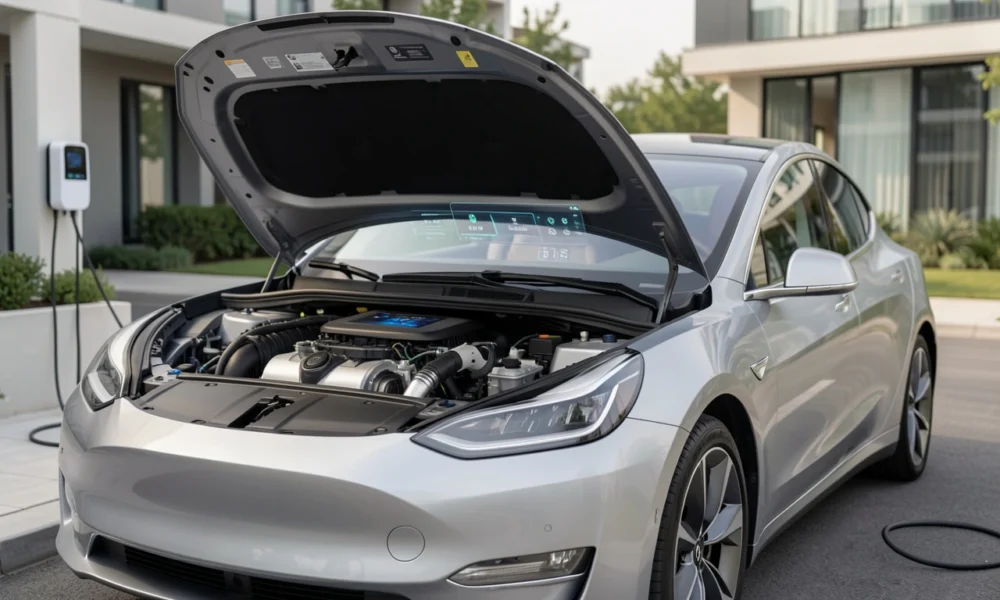
Modern cars are no longer just machines that get you from one place to another. Today’s vehicles combine electric powertrains, software-driven safety systems, wireless connectivity, and advanced driver assistance tools into a single platform. Whether you’re buying your first car or trying to understand what’s changed, this guide explains what modern car technology actually means—and what it means for you as a driver and owner.
Table Of Content
- How Modern Cars Differ From Traditional Vehicles
- Electric Vehicles: What They Are and How They Work
- Charging: What You Actually Need to Know
- Modern Car Technology and Electric Vehicles Guide: Key Systems Explained
- Advanced Driver Assistance Systems (ADAS)
- Infotainment and Connectivity
- Connected Car Services
- Autonomous Driving: Levels, Limitations, and Reality
- Comparing Powertrains: BEV, PHEV, and Petrol
- Smart Features That Actually Change How You Drive
- Vehicle Software and Over-the-Air Updates
- What Modern Car Technology Costs to Own
- How to Evaluate a Modern Car Before Buying
- FAQs
- Is an electric vehicle more expensive to run than a petrol car?
- What does “over-the-air update” mean for a car?
- Do I need to be a tech expert to use modern car features?
- Are autonomous cars available to buy now?
- What should I check when buying a used EV?
- How long do EV batteries last?
How Modern Cars Differ From Traditional Vehicles
The gap between a car built in 2005 and one built today is wider than most people expect. Older vehicles relied almost entirely on mechanical systems—combustion engines, hydraulic brakes, and analog controls. Modern cars layer software, sensors, and connected services on top of those mechanical foundations, or replace them entirely.
This shift changes what you need to know as an owner. Software updates now fix problems that once required a workshop visit. Sensors can detect hazards faster than human reflexes. Connectivity means your car can communicate with your phone, your home, and in some cases, other vehicles on the road.
Understanding these differences helps you choose the right vehicle, use its features properly, and anticipate what ownership actually costs over time.
Electric Vehicles: What They Are and How They Work
An electric vehicle (EV) uses one or more electric motors powered by a rechargeable battery pack instead of—or alongside—a combustion engine. There are three main categories you’ll encounter:
- Battery Electric Vehicles (BEVs): Fully electric. No fuel tank. Charged from an external power source.
- Plug-in Hybrid Electric Vehicles (PHEVs): Combine a battery-powered electric motor with a petrol or diesel engine. Can be charged externally.
- Hybrid Electric Vehicles (HEVs): Use regenerative braking and the engine to charge a smaller battery. Cannot be plugged in.
The battery pack is the most important component in a BEV or PHEV. It determines driving range, affects the vehicle’s weight distribution, and represents the largest cost factor in the vehicle’s construction. Most modern EV batteries use lithium-ion chemistry, the same technology found in laptops and smartphones—but at a much larger scale.
When you press the accelerator in a BEV, electric current flows from the battery to the motor, which converts it into rotational force almost instantly. This is why electric vehicles feel quick off the mark—there’s no delay waiting for an engine to build power through gears.
Charging: What You Actually Need to Know
Charging speed is measured in kilowatts (kW). The higher the number, the faster the charge. At home, a standard wall socket delivers roughly 2–3 kW, which is slow but practical for overnight charging. A dedicated home wallbox typically delivers 7–22 kW. Public fast chargers range from 50 kW to over 350 kW, depending on the network and your vehicle’s onboard charger limits.
One common misunderstanding: a vehicle’s maximum charging speed is capped by whichever is lower—the charger’s output or the car’s onboard charger capacity. Plugging into a 150 kW charger doesn’t help much if your car can only accept 50 kW.
Range varies significantly between models and conditions. Cold weather, motorway speeds, and heavy use of heating or air conditioning all reduce the distance you can travel on a single charge. Manufacturers publish official range figures based on standardised test cycles, but real-world range is usually 10–20% lower in average conditions.
Modern Car Technology and Electric Vehicles Guide: Key Systems Explained
Beyond the powertrain, modern vehicles—both electric and combustion—include a range of technology systems that affect safety, comfort, and how you interact with the car day to day.
Advanced Driver Assistance Systems (ADAS)
ADAS is the collective name for software-driven safety and convenience features. These systems use cameras, radar, ultrasonic sensors, and sometimes lidar to monitor the vehicle’s surroundings and assist the driver.
Common ADAS features include:
- Automatic Emergency Braking (AEB): Detects an imminent collision and applies the brakes if the driver doesn’t respond in time.
- Lane Keeping Assist (LKA): Alerts the driver or applies gentle steering corrections if the vehicle drifts out of its lane.
- Adaptive Cruise Control (ACC): Maintains a set speed and automatically adjusts to keep a safe distance from the vehicle ahead.
- Blind Spot Monitoring: Warns you when a vehicle is in your blind spot during lane changes.
- Rear Cross Traffic Alert: Detects vehicles approaching from the side when reversing out of a parking space.
These features do not make a car autonomous. They are assistance tools. The driver is always responsible for the vehicle’s behaviour, even when systems like ACC are active.
Infotainment and Connectivity
The central touchscreen in modern cars is more than an entertainment hub. It typically controls navigation, climate settings, vehicle configuration, and in many cases, over-the-air (OTA) software updates.
Apple CarPlay and Android Auto allow you to mirror your smartphone’s interface on the car’s screen, giving you access to maps, calls, and music through the car’s controls. Most new vehicles now support at least one of these platforms.
OTA updates are worth understanding as an owner. Manufacturers can push software improvements, new features, or security patches to your vehicle without you visiting a dealership. Tesla pioneered this approach, and most major manufacturers now offer it to varying degrees.
Connected Car Services
Many modern vehicles come with a built-in SIM card that enables services like remote locking, real-time traffic data, stolen vehicle tracking, and roadside assistance alerts. These services often require a subscription after an initial free period.
Before buying, check what the connected services include, how long the free period lasts, and what the ongoing cost is. Some features—like live traffic data in the navigation system—are genuinely useful. Others, like remote pre-conditioning of the cabin, are convenient extras rather than essentials.
Autonomous Driving: Levels, Limitations, and Reality
You’ve probably heard terms like “self-driving car” and “autopilot.” These phrases are often used loosely, which creates real confusion about what modern cars can and cannot do.
The Society of Automotive Engineers (SAE) defines six levels of driving automation, from Level 0 (no automation) to Level 5 (full automation with no human input required). Most production vehicles available today sit at Level 2—meaning they can control steering, acceleration, and braking simultaneously, but require the driver to remain attentive and in control at all times.
Level 3 systems—where the car handles all driving tasks in specific conditions, and the driver can disengage temporarily—are beginning to appear in limited markets. No mass-market vehicle currently offers Level 4 or Level 5 automation for general road use.
The practical takeaway: if a car’s marketing mentions autopilot, self-steering, or hands-free driving, read the small print carefully. These systems still require driver supervision. Using them as a substitute for attention is both dangerous and, in most jurisdictions, illegal.
Comparing Powertrains: BEV, PHEV, and Petrol
Choosing between vehicle types involves more than comparing fuel costs. Here’s a clear breakdown of how the main options compare across common ownership factors.
| Factor | Battery EV (BEV) | Plug-in Hybrid (PHEV) | Petrol / Diesel |
|---|---|---|---|
| Running cost per mile | Low (electricity) | Low if charged regularly | Moderate to high |
| Home charging required | Yes | Recommended | No |
| Long-distance convenience | Requires planning | Flexible (uses engine too) | Very convenient |
| Maintenance complexity | Lower (fewer moving parts) | Moderate | Moderate to higher |
| Purchase price | Higher upfront | Moderate to high | Wide range |
| Environmental impact | Lower (depends on grid) | Mixed | Higher |
| Resale value trends | Variable, improving | Variable | More established |
A PHEV suits drivers who regularly travel short distances but occasionally need a longer range without charging infrastructure anxiety. A BEV makes the most financial sense when you can charge at home or work, and your typical journeys fall well within the vehicle’s range. A petrol or diesel vehicle still makes practical sense if you drive high mileages on motorways regularly and charging access is limited.
Smart Features That Actually Change How You Drive
Not every “smart” feature in a modern car is equally useful. Some genuinely improve safety or reduce effort. Others are novelties that most owners stop using within weeks.
Features that tend to deliver consistent value:
- Automatic Emergency Braking has measurably reduced rear-end collisions across fleets and insurance data. It works without any input from you and can prevent accidents in situations where human reaction time isn’t fast enough.
- Adaptive Cruise Control with lane centring reduces driver fatigue on long motorway journeys. It doesn’t replace attention, but it takes over the small, constant adjustments that build up over hours of driving.
- 360-degree camera systems make parking in tight urban spaces significantly easier. They’re particularly useful in larger vehicles where the driver’s visibility is more limited.
- Features that are often oversold:
- Voice assistants integrated into car systems vary enormously in reliability. Many owners revert to using their phone’s assistant through CarPlay or Android Auto instead, which typically performs better.
- Gesture controls for infotainment functions are present in some vehicles, but rarely become a preferred method of interaction. Physical controls or touchscreens are faster in practice.
- Health monitoring systems that track driver fatigue through steering behaviour are useful in commercial fleet contexts, but their reliability in consumer vehicles is inconsistent.
Vehicle Software and Over-the-Air Updates
Modern cars increasingly resemble software platforms. The vehicle you buy today may have different features or improved performance in two years—not because you’ve replaced any hardware, but because the manufacturer has pushed a software update.
This changes the ownership model in meaningful ways. Updates can add new ADAS features, improve battery management algorithms in EVs, refine infotainment responsiveness, or address security vulnerabilities. They can also occasionally introduce bugs or change the behaviour of features you’ve grown used to.
As an owner, it’s worth checking whether your vehicle manufacturer has a clear update policy. Some publish detailed release notes. Others offer little transparency about what changes with each update. Knowing what’s changed helps you understand if a behaviour difference you’ve noticed is a fault or a deliberate modification.
One limitation worth noting: OTA updates can only change software. Physical components—brake pads, tyres, suspension—age regardless of how current the software is. A software-heavy vehicle still requires conventional maintenance.
What Modern Car Technology Costs to Own
Technology-rich vehicles often carry higher purchase prices, but the ownership cost picture is more nuanced than the sticker price suggests.
Electric vehicles have lower per-mile energy costs than petrol or diesel equivalents in most markets where electricity prices are stable. They also require less frequent maintenance because they have fewer components subject to wear—no oil changes, no timing belt, simpler brake maintenance due to regenerative braking, reducing pad wear.
However, battery replacement is a significant long-term cost factor in BEVs. Battery packs degrade over time, and while most manufacturers offer warranties covering a minimum state of health (often 70% capacity over 8 years or 100,000 miles), a battery replacement outside warranty is a major expense.
ADAS and connected features add complexity to repair costs. Cameras and radar sensors built into bumpers, mirrors, and windscreens mean that minor bodywork damage can become expensive if it involves recalibrating sensors. Always check repair costs for sensor-equipped areas before buying.
Insurance costs for EVs and technology-rich vehicles are often higher than for equivalent conventional vehicles, primarily due to higher repair and parts costs. It’s worth getting insurance quotes for specific models before making a purchase decision.
How to Evaluate a Modern Car Before Buying
Technology features are easy to be impressed by during a test drive. Here’s a more structured way to evaluate whether those features are right for you.
Match the powertrain to your actual driving habits—Calculate your typical weekly mileage and identify how much of it is short urban trips versus longer journeys. Be honest about your access to charging infrastructure—at home, at work, and along your regular routes.
Test the ADAS features properly—During a test drive, activate adaptive cruise control and lane keeping assist on a road where you’d actually use them. Pay attention to how natural the steering input feels and how the system handles curves and lane markings. Poorly calibrated systems can feel intrusive rather than helpful.
Understand the infotainment system before you commit—Spend time navigating menus, adjusting climate settings, and connecting your phone. A slow or unintuitive system is a daily frustration. Some manufacturers prioritise large screens without optimising the software behind them.
Ask about the software update history—If buying a used vehicle with OTA capability, ask whether updates are still being provided for that model year. Software support lifecycles vary between manufacturers, and an older model may no longer receive updates even if the hardware supports them.
Factor in real-world range and charging time if buying an EV—Ask for the WLTP range figure for the specific trim level you’re considering, not just the headline range for the top spec. Then apply a realistic real-world reduction—especially if you live in a colder climate.
FAQs
Is an electric vehicle more expensive to run than a petrol car?
In most cases, no. Electricity costs less per mile than petrol in most markets. The gap varies depending on your local electricity tariff, whether you have access to cheaper overnight rates, and how much motorway driving you do. Home charging is significantly cheaper than public rapid charging.
What does “over-the-air update” mean for a car?
It means the manufacturer can send software changes to your vehicle remotely—similar to how your phone receives operating system updates. No workshop visit is needed. Updates can improve existing features, add new ones, or fix issues.
Do I need to be a tech expert to use modern car features?
No. Most systems are designed for everyday drivers. The challenge is usually not complexity but learning where to find settings and understanding what each feature actually does. Reading the manual—or at minimum, watching the manufacturer’s tutorial videos—goes a long way.
Are autonomous cars available to buy now?
Not in the full sense. Current consumer vehicles offer Level 2 automation at most, which assists the driver but does not replace driver attention. Higher levels of automation exist in limited commercial or geographic contexts but are not available for general purchase.
What should I check when buying a used EV?
Ask for the battery’s current state of health (SOH) report, which shows how much capacity remains compared to the original. Check whether the battery warranty is still active and transferable. Inspect the charging history—frequent rapid charging degrades battery capacity faster than regular home charging.
How long do EV batteries last?
Most manufacturers warrant EV batteries for 8 years or 100,000 miles, guaranteeing a minimum state of health during that period. Real-world data from early EVs suggests most batteries retain usable capacity well beyond this point, though gradual degradation is normal over time.