

Industrial Floor Treatments: Benefits, Types, and Long-Term Value (2026 Guide)
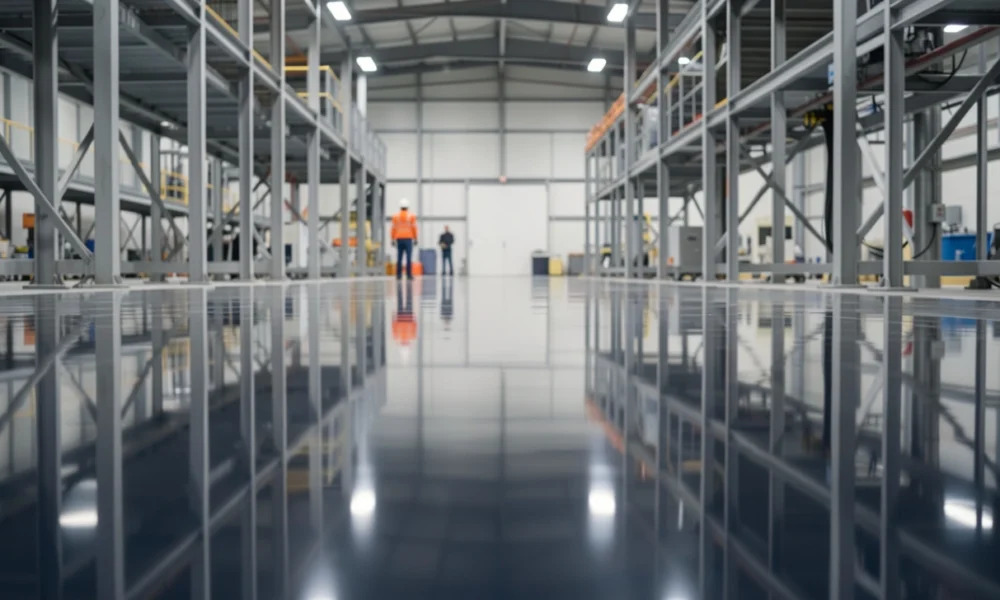
For facility managers and business owners, the condition of a factory or warehouse floor directly impacts operational efficiency, worker safety, and long-term maintenance budgets. Standard, untreated concrete is porous, prone to dusting, and vulnerable to damage from chemicals and heavy loads. Modern industrial floor treatments have evolved from simple protective coatings into sophisticated systems engineered to meet specific operational demands. This guide provides a detailed overview of the benefits of industrial floor treatments, the primary types available, and key considerations for selection based on current industry standards and 2026 market insights.
Table Of Content
- Key Takeaways
- Understanding Industrial Floor Treatments
- Key Benefits of Modern Floor Treatments
- . Structural Reinforcement and Load Resistance
- 2. Chemical and Thermal Protection
- . Safety Through Surface Engineering
- 4. Hygienic and Seamless Surfaces
- 5. Contribution to Operational Efficiency
- 6. Lifecycle Cost Efficiency
- Types of Industrial Floor Coating Systems
- Critical Factors for Long-Term Performance
- The Bottom Line
Key Takeaways:
- Enhanced Durability: Treatments significantly increase resistance to abrasion, impact, and chemical attack, extending the floor’s service life.
- Safety & Hygiene: Seamless, non-porous surfaces with slip-resistant options improve workplace safety and simplify sanitation protocols
- Operational Efficiency: Fast-curing systems minimize downtime during installation, supporting quicker facility launch and reduced production interruptions .
- Strategic Investment: The global industrial flooring market is projected to grow significantly, reflecting its recognition as a critical component of facility performance and lifecycle cost management .
Understanding Industrial Floor Treatments
Industrial floor treatments encompass a range of systems—from coatings and sealers to applied toppings—designed to protect and enhance concrete substrates. Their primary purpose extends beyond aesthetics. They serve as a critical barrier against the operational stressors of industrial environments, including relentless traffic, chemical spills, thermal shock, and moisture intrusion . The choice of treatment directly influences a facility’s uptime, maintenance frequency, and compliance with industry-specific safety and hygiene regulations.
Key Benefits of Modern Floor Treatments
While the original article touched on basic advantages, current industry analysis reveals a more comprehensive set of benefits that directly impact a facility’s bottom line and operational resilience .
. Structural Reinforcement and Load Resistance
Industrial floor treatments significantly improve the durability of concrete. For instance, silicate-based densifiers penetrate the concrete and chemically react to form a harder, denser surface, reducing dust and increasing abrasion resistance. Resin systems like epoxy and polyurethane create a tough, impact-resistant cap that protects against the wear caused by forklifts and heavy machinery
2. Chemical and Thermal Protection
In sectors like chemical processing, food and beverage, or automotive, floors are regularly exposed to oils, acids, solvents, and aggressive cleaning agents. High-performance coatings, such as novolac epoxy or cementitious urethane, are formulated to withstand these harsh exposures without degrading . They also offer resistance to thermal shock from processes like steam cleaning or temperature fluctuations in cold storage .
. Safety Through Surface Engineering
Worker safety is a paramount concern. Industrial floor treatments directly address slip, trip, and fall hazards—a leading cause of workplace injuries.
- Slip Resistance: Textured aggregates can be added to epoxy and polyurethane systems to create slip-resistant surfaces, even in wet or oily conditions .
- Visual Demarcation: Coatings can be installed with integrated color zones and line striping to clearly mark walkways, traffic lanes, and hazardous areas, improving site organization and safety .
- Fire Resistance: Certain cement-based toppings and specialized coatings achieve an A1 fire rating, contributing to the facility’s overall fire safety strategy .
4. Hygienic and Seamless Surfaces
For industries with strict sanitation requirements—such as pharmaceuticals, life sciences, and food processing—the non-porous, seamless nature of resin floor systems is critical. They eliminate grout lines and crevices where bacteria, mold, and other contaminants can accumulate, supporting compliance with strict hygiene standards like cGMP. Antimicrobial epoxy options are also available for environments like hospitals and cleanrooms
5. Contribution to Operational Efficiency
Modern formulations prioritize speed. Fast-curing polyaspartic and polyurethane systems can return a floor to service in a matter of hours, drastically reducing facility downtime during installation or renovation .New industrial toppings can be ready for foot traffic in 2-3 hours and for coating application within 12 hours . His rapid return to service is a key factor in minimizing disruption to production and logistics.
6. Lifecycle Cost Efficiency
While the initial investment in a high-performance floor treatment may be higher than basic paint or sealers, a lifecycle cost analysis (LCCA) demonstrates its long-term value. By extending the floor’s service life, reducing the need for frequent repairs, and minimizing costly downtime, these systems offer a lower total cost of ownership. The global industrial flooring market’s projected growth to US$14.5 billion by 2030 (from US$10.6 billion in 2024) reflects this understanding of flooring as a strategic, long-term asset.
Types of Industrial Floor Coating Systems
Different operational environments require different material properties. The table below summarizes the most common high-performance systems used in 2026.
| System Type | Key Characteristics | Typical Applications | Representative Performance Attributes |
|---|---|---|---|
| Epoxy | Excellent adhesion, high chemical and impact resistance, and a hard surface. | Manufacturing plants, warehouses, auto garages, and commercial kitchens. | 100% solids, low-VOC formulations; can be customized with anti-slip aggregates. |
| Polyurethane & Polyaspartic | High flexibility, UV stability, excellent abrasion resistance, and very fast cure times. | Facilities with thermal cycling, outdoor loading docks, and areas needing rapid return-to-service. | Polyaspartics can cure in hours, even at low temperatures; excellent for time-sensitive projects. |
| Cementitious Urethane | Superior resistance to thermal shock, moisture, and aggressive cleaning chemicals; bonds well to damp substrates. | Food & beverage processing plants, commercial kitchens, cold storage. | Withstands extreme washdowns and temperature changes without cracking or delaminating. |
| Silicate Densifiers | Penetrate concrete to form CSH gel; increase surface density, hardness, and dust resistance. | Warehouses, distribution centers, or any facility wanting to improve plain concrete. | Products include lithium, potassium, and sodium silicates from manufacturers like PQ Corporation. |
Critical Factors for Long-Term Performance
Selecting the right material is only one part of the equation. Industry experts emphasize that long-term success depends on two other critical factors: surface preparation and expert application.
- Surface Preparation is Foundational: Proper preparation—including shot blasting, diamond grinding, and repairing cracks—is non-negotiable. It ensures the coating bonds mechanically to a clean, sound substrate with the correct profile. Skipping or rushing this step is the primary cause of premature coating failure.
- Application Expertise Matters: The performance of a coating system is only as good as its installation. Partnering with experienced, certified contractors who understand environmental conditions, substrate nuances, and proper mixing and application techniques is essential to achieving the desired performance and warranty validation.
The Bottom Line
Industrial floor treatments are a critical investment in a facility’s operational integrity, safety, and financial performance. By moving beyond a “quick fix” approach and selecting a system tailored to the specific stresses of the environment—whether that’s chemical resistance in a lab, thermal shock resistance in a food plant, or rapid installation in a busy warehouse—owners can significantly reduce long-term costs and improve workplace outcomes. As the market continues to grow and materials science advances, the role of the industrial floor as a strategic asset will only become more pronounced.